


FW
Lenzing incorporates Refibra technology in Tencel branded fibers
Lenzing Group has incorporated the Refibra™ technology in carbon-zero Tencel branded fibers to address the growing demand for circular fashion and carbon neutrality. As per a Textile World report, through this the group aims to provide more innovative solutions for fashion brands to meet carbon reduction targets and consumers to enjoy sustainable products.
The initiative demonstrates Lenzing’s solid commitment to build a truly sustainable textile industry. The pioneering Refibra™ technology involves upcycling cotton scraps from garment production and transforming them into cotton pulp. The cotton pulp is then added to sustainably sourced wood pulp to produce virgin Tencel Lyocell fibers. This innovation reinforces Lenzing’s ongoing effort to the Science Based Targets (SBT) initiative and support of the United Nations Sustainable Development Goals to limit global warming.
Lenzing’s long-time partner and international denim brand, Jack & Jones has also incorporated 38 per cent of carbon-zero Tencel Lyocell fibers in its latest range of jeans to offer long-lasting softness, silky smoothness, enhanced breathability, color retention and being gentle on the skin.
By offering carbon-zero Tencel fibers with Refibra technology, Lenzing provides the industry more sustainable material options right from the beginning of the product life cycle, bringing Lenzing one step closer to its goal of reaching zero carbon emissions by 2050. Moving forward, Lenzing will continue to work with industry partners to reduce the product’s carbon footprint and offset unavoidable emissions to ultimately drive decarbonization in the textile industry.
IAF, ABIT, Euratex join hands for international conferences on European industry
International Apparel Federation (IAF), ABIT, the national association for the Brazilian Apparel and Textile industry and Euratex have joined forces to hold international conferences to offer complementary insights into the huge transition the apparel and textile industries are going through. While the conferences of IAF and ABIT are based on similar themes, Euratex’s conference is based on ‘A new paradigm for the European Textile and Clothing Industry.’
ABIT’s international conference will take place on October 27 and 28 and focus on people, exploring data gathering; a transition to a design more guided by individualization and communication in a digital environment. IAF’s conference will focus on the intra supply chain dynamics, looking at how the relations between buyers and suppliers need to change. Meanwhile, Euratex’s conference will focus on the role of legislation shaping our industry’s actions.
IAF and Euratex will hold their conferences back-to-back in Antwerp, Belgium on November 8 and 9 respectively. For those visitors that might be held back by pandemic related restrictions to visit the venue in Antwerp, the conferences will be available online.
M&S bets on casual fashion to drive growth
No longer selling suits in its stores, Marks & Spencer now bets on casual fashion to fuel growth.
M&S’ suit sales fell by 7 per cent.in 2019 as it sold just 7,500 suits – a fall of 80 per cent compared to the same period in the previous year.
The brand’s formal wear years during the year upto April declined by 15 per cent online and 72 per cent in stores compared to the previous year.
During the same period, sales of casual wear increased 61 per cent online.
M&S has stopped stocking suits across more than half of its 245 larger-format stores. Over 50 per cent of M&S’s bigger stores are no longer selling suiting, with tailoring available in just 110 of its 254 larger stores.
Instead, the retailer is focusing on categories such as chinos and shirts, which have higher sell-throughs.
Office wear has become decidedly more relaxed due to the rise of new work from home culture, as per the latest report by the Kantar Group.
Sales of suits in the UK have fallen by 2.3 million over five years. Men purchased 2 million suits during the year to July compared to 4.3 million for the same period in 2017.
Annual sales of men’s suiting fell from 469m pounds in 2016 to 159m pounds in past year to July.
Archroma launches new compliance platform
Global leader in specialty chemicals for sustainable solutions, Archroma has launched a new online platform called The Safe Edge. The platform will provide the company instant access to product related regulatory and compliance certificates and information. The platform has been designed to allow brands, retailers and manufacturers of textile, fashion, packaging, paper, paints, to verify with just a few clicks the regulatory and compliance status of Archroma products, including regulations, ecotoxicological information and certifications, and brand requirements.
The Safe Edge covers standards, regulations and information such as air emission factors, animal origin, halal, kosher, plant origin, food contact, Blue Angel, bluesign®, Cradle-to-Cradle, chemical inventories, Composability EN 13432, conflict minerals, EU Flower/Ecolabel, GOTS, CONEG, ISEGA, Nordic Swan, Oekotex® Standard 100, California Prop 65, REACH, RoHS (Restriction of Hazardous Substance), Screened Chemistry, SDS, SVHC (Substance of Very High Concern), VOC (US), ZDHC (Zero Discharge Hazardous Chemicals), and brand standards (like Coats A&F MRSL, Decathlon RSL 2020, Jack Wolfskin RSL and The List IV by Inditex.
The Safe Edge is already accessible for manufacturers, brands and retailers in Europe and Asia, and will be launched in North America in September 2021, and in Latin America by the end of the year.
Coloreel launches new recycled polyester thread
Coloreel has launched a new recycled polyester thread to be used with the groundbreaking embroidery technology that enables the thread to be colored as per demand. As per Textile World, the thread was launched in collaboration with world leading manufacturer Madeira. The 100-per cent recycled polyester thread can be used with the instant thread coloring technology for embroideries. This will enable customers to create more sustainable embroideries with thousands of colors, CMYK, RGB/HEX and PMS compatible.
The polyester thread has been created from 100-per cent recycled post-consumer PET bottles. It has passed through all industry standard quality testing and provides same fastness properties as virgin polyester thread and is certified standard 100 by OEKO-TEX®. The recycled thread will be sold in sets of 6 x 10 kilometer thread reels. With the ambition to further minimize impact, the thread cone is made from recycled plastics and will be packaged and shipped in recycled carton boxes.
Messe Frankfurt announces dates for Heimtextil 2022
German trade fair and event organizer Messe Frankfurt has announced dates for its home and contract textiles trade fair Heimtextil 2022. The trade fair will be held in Frankfurt next year from January 11-14, 2022 featuring 1,600 exhibitors from 50 countries. In addition to the extensive spectrum of products, the fair will offer an attractive range of information services and events to help visitors discover the latest market developments in the sector. In particular, it will present the Heimtextil Trends to offer in-depth insights into tomorrow’s furnishing themes.
The interior, architecture and hospitality zones will spotlight offers for architects and hospitality experts. The Heimtextil Sleep & More Conference will be a meeting place for representatives of the specialist bed trade with a high-grade program of lectures, discussions and product presentations .Another important focal point at Heimtextil 2022 will be presentations by Trevira and DecoTeam.” The range of products and information at Heimtextil 2022 will be rounded off by a blend of digital services. For example, the complete spectrum of Heimtextil Trends will be available for the first time in digital form – richly illustrated and visualised with the latest colors, designer features and short films. The Future Materials Library is also online with a first-class selection of sustainable material innovations. Also in planning are videos on demand about many of the items on the program and tours of the fair via audio guides.
India: GST rates increase, a huge setback for the garment industry
Experts and businessmen believe, the government’s decision to increase GST on textile articles like yarn, fabric, cloth to 12 per cent from January 1, 2022 will lead to an increase in prices of garments and textile articles for end consumers. It will also hike the cost of investment for the businessmen, says NK Thamman, Tax Expert. Narinder Mittal, General Secretary, Ludhiana Business Forums opines, the GST increase will prove to be a big setback for the industry already facing severe fund crunch due to lockdowns.
Harish Kairpal, Finance Secretary, Knitwear Club, adds, the move will have serious repercussions on garment and textile manufacturers. Their cost of investment will rise steeply and retail consumers will also suffer as rates of garments and textile articles will be increased due to this tax difference.
Pakistan: Provide more incentives to textile processing units, urges APTMA
Sheikh Shahid Javaid, Regional Chairman, All Pakistan Textile Processing Mills Association (APTPMA) has urged the government to provide more incentives for the textile processing sector. Javaid said, previous governments had badly ignored the textile processing industry despite the sector earning huge foreign exchange for the country. However, the PTI government took pro-industry steps to revive this sector. It provided subsidized energy rates for the textile sector in addition to implementing the ‘inspector-less regime’ policy to stir its growth, he added.
The government also provided relief to the industrial sector and adopted smart lockdown policy to keep industrial wheel on moving during the COVID-19 period. It provided electricity on comparatively less rates to the textile sector, Javed observed. He added, COVID-19, has increased raw material prices manifold at global level due to cartelization, pushing the textile processing industry on the verge of total collapse.
Therefore, the government needs to take bold steps and provide more incentive to the sector by exchange rates, reversing freight rates on previous level and imposing zero rate policy on raw material imports, he added.
Sustainability pressures compel brands to relook raw material choices
 The pandemic has accelerated demand for clothes made from performance fabrics because of its moisture-wicking, anti-odor and cooling properties they offer. As per a Women’s Wear Daily report, consumers are seeking not just presentable but also versatile garments. This has created demand for fabrics with technical attributes, says Stephen Kerns, President, Schoeller USA. His company launched several products in June including ‘Drys’, a two-way stretch fabric made from recycled polyester and Ecorepel Bio, a moisture and abrasion-resistant technology that can be used in sports and lifestyle apparel.
The company also launched Schoeller Shape, a cotton blend made from recycled polyamide. Another launch is the Softight ripstop fabric made from recycled polyamide for making pants. Finished with Ecorepel Bio technology, these fabrics offer are water- and dirt-repellent besides being PFC-free and renewable raw materials-based. They can be used in bottoms, tops and jackets, says Kerns,.
Opportunity for stretch fabrics
Pandemic-prompted lifestyle changes have stepped up demand for stretch fabrics, opines Kerns. These fabrics enable consumers to retain their garments longer, explains Alexa Raab, Head-Global Brand and Communications, Sorona, a bio-based, high-performance polymer from DuPont. Sorona-blended fabrics not just offer long-lasting stretch but also feature wrinkle resistance and shape recovery properties that reduce bagging and pilling.
Certified through the company’s ‘Common Thread Certification Program’, these fabrics meet the key performance criteria of long-lasting stretch, shape recovery, easy care, softness and breathability. They are being used in home products and comforters. In February, Dupont teamed with Thindown to launch a blended material that provides warmth, lightness and breathability on top of Sorona’s softness, drape and stretch.
Owned by Milliken & Co, Polartec increased the use of performance fabrics in garments, Steve Layton, President notes, the brand introduced synthetic PolarFleece performance fabric in 1981as an alternative to wool. It also works with Moncler, Stone Island, Reigning Champ, Veilance and other fashion brands.
Blending appearance with comfort
Appearance plays an important role in garments made from performance fabrics, says Layton. One of the most popular performance fabrics offered by Ploartec is the PowerAir that retains warmth by reducing microfiber shedding. Polartech also eliminates PFAS (per- and polyfluoralkyl substances) across its line of performance fabrics. In future, the brand aims to use more bio-based fibers in its performance fabrics, Layton adds.
Growing demand for sustainable performance fabrics have been answered by Unifi which launched Repreve recycled polyester fiber. As Chad Bolick, Vice President says, these fibers can be used to create a variety of products ranging from apparel and shoes to home furnishings.
Growing demand for merino wool loungewear
Consumers also look to merino wool to meet their performance needs. Stuart McCullough, Managing Director, The Woolmark Company says, consumers are seeking innovative and eco-friendly solutions in performance fabrics. This is leading to increased demand for loungewear made from merino wool. To capitalize on this, Woolmark plans to increase the use of performance fibers in shoes such as APL’s technical knit runner.
McCullough believes demand for a sustainable system will drive the use of performance fabrics in future. Sustainability pressures are compelling brands and manufacturers to relook their material choices and opt for more eco-friendly fibers. Australian wool is emerging as a more eco-friendly option for development of sustainable textiles.
China’s CPTPP membership could create hurdles for US’ textile industry
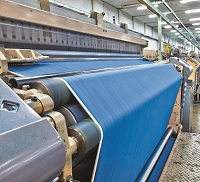 Textile and apparel companies have been on a high alert ever since China submitted its application to join the 11-member Comprehensive and Progressive Agreement for Trans-Pacific Partnership (CPTPP). They believe China’s potential accession to the CPTPP could create unprecedented challenges for the Western Hemisphere textile and apparel supply chain that also involves the US textile industry.
In a signed article ‘China’s Membership in CPTPP Could Threaten the Survival of the US Textile Industry’ by Sheng Lu, Associate Professor, Department of Fashion & Apparel Studies, University of Delaware in Fash455, writes if China joins the CPTPP, tariff cuts could provide strong financial incentives to Mexico and Canada to use more Chinese textiles. This would increase China’s share in textile exports in these two countries more than that of the US.
Currently, US is the largest textile supplier to Mexico and Canada with share of 48.2 per cent and 32.7 per cent respectively in exports. They also serve as the largest export market for US textile producers, accounting for as much as 46.4 per cent of total US yarn and fabric exports in 2020. However, China has stepped up competition by offering a wider range at more competitive prices. It has strengthened its foothold in these two markets while US textile suppliers lost nearly 20 percentage points market shares from 2015-2019.
Potential threat to US’ export markets
If China becomes a CPTPP member, its textile exports would enjoy duty-free access to Mexico and Canada. Mexico’s reduction of import tariffs from 9.8 per cent to zero for China would make its textiles more price-competitive than the US’. This would cause the US textile industry to lose its most critical export market.
China’s CPTPP membership would also encourage Mexico and Canada to import textiles from there and export finished garments to the US duty-free. This would prove devastating for the US textile industry as it would decline US textile exports to its critical market comprising CAFTA-DR countries. US’ textile exports to CAFTA-DR countries mainly depend on the volume of garment exports by these members to the US. On the other hand, US’ apparel imports from Asia are free from dependence on US-made textiles. These imports are mainly made from Asian textiles. For instance, Vietnam imports 97 per cent of its textiles including yarns and fabrics from Asian countries including China, South Korea, Taiwan and Japan.
Increase in Vietnam’s competitiveness
China’s membership of CPTPP also threatens to make Vietnam a more competitive apparel exporter than the US. Already, Vietnam is the second-largest apparel exporter to the US, next only to China. US’ apparel imports from Vietnam increased by 131 per cent between 2010 and 2020. Its share of apparel exports from Vietnam also increased from 7.6 per cent in 2010 to 19.3 per cent in the first half of 2021. Its inclusion in the CPTPP could encourage China to make more investments in Vietnam and increase its competitiveness in apparel exports. China and Vietnam’s CPTPP memberships could also result in demand drop for US textiles, making the industry’s survival more difficult.











