


FW
Diplomacy and support may help Bangladesh benefit from new GSP rules
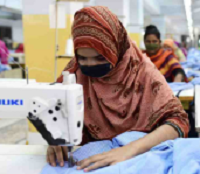 Originally framed on the recommendations of UNCTAD in 1971, the Generalized Scheme of Preferences (GSP) enables developing nations export their products to the European Union. The scheme aims to boost the export earnings of developing nations and boost their economic growth. To improve some of the key features of the scheme and meet the needs and challenges, European Commission recently proposed a new GSP framework that lowers thresholds for exports.
Advances sustainable development
As per a RMG Bangladesh report, the modernized framework enables the European Union to create economic opportunities and advance sustainable development through trade preferences. It also strengthens the Union by enabling it to withdraw GSP preferences in case of trade rules violations. Further, it adds two new human rights instruments on the rights of people with disabilities and the rights of child, two labor rights conventions on labor inspections and tripartite dialogue, and one governance convention on transnational organized crime. Rensje Teerink, Head of delegation of the European Union to Bangladesh, adds, the new regulations also extend to issues of environmental protection and good governance.
A threat to Bangladesh’s competitiveness
However, the scheme can prove a hurdle to Bangladesh’s future economic growth as it limits the country’s gains from the ‘GSP plus’ in key export items like apparels, points out Mustafizur Rahman, Distinguished Fellow at the Centre for Policy Dialogue (CPD). The new scheme reduces the general threshold to 47 per cent and textile threshold to 37 per cent, from existing 57 per cent and 47.2 per cent respectively, enabling poorer developing countries to benefit from the scheme.
However, lowering of thresholds may deprive Bangladesh of the current export competiveness it enjoys in certain products, opines Rahman. The country has been negotiating with the EU to extend its graduation from the Least Developing nations category to 2029 from the current 2024. Its proposal is set to be finalized by 2023 and includes five new points with the current 27 international conventions related to human rights, labor rights, protection of the environment and climate and good governance to benefit from this arrangement, adds Rahman. Though conducive to the country’s development, the proposal may add to the pressure on Bangladesh government, says a representative from the Centre for Policy Dialogue.
Trouble for garment exporters
Fazlee Shamim Ehsan, Vice President, Bangladesh Knitwear Manufacturers and Exporters Association (BKMEA) believes the new proposals may create certain problems for Bangladeshi woven garment exporters. The government needs to provide more policy support for setting up more textile units in this sector, he adds.
Md Saiful Islam, President of Leathergoods & Footwear Manufacturers & Exporters Association of Bangladesh (LFMEAB) also feels the proposal may affect Bangladesh’s apparel exports. He advises the government to ensure diplomatic negotiation with the EU to benefit from the new proposal. The Bangladesh Garment Manufacturers and Exporters Association (BGMEA) is also pushing the EU to improve threshold for exports, affirms Abdullah Hil Rakib, Director The association aims for extension of the full GSP benefits till 2029.
Second Renewable Materials Conference to opt for hybrid format
The second edition of the Renewable Materials Conference will be held in a hybrid format fromMay 10–12, 2022 at Cologne in Germany.
Organizer nova-Institute will present numerous market highlights from bio- and CO2- based chemicals and materials as well as from chemical recycling: Over the course of three days, participants will get a comprehensive overview of the latest developments in the renewable material sector, with a focus on industry-ready solutions from a wide spectrum of sustainable raw materials and technologies.
In 2021, the new concept of the Renewable Materials Conference generated an outstanding response, which exceeded all expectations: 420 online participants witnessed a firework of innovations of non-fossil material. 60 speakers, 11 panel discussions, 500 public posts and 1,500 networking activities were proof of the lively exchange during the three conference days.
In 2022, nova-Institute plans to host the conference physically in the heart of Germany's fourth largest city, Cologne. It is expected to be attended by 400 participants on-site and many more online. On-site, the conference will be accompanied by a large exhibition where companies and institutes can showcase their recent developments. The supporting program, networking activities and many secluded spots at the location offers excellent opportunities to make new business contacts and refresh old ones.
H&M launches Recycled Denim collection
H&M has launched the Recycled Denim collection featuring 10 pieces of women’s garments including baggy jeans, loose straight jeans, a Trucker jacket, an oversized overshirt, a bucket hat and tote bag. As per a Sourcing Journal report, all of these are made from 100 percent recycled fabrics, threads, labels and pocketing. The collection is also partly made with recycled metal zippers and trims.
For the tops and bottoms, H&M incorporated pre-consumer recycled cotton from industrial waste cuttings and post-consumer recycled cotton from collected garments, some with recycled polyester. The accessories are made entirely from fabrics that have been cut and re-used from production rejections.
The washing technique used for the garments has a low environmental impact and is free from harmful chemicals. The collection retails from $24.99-$39.99.
This month H&M Group was named a Global Compact LEAD, which demonstrates an ongoing commitment to the United Nations Global Compact and its Ten Principles for responsible business.
MarediModa planned from November 09-11
The next edition of MarediModa will be held from November 9 to 11 at the Palais Des Festivals in France. The upcoming show will display amazing European textile and accessories collections as well as the high quality know-how of a selected group of private label manufacturers in Cannes.
In the foreground, two conferences by David Shah about trend 2023 followed by an exclusive guided tour led by the MarediModa head of trend board will be held. Visitors will be accompanied to discover the essential themes that will feature summer 2023.
The show plays an important role for the whole industry. It represents the driving force of an economic and cultural revival of the industry by contributing both to a return to normality and to plan a new future.
Intertextile Apparel to feature four Asian pavilions
To be held from October 09-11, the ready-to-wear fabrics fair, Intertextile Apparel will feature four Asian country pavilions — Japan, Korea, Hong Kong and Taiwan.
The Japan Pavilion will consist of 36 companies, including two brand new exhibitors. They will showcase the best of original Japanese designs along with exclusively produced natural and polyester fibers. Key exhibitors in this pavilion will include Iris Co; Marusa Co Nikke Textile Co; Suzuki Bleach & Dyeing Co and, Uni Textile.
The Taiwan Pavilion will feature 15 exhibitors displaying the latest innovative textile and accessories. Highlighted products include world famous lace and embroidery pieces for wedding and high-end dresses, and functional fabrics with antibacterial and hygienic features.
The Hong Kong Trade Development Council (HKTDC) will organize the Hong Kong Pavilion that will showcase ladieswear, casualwear and functional wear from eight suppliers, with a variety of quality embroidery and high-grade knitted fabrics to be discovered. Organized by the Korea Trade-Investment Promotion Agency (KOTRA) and the Korea Fashion Textile Association (KFTA), the Korea Pavilion members will mainly focus on ladieswear, casual wear and functional wear. A variety of fancy and functional fabrics can be found among the 14 exhibitors’ collections, along with velvet, modal, metallic, tencel, nylon, rayon, cotton, jacquard, linen, wool, polyester, coated, printed and mixed woven fabrics. A highlighted exhibitor is Frog Co Ltd (stand number: 2.1-D66).
56th Filo features dedicated area for knitting
Being held on September 29 and 30 at Milano Convention Centre, the 56th edition of Filo has a new area exclusively dedicated to knitting.
The exhibition has an area particularly designed for turning the spotlights on knitwear sector and its specific creativity and it is being called ‘Un filo per la maglia’ (a yarn for knitwear). More space is given to fibres too with the world leading companies in the production of natural and synthetic man-made fibres: Asahi Kasei and Lenzing.
The 56th edition of Filo, the international exhibition of yarns and fibres exhibits yarns, fibres, and very high-quality materials, for the top-of-the-range industry, produced by companies whose keywords are sustainability, research and innovation.
Exhibtion hall for the 56th edition of Filo has a different layout, designed for giving even more visibility to products.There are two catalogues available for visitors: a general one and a “green” one, including companies participating in FiloFlow project. The Trend Area is also doubled: the classic one and the one dedicated to FiloFlow companies, at the centre of the Sustainability Area. Two exhibitions complete the program for the 56th edition of Filo. The first one consists in an installation by Cittadellarte-FondazionePistoletto in cooperation with a company from Biella: a suspended Third Paradise, coming to life thanks to visitors’ involvement.
The second one is Ricucireilfuturo – Omaggio a Chanel. This is an exhibition which has been totally created and developed by the students attending ITS TAM Biella, and it is at the same time a tribute to C
Sandonini to showcase latest offerings at FIMAST
Hosiery machinery specialist Sandonini will showcase its latest offerings at the upcoming FIMAST show in Brescia, Italy.
As per a Knitting Industry report, the manufacturer will present its latest developments, including the 3D knitted shoe uppers, at the upcoming FIMAST exhibition for hosiery and knitting machinery, which will open its doors from October 19-22, 2021 at Brixia Forum in Brescia.
The company, which developed its innovative ShoeSocks3D concept, by using an innovative, high-tech hosiery machine, a few years ago, says its ShoeSocks machines help cut production costs by reducing time and waste. The 3D knitted shoe uppers are made in one piece and are ready to fit on a form and be attached on any type of sole.
Manufactured during a quick, three-minute, and waste-free production process, and available in any color or design, the flexible technology allows the creation of any type of knitting stitches, as well as fast change of style, model and size, according to the company.
US cotton exports to decline in 2021-22
Despite larger crop of 18.5 million bales, US cotton exports are expected to decline to 15.5 million bales in 2021-22 from the previous year. As per a report by the US department of agriculture (USDA), US cotton exports reached their highest levels in 15 years to 16.4 million bales in 2020-21. China emerged as the largest importer of US cotton for the first time in 6 years at more than 5 million bales. However, US exports to eight of its 10 largest markets declined from the previous year, says, the Foreign Agriculture Service (FAS) of the USDA in its September 2021 report on ‘Cotton: World Markets and Trade.’
US’ exports to China reached its highest levels in 8 years with demand led by China’s State Reserve. US cotton accounted for almost 90 per cent of State Reserve imports and nearly one-half of China’s total imports in 2020-21. Bangladesh, Vietnam, Pakistan, and Turkey, rounded up as the top five largest global importers of US Cotton in 2020-21. Higher yarn prices and rising global demand for cotton products spurred imports and cotton consumption.
Brazil and India helped supplant US exports in these respective markets; Brazil’s 2020-21 exports exceeded the previous year’s record by roughly 2 million bales, and India is projected to register its highest exports in 7 years. China is once again forecast as the world’s largest importer at 10.0 million bales, but its imports declined by over 2.8 million from the previous year.
Second ‘i of the World’ exhibition organized in New York
The second ‘i of the World’ exhibition is being held at the InterContinental Hotel in New York from September 28-29, 2021. Organized by the Istanbul Textiles and Raw Materials Exporters Association (ITHIB), the exhibition offers Turkish textile manufacturers an opportunity to showcase their products. It is expected to attract a number of leading US apparel producers, designers and distributors. Last year, İTHİB organized the first ‘i of the World’ exhibition in New York, in cooperation with the Turkish Trade Ministry and the Turkish Exporters Assembly.
The event was extremely productive for Turkish textiles, says Ahmet Öksüz, President, ITHIB. Despite the pandemic, Turkish textiles exports to the US rose by 8 per cent in 2020 to reach an all-time high of $628 million. And during the first eight months of 2021, Turkish textiles exports to the US rose 51 per cent to reach $547 million – accounting for 2.7 per cent of the total US textiles market.
The ongoing exhibition will help Turkey sustain this increase and achieve its ambitious bilateral trade targets, says Öksüz. The Association plans to launch several more promotional activities and B2B projects in the US.
Only registered manufacturers can benefit from PLI, says ministry notification
The recent notification by textile ministry says, only registered manufacturing companies can avail the benefits of the recently approved Rs 10,683-crore production-linked incentive (PLI) scheme for the textiles sector. For this, the participating companies will have to undertake processing and operation activities in their own factory premises, it adds. The notification further says the turnover achieved from trading and outsourced job work will not be accounted for while calculating claims for availing the incentive.
The goods manufactured by the company registered under the scheme shall only be eligible for the incentives, while goods manufactured by other manufacturers or units of the same group company shall not be accounted for in the calculation of incremental turnover. Incentives under the scheme will be available for five years during 2025-26 to 2029-30 on incremental turnover achieved during 2024-25 to 2028-29 with a budgetary outlay of Rs 10,683 crore.
The scheme proposes to incentivize MMF (man-made fiber) apparel, MMF fabrics and 10 segments of technical textiles products.
Further, the notification says, only one company of a group will be allowed to be registered for PLI for Textiles and none of their other group companies will be eligible for participation in this scheme as a second participant.











