


FW
Ontimeshow to expand fashion showcase and showroom functions
Largest fashion trade show during Shanghai Fashion Week, Ontimeshow, plans to expand its fashion showcase and showroom functions. This season it took over Tank Shanghai, a contemporary art space converted from oil tanks and a short walk away from its main venue on West Bund, to meet the increasing demand from local designers.
YeliGu, Founder, Ontimeshow, said, the organizer has just signed another five-year strategic partnership with West Bund to help the area reinforce its positioning as the city’s up-and-coming art and design district. In return, Ontimeshow gets to steadily expand its presence in the desirable location.
This season West Bund is also offering the majestic dome-shaped show space Dream Center for designers, with Ontimeshow’s showroom business RoomRoom showcasing their spring 2022 collections.
The lineup includes first Chinese Fashion Fringe Winner Haizhen Wang, the first Chinese Woolmark Prize winner Qiuhao, LVMH Prize-short-listed Susan Fang and Xiao li, and Angel Chen, who became known internationally with Netflix’s fashion reality show “Next in Fashion.”
Other brands to watch this season at Ontimeshow include Annakiki, By Fang, Deepmoss, Evening, Judyhua, Masha Ma, Renli Su, Roderic Wong, Sweetpotato Chiu, Wan Yi Fang and Yingpei Studio.
Duarte to showcase Spring/Summer 2022 collection in Lisbon
After receiving the 2021 C.L.A.S.S. Icon Award, and successfully exhibiting as special project at White Show Milan, Portuguese brand Duarte will showcase its Spring/Summer 2022 collection in Lisbon.
Streetwear designer Ana Duarte has worked in close contact with the Milanese hub in order to create a 40 pieces collection - mostly gender neutral - in which the approach to materials, suppliers, new business models and communication includes and supports a holistic view.
Ana Duarte is a Lisbon based designer and Creative Director of sustainable sportswear luxury brand, Duarte. She draws inspiration from her love for sports, nature, colour, and comfortable yet feminine personal style. Conscious about the body and movement, her pieces are ergonomically designed. She creates for people who wear clothes for their love for the story behind them. The pieces are about the details, quality finishes and materials, allying classic tailoring and sportswear techniques, the garments are made to last a lifetime.
Turkey’s textile exports increase by 41% during January-August’21
According to the export report published by the Istanbul Textile and Raw Materials Exporters’ Association (ITHIB), Turkey’s textile exports increased by 41 per cent to $8.2 billion during the January-August period of 2021. In August, the sector’s exports increased by 36 per cent to $1 billion compared to the same period of the previous year, reaching the highest August export figure of all time.
AhmetÖksüz, Chairman, ITHIB, predicts, by the end of the year, Turkey will reach its export target of $12 billion by breaking the historical record of the Republic. Together with the ready-to-wear industry, the industry aims to have a foreign trade surplus of $18.6 billion at the end of the year.
Öksüz disclosed that Turkey rose to the fifth rank in world textile exports in 2020, and its market share continues to increase in the European Union countries. The industry recorded significant increases of up to 60 percent in all country groups, especially in the American countries, other European countries and Former Eastern Bloc Countries, besides the EU.
SCI unveils new performance fitness fabric
Global sports apparel design and manufacturing company, Sport Casual International (SCI), has unveiled a new performance fitness fabric called SCI FIT 1.
A scientific fabric breakthrough, SCI FIT1 eliminates the Grin-Through Effect: the fabric stretching, material erosion (almost to see-through transparency) and color degradation that commonly occur in today’s most popular sports and workout apparel.
With its uniquely luxurious feel, and a firm, customized fit, SCI’s new fabric features No “grin through, becoming see-through for the wearer, even in lighter color fabrics, four-way stretch compression interlock, a dense, 240-gram packed knit construction with more ‘picks and ends,’ 30 per cent cotton, 70 per cent spandex blend, moisture-wicking, lush texture and a peached” finish
For over 25 years, SCI has provided end-to-end design and supply chain management solutions for sports performance and active lifestyle apparel for brands, retailers and organizations.
CmiA teams up with AbTF to uplift African cotton farmers’ lives
 Besides impacting global ecosystems, climate change also compounds problems for small farmers across the world. To help them, Cotton made in Africa (CmiA) teamed up with Aid by Trade Foundation (AbTF) aiming to improve their working and living conditions, and protect the environment. The mandate to assess results of this study was given to Syspons, an independent consulting firm. The results confirm CmiA’s ability to improve the lives of small farmers and their families, particularly through various training programs.
Elevating farmer’s lifestyles
The training programs conducted by Cotton made in Africa (CmiA) are designed to elevate the standard of lives of participating cotton farmers. They help farmers increase their cotton yield besides causing positive cultural shifts in the village communities. The organization’s verification process also improves the working conditions and management abilities of cotton companies. This enables companies to tackle other issues like children’s rights, gender equality, and workplace safety.
Favorable market conditions enable CmiA’s verification process to achieve 100 per cent accuracy. The industry’s structure, combined with a stable cotton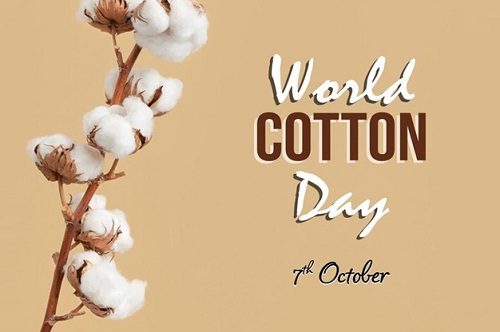 price set at the national level, assures farmers of regular income and future stability. Farmers also benefit from CmiA’s steady knowledge transfers and skill development program. This raises their productivity, improves income security and income levels.
A threat to profitability
Climate change proves a major challenge for Africa’s small farmers as it faces erratic monsoon. It leads to a decline in farm lands and encourages farmers to decrease biodiversity and increase pest infestations.
Their profitability also declines. Till date, AbTF has not been able to fully realize CmiA’s full potential in Zambia. However, the organization has been able to establish training mechanisms to reduce the harmful effects caused by the unfavorable external factors, thereby slowing further deterioration. Cotton made in Africa aims to improve the living conditions of farmers and strengthen their resilience to external factors through its training program Its trade partner Aid by Trade Foundation aims boost investments in climate-smart agricultural practices in order to secure finances for such forward-looking projects, says Tina Stridde, Managing Director.
Impact verification
CmiA’s study highlights the key insights of AbTF on ground situation. Conducted between October 2019 and June 2021 by Syspons, a well-regarded consulting company, the study verifies the effects of the CmiA’s training program on farmers’ living conditions. It presents two comprehensive case studies conducted in Zambia and Côte d’Ivoire. The case studies include household surveys of cotton farmers, focus-group discussions with village communities, and qualitative interviews with industry experts. They also analyze all relevant documents and data, including the cotton associations’ self-assessments and verification reports, previously conducted sample-based surveys, and a baseline study from 2010.
Founded by Dr Michael Otto in 2005, The Cotton made in Africa initiative was established as an internationally recognized standard for sustainably produced cotton from Africa by the Hamburg-based Aid by Trade Foundation (AbTF). The initiative connects African small-scale farmers with trading companies and fashion brands throughout the global textile value chain. It aims to help around one million cotton farmers and their families in Sub-Saharan Africa become self-reliant besides protecting the environment. The program includes training facilities for farmers and better working conditions, and facilities to educate their children. Female small-scale farmers are encouraged to pursue professional and social independence.
Levi Strauss & Co expects Q4 revenues to grow by 21%
Levi Strauss & Coexpects holiday-quarter net revenue growth of 21 per cent from a year earlier, while analysts were expecting growth of 22 per cent.
Levi also expects fourth-quarter earnings per share to be between 38 cents and 40 cents per share, compared with analysts average expectation of 40 cents per share.
Boosted by an uptick in demand for jeans from people refreshing their wardrobes as they returned to normal social life following easing pandemic restrictions, the company beat third-quarter revenue and profit estimates,
Net revenue for the company rose to $1.50 billion from $1.06 billion in the third quarter ended August 29. Analysts on average had expected $1.48 billion, according to IBES data from Refinitiv.
The company’s shares rose by 2 per cent in extended trading after its board approved a $200 million share repurchase plan. The company has a market capitalization of $49.49 billion, according to Refinitiv data.
Levi also benefited from a reopening of the economy in its European markets and investments in its direct-to-consumer business.
Analysts expect Levi to face less supply pressure than peers due to its minimal reliance on Vietnam, an apparel manufacturing hub that has seen several factories close due to COVID-19 outbreaks and lower usage of the congested West Coast port.
Government policies help boost Bangladesh’s textile export: BTMA
The supportive policies of the government have boosted investment in Bangladesh’s primary textile sector to $12 billion, says Mohammad Ali Khokon, President, Bangladesh Textile Mills Association (BTMA). He also noted the contribution of textile and clothing in total export revenue was 82 per cent.
In FY 2020-21, Bangladesh earned $38.35 billion in export revenues of which textile and clothing export was $31.45 billion, Khokon said while addressing a program arranged by Cotton Council International, US and Bangladesh Cotton Association (BCA) marking World Cotton Day 2021.
The sector is helping the country to retain foreign exchange and enriching the foreign reserve as well, he added.
Khokon said in fiscal year 2020-21, Bangladesh imported 8.2 million bales of cotton. He further said the cotton import from the US is expected to increase to 14% in the coming year. He also requested US Ambassador to Bangladesh Earl R Miller and Brazil Ambassador to Bangladesh Joao Tabajara de Oliveira Junior to press their governments to increase cotton export to Bangladesh.
Denim Premiere Vision’s next edition to be a hybrid show
After nearly two years of digital-only events, Denim Première Vision will hold its next edition as a hybrid trade show from October 13-14 at SuperstudioPiù in Milan and online.
A platform for players across the global denim supply chain to showcase their concepts for Spring/Summer 2023, the event will also be an opportunity for education. In-person trend presentations, workshops and press conferences will be complemented with “synergistic” virtual talks available to view from Oct. 11-15.
Exhibitors include weavers, fashion manufacturers, laundries, finishers, accessory makers and technology developers from Italy, France, Spain, Turkey, Japan, Morocco, Pakistan, Egypt and China, among others.
The Milan show is also chance for Denim Première Vision to return to its roots as a leading voice fashion and trend forecasting. In addition to trend seminars, physical events will include a presentation by PG Denim that will blend history, theater and denim. On the second day of the show, garment dyeing company TintesEgara will host a sustainable dye workshop in collaboration with anthropologist and artisan Emina Batik. The workshop will examine how to use old batik techniques to dye a fabric with natural and indigo dyes, using as little water and energy as possible.
Gokuldas Exports launches QIP to raise Rs 300 crore
Apparel maker and exporter Gokuldas Exports has launched a qualified institutional placement offering (QIP) to raise Rs 300 crore from institutional investors including Goldman Sachs, HSBC, Nippon and others. The company plans to use the funds for repayment or prepayment of all or a portion of its borrowings, financing working capital requirements, inorganic growth opportunities and for making strategic acquisitions, entering into a new business line, the company said in its offer document filed with stock exchanges.
Incorporated in 2004, Gokaldas Exports is one of the largest manufacturer and exporter of apparels in India with an annual turnover of $200 million.
SRTEPC applauds government for approving 7PM MITRA parks
Dhirubhai R Shah, Chairman, SRTEPC has applauded the government for approving to set up of the 7 PM MITRA parks. These parks will play will provide a ready-made international quality manufacturing platform in plug and play mode, he added. The government of India recently approved setting up of 7 PM Mega Integrated Textile Region and Apparel (MITRA) Parks across Indi.a First announced in the Union Budget for 2021-22, the proposal aims to realize the government’s vision to build an Aatmanirbhar Bharat and position India strongly on the Global textiles map. The integrated ecosystem will help in further growth of textile segment in the economy in general and the MMF textile sector in particular which is rare globally, added Shah.
The 7 PM MITRA parks will be setup at Greenfield Brownfield sites located in different states. Maximum Development Capital Support (DCS) of Rs 500 crore to all Greenfield PM MITRA and Rs 200 crore to Brownfield PM MITRA will be provided for development of common infrastructure and Rs 300 crore of Competitiveness Incentive Support (CIS) will also be provided to each PM MITRA park for early establishment of textiles manufacturing units in PM MITRA. State government support will include provision of 1,000 acre land for development of a world class industrial estate.
The parks will have facilities such as an incubation centre and plug & play facility, developed factory sites, roads, power, water and waste water system, common processing house & CETP and other related facilities. They will also have workers’ hostels and housing, logistics park, warehousing, medical, training and skill development facilities
According to Shah, the parks will boost production and export of international quality MMF textiles viz., manmade fibre, MMF yarns, MMF fabrics and MMF made-ups, and garments in India. This will also help India to increase market share in overseas markets and position India a one of the textile leaders.











