


FW
GST Council to correct inverted duty structure
At its Lucknow meeting on September 17, the GST Council announced its intentions to correct the inverted duty structure in the industry by levying 12 percent GST on all textile products except cotton.
As per a SRTEPC report, this will raise synthetic prices by nearly three times. The GST Council/ The new rates will be effective from January 1, 2022. Currently, man-made fibre-based textile value chain is witnessing 5-18 per cent GST rate at different levels. GST rate is 18 per cent on mono-ethylene glycol (MEG) and purified terephthalic acid (PTA), 12 per cent on polyester partially-oriented yarn (POY) and 5 per cent on grey fabric, finished fabric and garments.
This has led to a tax structure where the rate on inputs is higher than that on the outputs, leading to inverted duty structure. Experts have pointed out that correction of inverted duty will lead to seamless input tax credits, making the impact benign on the entire value chain. Biggest impact of the proposed change in tax structure would be on man-made fibrebased textile value chain, mainly developed in Surat and South Gujarat region, claimed Ashish Gujarati, President ,South Gujarat Chamber of Commerce & Industry (SGCCI).
Knitting Lab launches new range of knitted accessories and lifestyle products
A lab for creative, ecological, and design-driven textile and apparel solutions based in the Netherlands, Knitting Lab is introducing its own line of knitted accessories and lifestyle products.
The initial collection includes scarves, socks, and bucket hats with clever technical aspects. Knitwear Lab would ‘release new goods throughout the year’ rather than working with seasonal collections. The Lab is concerned with environmental and animal welfare. The design is manufactured using environmentally friendly methods: the majority of the designs are knitted in one piece, resulting in nearly minimal waste.
All woollen scarves sold by the lab are made from extra-fine merino wool from farms that do not engage in the inhumane practise of mulesing.
The labuseesBembergCupro for the scarves.This regenerating fibre was formed from cotton linter, which is a waste material manufactured during the manufacturing process of cotton.
The line is created, produced, and manufactured in the Netherlands by the Knitwear Lab team under the creative leadership of Cherish Brouwer and ThijsVerhaar.
IFC invests $22.7 million in Hamza Textiles
International Finance Corporation (IFC) has invested $22.7 million in Hamza Textiles (HTL), a dyeing and finishing company of Dulal Brothers (DBL) Group to improve global competitiveness of Bangladesh’s readymade garments (RMG) sector. The financing will help the firm build a new factory with advanced and resource-efficient technologies. The new factory will create more than 900 direct jobs.
The new investment includes financing from the International Development Association’s Private Sector Window (IDA-PSW), set up to catalyse investment in low-income and fragile countries.
The expanded operation is also expected to contribute $8 million to Bangladesh's economy directly and indirectly through local supply chains by 2028, $15 million in expected economic activities generated by the additional income of employees, and boost opportunities for micro, small, and medium enterprises along the supply chain.
IFC’s investment will help expand HTL’s finishing capacity by 80 tonne per day to reach a total capacity of 103 tonne per day at its new factory, which will also be a Leadership in Energy and Environmental Design (LEED)-certified green building.
Renewcell, Keilheim Textiles collaborate for development ofCirculose material
Renewcell and KelheimFibres have collaborated to add a crucial link for a circular economy for textiles in Europe. Both the companies have recently signed a letter of intent for the commercial development of Renewcell’s 100 per cent textile recycled material Circulose annually.
The collaboration paves the way toward a fully European closed loop in which textile waste is collected, recycled and regenerated into new Circulose fibers for people that want to reduce their fashion footprint significantly, said Craig Barker, CEO, KelheimFibres. Made of Renewcell’sCirculose and manufactured using environmentally sound processes at theKelheim plant, these recycled cellulose fibers are an answer to the fashion industries need for a more regional and reliable supply chain, he adds.
Shima Seiki to showcase flat knitting machine at 2021 International Trade Fair
Leading flat knitting solutions provider Shima Seiki will showcase its SVR123SP computerized flat knitting machine featuring a dedicated loop presser bed at the A+A 2021 International Trade Fair for Safety, Security and Health at Work in Düsseldorf, Germany to be held later this month, via its Italian subsidiary Shima Seiki Italia.
As per an Innovation in Textiles report, SVR123SP furthermore features i-Plating inverse-plating capability for increased patterning capability, including the production of jacquard-like patterns in light-weight plain jersey stitch. A variety of knit samples produced on SVR123SP will be presented at A+A featuring anti-bacterial, fire- proof and cut-resistant fabrics, including a lightweight cut-resistant apron as an alternative proposal to current heavy vinyl aprons used in the meat packing industry. Safety glove samples knitted on Shima Seiki’s glove knitting machine will also be presented.
Shima Seiki will also demonstrate the SDS-ONE APEX4 3D design system. The system’s capability for virtual sampling is especially effective in streamlining the production process. Its ultra-realistic simulation capability allows the use of virtual samples for evaluating design variations without producing actual samples for each variation.
Gucci’s Q3 sales miss analysts’ expectations
Third quarter sales of French luxury group Kering's star fashion brand Gucci missed analysts’ expectations as they grew by just 3.8 per cent owing the slowing of recovery pace, particularly in Asia.
As per a Reuters report, encouraged by pentup demand for high-end wares with the easing of lockdowns, sales of luxury groups have bounced back strongly.
Overall sales at Kering rose by 12.2 per cent on a comparable basis, marginally above the analyst consensus forecast for an 11 per cent increase. The group reported a strong growth in the United States and Western Europe. However, a resurgence of COVID-19 cases in late July and August weighed on the brand’s revenue in the key Asia-Pacific region, where its sales declined by 3 per cent.
Analysts had expected Gucci’s revenues to rise by 9 per cent in the three months to end-September after an 86 per cent surge in the previous quarter. By comparison, LVMH's fashion and leather goods division, home to Louis Vuitton and Dior, posted a 24 per cent increase in third-quarter sales.
Jean-Marc Duplaix, Chief Financial Officer, Kering, the group expected Gucci's growth to accelerate in the fourth quarter after its new Aria collection. The group aims to support the brand with investments in events, communication, stores and recruitment, efforts that would hit the brand's margin growth in the second half.
Shanghai Fashion Week organizes over 100 fashion shows
Held from October 08-16, Shanghai Fashion Week included over 100 shows on its official calendar, alongside a multitude of off-calendar and related events.
As per a Business of Fashion report, the show included several awards announcements, including the inaugural Hu Fashion Forward Prize, which saw Samuel Gui Yang win 500,000 yuan, or $77,600, as well as the fourth edition of the Shan Future Forum, a sustainable fashion event presented by fashion media veteran, ShawayYeh, and her YehYehYeh consultancy, this time around backed by Kering and OTB Group.
On October 11, the fashion week held the first ‘Her Power Fashion Dialogue’ at the Fosun Art Center that included a keynote speech from Xiao Xue, Former Editor-in-Chief, Elle China and Ambassador, Shanghai Fashion Week as well as round table discussions that included model, Liu Wen, tennis superstar, Li Na, and underwear upstart Neiwai’s founder, Liu Xiaolu.
The pandemic period has encouraged a number of Chinese-born designers to move home. This had led to an increased concentration of Chinese desingers at Shanghai Fashion Weeks in recent seasons. Some of the Chinese brands present in this edition of the event included Masha Ma Pronounce, Samuel Gui Yang and Louis Shengtao Chen.
Survey reveals a change in consumer attitudes towards luxury in key markets
A recent IFOP survey by French luxury goods trade association Comite Colbert reveals a change in consumer attitudes towards luxury purchases in key markets, especially in terms of second-hand goods.
As per a Women’s Wear Daily, the survey of 1,844 consumers included 60 percent Americans, 51 percent Chinese and 42 percent French consumers. It questioned luxury consumers, representing the top 20 percent of earners in the three countries, to see how their perceptions of luxury had changed since the pandemic.
Luxury as an investment emerged as a strong driver for 90 percent of Chinese consumers, 88 percent of Americans and 77 percent of French people.
Around 26 percent of consumers in the US said they often bought luxury goods second-hand; another 35 percent said they sometimes did, while 18 percent said they had not done so in the past, but planned to.
While the principal driver of second-hand purchases remained price, the need to be seen regularly with new products, galvanized by social media, was also a strong concern for consumers surveyed, especially among younger generations.
Regarding sustainability, 90 percent of Chinese consumers, 83 percent of Americans and 80 percent of the French said that luxury brands should set an example when it comes to environmental responsibility.
These findings echoed the concerns and actions of the Comité Colbert’s member companies. The body includes 90 French luxury houses and 17 cultural institutions.
EU’s new labeling scheme threatens to intensify greenwashing amongst brands
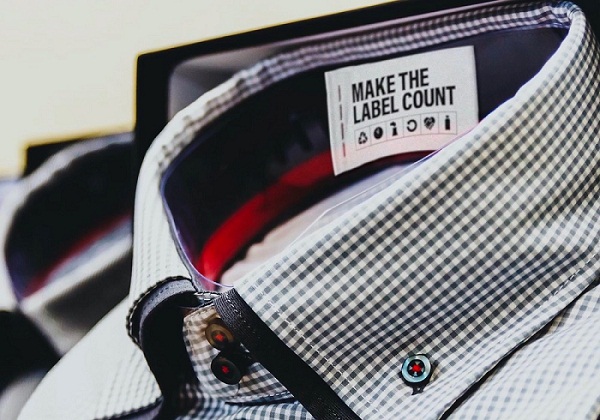
Industry leaders fear, European Commission’s new scheme to make every garment and shoe sustainable by 2023 may intensify the greenwashing trend amongst brands.
No listing of renewable fiber benefits
Titled as ‘Product Environmental Footprint’ (PEF), the scheme aims to encourage consumers to opt for eco-friendly products. However, the methodology to make this choice does not take into consideration environmental factors, says ‘Make the Label Count’, an initiative whose members include Australian Wool Innovation, the Campaign for Wool, Changing Markets Foundation, Cotton Australia, Fibershed, the International Sericultural Commission, the International Wool Textile Organisation and the Plastic Soup Foundation.
The framework of this scheme lists neither the benefits of renewable and biodegradable fibers nor the effects of microplastic pollution. Synthetics derived from fossil fuels are greener than their natural counterparts. This leads to not only misleading customers about the impacts of their products, but also eroding the system’s credibility and undermining the European Union’s overall sustainability goals, say campaigners group for the scheme.
The initiative can deliver great environmental outcomes if it amends the PEF methodology, the group adds in a report summing up concerns about the campaign.
The scheme was proposed by the European Commission in 2013 as a standard for measuring and validating environmental claims. It also aims to create a level playing field for products made by different member states. Using, life-cycle assessments, the PEF scheme has till date, identified 16 environmental categories in its methodology, including ozone depletion, human toxicity, land use and resource depletion. This has helped create a consumer-facing label that uses red, yellow and green “traffic lights” or an A to E grading scale to present an at-a-glance measure of a product’s environmental burden.
PEF mandates synthetic fibers analysis from their extraction at the wellhead. This magnifies the inequity between products made from natural and fossil fuel-based fibers, asserts Make the Label Count,
The final PEF framework is yet to be released by the European Commission. The commission has identified room for improvement along all the phases for the circular economy for design says Paola Migliorini. PEF also needs to introduce a EU strategy for sustainable textiles to enhance the scheme’s clarity.
A threat to earth’s existence
Usually, LCAs on textiles and clothing don’t include the use phase of the value chain, says Ingun Grimstad Klepp. The labeling system can be made functional by ensuring that it is known to everybody, secondly, it needs to trusted by consumers and lastly, it needs to use a fair methodology.
A label based on misinformation and twisted logic can unleash billions more items made of non-biodegradable petrochemical plastic polymers onto a patchy global waste system, says Livia Firth, Creative Director, Eco Age. It could affect ESG funds needed to tackle climate crisis besides sustaining more pollution.The company engaged in mislabeling loses the moral authority to combat other forms of greenwashing, adds Firth.
The industry is flooded with misleading claims on sustainability that threatens to damage the earth, adds Firth. Labeling a garment as sustainable is a serious issue that depends on the discipline and etiquettes needed to create a civilized planet.
Consumers shun fast fashion as eco-awareness rises
 Once a booming sector, the fast fashion industry is losing favor due to rising environmental consciousness amongst consumers and a growing preference for secondhand apparels. The industry is facing delivery delays due to the complex supply chains, adding to the woes of the retailers. British online retailer Asos reported a 12 percentage points decline in profit margins this year though revenues grew by 20 per cent. It expects higher freight costs and increased investment in customer experiences to lower annual profit by over 49 per cent.
Asos’ profits are also being impacted by doubling of transit times from Asia to the US, says Matt Friend, Chief Financial Officer. Besides, the company faces a deteriorating transit times in the European market. Other apparel brands in Vietnam are also facing factory closures, making it challenging for fast fashion retailers to sell out-of-season stock.
Secondhand apparel market to grow 11 times faster
Fast fashion also suffers from the growing number of environmentally-conscious consumers. A report by the National Retail Federation and IBM shows, almost 57 per cent of consumers plan to focus on the environmental impact of their shopping habits and change shopping habits accordingly. Around 77 per cent consumers urge brands to be sustainable and environmentally responsible.
Against this, fast fashion brands are often accused of overproduction and throwing used garments away. As per recent estimates, US dumps around 11 million tonnes of clothing every year.
This is encouraging more consumers to opt for secondhand apparels. A ThredUP report shows, the market for secondhand apparels is expected to grow 11 times faster than the broader retail clothing sector over the next five years and reach $77 billion by 2025. The resale market will be twice as big as fast fashion by 2030, says James Reinhart, CEO.
Ready to change
Best known for serving fast fashion across the world, Sweden-based H&M is bracing itself for the changing winds. Owner of around 70 per cent of secondhand shop Sellpy, the brand is also collaborating with Sellpy on a new warehouse in Poland, as well as distribution and quality control efforts for garments and handling orders.











