


FW
Fair price, value chain transparency to boost global organic cotton
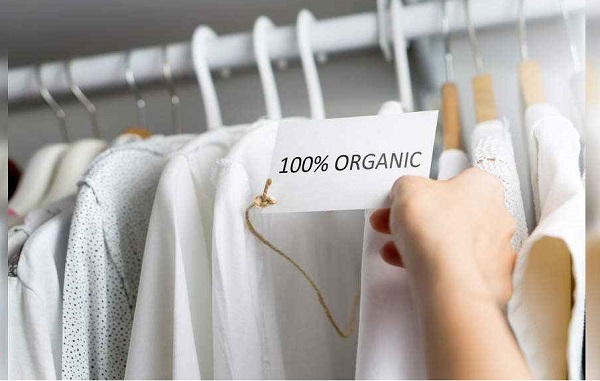
Free from harmful chemicals and pesticides, organic products can make a huge difference to human lives in the 21st century. Adoption of organic products in fashion chain can help save the planet from rising ecological pollution. Demand for organic cotton has been rising steadily over the years. As per a report by Textile Today, demand for organic cotton is expected to increase 84 per cent by 2030. Demand will mostly be spurred by increasing use of fiber in their product lines.
Safety factors enhance organic farming growth
One reason for rise in demand is the environmental safety ensured by organic farming. Organic farming is known to be a safe option as it does not harm animal habitats like traditional farming methods. Organic farming is also known to be sustainable, functional and durable. In 2019-20, a total of 249,153 tons of organic cotton was grown on 588,425 hectare of certified organic, as per Textile Exchange’s ‘2021 Organic Cotton Market Report’. This is expected to surge further 2020-21.
Rising demand for organic cotton is also boosting prices in the global market, encouraging producers to dedicate a larger share of their certified organic land to cotton against other crops. These producers are also being driven by the rising demand for organic cotton in global market.
As organic cotton requires little water and is free from pesticides and insecticides, production across the world is increasing. As per reports, India is the largest producer of organic cotton and supplies around 51 per cent of the global requirement. China with 19 per cent share stands second, Kyrgyzstan with 7 per cent, Turkey with 7 per cent and Tajikistan with 5 per cent of global supplies. The organic cotton industry has a great scope for development as it currently accounts for only 1.1 per cent of the total cotton production of the world. In 2019, number of facilities certified to leading voluntary organic textile standards increased substantially. Facilities certified to the Organic Content Standard (OCS) increased 48 percent during the year while those certified to the Global Organic Textile Standard (GOTS) surged 35 percent. Supply of organic cotton fibers increased 392 per cent to 25,394 metric tons during the 2004-05 crop years.
This encouraged Rui Fontoura, Fiber Strategist, Textile Exchange to urge all brands to plant more organic cotton fibers. However, this shift needs to be supported by the government by introducing new market-friendly policies and wider international trade pacts.
Brands face price and availability issues
According to the Demand Insights Report, brands face several challenges while sourcing organic cotton. They are unable to meet sourcing goals due to both price barriers and lack of in-conversion cotton. Organic Cotton Association (OCA) believes, without proactive steps being taken by retailers and brands, farmers will not be able to scale organic cotton which will further impact the environment.
The use of organic cotton is projected to grow 10 per cent every year till 2025, and by 15 per cent annually from 2025-2030. However, only 27 per cent companies have so far, incorporated in-conversion cotton into their sourcing strategies. They need to take action immediately and invest in cotton conversion programs.
As per the Demand Insights report, retailers and brands have often listed as pricing as one of the major obstacles in sourcing organic cotton. However, this can be dealt with by investing in new agricultural programs. Brands and retailers need to also focus on creating a fair and honest value chain. Many of these brands and retailers have already confirmed their long-term commitments to farmers by entering into new investment programs. This is encouraging new leaders to join this initiative.
Delivery delays threaten future growth of American bridal fashion

COVID-19 pandemic has changed the US wedding industry forever. With shopping, meetings and social events all moving online, global supply chain issues are escalating. This, in turn, is threatening to spoil the special day for many brides- to-be.
Manpower shortage increases delivery time, costs
As per a report by My Central Oregon.com, many couples in the US have had to reschedule their weddings due to delivery delays of gowns and dresses. Pennyslvannia-based upscale bridal shop L’Fay Bridal expects deliveries of wedding gowns to be delayed by atleast two months this year, says McKenzie Custin, Shop Manager. Would-be-brides may also have to pay additional fees for speedy delivery of gowns, adds Custin. They also need to reserve at least a month for alterations of gowns before confirming wedding dates, she adds further.
In 2022, the United States is estimated to hold the most number of weddings since 1984, as per the Wedding Report. However, delays in delivery of wedding dresses are unlikely to slowdown as designers continue to operate with reduced staff, says Custin. This may also increase the rush price and minimum turnaround time for customers.
Pandemic survivors
The disruptions in supply chain have affected arrivals of not just wedding gowns but also bridesmaid dresses. For instance, New York City-based pediatric nurse practitioner Allyson Tauber received her wedding dress rather quickly. However, she had to cancel her order as bridesmaids dresses were expected to be delayed.
Though supply chain issues have impacted many bridal suppliers in the US there are few who have been able to tide over the problem. For instance, New York-based Kleinfield Bridal did not face any issues. Similarly retailer, David’s Bridal has reported 45 per cent increase in store sales. The company stocks over 300,000 gowns in its stores in a variety of styles. These retailers are helping to uplift the bridal fashion industry in the country, opine experts.
VF Corp’s earnings dip due to Vans, supply chain issues
VF Corp’s earnings have fallen short of expectations. Revenue in the active segment, which includes the Vans footwear line, also fell short of estimates. Port congestion and the ongoing coronavirus outbreaks have constrained suppliers. VF is the latest apparel company to blame operational woes on a snarled global supply chain, with clogged ports and factory shutdowns in countries such as Vietnam.
A resurgence of Covid-19 lockdowns in key sourcing countries has resulted in additional manufacturing capacity constraints. The Vans brand also experienced lower-than-expected sales during the back-to-school season. Supply chain bottlenecks have affected the company’s ability to source and move products to the US. Virtually all of its brands are experiencing delays in shipping merchandise, while consumer demand remains high.
VF gets about 10 per cent of its products from factories in Vietnam. For its Supreme brand, the percentage rises to 25 per cent. VF Corp also owns brands such as the North Face and Timberland. Vietnam, which has become a hub for the global apparel industry, has struggled to contain the Covid-19 pandemic.
Rieter sees huge jump in orders
Characterized by rapid market recovery combined with a regional shift in demand, in Q3 Rieter has reported a 294 per cent year-on-year growth in order intake, over the same period of 2020.
A major reason for this regional shift in demand has been the growing costs in China. This is leading to increased investments outside the Chinese market. The orders came primarily from Turkey, Latin America, India, Pakistan and China.
Rieter is a Swiss supplier of systems for short-staple fiber spinning. Demand for new systems is expected to gradually return to normal in coming months. The machines and systems business achieved 447 per cent jump in order intake during the first nine months of 2021, attributed to the regional shift in demand. While the components business recorded a jump of 95 per cent after sales were up 123 per cent.
The realization of sales from order backlog continues to be associated with risks, in the light of bottlenecks in material deliveries and freight capacities as well as the ongoing pandemic in countries that are important for Rieter.
China’s garment industry profits rise
China's garment industry reported higher revenue and profit in the first eight months of 2021. From January to August, the combined operating revenue of 12,520 major garment companies was up 9.6 per cent year on year. Total profits of these companies rose 9.5 per cent from a year earlier while the combined output expanded 12.9 per cent year on year to 15.2 billion pieces.
The country's exports of garments and accessories increased 28.1 per cent year on year.
Brands lag in emission disclosure
Nearly 62 per cent of the 250 biggest brands publish their carbon footprint in their own facilities, says responsible fashion advocacy group Fashion Revolution. However, most carbon emissions occur at processing and raw material levels. Only 26 per cent of brands disclose emissions information at the processing and manufacturing level, and only 17 per cent do so at the raw material level. More than one third big brands have published their progress towards reducing the use of virgin plastics for packaging, but only 18 per cent did so for textiles deriving from virgin fossil fuels.
There has been slight progress with regard to supply-chain transparency. Almost 27 per cent major brands now disclose some of their processing facilities, compared to 24 per cent last year. Additionally, 11 per cent brands publish some of their raw material suppliers, up from seven per cent last year. According to the report, shoppers would like more transparency among fashion brands: They also believe ethical labor policies are important. Shoppers are interested in purchasing sustainable clothing but don’t know how or where to find sustainable clothes. More than a third say, if there were a store for sustainable clothes, they would do all their shopping there.
Fashion retail in crisis as costs and delivery issues continue to persist in 2021
 With profits hitting record-low levels in 2020, the fashion industry’s form was hit hard by the COVID-19 crisis in 2020. The pandemic continues to spell doom in 2021, with fashion retailers still experiencing delayed deliveries amid more online shopping. A recent report by equity analysts Michael Field and David Whiston studies the impact of these industry disruptions on fashion manufacturers and retailers across the world.
Published in the Morning Star, the reports cites China as being worst-hit by COVID-19 hit. China accounts for around 36.5 per cent of all fashion exports by a wide margin. The pandemic compelled manufacturers to shutdown factories and disrupting operations of retailer’s who relied on exports. The disruptions intensified as China reopened its economy around April 2020, when other countries announced fresh lockdowns. This destabilized China’s production and made its shipping schedules unreliable.
However, the disruption benefitted manufacturers located closer to home for companies like Inditex . The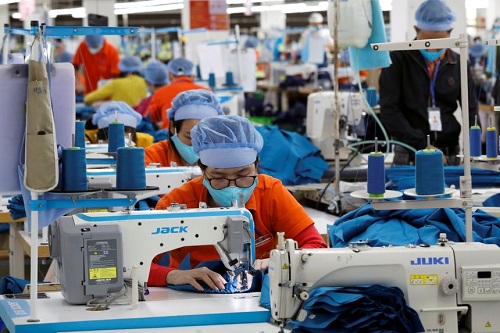 vulnerability of supply chains will compel retailers to diversify sourcing in future.
Demand collapse leads to 90% drop in sales
Demand for fashion collapsed in the initial months of 2020 as stores remained shut. This caused fashion sales to fall by almost 90 per cent in some regions. Many retailers had to cancel their orders, halting production of new clothes and accessories. This led to a rise in inventory levels for manufacturers who also had to pay for the costs of existing orders
As per a Centre for Global Workers Rights report, around 72 per cent retailers refused to pay for their raw material costs while 91 per cent didn’t pay for production costs.
Online retail surges as stores remained closed
Online shopping surged during the lockdown period. The percentage of online sales of UK clothing giant Next in its overall sales jumped from 45 per cent in 2019 to more than 70 per cent in 2020. However, the rate of returns for goods purchased online also increased to 35 per cent during the year, shows a survey from GXO.
A few players managed to beat this trend and grow their online sales significantly. These companies closed their brick-and-mortar stores and focused on the new cutting-edge e-commerce technology. An example is Nike, which closed a few of its stores in Vietnam to focus on online operations.
Few retailers beat forecasts
The pandemic has raised costs and other consumer related concerns for fashion retailers. However, a few retailers have been able to beat analysts’ forecasts. For instance, activewear and basic apparel wear company Hanesbrands 5.8 per cent sales growth to $1.79 billion in the third quarter (Q3) of FY21 ended on October 2, 2021, over the same period of previous fiscal. The company’s net income for the three-month period expanded to $151.7 million (Q3 FY20: $103.3 million). All this despite the lockdown and disruptions
Increase in Chinese dye prices affects Tirupur garment units
Garment makers in Tirupur are reeling under severe losses because of increase in the prices of dye and chemicals. Prices of dyes, chemicals and wetting agents used for coloring fabrics have increased over 30 per cent in the last few months.
Tirupur is the knitwear capital of India. Almost all dyes and chemicals are imported from China by traders based in Gujarat and Maharashtra and distributed throughout the country. However, due to extreme power shortage in China, chemical production has reduced by over 25 per cent. Besides, the economic crisis triggered by the Covid-19 induced lockdown and China's climate change policy disrupted the supply chain and has spiraled on importers from India.
Dyeing is an important process in the garment and textile manufacturing process. The cost of dyeing and other chemicals increased over the last five months leaving exporters’ resources stretched. Since the contract between garment units and exporters is pre -determined, exporters cannot revise the price when input cost increases. Whenever exporters send a quotation to the buyer or importer, they mention the current price and cost. It takes around two weeks for a deal to be finalized. If there is a rise in pricing in the meantime, they cannot renegotiate or bargain with the customers and must bear the loss. Small units are affected the most by the fluctuating prices.’’
Crocs Q3 revenue up 73 per cent
US-based footwear maker Crocs’ revenue for the third quarter rose 73 per cent compared to the same period in previous year. Crocs experienced strong revenue growth in all geographies during the quarter but saw particularly impressive progress in the Americas, where revenues were up 94.5 per cent on a constant currency basis year over year.
In Europe, the Middle East and Africa sales rose 43.8 per cent in constant currencies while in the Asia-Pacific region they increased 21.2 per cent. Direct-to-consumer sales at the company rose 60.4 per cent while wholesale revenues increased 88.2 per cent. Digital sales increased 68.9 per cent and represented 36.8 per cent of Crocs’ total revenues during the quarter, compared to 37.7 per cent in the third quarter of 2020 and 32.2 per cent in the third quarter of 2019.
For Crocs the third quarter was exceptional, underscored by an industry-leading operating margin of 32 per cent. Despite the temporary disruptions, it expects 2022 revenues to grow over 20 per cent from 2021 fueled by the strength of its brand and consumer demand globally. Crocs also increased its full-year financial outlook. It now expects to report revenue growth of between 62 per cent and 65 per cent in fiscal 2021.
Bangladesh RMG makers want cash incentives for imported raw materials
Garment makers in Bangladesh have demanded cash incentives for exporting garments made with imported yarn. At present, only garment exporters who purchase raw materials from local textile mills get incentives. They also want incentives to be calculated directly on export price, rationalization of depreciation or wastage rate of raw materials in garment manufacturing, and elimination of harassment in the process of paying VAT and customs duty. Calculating incentives directly on export prices is expected to reduce the chances of all irregularities committed by the exporters.
Garment manufacturers came up with these demands as discussions are going on to increase the price of yarn in local market in view of the increase in the price of cotton, raw material for yarn, in the international market. Garment manufacturers have also sought permission to import yarn through land ports outside Benapole as part of removing the existing barriers in importing yarn from the neighboring countries. They want capacity building at the land ports and proper facilities for testing the imported goods be ensured before allowing import of yarn through land ports outside Benapole. Besides, readymade garments makers have demanded that the government allow partial shipment of goods against a letter of credit.











