


FW
Bangladesh apparel exports to EU up 16 per cent
During July to October 2021 Bangladesh’s apparel exports to the European Union were up 16 per cent. Bangladesh’s apparel exports to Germany grew 13 per cent in this period, says BGMEA. Exports to the United Kingdom grew by 16 per cent while exports to Spain grew by 25 per cent. Apparel exports to France grew by eight per cent. Apart from these markets, Poland, the Netherlands, Italy, Belgium, Denmark and Sweden also remained positive in their imports from Bangladesh during July to October ’21. In fact Europe is Bangladesh’s main export market for readymade garments.
Year, 2021 was a comeback year for the readymade garment export industry of Bangladesh and the European market remains as one of the top export destinations of the country despite Covid being still a danger in EU countries. Europe has once again become the epicenter of the pandemic, with many European Union nations recording the highest Covid cases in recent days. Among Bangladesh’s exports to the EU, the top four export destinations, Germany, UK, Spain and France, account for 67 per cent of Bangladesh’s total readymade garment export value to the EU markets, while the rest is shared by the rest of 24 countries.
Lee Jeans to offer a line for children in EMEA market
Lee Jeans will introduce a children’s collection in the EMEA (Europe, the Middle East and Africa) market in July. The initial fall/winter 2022 collection, which will be produced under license by Brand Machine Group (BMG), will offer boys and girls up to 16 years the complete Lee look. The collection will include the heritage brand’s signature denim styles, tops and accessories. The aim is to introduce Lee to the next generation of brand enthusiasts. The line will go to Lee stockists and children’s wear specialist retailers. It will also be available at Lee-owned and Lee-operated stores. BMG will work across the EMEA region. The focused territories will be UK, Germany, Scandinavia, Benelux (Belgium, the Netherlands and Luxembourg) and the Middle East. BMG is a UK-based licensing specialist and will be sourcing sustainable materials for the children’s collection.
The collection is another example of Kontoor Brands’ expansion strategy. Kontoor is Lee’s parent company. Children’s styles were a part of Lee’s collaboration with H&M earlier this year. Made from post-consumer recycled cotton and organic cotton and featuring non-leather back patches made from cork and jacron paper, the denim collection demonstrated the brand’s increasing focus on responsible production. Garments were made with water-saving dyeing processes and low-impact, third party-verified washing methods.
Bangalore to host Apparel Sourcing Fair in March
Apparel Sourcing Fair will be held in Bangalore, March 4 to 6, 2022. It is expected to feature over 500 garment and fashion businesses. The trade show will link garment manufacturers with distributors, retailers, and wholesalers, among others. It will also be creating networking opportunities to enable businesses to expand their distribution networks and gain orders, the trade show will facilitate trend forecasting for the coming season and disseminate information on upcoming industry trends.
The trade show expects to draw industry crowd of over 50,000 visitors over the course of the three-days. The Fabrics and Accessories trade show will run alongside the Apparel Sourcing Fair at the same venue. The sister event will feature product categories including apparel fabrics, fabric trimmings, fabric embellishments, fabric services, men’s wear, women’s wear and children’s wear, embroidery threads, sequins and beads, tassels, and more. The trade shows will run with Covid preventive measures in place.
Bangalore Fashion Week was held on December 16 and 17, 2021. It focused on India’s crafts and craftspeople and featured artisan-designers. Short video app Chingari partnered with Bangalore Fashion Week to hold a contest to find models to walk the runway. Chingari invited its video creators to create their own videos on the app showcasing different outfits and their runway walk using music from the Chingari library.
London Textile Fair shifted from January to March 2022
London Textile Fair will be held March 22 to 23, 2022. The original dates for the event was January 11 and 12 but I now postponed as Covid cases continue to rise across the UK amid the spread of the Omicron variant. The situation in the UK is very uncertain due to the strong surge of the new Coronavirus variant. UK recently imposed new restrictions, which include the advice of working from home whenever possible. Further and more stringent restrictions are expected before the end of year.
London Textile Fair is the UK's premier platform for fashion fabrics, clothing accessories, print studios and vintage garments. It provides manufacturers and their agents with the opportunity to showcase their products to the most influential British buyers and designers. For the January 2019 show there were more than 500 exhibitors, up from 472 last season. Mostly from Europe the comprised textile manufacturers from Turkey, Italy, Portugal and the UK; buyers from several big-name brands and retailers attended, including River Island, Karen Millen, Oasis, Ted Baker, Jaeger, John Lewis, Boden, Mr Porter and Gieves & Hawkes. Demand for sustainable fabrics was one of the biggest trends at the show. Interest in sustainable alternatives was at an all-time high. There was a surge in interest for recycled fabrics and for BCI cotton.
JFW-JC and PTJ end on a successful note following all COVID-19 protocols
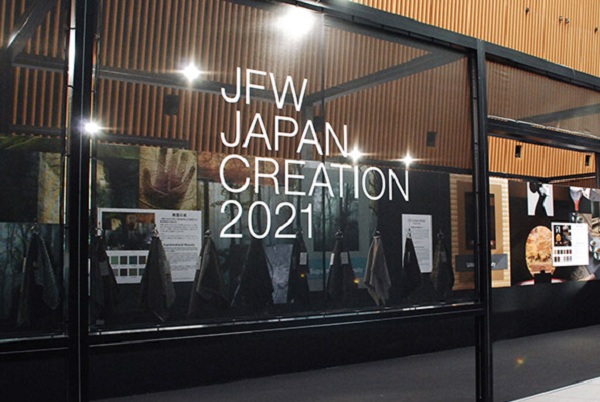 Held over two days at the Tokyo International Forum/Hall E, the two shows, JFW Japan Creation (JFW-JC) 2022 and Premium Textile Japan (PTJ) 2022 Autumn/Winter, ended successfully on December 8.
A slow start
This year’s event was attended by around 293 companies with 187.9 booths for JFW-JC2021; 242 companies in 168.9 booths for JFW-JC, and 66 companies in 98.5 booths for PTJ. The shows are a business platform for visitors to exchange views besides allowing them to touch the fabrics on site. The show had a slow start with few visitors attending compared to previous years. This was partly due to the pandemic related restrictions imposed by certain companies on buyer numbers to visit exhibitions.
Momentum with seminars and fashion shows
However, on Day 2, around 1,250 visitors attended the shows. The trend/index corner introduced newly launched JFW Textile Online Salon. Although the publication is currently designed to complement physical shows, the organizers have been striving to complete the English version by inserting videos to consolidate its content.
PTJ-related programs included two lectures. At ‘Textile Workshop - Let’s learn Japan fabrics’ on December,7, Shigeaki Uzui, from Meirin Seni Co rrepresenting Fukui Region discussed ‘Sustainability based on raw materials’. In the JFW Textile seminar held on December 7, Kikuko Hirasawa from Toyoshima & Co, spoke on ‘Let’s learn certification standards of sustainable fibers right from the start.’ The lecture aimed to enhance the dissemination of information.
Commemorating the exhibitors
On December 7, a ceremony to commemorate the 30th JFW Japan Creation and 21st Premium Textile Japan events was held. Some companies were honored with trophies. They included: JFW-JC exhibitors participating for nine consecutive times, PTJ exhibitors participating for 10 consecutive times and PTJ exhibitors participating for 21 consecutive participations.
On Day 2, the annual event: ‘Piggy’s Specials, a fashion show to display pigskin’ was held at the exclusive stage in lobby gallery. The show included a student section attended by around 12 fashion-related schools three designers: Tactor by Nayuko Yamamoto, Middla by Ohal Ando and Re:quaLby Tetsuya Doi presented their works in the professional section. The day ended with a lecture by Atsuo Yoshida from Yoshida Senko Co representing Wakayama Region on ‘Sustainability at raw materials: dyeing/finishing’.
China continues to dominate textile and apparel exports with better epidemic control
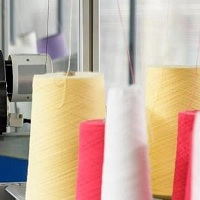 The outbreak of COVID-19 in Vietnam, Bangladesh, Cambodia and other Southeast Asian countries led to a sharp drop in apparel and textile exports from these countries. At the same time, the gradual subsiding of the pandemic in China and its stable and complete supply chain resulted in a few apparel and textile orders meant for these countries being diverted to China. China also witnessed a rebound in operating rate of domestic textile and apparel mills that led to a sharp surge exports.
Overseas demand fuels order growth in China
As per a CCF Group report, China’s textiles and apparels exports surged 7.7 per cent Y-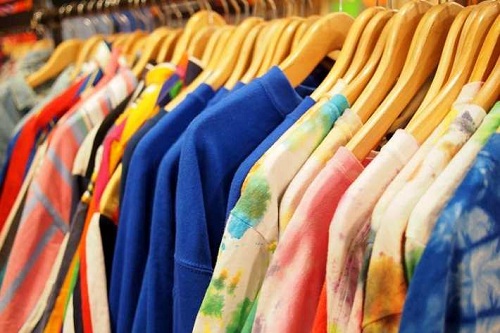 o-Y to $$285.29 billion during January-November 2021; a growth of 15.56 per cent from the 2019 levels and faster than expected for the second straight year. It was attributed to surging overseas consumer demand and returning production orders. The American Rescue Plan also helped stimulate demand in the US in March. Consumption of goods also surged leading to a strong demand in overseas markets. The outbreak in Southeast Asian countries also brought textile and apparel orders back to China.
However, with slowing down of the effect of the pandemic in Southeast Asia, governments in these countries relaxed pandemic-related restrictions and resumed production. This is leading to a return of orders back. As per data, textile and apparel exports of Pakistan, Bangladesh, India and Vietnam have returned to pre-COVID levels
Rising transport prices dampen Southeast Asian’s prospects
Exports of Southeast Asian countries rebounded quickly as these countries were in a lockdown for a long time. However, this also led to a sharp increase in their local transport prices. Transport prices in these countries have increased over $1000 to between $3000 and $4000 since November 9. Local freight rates have gone up 10 times from $300-400 before the outbreak.
Hence, though Southeast Asia mills have resumed production gradually, China still continues to hold advantages in epidemic control. This will not allow orders diverted to Southeast Asia to become mainstream.
Growing demand from domestic, foreign players boosts India’s textile machinery business
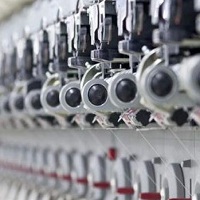 Heralding a textile revolution in India, the textile machinery industry is transforming from labor-intensive to a more modern and automated manufacturing industry. The sector managed to survive the COVID-19 pandemic and rise above expectations in August 2021. It is likely to get a further boost from rising demand in both domestic and foreign markets in coming years.
As per a Textile Value Chain report, the textile machinery industry imported fiber processing machines worth $203.02 million by the end of August 2021as against $78.65 million worth of machines imported in August 2020. Import of auxiliary machines and part textiles machines were worth $254.31 million by the end of August 2021, an increase of 89.75 per cent. Import of weaving machines increased 31.85 percent to $242.1 million by the end of August 2021. On the other hand, imports of machinery for knitting, lace, embroidery, tufting, etc, grew to $04.25 million. The country imported machinery for making belt, nonwovens and hats worth 56.31 million dollars by August 2021-end.
Japan emerges top importer of fiber processing machinery
Japan emerged the leading import destination for India for import of machinery for processing fiber in 2021 with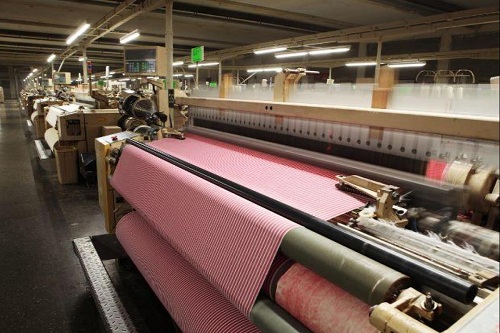 imports worth $76.81 million by August 2021-end. India’s imports of commodities from China increased to $32.78 million while from Germany it was $19.54 million at the end of August 2021. India bought machineries worth $16,64 million from Netherlands while imports from Italy and Switzerland totaled $15.91 and $11.24 million respectively. Malaysia exported machineries worth $7.49 million by the end of August 2021.
Germany top imports of auxiliary and parts textile machinery
China exported auxiliary and textile machinery worth $42.04 million to India by the end August 2021. India’s import of machinery from Germany was worth $71.57 million while from Japan it was $19.36 million. Between January to August 2021, Netherland’s exports to India rose to $7.56 million; Korea and France exported auxiliary machinery and textile machinery parts worth $4.97 and $4.34 million to India.
China dominates weaving machines imports
China emerged the top exporter of weaving machines (looms) with exports worth $138.7 million. However, Japan’s exports to India dropped 25.88 per cent to $33.59 million. Exports by the US and Hong Kong, increased to $5.92 and $4.12 million and UAE’s exports declined 20.32 per cent to $3.34 million.
Knitting, lace, embroidery, tufting machines exports rise
At the end of August 2021, India’s overall exports of machines for knitting, lace, embroidery, tufting, and other crafts climbed by 99.30 per cent. It imported machinery worth $16.05 from Germany while Taiwan exported machinery worth $10.97 million s. Turkey exported machines worth $5.14 million during the year while imports from Singapore and United States were totaled $2.22 and $2.12 million.
New materials, conscious production will reduce impact on biodiversity: McKinsey Study

The impact of apparel industry on biodiversity is often overlooked, as a new McKinsey study reveals. The study defines biodiversity as the variety of life on Earth at all levels. Though a distinct issue, the term is related to Climate Change. The study blames three main stages in the apparel value chain for the industry’s negative impact on biodiversity. These are: production of raw materials; preparation and processing of materials; end of life. The McKinsey study also identifies five reasons for biodiversity loss related to apparel value chain:
Cotton farming
One of the most used non-synthetic fiber in the world cotton farming involves heavy use of insecticides and pesticides. As a Textile Today report shows, though cotton farming involves only 2.4 per cent of global cropland, it accounts for 22.5 percent of the world’s insecticide use and 10 percent of all pesticide use. Also, cotton is a water-intensive crop. It requires around t 713 gallons (2,700 liters) of water to produce one T-shirt.
Increasing use of man-made cellulose fibers (MMCFs)
Created from cellulose, a wood-derived material, MMCFs acquired from certified and sustainable tree plantations. According to estimations, more than 150 million trees are cut annually to make MMCFs. However, around 30 per cent MMCFs are also obtained from endangered and primary forests. The water and soil pollution in these plantation forests often leads to loss of habitat and endangered species.
Water pollution from textile dyeing and treatment
Textile dyeing leads to approximately 25 per cent industrial water pollution. The process contaminates freshwater resources with chemicals and other non-biodegradable liquid waste. Around 165 of the 1,900 chemicals used in clothing production have been classified as hazardous to health by the European Union,
Release of microplastics in oceans
Apparel production also leads to a release of around half a million tons of microplastics in oceans every year. Around 35 per cent of primary microplastics in the world’s oceans are released from the washing of synthetic textiles.
Rising textile waste
Nearly 73 per cent of textile waste ends up in landfills every year. This releases pollutants in the surroundings and leads to loss of habitat. Around 30 to 300 species per hectare are lost during the development of just one landfill site.
Measures to slow down impact on biodiversity
The study recommends certain measures to slowdown the apparel sector’s impact on biodiversity loss. These include:
Introduce new materials, processes
The study recommends making the most commonly used materials in the apparel industry such as cotton, MMCFs, and synthetics more sustainable. It also recommends stepping up investments in introducing new and innovative materials.
Tougher stance against waterway pollution
The study urges apparel brands to take tougher stance against waterway pollution from textile dyeing and processing. It urges brands to engage with suppliers to establish zero certification standards through education, targeted investment, and stricter accountability. Suppliers should also comply with Zero Discharge of Hazardous Chemicals, Manufacturing Restricted Substances List (ZDHC MRSL), and Wastewater Guidelines, it adds
Educate consumers
The study also urges brands to educate consumers to minimize their actions on biodiversity loss. It recommends simple behavioral adjustments and consumption choices like washing clothes in cold water, filtering microfibers during washing and using water-efficient or waterless washing machines for substantive results. Another way consumers can curb biodiversity loss is by garment repair, recycling, and resale.
Stop overproduction
Curbing overproduction of clothes is one of the best ways for apparel brands to stop biodiversity loss. Though manufacturers are known to recycle roughly 75 per cent of pre-consumer textile waste the remaining 25 per cent primarily ends up in landfills. This can be stopped by producing lesser clothes.
GST hike on textiles evokes a strong response from the industry
 There is strong opposition in Indian garment industry against the government's move to increase goods and service tax (GST) on textiles as the costs of raw materials are already rising. The Confederation of All India Traders believes, status quo on GST rates on finished goods be maintained and changes should be made only after a consultation with the textile ministry and industry stakeholders In fact, Praveen Khandelwal, Secretary General also plans to approach Finance Minister Nirmala Sitharaman and state finance ministers requesting them to reverse the proposed hike.
Contrasting views from the industry
Though the proposed hike is being opposed by many industry associations, a few consider it beneficial for the industry. A Sakthivel, Chairman, AEPC opines, the GST hike rates will lessen the burden of tax compliance and help in releasing input tax credit residues accumulated on account of the inverted tax structure, saving crucial working capital for small businesses. Dealers in finished goods, however, disagree with him. Kumar Rajagopalan, CEO, Retailers Association of India, opines, such a steep hike will impact the remaining 85 per cent of the industry while benefitting only 15 per cent. It may also lead to a rise in garment prices.
BC Bhartia, National President, CAIT, believes the tax may block the capital of small traders and may prove to be a regressive step for the industry. The Retailers Association of India recommends a flat 5 per cent GST on the entire textile value as a solution to this problem. The will not only resolve the issue of inverted tax structure but also boost sector’s growth.
Clothing Manufacturer’s Association of India also calls the hike unjustifiable. The market may see a 15-20 per cent price increase in apparel costs in coming season even without the revised GST rate as prices of raw materials, especially yarn, packing material, raw cotton and freight are already rising.
The prices of raw cotton have increased by Rs 130 per kg so far this year compared to the preceding year, informs MP Muthurathinam, President, Tiruppur Exporters and Manufacturers Association. Further hike could force many units to shut down.
Mixed response from manufacturers
Tax experts say, the 7 per cent hike is substantial and would have a mixed effect on textile manufacturers depending on their business model. If they absorb the hike, it will erode their profit margins. On the other hand, if they pass it on to consumers, it will further strain their monthly budgets, adds Bipin Sapra, Indirect Tax Partner, EY India.
Zara opts for a series of collaborations
In 2020, fast fashion retailer Zara released a pair of sneakers with Playstation. In 2021, Zara partnered with Everlast in January, Kassl Additions in September and Charlotte Gainsburg in October. And in the last three weeks, it’s rolled out collaborations with Korean streetwear label Ader Error, biotech company LanzaTech and TRX, a company that makes at-home fitness equipment and publishes digital workout videos.
Each of these collaborations connects Zara with a buzzy area of fashion. The Ader Error collaboration encompasses physical and digital outfits. The LanzaTech collab focuses on sustainability by making clothes from captured carbon emissions, and the TRX partnership links Zara to on-the-rise at-home fitness.
Zara’s strategy is to tap partners that specialize in emerging spaces and gain a foothold in those categories. While collaborations are often planned months in advance, Zara’s change in strategy around collabs comes just as parent company Inditex is going through a leadership transition. Longtime CEO Pablo Isla stepped down in November and will be replaced by Oscar Garcia Maceiras, and Marta Ortega has been promoted to chair of the company. Between November 1, 2021 and December 10, 2021 Inditex’s sales increased ten per cent over 2019 and 33 per cent over 2020.











