


FW
Activewear, one of the hottest selling categories for DTC brands in 2021
 The DTC activewear market remained one of the busiest in 2021 with a large number of acquisitions and IPOs being launched. Some of the most prolific deals in during the year included the acquisition of Sweaty Betty by Wolverine World Wide, the purchase of Beyond Yoga by Levi’s and the snapping up of Osprey by Helen of Troy, the owner of Hydro Flask.
In terms of monthly website visits Arc’teryx and Tracksmith remained the fastest growing DTC athletics brands. The monthly visits of Arc'teryx in the US spiked 264 per cent over that period while that of Alo Yoga increased 124 per cent and Tracksmith saw 75 per cent hike. The data was tracked by SimilarWeb, which also highlighted growth at equipment makers like Hydrow, Tonal and Mirror.
Investors cash in on rising popularity
In recent years, Outdoor Voices has emerged one of the most significant DTC brands in activewear market. The market is also attracting brands from other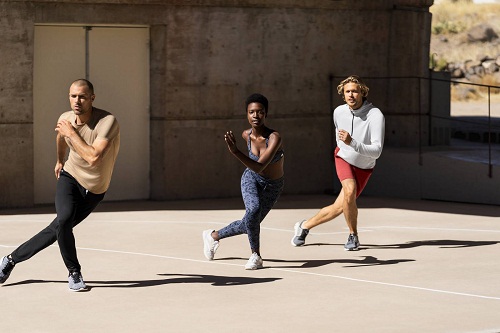 categories like intimate brand ThirdLove, which forayed into activewear in September 2021. It was preceded by Thinx bu a few months ago.
California-based brand Vuori recently announced a $400 million expansion that includes building 100 stores in the US and entering international markets. It brand has been one of the most profitable activewear brands since 2017 and aims to repay shareholders, says Joe Kudla, Founder and CEO.
Expansion plans of activewear brands are also being fuelled by rising interest of investors in the category. In recent times, many investors including Norwest GV and Forerunner Ventures have shown an interest in this category. Athleisure or active wear is currently one of the brightest spots in an otherwise challenged apparel sector. DTC brands can capitalize on growing popularity of activewear by selling through not just on their own DTC channels but also through wholesale.
Soaring popularity across categories
Athleisure has been one of the most significant segments in the apparel market. Over the last few years, the segment has attracted many streetwear, lifestyle and women’s wear brands. For example, On is creating many activewear and athleisure products.
The sector is attracting brands beyond DTC as well. In January 2020, Target launched its own private activewear label followed by Kohl’s. JC Penney revamped activewear range in January last year in order to strengthen its order book. Matt Powell, Senior Industry Advisor for Sports, NPD Group point out, activewear remains a hot category for fashion brands. The launch of stretch denim, stretch dress shirts, stretch suits is a testimony to this. The category is also popular in footwear with sports shoes now more popular than fashion footwear. In apparel, the trend is growing steadily with many brands launching activewear collections to cash in on their popularity.
Bangladesh RMG footprint spreads globally with promising export growth
Bangladesh’s exports to traditional markets including the US and the EU grew in 2021. Exports to its single largest market, the US surged from 17.5 per cent in 2018 to 20.30 per cent in 2021, says Faruque Hassan, President, BGMEA. It totaled $7.28 billion in 2021. The share of woven garment exports was worth $4.65 billion while knitwear exports totaled $ 2.62 billion. For the first time, Bangladesh’s RMG export to the US exceeded $7 billion in a year, a growth of 43.62 per cent compared to 2020, says Hassan.
Bangladesh’s exports to its second largest export destination, the EU accounted for 50.07 per cent of its total exports. In the last five years, Bangladesh’s exports to the EU grew from $18.69 billion in 2017 to $ 21.74 billion, a 27.74 per cent year on year growth
Exports to Germany crosses new milestone
Among the EU member states, exports to Germany, France, Italy, Denmark, Belgium, Portugal and Poland grew in 2021. For the first time exports to Germany crossed $6 billion registering a growth of 26.64 per cent. In the same year, exports to UK reached $3.81 billion; Canada saw an increase of 28.46 per cent from $865.17 million in 2020 to $1.12 billion in 2021.
Promising growth to non-traditional markets
Exports to non-traditional markets also showed promising growth during the year. It grew 25.75 per cent to reach $5.7 billion in 2021. Exports of woven garments amounted to $2.54 billion while knitwear garments was worth $3.14 billion. Exports to Japan recorded highest growth of 17.22 per cent to reach $1.03 billion.
Tapping the EAEU market
Exports to other non-traditional markets such as Australia, South Korea, Russia, India, and Mexico also increased remarkably while those to Brazil, China and Turkey declined, as recovery from the pandemic faltered. Exports from Asia showed promising growth as seen by the rising exports from emerging markets like Japan, China, India, South Korea. The Bangladesh government has sent an official proposal to the Eurasian Economic Union (EAEU) comprising of Russia, Belarus, Kazakhstan, Armenia and Kyrgyzstan.
Apparel diplomacy in non-traditional markets
In the last few years, Bangladesh has made tremendous progress in growing its market base. However, the country suffers from low diversification in export items and destination. Hence, BGMEA has launched an initiative to explore non-traditional markets under the apparel diplomacy campaign. The plan is to organize ‘Made in Bangladesh’ road-shows to regions like Middle East, Asia which includes Japan, Korea, China and India, Iraq, Russia and a follow-up visit to Latin American countries. The initiative is aimed at highlighting the industry’s growth, establish contacts and networks, engage with similar organizations to promote trade, identify problems and advance discussions on market access.
Looking to tap high-value market
BGMEA is also planning to tap the untapped potential in existing markets. One of the plan is to enter the high value-added market segment for which it plans to produce more high-end products. The association also aims to invest in new technologies and focus on backward and forward linkage industries. Going digital is also one of Bangladesh’s aim in the next few years, Hassan concludes.
HeiQ launches new textile cooling technology
HeiQ has launched HeiQ Cool, a new dual action textile cooling technology that offers both instant contact cooling and continuous evaporative cooling.
Fabrics powered byHeiQ Cool constantly regulate the skin temperature with a dual cooling capability. In a first step, melting energy absorption delivers instant contact cooling before the first sign of sweat and delays the build-up of heat, followed by a vaporizing energy action that mimics the skin's thermal regulating system by providing continuous evaporative cooling as long as the body is hot and sweaty. Suitable for all fabrics, the initial launch focuses on home textiles, especially sleeping products such as mattress ticking, pillows and bed linen because of its clear benefit to help users get a good night's sleep. It cools before the first sign of sweat, delays the build-up of heat and continuously regulates the temperature. Instantly cool to the touch, the components synergistically recharge the surface layer ensuring a consistently cool, dry and comfortable body climate.
The biobased vegetable oil-derived thermo-functional polymer absorbs heat energy, giving an instant cooling sensation. If the body continues to heat up, perspiration is generated and the patented hydro-functional polymer transports moisture away together with the heat, creating a continuous cooling effect that stops once cooling is complete. The combination of a hydro-functional polymer with biobased vegetable oil-derived thermo-functional polymer formulation of HeiQ Cool contains more than 50% USDA® certified biobased content. It is also OEKO-TEX class 1 suited and meets most brand RSL (restricted substances list) requirements.
Colombiatex de lasAméricas planned from January 25-27, 2022
Columbia’s main textile event, Colombiatex de lasAméricas will take place in Medellin from January 25 to 27. As per a Textile World report, the event will be attended by 19 Italian textile machinery manufacturers. It will be organized by Italian Trade Agency and ACIMIT, the Association of Italian Manufacturers of Textile Machinery.
The following ACIMIT member companies will participate in the event. Bonino, Btsr, Color Service, Crosta, Fadis, Flainox, Kairos, Mactec, Mcs, Nexia, Ratti, Reggiani, Santoni, Savio, Smit, SperottoRimar and Tonello.
Italian exports to the important South American market in the first nine months of 2021 reached a value of 9.3 million euros, in strong growth (over +130%), not only compared to the value recorded last year, but also to that of 2019. More than half of the demand for Italian machinery in Colombia refers to finishing machines.
The presence of Italian Companies at Colombiatex is a further sign of confidence for the beginning of 2022. Compared to previous editions of the event, there are more number of Italian exhibitors at the event, the health emergency is far from over and there is great uncertainty characterizing the world economic scenario. The Italian companies exhibiting in Medellin testify to the optimism with which the entire Italian textile machinery industry is looking towards this 2022 year.
Fast Retailing keeps yearly forecast unchanged
Uniqlo operator Fast Retailing has kept its yearly forecast unchanged, even as business in the key market of mainland China was hit by virus restrictions.
The Japanese casualwear behemoth posted better-than-expected sales and profit in the three months to December, thanks to the growing diversification of its business.
The company does not expect the spread of the highly contagious Omicron coronavirus variant to dent overall performance in 2021-22. However, it sounded a note of caution over the unpredictable impact of the pandemic.
Net profit for the first quarter jumped 33 percent on-year to 93.6 billion yen ($817 million) marking its best ever first quarter, Fast Retailing said, as business in many parts of the world rebounded from virus lockdowns.
However, revenue and profit declines were seen in mainland China, which is pursuing a strict zero-COVID strategy and has imposed tough localised restrictions in recent months.
Sales dropped in Japan, too, following strong performance the previous year and as warm autumn weather hit demand for winter outfits.
The company, one of the world's top aooarel retailers, kept its net profit forecast for the year to August 2022 unchanged at 175 billion yen -- a three-percent increase from the previous year's record figure.
Its results have also been boosted by the depreciation of the yen, which recently hit a five-year low against the dollar.
Arvato Supply Chain Solutions to handle Guess’ online business
Arvato Supply Chain Solutions has collaborated with the fashion and lifestyle brand Guess for handling the brand’s online business.
Arvato Supply Chain Solutions performs B2C channel services for Guess from a warehouse spanning 20,000 sq m. The range of services includes shipping individual clients’ orders to dozens of countries, both in Europe and beyond. Additionally, the company also ships business-to-business (B2B) shipments. In the first year of collaboration, Arvato Supply Chain Solutions will employ around 100 people, and during peak seasons this number may even double.
The new distribution center in Poland will play a crucial role in reaching these targets. The opening of the fully dedicated e-commerce processing center is the result of a great example of cooperation and teamwork between Arvato Supply Chain Solutions and GUESS, achieved despite the unpredictable pandemic scenario.
In the logistics center, the following services will be provided: inbound, warehousing, picking and packing, returns management, as well as value added services (VAS) for a range of products including clothing, handbags, footwear and accessories. All operations are based on the WMS SAP Arvato IT system, customized for the client’s needs, on the warehouse infrastructure designed, purchased and installed by Arvato Supply Chain Solutions.
Alvanon launches Fit Studio in Milan
The world’s foremost leader for size standards for the fashion industryAlvanon has launched its latest Fit Studio in Milan in partnership with IstitutoSecoli, the first Italian fashion school recognized worldwide for its patternmaking.
The Fit Studio at IstitutoSecoli will enable designers, fashion brands and retailers to try their garments on full form physical mannequins in a safe and private space, ensuring their collections achieve the best possible fit for their target demographic.
Featuring a full line-up of the Alvanon standard series, the European Standard fit forms available in men’s and women’s, the studio can either be rented out by brands who are looking to test out their fit standards or used by designers practicing their skills on a form that represents realistic body shapes.
Alvanon has previously launched Fit Studios in Amsterdam, Hong Kong, London, New York and Shanghai. In an effort to help foster young talent, Alvanon and IstitutoSecoli agreed to use 100 per cent of the money earned from the Fit Studio for scholarships.
As Brexit impacts margins, British brands eye Germany for expansion
Germany is one of the most lucrative markets for British brands looking to expand operations internationally. As per a Drapers Online report, Germany’s large network of independent retailers and opportunities offered by marketplaces such as Zalando are attracting many international fashion brands despite Omicron hitting the industry hard.
German clothing market to grow
Figures released by research firm GlobalData in early December indicate, the German clothing market will grow 9.6 per cent year-on-year to € 74.2 billion (£62.7 billion) in 2022. The re-election of Social Democrat Olaf Scholz as the new German Chancellor is also likely to boost growth.
Diversification, key to reduce market impact
Emily Salter, Senior Analyst, GlobalData believes it is important for brands to diversify away from a single key market to reduce the impact of store closures, Brexit and weak consumer confidence. Owner of re-usable nappy brand TotBots and re-usable period product company Bloom & Nora, Frugi plans to increase sales share from 14 per cent to 25 per cent. In 2021, the company appointed a new European sales team for the German market with plans to expand German operations by partnering Zalando and independent retailers. It also plans to launch a new German-language website for 2022, and potentially owned stores in the future.
Other UK brands like Boardies are foraying into Germany through distribution partnerships. These partnerships will help the company manage logistics, says Nick Crook, Founder. They will also provide an opportunity to increase brand awareness through online platforms, such as Zalando. The ecommerce market in Germany also boomed during the pandemic. As Salter reveals, online penetration in Germany is expected to increase from 25.9 per cent in 2019 to 33.6 per cent in 2022. Zalando expects its gross merchandise value to exceed €14billion (£11.91billion) in 2021.
Targeting both online and offline expansion
A few brands are also betting on own stores and websites to foray into the German market. Swedish premium footwear and lifestyle brand Axel Arigato, opened its first company-operated store in Munich, Germany in November 2021. The brand aims to expand in Germany through more collaborations, marketing and events, says Albin Johansson, Co-Founder and CEO.
Other brands like Frugi, are setting up German websites. Localized website of British lingerie and loungewear etailer Lounge Underwear has enjoyed a huge success in Germany since its launch in 2020. The website aims to provide seamless customer experience to German shoppers, says Dan Marsden, CEO. Localized website helped the company build a direct relationship with the customer, he adds.
Brexit impact on German foray
Brexit has also impacted the foray of British brands into Germany. It has changed brands’ relationships with the UK as they will no longer incur tariffs associated with trading in the country, adds Salter. Brexit also presented a conundrum for Frugi as it sought to expand internationally, says Clark. The brand opened a third-party distribution centre in the Netherlands in February 2020 to counter this red tapism. Brands Asos and JD Sports Fashion have also opened distribution centers or warehouses in Germany to reduce Brexit-related tariffs. Despite these challenges, Germany remains one of the most favored destinations for international expansion for British brands.
RCEP to help attract more investments in apparels and textiles
With the world’s largest free trade agreement, the Regional Comprehensive Economic Partnership (RCEP) coming into effect on first day of 2022, there is a great deal of apprehension over the changes it will bring. Including the 10 ASEAN members, China, Japan, the Republic of Korea, Australia and New Zealand, the RCEP agreement was passed at the 21st ASEAN summit in 2012, says a CCF Group report. The agreement aimed to establish a free trade agreement with unified market by reducing tariffs and non-tariff barriers. The agreement encompasses the members’ trade in goods, services, investments and rules
Around 27.4 per cent of global trade value
Accounting for 30.9 per cent of the world’s population, RCEP member countries have a population of 2.37 billion. Their GDP accounts for 29.9 per cent of the world's GDP, exports account for 39.7 per cent of the world's exports and imports account for 25.6 per cent. The overall trade value of the RCEP member countries accounts for 27.4 per cent of the global. These countries are mainly exporters with imports forming a miniscule proportion of their imports.
Among the 15 RCEP countries, China accounted for 10.7 per cent imports and 24 per cent exports in the world, in 2019. It was followed by Japan with 3.7 per cent of imports and 2.6 per cent of exports. The third largest trading country was South Korea with 2.6 per cent of imports and 2.8 per cent of exports.
Textile and apparel exports account for 46.9 per cent
Of the total trade from RCEP countries, textile and apparel exports totaled $374.6 billion accounting for 46.9 per cent of the world, while imports totaled $138.5 billion, accounting for 15.9 per cent of the world. Vietnam, Cambodia, Myanmar, Indonesia and other ASEAN regions were the major exporters while China. Singapore, Brunei, the Philippines, Japan, South Korea, Australia and New Zealand were net importers.
RCEP to spike competition for local enterprises
The introduction of RCEP is likely to reduce tariffs among member countries and drop trade costs. This will lead to increased competition for local enterprises not only from domestic but also foreign brands, especially Chinese ones. Except New Zealand, South Korea and Japan, other member countries mainly export clothing, supplemented by textiles, while Myanmar, Cambodia, Laos, Indonesia, Philippines, Thailand are largely importers. The upstream and midstream end apparel users were highly dependent on imports, while developed regions such as Japan and South Korea mainly imported textiles and apparel, which were the main places of consumption.
Rise in overseas investments
The RCEP agreement can help significantly lower tariffs and fulfill the commitment to open investment in services. Reduction in tariffs will significantly improve the competitiveness of RCEP member countries. Meanwhile the competitiveness of textiles and apparel from major production bases such as India, Bangladesh, Turkey and other major production bases has declined in RCEP. Investment barriers among RCEP member countries have also leading to a rise in overseas investment in the region.
University of Georgia introduces new toxic denim dyeing solution
A research team at the University of Georgia has introduced a new solution to toxic denim dyeing that eliminates noxious chemicals from the denim dyeing process while using a fraction of the water.
As per reports, the new denim dyeing method mixes cellulose nanoparticles made from wood pulp — a sugar called chitosan — with natural indigo dye to create a gel that can be applied to the fabric a single time to yield an intense indigo color.
The chitosan essentially glues the pigment in place after the fabric dries, creating a sort of matrix of dye that coats the fibers of the denim. The process does not require reducing agents as it doesn't involve dissolving the indigo dy. It reduces the amount of water used in conventional dyeing methods by about 96 percent.
The process is also non-toxicas the drying time for the chitosan dye is shorter and the new technique yields fabric of the same weight, thickness and overall feel as traditionally dyed denim.











