


FW
Bangladesh: Follow global currency trends BGMEA advises regulatory authorities
Though the current depreciation of the Bangladeshi Taka against the American dollar proves to be a boon for garment exporters, in the long run, it threatens the competitiveness of Bangladeshi apparels in world market, points out Faruque Hassan, President, Bangladesh Garment Manufacturers and Exporters Association (BGMEA).
Taka depreciates 8.13 per cent in last decade
In the last five years, Bangladesh Taka (BDT) has depreciated by 3.84 per cent. Its exchange rate per dollar has increased from 82.82 Taka to 86 Taka as per Bangladesh Bank. Data from Oanda.com also shows, Turkish Lira witnessed the highest depreciation of 265.74 per cent during this period; followed by the Pakistani Rupee which depreciated 59.60 per cent; Sri Lankan Rupee, Indian Rupee and Vietnamese Dong depreciated 31.24 per cent, 16.18 per cent and 0.28 per cent respectively. On the other hand, Chinese Yuan remained stable with 0.98 per cent appreciation against the dollar cumulatively.
In the 10-year period spanning January 2013 to January 2022, the Bangladeshi Taka depreciated 8.13 per cent while the Turkish Lira witnessed 673.80 per cent and Pakistani Rupee 81.24 per cent depreciation respectively. Currencies of other competing countries including Sri Lanka, India and Vietnam depreciated by 58.02 per cent, 34.05 per cent and 8.88 per cent respectively. Chinese Yuan also depreciated during this period by an aggregate 1.26 per cent.
Wider implications on the economy
The depreciation of Bangladeshi Taka had stabilized over the last few years and the currency was again becoming stable. However, the outbreak of COVID-19 last year, once again plunged Taka’s value which depreciated from 84.80 Taka in January 2021 to 86 Taka in January 2022. Supporting export industries, this depreciation reflects the foresight of Bangladeshi regulatory authorities, says Hassan.
However, the benefit it actually offers to Bangladeshi garment industry is questionable. Garment prices in the country are rising due to hike in production and raw material costs. Freight and fuel rates have also surged enabling competing countries to surge past Bangladesh.
Currency exchange rate has a deeper impact on a country’s economy. It not only influences the inflation rate but also affects its balance of payments and FDI reserves.
Enhance efficiencies and waste management techniques
Therefore, to safeguard its domestic industries, Bangladeshi regulatory authorities need to take the global currency trend into account, Hassan opines. He also advises stakeholders to enhance factory efficiencies by making maximum use of the available resources. Industry leaders also need to boost investments in supply chain management and automation besides technically upgrading their factories, he adds.
Another area, Bangladesh apparel leaders need to pay attention is to emphasizing waste recycling in order to boost circularity in the industry. Focusing on these issues will enhance the industry status and make it more competitive in the world market, Hassan concludes.
GST may drive consumers away from value brands fear apparel retailers
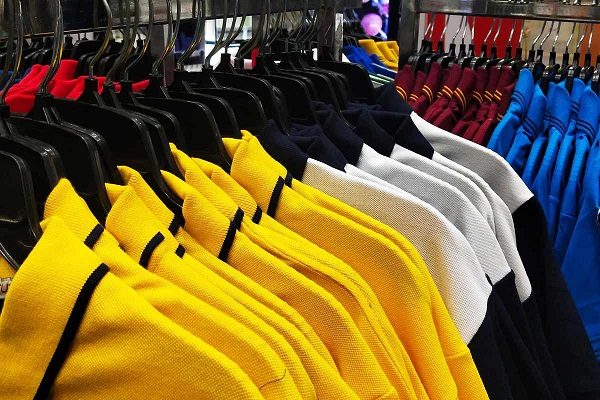
Deferment in GST rate hike on textiles from 5 per cent to 12 per cent hardly brings any relief to consumers as they still have dole out extra cash for branded clothes. As Charath Narsimhan, CEO, Indian Terrain Fashion says, with rise in raw material prices like cotton, yarn, fabrics and packaging materials, the price of finished goods are also likely to increase by 8-15 per cent.
Already, many brands have started increasing prices of their garments with others likely to increase by around March. Raw material prices have increased by around 15-20 per cent, leading to a rise in MRP of branded garments by around 10 per cent, adds Yuvraj Arora, Partner, Octave Apparels.
Numero Uno is also increasing prices by around 10 per cent while Madame is increasing by 12 per cent, starting with its summer collections. Prices of summer collections from most brands are likely to increase 15-20 per cent, predicts Clothing Manufacturers Association of India (CMAI).
To reduce the price hike, few brands may tweak their product quality, especially in the lower price range and limit price increase to 5 per cent, adds Rahul Mehta, Mentor, CMAI. Whatever is the scenario, apparels prices are likely to rise from January end, he adds.
Price rise to make up for pandemic losses
For some time, retailers have been absorbing the hike in raw material prices, high freight costs, devalued rupee, into their profit margins. They refrained from passing on the hike to consumers due to sluggish demand.
However, with sales revival and consumer demand, they plan to make up for their losses by increasing prices. As Akhil Jain, Executive Director, Madame notes, brands hesitated to increase prices leading to a decline in selling prices. This along with steep discounting led to industry working on a thin margins His brand Madame used to have 65-70 per cent sale through earlier. But now-a-days, it has only around 55 per cent sale through, he informs.
Ramesh Kapoor, CFO, Numero Uno says, the above factors compelled them to hike prices for all its apparel categories by around 10 per cent. To control rising prices, a few apparel makers have sought government intervention though others believed factors are mostly external.
Significant impact on volumes
Though the GST Council has deferred the proposed hike, it has referred the matter to a Group of Ministers on GST rate rationalization. The Council believes, GST hike will impact prices of only those brands that sell merchandize below Rs 1,000. Prices of these garments are likely to increase 7-10 per cent, opines Mehta.
Arora adds, GST hike will affect brands whose merchandise is priced at or below Rs 1,049. Octave Apparels will be impacted as it sells round neck T-shirts for about Rs 799-899 and a polo T-shirts for about Rs 999. GST hike will push up prices by almost 30 per cent for these tees to Rs 1,299. Even a 7 per cent hike in GST will compel the brand to increase prices drastically, Arora explains. The move will decrease the volumes of value brands as consumers may shift to other low-priced brands, he laments.
India: Tiruppur traders expect cotton yarn prices to rise post festive season
Traders in Tirrupur market expect cotton yarn prices to increase post the festive season next week. As per a Textile Value Chain report, cotton yarn prices remained steady in the Tirrupur market despite poor demand. Cotton yarn of 30 counts combed was traded in Tiruppur at Rs 350-360 per kg, 34 counts combed at Rs 360-365 per kg, and 40 counts combed at Rs 390-395 per kg. Cotton yarn of 30 counts carded was sold at Rs 320-325 per kg, 34 counts carded at ₹325-330 per kg, and 40 counts carded at Rs 345-350 per kg. Prices of cotton yarn of 30 count carded and 40 count carded declined by ₹5 per kg due to poor demand.
Many workers in Tiruppur have gone on holiday to celebrate Pongal and other regional festivals. Hence, demand remained weak. However, the scenario is likely to change at the end of this month. Fabric manufacturers will have to buy yarn at higher prices to meet demand from downstream industries. Demand for summer clothing will be good, so the prices are expected to rise for the entire value chain of the textile industry.
Kingpins Show plans next physical event in Amsterdam
Denim show Kingpins Show will host its next physical show in Amsterdam from April 20-21 and at SugarCity from October 19-20, 2022. As per Sourcing Journal, the last Kingpins Amsterdam show was held in Amsterdam in October 2019. The shows in New York and China have since been canceled due to the pandemic.
The global denim industry is hopes to see more in-person events this spring. Munich-based organizer Bluezone plans to host a denim event from May 02-04, 2022, while Denim Premiere Vision’s next event will be held in Berlin from May 17-18, 2022.
Kingpins Amsterdam’s SugarCity show will grow its footprint by over 40 per cent to 100,000-sq. ft. The additional space will enable organizers to add new features to the show and develop some of its key areas to better serve exhibitors and visitors.
Better Cotton Conference to take the hybrid route in June 2022
After two years of being confined to the online platform due to the pandemic, the next Better Cotton Conference will be held in a hybrid format on June 22-23, the conference will help stakeholders transform the cotton sector into a sustainable industry. It is held annually by the Better Cotton Initiative (BCI). A non-profit, multistake holder governance group, the Better Cotton Initiative promotes better standards in cotton farming and practices across 21 countries. As of 2017, Better Cotton accounted for 14 per cent of global cotton production. Its partner retailers included H&M, Gap, IKEA, and Levi Strauss, and include funding partners from USAID.
At the end of 2017, BCI had 1,197 members – 85 retailer and brand members, 1,039 supplier and manufacturer members, 32 producer organization members, 31 civil society members and 12 associate members. BCI contributes towards the UN's goals to achieve better global water sustainability and sustainable agriculture.
Indonesia’s textile industry to grow 3 per cent this year: Indef
As per the Institute for Development of Economics and Finance (Indef), the Indonesian textile industry will grow only 3 per cent this year, much below the Ministry of Industry's target of 5 per cent, says Ahmad Tauhid, Executive Director, Indef. Several factors will impact the industry’s growth in 2022, as per an Indo Textiles report. These include the uncertainty surrounding spread of Omicron variant whose impact can restrain demand in shopping and trade centers.
Secondly, the trend of imported textile products will affect domestic demand, adds Tauhid. The effectiveness of secure measure import duty introduced by the government in 2020 has proved ineffective. This has thrown many textile industries out of business, he adds. To boost growth in the textile industry, the government needs to improve economy significantly, Tauhid further adds. It also needs to handle the pandemic more effectively; especially with the emergence of a new variant of Omicron.
Bangladesh cotton imports to cross 9 million bales this year
Despite the pandemic’s severe impact on global textile supply chain, Bangladesh's cotton imports are set to cross the 9 million bales mark this year. A report by the Daily Star indicats, in 2021, Bangladesh imported 8.5 million cotton bales worth over $3 billion. Most import was fueled by Bangladesh’s rising garment exports. From July to December 2021, Bangladesh’s garment exports rose 28.02 per cent year-on-year to $19.90 billion. Of this, knitwear exports rose by 30.91 per cent to $11.16 billion while the exports of woven garments increased by 24.50 per cent to $8.73 billion. Faruque Hassan, President, BGMEA, said, the upward trend of garment exports will continue upto June this year as the association has booked a large volume of orders.
Mohammad Ali Khokon, President, Bangladesh Textile Mills Association (BTMA), added, it has already made payments of the letters of credit for importing cotton and expects a rush in import by March and April this year. Khokon further added, currently local spinners can meet 90 per cent of knitwear sector's demand for raw materials but only 40 per cent of woven sector’s needs. As a result, some 6 billion out of the required 10 billion meters of fabrics are imported to meet demand of local woven garment sector at a cost of $2.30 per meter. Therefore, local millers have either been expanding or investing afresh in the primary textile sector, particularly in manmade fibres and spinning mills.
He urged the government to facilitate MMF imports as the country does not produce these. He also urged the government to raise the ceiling for loan from an Export Development Fund to $40 million per borrower from the $30 million at present.
Karl Mayer achieves new milestone producing 1,000 drying cylinders annually
The Textile Drying Profit Center of the Karl Mayer Group reached a new milestone in 2021 as completed the annual production of 1,000 drying cylinders. Karl Mayer Rotal entered the production of steam-heating drying cylinders in 2016. The Group produced these cylinders mainly for its denim and sizing as well as third party businesses. The group soon reached annual production of 800 drying cylinders in 2018 which it further accelerated to 1,000 in December 2021.
The company's drying cylinders become bestsellers thanks to uncompromisingly high quality and safety coupled with an unbeatable price-performance ratio, says Karl-Heinz Vaassen, Head, Textile Drying Profit Center. He and his team have continuously developed their know-how and invested in targeted automation upgrades in order to achieve the output leap. These measures have eliminated bottlenecks in the production chain and accelerated time-consuming production steps.
CFDA launches official New York Fashion Week collection
The Council of Fashion Designers of America (CFDA) has launched its official New York Fashion Week range for February. The range includes garments by a host of new and big-name designers set to showcase their range in the city for the Fall 2022 season.
To be held in partnership with IMG, the seven-day New York Fashion Week American Collections Calendar will host runways and presentations by several big brands including Anna Sui, Christian Siriano, Don Lee, Gabriela Hearst, Jason Wu and Joseph Altuzarrara. On from February 11 to 16, the calendar will also host showcases from NYFW designers including LaQuan Smith, Michael Kors, Khaite, Naeem Khan, and Prabal Gurung, as well as an anniversary collection from Eckhaus Latta.
First-time participants in the show will include Dauphinette, Interior, Judy Turner, Loring, Luchen, Melke, PatBO, Saint Sintra and Zankov. Brands Kuon, Overcoat, Snow Hue Rao, Taylor, Adam Lippes Area, Dennis Bassom, etc will launch their collection digitally.
Being held amidst the third COVID-19 wave in the US, the New York Fashion Week faces logistical challenges including those related to staging physical runways and presentations while adhering to quick-changing pandemic-related protocols.
Pakistan’s textile exports decline 61 per cent in January
Pakistan’s textile exports fell 61 per cent in the first nine days of January, shows official data by the Ministry of Commerce. Data released by the All Pakistan Textile Mills Association (APTMA) also confirms, Pakistan’s textile production declined by $290 million in the first nine days of 2022. Production of value-added textiles accounted for $213 million and other textiles accounted for $77 million in terms of both value and volume, as per a report by the Global Village Space.
Textile mills in Punjab faced disruptions in gas and electricity supply leading to a huge loss to the industry. In October 2021, APTMA had announced a $5 billion investment in the textile sector. It hoped textile exports to hit $21 billion in FY22. SAPM Abdul Razzak Dawood, says, the $5 billion investment will help establish 100 new textile units in Pakistan. Of the $5 billion, $2.5 billion will be used to install new machinery while the remaining will be pumped in by June 2022. Abdul Bashir, Chairman, APTMA, adds, the if government policies remain consistent and long-term the textile sector will hopefully grow by 20 to 25 per cent each year.
However, frequent disruptions in gas supply and low electricity voltages are making it difficult for the textile industry to meet its targets, he adds further.











