


FW
AATCCC will hold new online educational program from February 23-24, 2022
AATCC will hold its new online educational program, Fluorescence and High Visibility for Textiles from February 23-24, 2022. The virtual event will feature industry experts discussing a variety of topics including color, innovation, technology, detergents, laundering, reflective tape, testing, product, etc. Many industry leaders including Rachel Applegate, Scientist, Procter & Gamble; Erika Simmons, Technical Director, AATCC; Randy Mumford, Technical Manager, Archroma; Ken Butts, Global Key Account Team Manager, Datacolor; Michael Murphy, Senior Advisor, e-Dye; Denise Statham, Director of Technical Services, Workwear Outfitters; Gregg Woodcock, Senior Manager Quality, Hanesbrands; Michael Hayes, Applications Engineer, 3M; Katie Aune, Applications Engineer, 3M and Roland Connelly, Color Supply Chain, Consultant, RoLyn Group Color Consultants will make presentations at the event. The sessions will be moderated by established industry experts Nelson Houser and Steve Simonson.
World’s leading not-for-profit association serving textile professionals since 1921, AATCC, headquartered in Research Triangle Park, NC, US, provides test method development, quality control materials, and professional networking for members in about 50 countries throughout the world.
India’s cotton stocks to decline by 12 lakh bales in FY2021-22: CAI
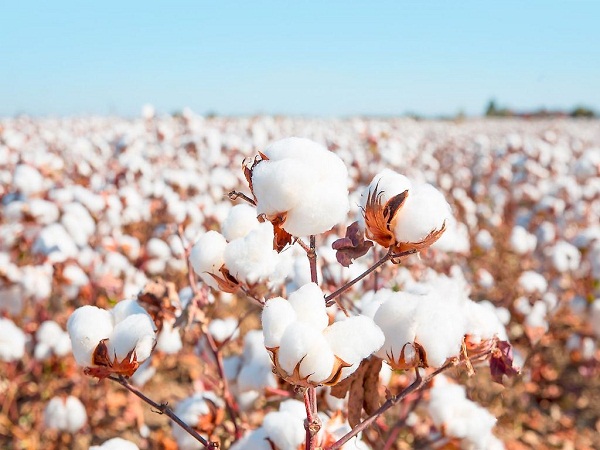
The Crop Committee, Cotton Association of India (CAI) has released its December estimate of the cotton crop for the season 2021-22. As per estimates, cotton stock in India is likely to drop by 12 lakh bales to 348.13 lakh bales against earlier estimate of 360.13 lakh bales. From October 2021 to December 2021, cotton stock in India is estimated to have reached 218.52 lakh bales. This includes arrivals of 140.52 lakh bales of 170 kg each imports of 3 lakh bales of 170 kg each and the opening stock of 75 lakh bales of 170 kg .each at the beginning of the season.
Stocks reach 113.77 by December 2021
By the end of December 2021, India is expected to have a cotton stock of 113.77 lakh bales of 170 kg. Of this, 65 lakh bales of 170 kg each will be available with the textile mills and the remaining 48.77 lakh bales of 170 kg each with the CCI, Maharashtra Federation and others.
From October 31-December 31, 2021, India’s cotton mills are estimated to have held 65.00 lakh cotton bales of stocks. Majority of this; 48.77 lakh bales of 170 kg each was held by the Cotton Corporation of India, Maharashtra Federation, MNS, Ginners, Traders, MCX etc. In all, spinning mills and stockists are estimated to have held 113.77 lakh bales of cotton of 170 kg each.
Production to drop by 348.13 lakh bales in FY2021-22
During the 2021-22 season, India’s cotton production will reduce to 348.13 lakh bales of 170 kg each from its earlier estimate of 380.13 lakh bales, says CAI. Gujarat will see the highest decline in production of 5 lakh bales of 170 kg each. It will be followed by Telangana and Karnataka with decline of 2 lakh bales each. Rajasthan will see the lowest decline in production of 0.25 lakh bales.
Consumption to increase to 345 lakh bales
CAI estimates, India’s domestic cotton consumption will increase to 345 lakh bales from 335 lakh bales during 2021-22. Exports are likely to reach 48 lakh as against the previous year’s export estimate of 78 lakh bales of 170 kg each.. Till September 2022, India will supply 438.13 lakh cotton bales of 170 kg each, estimates CAI. The total cotton supply will include opening stock of 75 lakh bales of 170 kg.
Imports to increase by 5 lakh bales
CAI estimates, India’s cotton imports during FY21-22 will increase by 5 lakh bales to 15 lakh bales of 170 kgs. each from the previous month’s import estimate of 10 lakh bales of 170 kg.
From October 2021 to December 2021, India’s cotton imports are estimated to decline to 140.52 lakh bales of 170 kg each Compared to the average cotton imports from October to December in the last five years, the current year’s cotton imports are likely to increase by 23.11 lakh bales of 170 kgs each compared to the average cotton arrivals of the corresponding months of the last five years.
Global cashmere clothing market to reach $3,333.6 million by 2026: Study
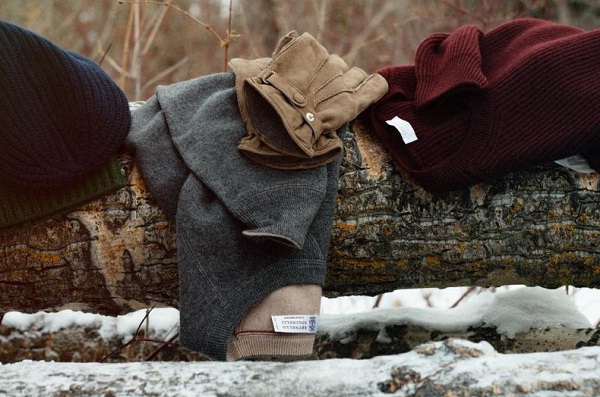
Estimated to be worth $2844.6 million in 2020, the global cashmere clothing market is expected to be worth $3,333.6 million in 2026 with an estimated growth rate of 4.0 per cent CAGR over the next five year, says Cashmere Clothing Market Report by IndustryDataAnalytics, a digital consultancy company providing research reports across Industries.
China tops both production and consumption
The report states, China is the largest exporter of Cashmere clothing in the world. It exports around 70 per cent of the world’s cashmere to various countries. Italy is its largest importer with imports accounting for 78 per cent of total cashmere exported by China in April 2017. China is also the largest importer of Cashmere in the world. The country’s growing national economy and gradually improving quality of life is driving Cashmere up consumption. Many leading companies like Lara Plana and Brunello Cucinelli are known to import large amounts of Cashmere for their products.
China manufactures Cashmere garments in large quantities. Yet, its brand penetration is low as most of brands operate as OEMs. This relegates most local brands to the bottom of the Cashmere value chain across the world. US is also a leading manufacturer of cashmere clothing in the world. In 2016, it manufactured about 19 per cent of world’s cashmere production amounting to 3.5 million units.
Cheap raw materials and labor help Asia dominate
Among the continents, Asia leads global cashmere production due to its low raw material costs and easy availability of cheap labor. This has led to many famous cashmere brands setting up their manufacturing bases across Asia. The fashion luxury cashmere market is largely concentrated with top 20 brands accounting for 50 per cent of global market share.
The report states, Loro Piana, Brunello Cucinelli, Ermenegildo Zegna, Malo, Alyki, Pringle of Scotland, SofiaCashmere, Autumn Cashmere, TSE, Ballantyne, Birdie Cashmere, Maiyet, Gobi, GOYO, Cashmere Holding, Erdos, Hengyuanxiang, Kingdeer, Snow Lotus, Zhenbei Cashmere are some of the leading players in world cashmere market.
US’ spending on apparel and footwear exceeds pre-pandemic levels in 2021
As per a new report by online personal styling service Stitch Fix, US Consumers’ spending on apparel and footwear exceeded pre-pandemic levels in every month of 2021.
As per a Daily Star report, the pandemic greatly accelerated the shift toward online shopping. E-commerce grew to account for 36 per cent of total apparel and footwear sales in 2020, versus 26 per cent in 2019, it said.
Apparel export to the American markets from Bangladesh grew 45.91 per cent year-on-year to $4.23 billion in the July-December period.
Export of goods and footwear made of leather to the US markets also increased thanks to high demand from retailers and brands. The export growth was mainly driven by three factors -- the US-China trade tension, strength in production of both basic garment items and those in the middle range of price and quality, and competitive prices.
The Ha-Meem group exported $550 million worth of garment items in 2021 of which 95 per cent went to the US markets. This year some $100 million-worth more garment items are expected to be shipped to the US markets.
Similarly, the Noman Group, another leading garment exporter, has also been receiving more work orders from the US-based retailers and brands this year compared to last year.
Western retailers and brands have been heading over to Bangladesh with plenty of work orders in an attempt to diversify sources and reduce overdependence on a single source.
Bangladesh’s leather and leather goods and footwear export have witnessed growth of over 18 per cent year-on-year in the July-December period. MdShahidullahAzim, Managing Director, Classic Fashion, said garment exports to the US markets at the end of the year may cross $8 billion as the growth was very high.
Faruque Hassan, President, BGMEA added, the confidence of Bangladeshi apparel items has improved a lot following the strengthening of workplace safety and continuation of product supply even during the pandemic's peak. Local manufacturers Aare also very strong in the production of garment items, he added.
The Lycra Company’s Foshan facility earns high score Higg FEM
The Lycra Company’s largest manufacturing site located in Foshan, China has earned a score in the upper quartile for its third-party audited Higg Facility Environmental Modeule (Higg FEM).
Higg FEM is a sustainability assessment tool that The LYCRA Company is using to determine the Foshan site’s environmental impact, standardize how its environmental performance is measured year over year and identify, prioritize and scale enhancements.
Foshan’sHigg FEM score is based on the percentage of completed and verified self-assessment questions related to its environmental management systems, energy use and greenhouse gas emissions, water use, wastewater, air emissions, waste management and chemical management. The Foshan site completed the full module and had their responses confirmed by an independent verifier.
High-fashion brands eye new stores in Texas
Drawn to its young, wealthy urban residents, many high-fashion brands are looking to set up new stores, pop-ups and shows in Texas. A report in Glossy says, in 2019, more than 12,000 people under 35 years making more than $100,000 a year moved to Texas. Balmain is hosting its only Barbie-themed pop-up with Texas-based Neiman Marcus in Dallas this month, Gucci opened its first store in Austin in May 2021, and Jonathan Simkhai opened its first Texas retail experiment on January 19.
For Jonathan Simkhai, Founder of the eponymous brand, Texas is the third-largest e-commerce market, behind New York and Los Angeles. The entrepreneur will open the brand’s first pop-up store at Dallas’ Highland Park Village He also hopes to open a permanent store in Texas soon.
A March 2020 reading of the state revenue index, a measure of the state’s economy compiled by the Federal Reserve Bank of Dallas, showed Texas quick recovery from the pandemic is helping it attract retailers. Between April 2020-21, retail traffic in the city jumped from 13,000 monthly visitors to the shopping center to 78,000. Meanwhile, monthly visitors to the Shops at Southlake in Grapevine, TX jumped from 94,000 to 240,000 in the same time period.
Thanks to its “business as usual” feeling, Texas shoppers are more open to attending in-person events, compared to consumers in cities like New York, with more restrictions on store capacity, says Simkhai
Commercial real estate prices in Dallas are at all-time highs. In terms of the most commercial real estate transactions in the country last quarter, Houston and Dallas were the No.1 and No. 3, respectively.
Texworld Paris to enable visitors discover Trends Forum
To be held from February 7 to 09 at the Parc des Expositions de Paris de Paris-Le Bourget, Texworld Evolution Paris will provide visitors an opportunity to discover the Trends Forum imagined and designed by the art directors of Texworld Paris, Louis Gérin and Grégory Lamaud. Displayed at several points in the exhibition, the new forum will highlight expressive lines born out of these two years of crisis. It will interrogate the new forms of ‘living together,’ the barriers between communities, cultures and materials by exploring the power of these interfaces in creative terms: the junction between digital and tangible, natural and synthetic, hard and soft. These associations, which give a particular place to materials and fibers, will be explored through four major themes.
Border: This theme gives clothing materials their rightful place. It will encompass a large tonal palette ranging from graphite to arctic blue, but always in rather muted and ‘earthy’ aspects.
Alliance: This ethereal and spiritual creative range will showcase palettes of blue and green. The materials (carved embroidery) and the fiber (fibrous protrusion) in this theme will be are expressed in tones - transparent or opaque - in a spirit where nature often shines through.
Connections: This theme will include synthetic and fluorescent materials. It will mix fluorescent angora with knitted (recycled!) plastics.
Surface: This theme will be the point of contact and exchange between virtual and real, between earth and space, through a palette of blues and greens that can be imagined as flat surfaces" in the style of "flat design". The mixtures (crystalline membrane) and contrasts (antic collage) that confront the materials are not forbidden.
Visitors will be able to discover these major themes through all material samples and finished products selected by the show's artistic directors to illustrate concretely each of the creative universes of Spring/Summer 2023 fashion.
Trident’s FY22, Q4 net profit surges 88.22 per cent
The consolidated net profit of textile firm Trident jumped by 88.22 per cent year-on-year (YoY) to Rs 211.09 crore during the fourth quarter ended December 2021. The company had posted a profit of Rs 112.15 crore in the corresponding quarter of the previous financial year.
Trident’s consolidated revenue from operations grew by 51.94 per cent YoY at Rs 1,980.01 crore as against Rs 1,303.15 crore posted in the same quarter a year ago. The company’s EBITDA grew by 143 per cent to Rs 406.06 crore against Rs 166.96 crore posted last year. Its total expenses surged to Rs 1,673.88 crore in the third quarter as compared to Rs 1,157.73 crore.
The company’s net debt increased to Rs 1,484.89 crore as compared to Rs 1,045.39 crore as of September 30, 2021. Its revenue in the textile segment incrased to Rs 17,05.93 crore in Q3 FY22 compared to Rs 1,107.77 crore in Q3 FY21. Revenues in the paper segment surged to Rs 2,51.95 crore compared to Rs 1,82.41 crore in Q3 FY21.
Rajinder Gupta, Chairman, Trident Group says, the company will continue to create value and maintain Trident͛'s excellence-centric mindset to achieve even stronger and better results in the coming years.
Italian brands face delivery delays, shutdowns owing Omicron outbreak
Omicron has led to Italian brands facing tough times. As per a Glossy report, brands in Italy have been facing not just delivery delays but also factory shutdowns. Tibi’s Italian factory shut down for over 10 days across December and January, informs Amy Smilovic, Creative Director. Lingerie brand Cosabella faced significant delivery delays with shipments arriving two later than the scheduled date.
If these delays and shutdowns continue into February and March, brands like Tibi and Cosabella will not be able to deliver their spring/summer orders. Last year, Cosabella received orders meant for January at the end of March. This year, his team anticipated the possibilities of delays in transition to the new year, even before Omicron became a concern. Cosabella bought excess raw materials in November, anticipating they may become harder or slower to get in January. The company also produced excess basics and core product around the same time, to solve for any dry periods when product runs low.
Brands including Jimmy Choo, Aquazzura and Sarah Flint that manufacture in Italy increased prices over the summer, to make up for new supply chain costs during periods when delays slowed the process to a halt.
Ban export of cotton yarn, demand Pakistan textile leaders
The Pakistan textile sector has demanded either an immediate ban on cotton yarn exports or a fixed export quota to limit shipments in the face of the commodity’s shortage in the domestic market. As per a Tribune report, Shahzad Azam Khan, Central Chairman, Pakistan Hosiery Manufacturers and Exporters Association (PHMA) has urged the government to eliminate all types of duties and taxes on the import of industrial raw materials not manufactured in the country.
The textile industry will be forced to shut down several units if the government fails to resolves these events, he added. Khan also requested the government to clear tax refunds of billions of rupees to ensure availability of raw material at reasonable rates to improve exports and avoid the imposition of taxes through the mini-budget.











