


FW
Levi Strauss & Co forecasts higher than estimated annual sales and profit
Bolstered by higher prices and strong demand for jeans and jackets, Levi Strauss & Co forecast annual sales and profit above analysts' estimates. According to Refinitiv IBES data, the Levi's 501 jeans maker expects revenues to rise between $6.4 billion and $6.5 billion in fiscal year 2022, compared with analysts' estimates of $6.37 billion.
The denim company plans to raise prices further in 2022 as demand outstripped supply in the quarter due to supply chain snarls, adds Chip Berg, CEO. Lower promotions, more full-price selling and reopening of European and Asian markets also lifted the Denizen brand’s sales in the fourth quarter.
Compared to pre-pandemic levels, it’s net revenues from Asia remained flat in the three months ended November 28, recovering from a 23 per cent slump reported in the third quarter.
Net revenues of the company rose by 22 per cent to $1.69 billion in the fourth quarter, edging past analysts' estimate of $1.68 billion.
Conscious fashion needs sustainable yarns, says MD, Neil Thorpe Lace Design & Draughting
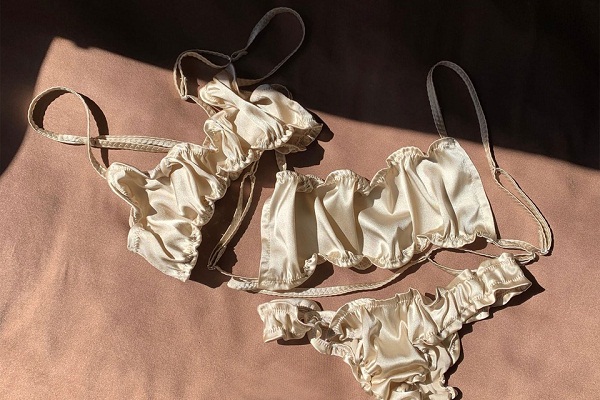
The pandemic is expected to cause a sea-change in consumers’ attitudes, says Neil Thorpe, Managing Director and Founder, Neil Thorpe Lace Design & Draughting. Consumers will now be driven towards a more mindful consumption, he adds. Thorpe and his team have been developing lace patterns since 1986. They are currently developing new patterns for Spring/Summer 2023 besides creating new lace designs for Fall/Winter 2023-24 for a few esteemed clients. The company mainly excels in creating lingerie lace patterns, which form 80 per cent of its total output.
Natural cotton look being preferred
“The pandemic has compelled consumers to focus on comfort and sustainability,” Thorpe says. Buyers are demanding softer and more environment-friendly garments. “To cater to this, we are creating more designs having a natural cotton look with more ethically accepted yarns like modal,” he states. The color scheme for the season is determined by the company’s consumers on the basis of their target markets. Buyers are opting for fabrics with a natural look in biege, white and cream tones. These give the garment an impression of being environmentally conscious, Thorpe explains.
Elaborating on the most preferred yarns of the season, Thorpe says, lighter yarns are in demand due to their environment-friendliness and natural patterns. However, lighter lurex yarns have fallen out of favor as they give the garment a plastic look. His firm is developing a new range of super soft, environmentally certified fibers, as there is a need for a wider selection of sustainable yarns, says Thorpe. It is also discovering optimal lapping techniques for smooth processing of latest yarns on the lace machine.
Floral and delicate designs in vogue
There is still some demand for small geometric patterns amongst younger consumers, says Thorpe. Yet, he believes, trends for the next seasons lean more towards floral designs. There is growing demand amongst consumers for timeless designs like florals. However, the floral patterns are given a modern twist by varying their sizes and experimenting with designs of edges and using new techniques.
As evident by the growing popularity of crochet and pinhole embroidery patterns, consumers are opting for heavier patterns. However, their affinity for delicate designs also persists, adds Thorpe. They are using the lapping technique to create designs with these lightweight yarns, he adds.
In terms of machine performance, the firm often gets feedback from customers. It welcomes new developments in the industry to boost operations. It seeks a wider, more readily available supply of sustainable yarns to meet the demand for more conscious fashion. The firm seeks an improved yarn that does not slip or loop on being combined with elastane, adds Thorpe.
Copenhagen Fashion Week’s Sustainability Action Plan 2020-22 to drive change globally

Copenhagen Fashion Week’s second annual report reflects its Action Plan to achieve sustainability targets in 2022. It showcases the organizers’ commitment, challenges and ambitions in living up to its strategy. Copenhagen Fashion Week has been developing its Sustainability Action Plan 2020-2022 since 2019. The plan was finally unveiled on January 28, 2020.
Reducing climate impact by 50 per cent
Titled ‘Reinventing Copenhagen Fashion Week – Reducing negative impacts, innovating our business model and accelerating industry change’ the Sustainability Action Plan 2020-2022 delineates future transformation of the event. In future, the event aims to focus on reducing the industry’s impact on the climate by 50 per cent and reorganizing waste management systems to target zero waste by 2022. It also outlines Copenhagen Fashion Week’s strategies to implement sustainability requirements and set new standards the industry.
Developed in collaboration with Copenhagen Fashion Week’s knowledge partner, In futurum, the plan is monitored by Copenhagen Fashion Week’s Board of Directors and Sustainability Advisory Board that includes industry leaders like Nicolaj Reffstrup, Founder, Ganni’s; Eva Kruse, CEO, Global Fashion Agenda and Clare press, Sustainability Editor, Vogue Australia. Several internationally acknowledged experts including Orsola de Castro, Frashion Revolutions, Professor Dilys Williams, Centre for Sustainable Fashion and Katherine Richardson, Professor, Biological Oceanography reviewed the 2023 Sustainability Requirements presented in the action plan.
Its sustainability potential was determined by the following three factors:
• SDG 12: Responsible consumption and production
• SDG 13: Climate Action
• SDG 17: Partnerships for the goals
Milestones achieved
As per the plan, some of the most significant milestones achieved by the event organizers in the last two years include:
New partnerships: One significant milestone achieved by event organizers in the last two years was new partnerships built around the 2023 Sustainability Requirements. In 2021, Copenhagen Fashion Week formed new partnerships with the trade fair CIFF (Copenhagen International Fashion Fair), the Norwegian Fashion Hub, Oslo Runway and the Icelandic Fashion Council who will all be implementing the 2023 Sustainability Requirements.
Training SMEs: Organizers also selected the requirements of the government-funded program Grøn Genstart, Fremtidens Tekstiler as the framework to train 50 SMEs in the Danish industry to lead to targeted action.
Delivering targets: They also ensured delivery on 19 out of 21 targets. Currently working on meeting their targets from the first Action Plan, organizers also plan to set new targets for 2023-25 and redefine their strategies for the future. They will also continue to pursue international partnerships to amplify the impact of the 2023 Sustainability Requirements and drive change in the industry at a global scale.
Year 2022 will be one of the best years for luxury fashion, say analysts
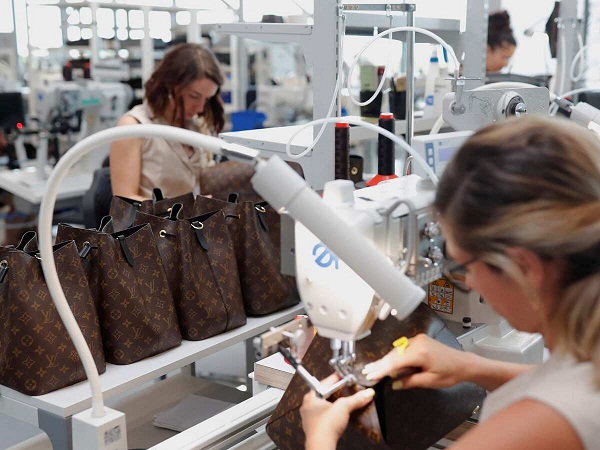
Pandemic-led supply chain disruptions have caused product shortages across the fashion industry. Luxury fashion; especially, has been a key sufferer of this, says the annual report, ‘The State of Fashion,’ by Business of Fashion and McKinsey. Supply chain disruptions have affected around one in eight businesses across the world. Raw material and component shortages, transportation hurdles, unavailability of staff and rising shipments costs have had a negative impact on around 85 per cent of fashion businesses.
Disruptions to curb overproduction
The industry is likely to face more disruptions in future’ especially at the retail level. However, analysts believe, this will compel it to focus on customers’ needs rather than on trends. Brands too will also focus on products that confirm to their ethics and philosophy, says couturier Amit Agarwal.
Priyanka Modi, Co-Founder and Creative Director, AMPM, views, small and medium-sized businesses continue to face minimum order quantity issues as mills or large vendors demand high MOQs or prices for smaller quantity of products. This aggravates their supply chain issues. Couture-based brands suffer more as they face acute labor shortage, opines Payal Singhal, Designer based in Mumbai. It limits their production, especially of embroidered products. This inevitably adds to the prices for end consumer, she adds
Rental fashion to grow in importance
In 2022, fashion prices are expected to continue rising, encouraging buyers to limit purchases and focus on high-value products. It will also encourage consumers to opt for renting fashion rather than buying it. The pandemic has shifted consumers’ focus from popular to niche and unique products, notes Aggarwal. It has made hashtags such as #vocalforlocal and #handmadeinindia a regular part of the digital landscape. However, customers need to be cautious while buying such products as they could be fake items or cheap replicas of original products, adds Singhal.
Industry to be more organized
One of the positive outcomes of the pandemic has been the discipline it has brought within the industry, says Modi. The industry has become aware of the hazards of over production and also learnt to manage inventories efficiently, she adds. Her own label has also grown as a complete solution for a women’s ready-to-wear wardrobe, she adds.
Aiming to redefine bridal couture, Aggarwal has opened a flagship store in Colaba, Mumbai while Singhal has opened her second store in Mumbai besides acquiring a space in Delhi’s multi-brand store Aza. The pandemic is forcing these brands to reinvent themselves to match consumers’ changing demands. These factors are making 2022, one of the best years for the fashion industry.
International Conference on Cellulose Fibers 2022 to be held in hybrid format
The International Conference on Cellulose Fibers 2022 will be hosted in a hybrid format from February 02-03, 2022 in Germany. The exhibition will focus on physical attendance under strict 2G+ Corona regulations:
More than 160 participants from 24 countries have already registered for the conference. Online participants will enjoy the advanced quality of a special “Zoom Conference” software, which allows chatting with your fellow online participants as well as with sponsors
The conference’s advisory board has nominated six highly interesting products, ranging from cellulose made of orange- and wood pulp to a novel technology for cellulose fibre production. The presentations, the election of the winner by the conference audience (online voting) and the award ceremony will all take place on the first day of the conference.
Huntsman Textile Effects showcases performance apparels solutions at Columbaitex 2022
On January 25 to 27, 2022, Huntsman Textile Effects showcased complete suite of solutions for performance apparel, technical textiles and casual wear at the Colombiatex de las Américas 2022. The company also introduced latest addition to the third generation of its revolutionary Avitera Rose Se polyreactive dye range at the three-day international exhibition.
The Avitera Rose Se dye delivers brilliant bluish-red shades while reducing the water and energy required for production by up to 50 per cent and increasing mill output by up to 25 per cent or more. It also significantly outperforms the best available dyeing technologies for cellulosic fibres and blends in terms of value by reducing recipe costs, minimising processing costs and eliminating reprocessing, Huntsman said in a press release.
Another water-saving innovation introduced by Huntsman is Eruioibe E3-Save. This is an all-in-one textile auxiliary for polyester processing that allows pre-scouring, dyeing and reduction clearing to be combined in a single bath and eliminates the need for anti-foaming products. This shortens processing time and saves water and energy.
Huntsman Textile Effects also presented an end-to-end solution for achieving full whites and consistent shades on rPET with right-first-time quality. This eco-friendly rPET processing solution includes pre-treatment chemicals, fluorescent whitening agents, state-of-the-art washfast dyes, and finishing solutions for high-performance protection and comfort.
The company partnered Sciessent, Huntsman Textile Effects to bring revolutionary antimicrobial and odour-control solutions to Colombiatex. These solutions enable mills to produce garments that smell fresh for longer and need less frequent washing. The partners also presented Sciessent’s Agion Active X2, next-generation odour-control solution that combines advanced antimicrobial and odour-absorbing technologies to both capture and fight odour-causing bacteria, and Lava X2, a standalone odour adsorption product and key component of Agion Active X2 that attracts, absorbs and degrades odours for long-lasting odour protection.
India: NAEC seeks government intervention on rising cotton yarn, fabric prices
Staring rising cotton yarn and fabric prices are impacting exporters, Lalit Thukral, President, The Noida Apparel Export Cluster (NAEC), has sought immediate government intervention. As per an Apparel Resources report, Thukral has sought removal of 10 per cent cotton import duty and development of a mechanism to regulate the prices of cotton and other raw materials to support the sector.
Cotton prices have grown almost 80 per cent in the last few months, informs Thukral. This has made it difficult for exporters to absorb the hike in fabric prices and remain competitive, adds Vimal Shah, President, Garment Exporters Association of Rajasthan (GEAR). High raw material price is one of the main reasons that garment exporters are losing orders and facing tough competition in the global export market. At the same time, they are also losing the confidence of the importers and the buying houses.
This creates more challenges for small- and medium-level exporters as they also face capital and liquidity crunch. There are many more challenges for them due to COVID-related disruptions.
Eraldo Poletto to be Diesel’s new CEO for North America
OTB Group-owned Diesel has appointed Eraldo Poletto new CEO for North America. He will report to Massimo Piombini, Global CEO, Diesel and lead the Italian firm’s development in a key market with great growth potential for the brand. As per a Sourcing Journal report, Poletto will help drive the brand’s growth in the US and Canada markets. He was earlier CEO and president of Stuart Weitzman brand since 2018.
Prior to this, he served as the managing director of several Italian companies, including Salvatore Ferragamo and Furla, where he played a significant role in the brands’ development on a global scale. Poletto also worked at Retail Brand Alliance Inc. for 15 years, where he was involved in the international growth of the Brooks Brothers brand.
Poletto’s luxury pedigree also has the potential to become an asset as Diesel creative director Glenn Martens works to elevate the brand’s collections with sustainable denim, higher-priced footwear and its first-ever runway show at Milan Fashion Week in February.
Chinese fashion retailer Shein plans to launch an IPO in New York this year
As per a Business Today report, the IPO would be the first major equity deal by a Chinese company in the United States since regulators in the world's second-largest economy stepped in to tighten oversight of such listings in July. Founded by Chinese entrepreneur Chris Xu in 2008, Shein first started preparing for a US IPO about two years ago, but shelved the plan partly due to unpredictable markets amid rising US-China tensions.
The e-commerce company ships to 150 countries and territories from its many global warehouses. In 2021, its revenues jumped to around 100 billion yuan due to the pandemic-induced shift to online consumption. Valued at around $50 billion in early 2021, its valuation is estimated to have doubled in the past year,
The company, whose investors include Sequoia Capital China, IDG Capital and Tiger Global, was valued at $15 billion in its last funding round in August 2020, according to CB Insights data.
According to Coresight Research, Shein’s estimated sales in 2020 jumped 250 per cent over the preceding year to $10 billion, with over 2,000 items added on its website weekly.
Scheme to trial dry processing technologies launched
Sportswear giant Adidas, luxury fashion brand Kering, US clothing giant PVH Corp, Arvind Limited and Welspun India have partnered with the Fashion for Good initiative to launch a new scheme that focuses on trialing "dry processing" technologies to reduce the environmental impact of pre-treatment and coloration of cotton, polyester, blends, denim and wool.
Known as the D(R)YE Factory of the Future, the scheme has the potential to reduce emissions by up to 89 percent and cut water consumption by between 83 percent and 95 percent,. It currently trains the plasma and laser treatments, spray dyeing, foam dyeing and supercritical CO2 technologies.
The eight innovators picked to take part are: Alchemie Technologies, Deven Supercriticals, eCO2Dye, GRINP, Indigo Mill Designs, imogo, MTIX and Stony Creek Colors. They are expected to collaborate with each other and work closely with the scheme's partners. The technologies would be tested in combination with one another to unlock their full decarbonization potential. A report will be published in late 2022 that shares the results from the evaluations, as well as next steps for the wider implementation of dry processing technologies and techniques,.











