


FW
To repatriate or not is the question for luxury brands post pandemic
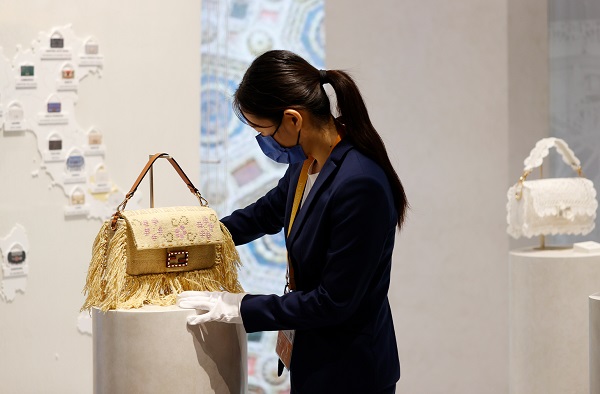
The upmarket stores across Asia had expanded rapidly in response to luxury brands increasing their footprint to capture domestic demand with travel corridors having shut down during the pandemic years. All the way from Thailand to South Korea, the quick shift toward domestic consumption made Western brands rethink their global retail footprint and distribute their investment in new ways. However, as the pandemic ebbs out, the same Western brands are now trying to figure out how best permanent repatriation can be made in the Asian market as the stakes get higher.
Experts feel, by 2025, Asian consumers are expected to account for more than half of the global luxury goods market. The proportion of spending that each nationality makes at home compared to the proportion they make abroad needs to be focussed on. Global consultancy company, Bain & Company forecasts now with a dip during the pandemic, Asians will make up between 55 and 64 per cent of total spending, up from 43 per cent in 2019. While the Chinese and Japanese will remain the two biggest spending nationalities, others too are on the rise. The luxury fashion industry’s collective efforts to rope in Asian customers in their own country have accelerated with premium brands pulling out all stops to make this work.
Local high-profile events help domestic consumption
Hosting fashion shows and having famous local celebrities and models endorsing products are some of the ways to keep the buzz going. French luxury fashion house recently cast Asian models on the runway and its creative collaboration with Thai film director Sivaroj Kongsakul lured high-profile Thai celebrities such as Urassaya Sperbund and Mario Maurer as well as South Korean actor Park Bo-gum to the red carpet at the mall. Christian Dior’s also had its first fashion show in South Korea in April, to forge new powerful ties with this country. Dior also recently presented events in Ho Chi Minh City, Vietnam, and Bali in Indonesia. Not to be outdone, Burberry took its TB Monogram pop-ups on tour, hosting events at holiday destinations in South Korea and Singapore.
As Thailand’s Chadatip Chutrakul, CEO of Siam Piwat Group points out, during lockdowns, demand from affluent local customers helped compensate for most of the loss of international shoppers. The decline in tourists made them change strategy to focus on local customers’ needs and requirements, allowing them to build a robust domestic market. The Siam Piwat Group owns high-profile shopping centres in Thailand, where the overall luxury market sales are on a meteoric high. Churakul says, over the past two years, there has been no decline in luxury spending — only a triple-digit increase, as the result of the consolidation of local Thai spending in the domestic market.
Although in India, the effects of repatriation is yet negligible, Mukesh Ambani , the chairman of Reliance Industries is building at least one new luxury mega-mall, Jio World Plaza, which is expected to include dozens of premium label boutique stores from Louis Vuitton to Gucci, to cater to the growing demand for premium brands. With local stores in the big cities across Asia having evolved to very high standards of fit-outs as well as offering a varied global product portfolio of the latest trends, the apparel repatriation game is going to be a tricky one.
Stop converting plastic bottles into polyester fabrics: Textile Exchange
The industry needs to stop converting plastic bottles into polyester fabrics, says Ashley Gill, Director-Standards, Textile Exchange. In 2019, only 14 per cent polyester fabrics were made recycled materials, he adds. As both polyester and plastic bottles come from fossil fuels, they could cause climate change, says Gill. As per an Indo Textiles report, the industry needs to reduce the demand for pure materials like this as they release tiny particles that are increasingly being found in food, air and water sources.
Sports brand Girlfriend Collective also says microplastic pollution needs to be curbed. The brand makes about 80 percent of its clothing from recycled polyester from plastic bottles. Other sustainable clothing brands such as Reformation and Patagonia also selli microfiber filters to catch microplastics before they end up in the ocean.
In addition to the problem of microplastics, the heavy chemicals and dyes used can also cause other problems, says Gill. Hence, the industry needs to reduce its dependence on polyester. He hopes, clothing companies will reduce overproduction and consumption of polyester even it is recycled,
China’s duty-free access presents $25 billion export opportunity to Bangladesh
China's latest move to allow duty-free access presents an opportunity for Bangladesh to export $25 billion worth of garment items, say experts. Bangladesh's exports to China are likely to grow to $25 billion if local suppliers grab an additional 1 per cent share of the Chinese apparel market of $350 billion. Currently, the country's share of exports to the Chinese market is 0.05 per cent, which is equivalent to a bit above $1 billion.
Despite Bangladesh's overall export earnings from China increasing by 9.81 per cent year-on-year to $426.14 million in the last seven months, apparel shipments to the East Asian nation declined 19.66 per cent to $131.20 million in the July-January period of the current fiscal year. Knitwear exports declined 30.77 per cent to $53.53 million while shipments of woven products declined by 10.36 per cent to $77.68 million, as per Export Promotion Bureau.
The Chinese government is encouraging the production of their own garment items, which negatively impacted Bangladesh's exports, says, Faruque Hassan, President, BGMEA. He hopes exports to China will grow with easing of coronavirus restrictions. Azizul Akil David, Senior Vice-President, Bangladesh China Chamber of Commerce and Industry says, Bangladesh should not target Chinese markets for garment shipments as China itself is the world's largest apparel producer.
MA Razzaque, Research Director, Policy Research Institute, adds, a major reason behind the decreased garment exports to China is the rising demand for locally made apparel items in the EU and the US. Bangladesh's current production capacity is mainly tailored for European and US markets, Razzaque adds.
Sanctions on Russia may accelerate textile market volatility, say industry leaders

The Ukraine-Russia crisis has sent energy stocks spiraling with crude oil prices trading at about $104 per barrel. This is likely to impact not just stock markets and commodity prices but also customers’ purchasing behavior, points out Sheshadri Ramkumar, Professor, Texas Tech University, United States.
Sanctions to harden crude oil and natural gas prices US, EU, and UK reacted to the crisis by imposing economic sanctions against Russia. These sanctions will only harden the current crude oil and natural gas prices in Russia, a major exporter of these commodities to EU nations like Germany, Sheshadri says. They may also strengthen the US dollar, making imports from the country more expensive. Cotton market will continue to remain volatile due to uncertain demand and high energy prices. The high energy costs will also influence overall EU market as many countries in the region depend on Russia for their energy needs, he says.
Cotton price volatility to persist
Velmurugan Shanmugam, General Manager, Jayalakshmi Textiles, believes, the volatility of cotton market will grow. A 100 per cent cotton spinning mill, the company has 72,000 spindles that spin fine count cotton yarns catering to home textiles market in India. The Ukraine-Russia crisis has been influencing commodity markets since the last few days. Mill delivered price for MCU-5 cotton surged from Rs 78,000 per candy to 83,000 per candy in the past 20 days. The current global situation is expected to add to the current price volatility, adds Shanmugam. The rise in gas prices may lead to consumers buying more textiles items, impacting exports.
Plan stocks diligently
Besides cotton and raw material prices, textiles’ demand is also influenced by factors like regional peace and security, says Sheshadri. He advises textile industry leaders to plan their raw material stocks carefully, and also manage transportation and operational costs efficiently. Russia will face tighter economy sanctions. Textile leaders need to monitor the impact of these sanctions on the sector, adds Sheshadri.
No impact of sanctions on the market, say Russian fashion leaders
The latest Ukraine standoff has resulted in economic sanctions against Russia. This has caused concerns amongst leaders especially in the local fashion industry, already bearing the brunt of inflation, pandemic and the volatility of the rouble. Imposition of new sanctions reduces international projects and investments in Russia and a further weakens its local currency, says Anna Lebsak-Kleimans, Fashion Consulting Group.
Russian fashion leads amongst European markets
In 2021, the Russian apparel and footwear market surged 4 per cent year-on-year to $38.93 billion. However, the market still remains 15 per cent below 2019 levels, as per the data by Euromonitor International. How much of this decline is attributed to the lingerie effects of sanctions is yet to be determined, as per a Business of Fashion report.
However, Russia’s luxury market continues to lead amongst other European markets thanks to the robust return of the consumer spending in the sector, say Claudia D’Arpizio and Federica Levato, Authors, 2021 Luxury Report, Bain & Company. Both the pandemic and the sanctions failed to dent the spirit of the luxury consumers in the country.
In 2021, Russia’s personal luxury goods market surged 1.6 per cent to $6.77 billion over 2019-levels, as per data by Euromonitor International. This year, the market is estimated to grow by 0.65 per cent and by 2024, it is expected to surge by additional 3 per cent. As per Euromonitor International projections, the overall Russian fashion market will decline 1 per cent this year while by 2025 it will drop 2.7 below 2021 levels.
Surge in luxury spenders to sustain market growth
Sergey Suverov, Investment Strategist and Economic, Arikapital opines, though new sanctions may lead to a decline in people’s incomes, they would not directly impact fashion sales due to an increase in the number of wealthy consumers in the country. Lebsak-Kleimans opines, Russia’s previous experience of dealing with economic sanctions may also boost its fashion industry’s resilience to future sanctions. Previous sanctions encouraged brands to strengthen their position in the market with the help of numerous e-commerce platforms that have grown in the recent past, she adds.
Euromonitor data shows, H&M’s sales in Russia increased 280 per cent from 2014 to 2021 while Zara’s sales increased 85 percent for the same period. Sales of Tommy Hilfiger surged 25 per cent while Gucci and Valentino saw their sales shoot up 638 per cent and 96 percent respectively since 2014.
Consumers shift focus to domestic market
Rather than being concerned about the effects of new sanctions, fashion leaders in Russia seem to be still preoccupied with declining business due to the pandemic. Consumers continue to focus on current issues rather than on long-term plans. International travel restrictions have increased spending in the domestic luxury goods market. Consumers are diverting their travel budgets to categories like fashion, beauty and luxury.
The trend of revenge shopping continues in Russia as consumers step up investments on their wardrobes. As Alexander Shumsky, President, Russian Fashion Council says, consumers continue to focus on the present as they shift attention to local brands. Even in case of the devaluation of rouble, wholesale players may choose to buy more from local rather than international brands. In any case, the economic sanctions will not have a major effect on the fashion market in Russia. The market will be affected only if the sanctions have a significant impact on the Russian economy.
Bluesign system has ensured sustainability by reducing environmental impact: Report
A solution for sustainable textile production, the bluesign® system helps textile manufacturers reduce their water and energy usage, and carbon dioxide emissions. It also encouraged them to use bluesign® approved chemicals over a 10-year period from 2010 to 2020 shows environmental effect figures released by Bluesign. The impact analysis shows the Bluesign System is revving progress towards a more sustainable fashion industry while persisting to ensure that textile products meet strict environmental and customer safety requirements worldwide, providing consumers the assurance of buying sustainable products made with decreased impact on people and the world.
Eliminates harmful substances during production
Another benefit of the bluesign® system is that it eliminates harmful substances during the textile manufacturing and ensures a safe and environmentally friendly production. Textile products manufactured through this process meet stringent consumer safety requirements
The bluesign® system gives customers a better insight into value-chain and helps them make informed decisions with verified data from on-site assessments. The Bluesign’s Input Stream Management system also ensures safe production by eliminating hazardous chemicals before the commencement of production, says Daniel Rüfenacht, CEO, Bluesign.
Comprehensive plans for each partner manufacturer
The bluesign® system focuses on developing unique, comprehensive action plans for each System Partner manufacturer. The partnership focuses on on-site assessment, measuring suppliers’ processes against strict bluesign® Criteria. providing a step-by-step guidance to reduce impact. The progress achieved by each of the partner is measured regularly using verified data and reported collectively across system partner textile manufacturers.
The Bluesign approach also helps companies like Mammut reduce their environmental effect caused by dyeing and finishing processes. In the last ten years, the company has increased the share of Bluesign products in its portfolio to over 60 per cent, says Adrian Huber, Head-Corporate Responsibility. It aims to further increase this to 90 per cent by 2025, he adds.
Helps improve reputation amongst customers
Working with Bluesign since 2016, Toray Coatex has seen a significant reduction in reduction in water consumption and carbon dioxide emissions at its facility. The company has gained a credible reputation amongst consumers for its product range and quality, states Kazuhiro Suzuki, President.
Profits Fund Global has been partnering with Bluesign since the last 15 years. The collaboration has helped the company achieve significant reductions at its dyehouse, says Hilmond Hui, Vice President. Together, both the companies have made many improvements at their facilities including upgrading wastewater treatment facilities and increasing use of alternative chemicals. The initiatives have helped the company reduce water consumption and carbon dioxide emissions by 40 per cent over a ten-year period.
Complete transparency in production
Verified data and quality information for complete traceability and transparency at each stage of production is another benefit offered by the bluesign® system to its partners. Verified by bluesign®, the data is accessible to the Bluesign network of System Partners within the cloud computing solution, known as the bluesign® CUBE. The company conducts over 28,000 chemical product risk assessments alongwith company site assessments to offer materials compliant with the bluesign® Criteria.
The collective impact reductions achieved by companies through the implementation of the bluesign® system are an indication of the significant progress achieved by the fashion industry.
Wilson College of Textiles to host Evolving Textiles Conference
Wilson College of Textiles will host the Inaugural Evolving Textiles Conference: Materializing TheFuture. This year’s conference will be held completely virtually on March 16-17, 2022. The themes are circularity in textiles and alternative fibers.
The purpose of Evolving Textiles is to define the current landscape in terms of alternative fibers and circularity in textiles and explore the direction for the future. The conference will identify challenges and opportunities with the intention of developing attainable goals and work toward having a measurable impact on sustainability in the textile industry over time.
Some of the most knowledgeable and compelling change-makers in the industry will facilitate an event that invites all stakeholders to consider their role in the supply system and work toward actionable change.
With speakers from all corners of the globe and aspects of the industry, the event will focus on sustainability in textiles from a holistic perspective. It will be attended by representatives from Patagonia, VF Corp., Textile Exchange, Bear Fiber, Cornell, etc.
TOBB and AmCham Turkey launch initiative to support local entrepreneurs entering US
The Union of Chambers and Commodity Exchanges of Turkey (TOBB) and the American Companies Association (AmCham Turkey) have launched an initiative to support local entrepreneurs entering the US market. With the support of United Parcel Service (UPS), they will offer mentoring services to selected companies via the new e-commerce mentoring programme.
Strategic planning, consultancy and business development support will be given to these companies so that they can mature their e-export processes to the US market. Companies will come together with experienced teams in the field of e-export.
Companies will have one-on-one meetings with mentors and will be connected to the ‘Turkey Trade Center’ established by TOBB in Chicago to accelerate their US market share.
TankutTurnaoğlu, Chairman, American Companies Association, which represents more than 110 American companies with investments of more than US$50billion in Turkey, stated that they aim to bring together small and medium-sized enterprises targeting the American market with their members.
BurakKilic, General Manager, UPS Turkey also emphasised the importance of the project while expressing that the global e-export volume is expected to reach $2.4 trillion 2025.
Illuna Group participates in Milan Fashion Week
Iluna Group is participating in the Milan Fashion Week being held from February 24-27, 2022.
The docu-event with a multisensory narrative ‘Unveiling the fashion backstage’, gives voice to the interpreters of the wardrobe industry, whose role is often taken for granted but is more than fundamental. The White Show is being held in collaboration with GiusyBettoni, CEO, C.L.A.S.S., and Marco Poli, CEO, The Style Lift. Iluna has been chosen to represent the world of lace, as a company committed to writing a new chapter in its history.
Iluna Group was born in 1970 from an idea of its founder Luigi Annovazzi. It was the beginning of a success story that made the company a point of reference in the international manufacturing industry. With a worldwide branched production, commercial and distribution network, today Iluna is among the first 3 world players in the lace sector.
Over the years, Iluna has been able to respond to the challenges posed by the market in terms of technology and sustainability, transforming them into opportunities for growth and becoming a virtuous example to be followed by the entire supply chain. As a spokesperson for aesthetic and responsible innovation in the lace industry, Iluna offers smart solutions to the contemporary consumer in different areas of the wardrobe: from athleisure to fashion and underwear, from sarongs to bodysuits, from evening dresses and bridal gowns to the world of denim and high fashion.
Among the main proposals signed Iluna Group that will enchant visitors during WSM: recycled and customizable tulle and flock, relief designs with 3D effect in chenille and multicolor lurex and lace ennobled with natural dyes or prints with a very low waste of water.
Chinese consumer no longer patronizing Nike and Adidas: Bloomberg
As per a new analysis by Bloomberg, Chinese consumers are no longer patronizing Nike and Adidas like they used to, a trend that is purportedly driven by nationalistic rejection of forced labor accusations against the country.
In the last few years, China has faced accusations of human rights abuses in the region, with critics claiming that the nation’s “re-education” centers are actually prisons in practice.
In January 2021, former President Donald Trump banned all cotton imports from Xinjiang, as well as products made from the material, and declared that China was committing a “genocide.”
Based on the in-depth analysis by Bloomberg, the cotton controversy, as of last March, appears to have escalated based on both resurfaced and new statements made by several Western brands, which all denounced the alleged forced labor in Xinjiang to varying extents. Those brands include H&M, Nike, Adidas, Converse, Burberry, Zara, Hugo Boss and Gap, etc.
The new analysis shows that the fallout — at least for Nike and Adidas — was instant, as both brands lost the largest shares in China’s sneaker market to local competitors.











