


FW
Colcci opens first store in the UAE
Firm on its international expansion, Colcci, the Texbrasil brand inaugurated its first store in the United Arab Emirates last week.
The store opened in the Gate Avenue Mall, located in the main financial district of the region. Currently, it exhibits the spring and summer collections of the brand. Julyan Santos, Global Sales, says, the brand plans to open another store in Abu Dhabi in March. It has signed a contract to open 12 stores by 2026/ The brand also open new stores in Saudi Arabia, Qatar and Egypt.
Currently, the brand has seven shops outside Brazil, and it exports to more than 20 countries. Consolidated in Latin American markets, the brand is now focusing on Spain, Portugal and Japan, in addition to the Middle East.
The brand’s international goals are bold, with plans to reach 25 international points of sale by 2026. Its exports are projected to grow by 60 per cent in 2022.
Designers explore Fall/Winter 22-23 denim trends at London Fashion Week
Designers explored their Fall/Winter 22-23 denim trends at the recently concluded London Fashion Week. London Fashion Week
As per a report by the Sourcing Journal, Huishan Zhang showcased wide-leg jeans as the laidback companion to strapless crystal-embellished tunic tops. The designer also presented a denim drop-waist party dress with a ruffled hem.
Rejina Pyo presented a comfortable and versatile office wear range, The collection included a pair of straight leg, button-fly jeans, a denim suit featured subtle shading and a roomy fit, a washed-down lavender jacket and jeans played with workwear constructions and seams.
Vintage floral prints added romance to Molly Goddard’s light-wash jeans. The fabric was also used for midi- and mini-skirts. The juxtaposition of delicate prints with long and chunky frays nodded to the collection’s eclectic ’80s vibe.
Ahluwalia made its LFW debut with a collection exploring creative director Priya Ahluwalia’s connection to both Bollywood and Nollywood. The designs included jean jackets and slouchy straight-fit jeans with laser-print motifs that represent Ahluwalia’s cross-continental heritage, combined with patchwork and piped details.
Laser-printed denim was a part of Conner Ives’ ode to ’90s fashion. A shacket and low-rise jeans with cut waistbands featured an abstract design that highlighted the subtle shading effects achievable with the sustainable technology
Stefan Cooke’s cable knit-printed jean jacket offered one of the most whimsical denim offerings from LFW, while Vivienne Westwood’s deconstructed logo was laser printed onto high-waisted jeans.
In a collection dedicated to his father, Daniel W. Fletcher combined ’70s silhouettes and football club themes with jeans and jackets made from denim scraps sewn into checkerboard patterns. Sports were also the inspiration for David Koma’s collection that spanned rugby-striped mini dresses to pleated denim mini-skirts, bustier tops and relaxed jean jackets.
GOTS certifies 12,338 facilities
The 18 certifying bodies of Global Organic Textiles Standard (GOTS) have certified 12, 338 facilities till now. Last year, it recorded a double digit growth last year.
The countries with the largest increase in GOTS certified facilities in 2021 were: Turkey Italy, Germany, Portugal, France, Denmark, Switzerland, Belgium, Sweden and Vietnam.
Out of 1.114 respondents, around 63 per cent indicated a permanent shift in their sustainability strategy with a focus on the environment and health of their workers and staff. Growing interest from industry, the public, and the media drove website visits up an impressive 48 percent. Media exposure grew by 64 percent and GOTS social media followers across several platforms jumped by 57percent.
All GOTS activities in 2021 were virtual, but North American GOTS representative, Lori Wyman is hoping to host a GOTS Roundtable in Los Angeles as soon as the Covid situation resolves. Last November, GOTS hired Travis Wells to be the North American GOTS protection officer to strengthen the correct use of GOTS signs in the region.
Global Textile Chemicals market to reach $33.1 billion by 2026
According to the report titled. Textile Chemicals Market Global Forecast to 2026, the global textile chemicals market is projected to reach $33.1 billion by 2026, growing at a CAGR of 4.6 per cent from 2021 to 2026. The driving factor for the market is growing demand for technical textiles. Also growing adoption of low VOC and biodegradable materials for textile manufacturing is expected to provide lucrative opportunities for the growth of textile chemicals.
Coating and sizing agents is the fastest-growing product type segment in the textile chemicals market. In the process of sizing, various types of materials are applied to the yarn. It is a procedure carried out by applying a protective adhesive coating on the yarn. The main objective of sizing is to provide strength and glaze to the yarn. This improves the weaving efficiency by reducing yarn breakage. Coating is the process of depositing a polymeric layer on one or both sides of the textile substrate which enhances the functional properties. The chemicals used for sizing of yarns and textile coatings are called coating & sizing agents, which constitute an integral part of textile chemicals
APAC accounted for the largest share of the Textile chemicals market in 2020. The textile chemicals market in APAC is driven by the demand from countries such as China, Japan, and India. Rapid industrialization, mainly in emerging economies such as China and India, has been one of the major factors driving the global textile chemicals market. Apart from this, favorable government policies, as well as low labor costs in countries such as India, Vietnam, and Bangladesh, are further strengthening the textile industry in these countries. Low production cost in these countries and huge installed textile production capacity in countries such as China has further attracted many international textile players in the region. This is expected to drive the demand for textile chemicals in the region.
Brazlian delegation attends physical edition of Columbiatex 2022
Brazalian delegation attended the physical edition of Colombiatex 2022 held in January with the support of Texbrasil (Brazilian Textile and Fashion Industry Internationalization Program) – the result of a partnership between Abit (Brazilian Textile and Apparel Industry Association) and ApexBrasil (Brazilian Trade and Investment Promotion Agency).
Around 22 Brazilian companies in the textile and supplies sector exhibited their novelties at the largest industry event in Latin America. Along with the trade show, the brands closed deals totaling $ 7,175,000.00, besides prospecting another $ 63,470,000.00 for the next 12 months.
Bruna Vianna, Style Planning, Textil said, the trade show offered great business opportunities. Its product has greatly pleased the international market In addition to the Colombian presence, the brand received buyers from the Dominican Republic, Venezuela, Ecuador and the United States.
Rafael Madureira, Export Sales, Kalimo also highlighted the presence of companies in the fitness and beach segment, as well as the return to the face-to-face format as essential to strengthen international relations. “
According to Lilian Kaddissi, Executive Manager, Texbrasil, the balance of Colombiatex 2022 was positive. It is important for companies to have direct contact with buyers and the return to Colombiatex brought many opportunities for Texbrasil participants.
adidas expects sales to grow by double-digits in 2022
After the recovery from the coronavirus pandemic in 2021, adidas expects double-digit top-line growth to continue in 2022 amid heightened uncertainty. Driven by the execution of the company’s strategy ‘Own the Game’ as well as its strong product pipeline currency, the brand’s neutral revenues are projected to increase at a rate between 11 per cent and 13 per cent
From a regional perspective, currency-neutral revenues are expected to increase in all markets. While currency-neutral sales in North America and Latin America are projected to grow at a mid- to high-teens rate, currency-neutral revenues are expected to grow at a rate in the mid-teens in EMEA and Asia-Pacific. Greater China is expected to record a sales increase in the mid-single digits as the company continues to make progress with its action plan aimed at stabilizing the business and re-igniting growth.
adidas’ gross margin is expected to continue to increase and reach a level of between 51.5 per cent and 52.0 per cent. A positive channel mix effect, significant price increases as well as the positive impact from favorable currency developments will drive the gross margin improvement and are expected to outweigh significantly higher supply chain costs.
The company’s operating margin is expected to increase in the range between 10.5 per cent and 11.0 per cent. In addition to the higher gross margin, lower operating expenses in percentage of sales will benefit the company’s operating margin in 2022. This development will be supported by the non-recurrence of around 70 per cent of the Reebok-related stranded costs, which accounted to more than € 220 million in 2021. Driven by the strong top-line growth in combination with the margin improvements net income from continuing operations is projected to increase to a level of between € 1.8 billion and € 1.9 billion in 2022.
Apparel producers in Western Hemisphere struggle to increase market share
Apparel, producers in the Western Hemisphere, and specifically in Central America, struggled to grow their market share by more than a percent in the last year.
The US witnessed an unprecedented surge of migrants from Central America due to the lack of job creation. Rather than working to address the root causes of migration as promised, President Joe Biden and Vice President Kamala Harris stuck with failed policies that could easily be fixed.
In her recent announcement in support of private sector investments in the Central American region, Harris refused to support updating current provisions in the Central American Free Trade Agreement — known as CAFTA-DR — that hinder economic development and job growth. This trade agreement intends to boost trade and increase economic prosperity in the region, but it has been limited in its ability to achieve this objective, particularly when it comes to the apparel industry. An update to the agreement would provide a long-term solution to job creation in Central America, as opposed to the administration’s band-aid approach.
Global digital textile printing market to grow 16.3 per cent from 2022-29: Report

The digital textile printing market is likely to miss its financial targets for this year as COVID-19 continues to disrupt supply chains across the industry. A report on the global digital textile printing market by Future Market Insights shows, the industry faces a huge demand decline due to the pandemic. It is currently building essential operational flexibility to survive.
The pandemic is also encouraging workplaces to shift operations to a digital platform. To survive increased competition, workplaces are creating a conducive environment to enable the digital textile printing market to transform operations. A new ESOMAR-certified market research and consulting firm’s market intelligence report pegs global digital textile printing market’sgrowth at 16.3 per from 2022-2029. Most of this growth will be driven by growing dominance of the printing sector in developing markets such as China, Mexico, and India. Technological advancements is also driving the growth of digital textile printing.
US, Canada to dominate future growth
With flexography and lithographic printing technology providers shifting to digital textile printing, the technology is slowly but firmly consolidating in the industry. The industry is likely to grow consistently over years with the US and Canada offering lucrative opportunities to manufactures.
During the forecast period, the direct to fabric (DTF) segment is expected to grow at17.5 per cent CAGR. Demand for digital textile printing is likely to surge despite higher primary set-up cost. An increase in orders for shorter run lengths will create multiple jobs and an increased need for regular plate changing.
Most of the growth in global digital textile printing market will be concentrated in North America and East Asia.Lately, it has become important for digital printers to determine the most suitable equipment type and run lengths. To achieve this, print service suppliers are concentrating on digitizing their printing processes.
Catering to exclusivity demands
Earlier, high-fashion clothing was launched physically at various fashion weeks. Over the last few years, high-fashion brands incurring H&M and Zara have joinedthe digital movement with unique and outbound designs. Digital textile printing techniques help high-end fashion brands meet demand for exclusive pieces of clothing. It gives them an opportunity to boost their market growth.
Digital textile printing technologies also enable designers to create unique designs of high-quality, expands their creativity and enables them to create futuristic designs.
Demand for signs and display printers rises
Growing demand for signs and display printers is giving a boost to digital textile printing technologies. Creating reliable, efficient, and low-cost products, these technologies are being adopted in outdoor, indoor, wall décor, and event décor segments. Manufacturers are also planning to increase short-run digital print jobs for events, team uniforms, corporate clothing, etc.
War with Ukraine halts fashion business as brands cease operations in Russia

The $3 billion Russian fashion industry is in a deep crisis as the Ukraine-Russia war is compelling brands including Mango, Nikaand H&M to shut stores in the country Global fast fashion website Asoshas halted online sales and deliveries in Russia while US conglomerate, TJX Cos is divesting 25 per cent stake in Russian low-cost apparel retailer Familia.Some of the world’s biggest luxury corporations, Richemont and LVMH are also closing stores in Russia.
Luxury fashion market in Russia declines
Besides other global names, Russia operates several reputed Australian brands like the upmarket fashion brand Zimmermann and Blundstone. A wholly owned Australian company based in Tasmania, Blundstone has a Russian Instagram account and a local website. On the other hand, Zimmermann sells clothes on Russian websites.According to Patty Huntington, Australian Fashion Journalist, Harper's Bazaar and National Correspondent, Women's Wear Daily, few companies like H&M have a significant financial interest in Russia. However, the market is not too big, forcing brands to ponder over their business in Russia.
Some of the world’sbiggest luxury brands are closing stores in Russia, reports Morgan Stanley and the market for luxury brands in the country is declining and accounts for only 1 per cent of LVMH and Kering’ssales. The Russian market accounts for around $9 billion in annual luxury sales, estimates investment bank Jefferies.
E-commerce players such as Farfetch, MyTheresa and Net-A-Porter and DHL and FedEx are also halting shipments to Russia, adds Huntington.
Delivery delays hit Bangladesh manufacturers
Meanwhile, brands’ decision to continue operating in Russia depends on the economic conditions in the country. A massive decline in rouble’s value and inability to access SWIFT may prompt some brands to discontinue operations in Russia, says Adam Blake, CEO, Blundstone.
The ongoing Russia-Ukraine war is also making shipments to Russia difficult with international container linessuspending deliveries. This is a concern for Bangladesh apparel manufacturers who fear facing order cancellations or difficulties in receiving payments.
Sonnet Textile, which handed over half of the ordered T-shirts to the freight forwarder nominated by Russian buyer, has not yet receiveddelivery confirmation, says Gazi Mohammad ShahidUllah, Director. This is making the company reluctant to book a ship to deliver the remaining three lakh pieces, he adds.
Around 166 Russia-bound containers are currently stuck in differently privately run depots in Bangladesh, affirms Ruhul Amin Shikder, Secretary General, Bangladesh Inland Container Depots Association.Bangladesh exports nearly 2 per cent of its goods to Russia with apparels constituting a major portion of these exports, says RakibulAlam Chowdhury, Vice President, Bangladesh Garment Manufacturers and Exporters Association (BGMEA). In fiscal year 2021, Bangladesh exported goods worth $687 million to Russia..
War to disrupt global supply chain
Garment manufacturers in Bangladesh also fear suspension of operations by some of their largest buyers, including multinational clothing brands H&M and Inditex. The closure of banks from the global telecommunication network of financial transactions, Swift, is also hitting Bangladesh exporters.
ShahedSarwar, Director, Bangladesh Shipping Agents Association warns, continuation of the Russia-Ukraine war may lead to additional surcharges on shipping fares from large shipping companies. This might disrupt the entire global supply chain in the future, he adds.
Metakeys: Ukraine, Russia, Bangladesh, BGMEA, Bangladesh Shipping Agents Association, Bangladesh Inland Container Depots Association, Sonmet Textiles,
Cambodia’s garment exports get a boost with new initiatives
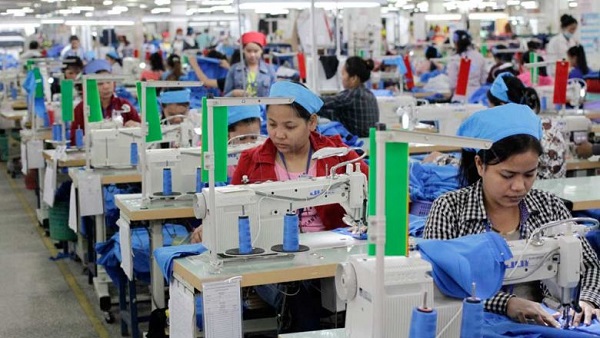
Garment industry experts from Cambodia opine, recent surge in exports may not boost profit margins as production costs in the country have increased simultaneously. Data from the Garment Manufacturers Association in Cambodia (GMAC) shows, Cambodia’s exports of textile-related products increased 15.2 per cent to $11.3896 billion in 2021. Garments exports increased to $8.017 billion, footwear shipments surged to $1.390 billion, export of travel goods amounted to $1.490 billion while exports in other categories grew to $0.49 billion.
Surge in logistic costs dent profit margins
However, the garment sector’s profit margins failed to grow in tandem with exports, says Kiang Monika, Secretary General, GMAC. The garment industry has invested a lot of money on measures to prevent COVID-19 transmissions. However, surge in logistic costs have dented profit margins. Effective coordination between ministries and sectors can stabilize garment production in Cambodia, adds Kong Sang, Chairman, GMAC.
The Cambodian government has launched several initiatives for the garment sector, says Ith Samheng, Minister of Labor and Vocational Training, Cambodia. These include a comprehensive roadmap titled ‘The Strategic Framework and Program for Economic Recovery in the Context of Living with COVID-19 in a New Normal 2021-2023’.
Initiatives to boost sector growth
The government also plans to introduce a 2021-2024 labor sector strategy to boost employment and vocational training for garment workers over year the next three years, adds Samheng. Additionally, the labor ministry has urged the National Employment Agency (NEA) and private recruitment agencies to supply workers to factories and enterprises in order to increase their various production capacities.
The primary voice for garment sector investors in Cambodia, GMAC has established a new forum to discuss various issues impacting Cambodia’s overall investment climate. The association acts as the sole representative of investors in the garment sector and protects their legitimate rights and interests, adds











