FW
Indian cotton yarn market struggles with low domestic demand, higher cotton prices, leading to drop in exports
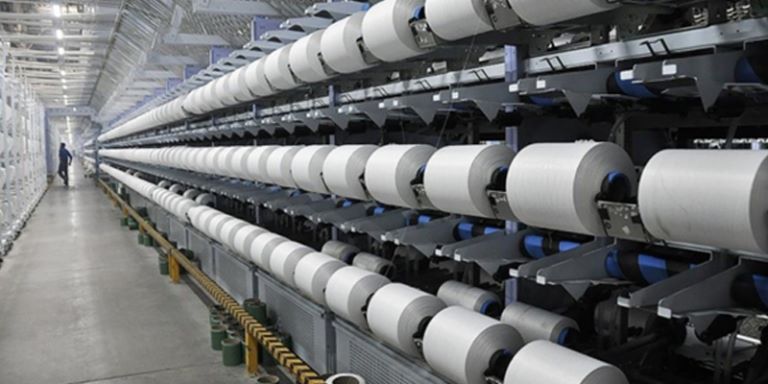
Textile mills in the state are facing a challenging time due to low demand for yarn in the market. Despite spinning mills running at nearly 90% capacity and cotton prices remaining stable, the demand for yarn is tepid. The situation is worse for small-scale spinning mills, where high power and cotton costs along with a dull market have hit operations hard.
According to K. Selvaraju, secretary general of the Southern India Mills’ Association, indicative data of yarn prices show considerable, but demand has fallen in the last one-and-a-half months.
According to Open end Spinning Mills’ Association, despite slight improvement in demand, prices remain a problem. With textile mills slowing down for the last few months, open end spinners are unable to get waste cotton, and as a result, comber noil prices are higher than last year.
Cotton prices are lower than the last year's price levels but higher than the present international prices. This has made Indian yarn uncompetitive in the international market, and buyers are gravitating towards countries like Vietnam.
Final phase of Canton Fair highlights textiles, fabrics, and clothing
The 133rd edition of China's Canton Fair has entered its final phase, with textiles, fabrics, and clothing taking centrestage in Guangzhou.
Despite coinciding with the ongoing Labor Day holiday, exhibitors remain keen to find new business opportunities. The previous phase generated over $4.5 billion worth of exports, featuring toys, home decorations, and various consumer products.
The trade expo's final stretch is showcasing a range of goods, including pharmaceuticals, healthcare products, and rural revitalization products. Many exhibitors are optimistic about the event's success, with some hoping to export their brand to new markets, including European customers.
As the Canton Fair concludes on May 5th, attendees are hailing the return of face-to-face business and the event's ability to facilitate trade amidst the ongoing pandemic.
Peru's textile industry calls for regulation to boost exports, protect local producers
Peru's petrochemicals-based textile industry is calling for a specific law, similar to that of the agricultural sector, to be implemented to protect local producers from unfair competition from cheaper products, particularly from China. According to the head of textiles at trade group Sociedad Nacional de Industrias (SNI), this regulation could help boost textile exports by $2 billion in the US market within a few years.
Despite the COVID-19 pandemic, Peru's textile exports increased by 7.8% in 2020, with the sector employing around 400,000 workers in a country of 34 million residents. However, textile exports are still below their peak in 2014, when they reached $1.2 billion. China is the main competitor of Peru's textile industry, accounting for 53% of Peru's textile imports in 2020, followed by Vietnam (11%) and Bangladesh (6%), according to the Ministry of Production.
Although the Peruvian government created a national plan for the development of the textile and clothing industry (PLANTEX) in 2016, some industry experts argue that more targeted regulation is needed to protect local producers and boost exports. The proposed law for the textile industry would be similar to the Law for the Promotion of the Agricultural Sector, which provided tax incentives and other benefits to support agricultural production and exports.
Peru's textile industry is dominated by small and medium-sized enterprises (SMEs), which often struggle to compete with larger, more established companies.
If implemented, the proposed regulation could level the playing field and support the growth of SMEs in the sector.
Vietnam's textile, garment and leather exports hit hard
Vietnam's exports have been hit hard by weakening global demand, according to experts.
Exports have decreased across most industries, including garments, agriculture, forestry, fishery and wood processing. Local exporters are struggling to meet their growth targets, as exports fell 11.9% year-on-year in the first quarter. Total exports and imports were estimated at $154.3 billion in the same period, down 13.3% year-on-year.
The hardest-hit sectors include textiles, garments, leather and footwear, timber and seafood, with the United States and the European Union being the main export markets. The decline has been attributed to high inflation and the slowing global economy, particularly the risk of an economic crisis in some of the country’s major markets.
Exporters are also facing higher raw material costs while export prices remain unchanged, reducing the competitiveness of their products. The cost of labour, packaging, and transportation has also been on the rise
Industry bodies are recommending that the government provide a low-interest credit package of 10 trillion dong ($438 million) to support farmers and fishermen to buy raw materials to maintain production.
Prosper Africa and USAID support co-investments between US and Kenyan clothing firms, including MAS Intimates
Kenya and the United States have agreed on six new co-investments totaling $55 million in the clothing industry, as part of an ongoing effort to enhance economic ties between the two countries. The program is supported by Prosper Africa and the US Agency for International Development (USAID). The recent agreements show how committed the US is to enhancing its economic ties with Kenya.
The co-investments with American and Kenyan clothing firms are set to generate more employment in both Kenya and the US by making it easier to conduct business together. The US government, through the federal program called Prosper Africa, is linking US and African companies with fresh customers, suppliers, and investment prospects.
As part of the new agreements, the clothing company MAS Intimates will educate Kenyan workers and generate jobs in the formal sector to enhance the production of high-quality clothing created in Kenya. United Garment Liquidators (UAL), a discount clothing company, will boost garment exports to the US market by constructing a one-stop shop in Kenya that synchronizes all phases of the production process from "Farm to Fashion." Mega Sports Apparel will increase its production capacity by incorporating new production lines.
The purchase of machinery by Kenya's Coast Apparel will help improve production and export capability, resulting in additional jobs for women and young people. Best Lifestyle, situated in Athi River, will increase its production in Kenya and hire and train additional workers. The US-based packaging company Nexgen Packaging will build a facility in Kenya to produce tags and labels for clothing and footwear that will be sold both inside and outside of Africa.
A trade mission to America, which includes a roadshow in New York, aims to attract more US investment in Kenya.
Sudan conflict: Bangladeshis look at alternative sources for cotton from other African countries
Ongoing conflict in Sudan will not significantly impact Bangladesh's import of cotton from the country, as it only accounts for a small part of the total import, and local importers, spinners, and millers have alternative sources in other African countries, according to industry experts.
African countries, particularly those in the west, including Benin, Lesotho, Chad, and Sudan, are critical sources of cotton for traders in Bangladesh. Western clothing retailers and brands have long banned the use of cotton from these countries under the excuse of using child labour in the cotton industry.
As a result, local spinners, traders, importers, and millers have started sourcing cotton from African countries. According to the Bangladesh Cotton Mills Association (BTMA), African countries provided 37.3% of the total cotton required in the fiscal year 2019-20. That percentage has since risen to over 40%, with Sudan accounting for only 5-6% of the total cotton imported from African countries.
The local cotton traders, spinners, millers, and importers started diversifying from India in sourcing their cotton since 2008 when India stopped shipments of cotton several times without prior notice. As a result, they have reduced their overdependence on Indian cotton and started sourcing from other African countries, the US, Brazil, Australia, and Argentina.
In fiscal year 2019-20, the share of cotton imported from African countries stood at 37.06%, India 26%, CIS 11.35%, Australia 4.65%, US 11.14%, and others 9.65%, according to the BTMA.
Bangladesh imports nearly nine million bales of cotton annually, at a cost of nearly $3 billion for use in nearly 500 spinning mills. The local production of cotton can meet less than 1% of the annual demand.
Industry believes the Sudanese crisis would not have any impact on the local cotton sourcing, textile, and garment sectors. While Sudan is still a small source nation for Bangladesh, other African nations, such as Benin and Mali, are major sources for cotton for Bangladesh as local traders import bulk quantities from those countries.
Pakistan Accord gains momentum with Hugo Boss becoming 36th signatory
Luxury fashion brand Hugo Boss has become the 36th company to sign the Pakistan Accord, which aims to protect workers' rights and promote safer working conditions in the textile and garment industry.
The accord is an extension of the International Accord for Health and Safety in the Textile and Garment Industry, which was formed after the Rana Plaza tragedy in Bangladesh in 2013. Hugo Boss, which is also a signatory of the larger accord, sources from Interloop Limited, a prominent hosiery maker that also supplies to other brands including Adidas, Nike, H&M, and Target.
Launched in 2021, the Pakistan Accord is expected to cover 500 to 700 facilities and tens of thousands of workers, with 110 companies currently expected to sign up. The accord is legally binding and requires signatories to carry out inspections, remediate any safety hazards identified, and establish an independent complaints mechanism to ensure workers' voices are heard. Signatories are also required to provide safety training to workers.
The textile and garment industry in Pakistan employs around 15 million people and is a major contributor to the country's economy. However, the sector has faced criticism in the past for poor working conditions and lack of worker protection. The Pakistan Accord seeks to address these issues and promote worker well-being.
Other brands that have signed the Pakistan Accord include Zara owner Inditex, American Eagle Outfitters, and Calvin Klein parent PVH Corp. However, Levi's has so far refused to sign the accord.
US: Clothing, accessories stores hit hardest as consumer spending drops, inflation concerns linger
Consumer spending in the US has taken a hit for the second consecutive month as the latest retail sales data from the US Census Bureau shows that consumers pulled back on their spending in March.
The decline in spending is seen across several categories with clothing and accessories stores being hit the hardest, slipping 1.7% month on month and 1.8% from a year ago. Spending on electronics and appliances was also down 2.1% month over month, while furniture and home furnishings dropped by a respective 1.2% and 2.4%.
Overall, spending declined 1% month over month on a seasonally adjusted basis, following a 0.2% decline in February versus January.
The research from PYMNTS suggests that this pullback in consumer spending is due to the average consumer not expecting inflation to return to normal until the end of 2024.
From backlash to recovery: Western brands' journey in China over Xinjiang cotton controversy
The boycott in China of Western brands associated with the Better Cotton Initiative (BCI) began in March 2021 after allegations of forced labor in Xinjiang cotton production surfaced.
BCI promotes sustainable cotton production and has been under scrutiny in China since it announced it would stop licensing cotton from Xinjiang due to concerns over human rights abuses. Several other Western brands faced backlash and boycotts in China, including Nike, H&M, and Burberry.
Nike and H&M faced significant backlash in China, with many of their stores being closed and their products being removed from major Chinese e-commerce platforms. H&M's sales in China dropped by 23% in the first quarter of 2021, and the company faced calls for a boycott from Chinese consumers and celebrities. Nike faced a similar situation, with some Chinese consumers cutting up their Nike products in protest.
Burberry also faced a backlash in China, with its sales falling 23% year on year in the quarter ended December 2022. The luxury brand appointed its first Chinese ambassador, Chen Kun, in two years earlier this month, marking a step towards recovery in the Chinese market.
Other brands, such as Adidas, have focused on rebuilding their reputation in China by promoting Chinese culture and incorporating Chinese elements into their products. Adidas signed a three-year partnership with the Chinese Literature and Art Foundation in November 2022 to help promote Chinese culture to the rest of the world. The company has also sponsored local sports events and tapped local designers to incorporate Chinese cultural elements into its products.
As China's economy bounces back, recovering lost market share has become a key priority for Western brands in China. However, with competition from domestic brands and ongoing scrutiny of issues such as forced labor, brands such as Adidas are taking a cautious approach to rebuilding their presence in China.
Luxury brands in China shift retail strategy with independent flagship stores
Luxury brands are shifting their retail strategy in China by building independent flagship stores in the country's top-tier cities.
The stores, which offer a more experiential shopping experience, allow luxury brands to adapt to consumer trends without negotiating with mall managers. In addition, brands have complete ownership of the stores and can create unique and memorable brand experiences. These standalone boutiques provide space for brands to create temporary pop-up stores, in-store trunk shows and host events for their VIPs.
Luxury brands are seeking to redefine the role of traditional counters and boutiques by incorporating cultural elements, coffee shops, art galleries and beauty salons into their stores.
Over 60% of respondents expect beauty labels to incorporate spa salons into their stores, according to a survey by a Chinese media platform