FW
Telangana to create textile value chain in the state
After having excelled in the fields of IT and pharma, Telangana has now set its sights on the textile sector. The state aims to create an end-to-end value chain for the industry to boost its prospects, says a Times of India report. One of the state’s plan is to set up the country’s largest textiles park — Kakatiya Mega Textile Park (KMTP) —over 1,200 acre for offering a complete manufacturing ecosystem for the textiles and apparel industry within its premises.
According to Jayesh Ranjan, Principal Secretary, IT & industries, Telangana, the state has acquired the required land for the project and is currently developing its infrastructure. It has also allotted 350 acre to two companies, Youngone Corporation and Ganesha Ecosphere. KMTP will also set up plug-and-play infrastructure for local weavers and textile manufacturers and a common effluent treatment plant. It will set up training centers in Warangal and its catchment villages to train the local population.
The state government also plans to set up country’s first technical textile testing lab with the help of the Centre at KMTP this year. The lab will be set up with an investment of Rs 150 crore.
Monforts Centre receives 36-roller raising machine
The Monforts Advanced Technology Centre in Monchengalbach, Germany received 36-roller raising machine manufactured in 1918. Introduced by Monforts, the raising machine proved to be a revolutionary product in the 19th century as it used low friction ball bearings for its raising rollers. This reduced the wear and maintenance of the raising rollers.
Despite current travel restrictions, the Monforts Advanced Technology Centre (ATC) is fully operational for industrial-scale trials and is run by highly experienced staff on behalf of customers. Since its opening in 2013, the technology centre has invested over €3 million in equipment. Spread across 1,200 sq m, the centre houses two full finishing lines, engineered to accommodate an extremely diverse range of processes based around the industry-leading Montex stenter, in addition to a Thermex range for continuous fabric dyeing and the newly developed CYD process for yarn dyeing.
New survey predicts 37 per cent brands to close stores this year
As per a Brightpearl survey, over 37 per cent of fashion brands plan to close stores across the globe this year. Around 56 per cent of retailers will shut their physical stores while 66 per cent of shoppers don’t plan to visit a mall in the next year.
One in five retailers plan to move their stores from major city centers and into local neighborhoods within the next 12 months. However, around 58 per cent retailers expect their e-commerce operations to fare much better than the rest of their business in the next 12 months.
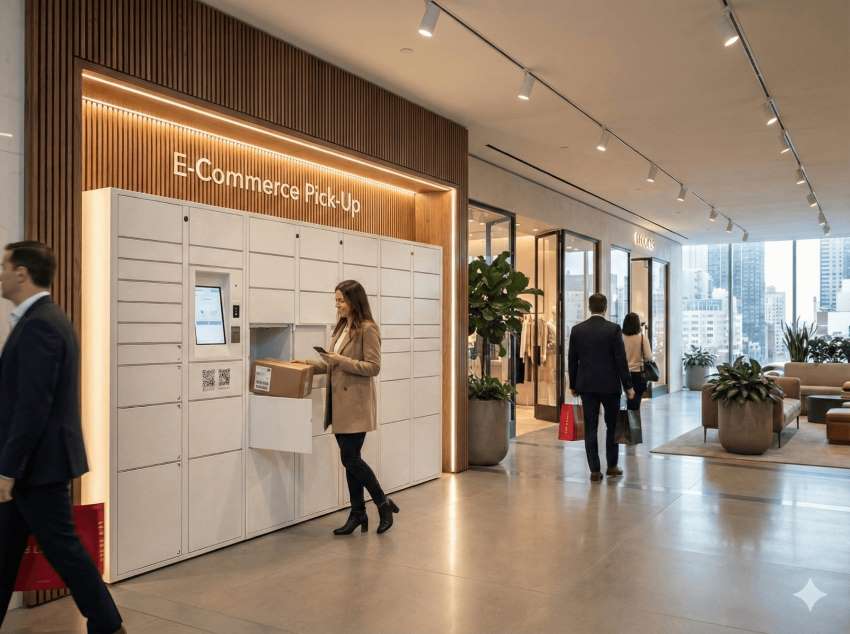
These retailers plan to ramp up their digital operations over the next year to meet growing demand. Technically savvy companies plan to add local collection points to their online delivery, capitalizing on customers' increased preference for local shopping. Brands that are prepared to adapt to this once in a generation retail transformation will prove to be successful in the long-term, says the survey
Adidas to sell Reebok brand
German sportswear maker Adidas AG plans to sell its underperforming brand Reebok, 15 years after the US fitness label was bought to help compete with arch-rival Nike. Adidas will divest Reebok as a part of a five-year strategy it plans to present on March 10. It will report Reebok as a discontinued operation from the first quarter of 2021. It will either spin off Reebok as a stand-alone public company, or sell the brand to private equity, another major sports retailer or a multibrand player like VF Corp.
The company bought Boston-based Reebok for $3.8 billion in 2006 but its sluggish performance led to repeated calls from investors to dispose of the brand. The brand’s net sales fell 7 per cent in the third quarter of 2020 to €403 million after falling as much as 44 per cent the preceding quarter. In 2019, Adidas wrote down Reebok's book value by nearly half, compared with 2018, to €842 million.
Analyst believe Reebok's recent collaborations with celebrities like Cardi B and a refreshed focus on women's apparel have put the brand in a better place.
Punjab slips to the 7th position as exports tank in 2019-20
A major textile and garment hub, Punjab has slipped to the seventh position in volume of net exports in the sector in 2019-20. As per Ministry of Textiles, Punjab exported textiles and garments worth $1,509 million in 2019-20. The state was preceded by other states such as Gujarat, Haryana, Karnataka, Maharashtra, Tamil Nadu and Uttar Pradesh.
Industrialists warn Punjab’s position may slip further if the Centre and the state government keep turning a blind eye to the problems of garment and textile industry. Harish Dua, Executive Council Member, Apparel Export Promotion Council opines, at one time Ludhiana was the number one garment manufacturer in the country, but due to the apathy of the successive Central and state governments, its position was taken over by other states. Dua believes one of the biggest hurdles for Ludhiana's garment exporters is huge expenditure incurred on outgoing freight till the ports as compared with the other states. Manufacturers have been demanding freight subsidy for garment exporters of Punjab since many years.
Vinod Thapar, Chairman, Knitwear Club, advises the Centre and state to come together and introduce a tailor-made technological upgrade scheme for the state, under which it should be given financing at 0 per cent rate for purchase of machinery.
However, Narinder Mittal, General Secretary, Ludhiana Business Forums says, textiles is a vast term that includes a wide product range, including denims, carpets, saris, home furnishing and specialised fabrics. However, Punjab produces nothing of this sort and therefore lags behind other states UP and Gujarat. He urged the state and central governments to take steps to uplift the garment industry of Ludhiana.
Bangladesh apparel prices witness sharp fall in EU and US markets
As per a study by the Centre for Policy Dialogue (CPD), the prices of Bangladeshi apparel items have fallen sharply compared to the Vietnamese products in the EU and US markets. The price of 100 kg of made-in-Bangladesh cotton fiber T-shirt declined by 1 per cent year-on-year to €1,091.5 euros in 2020. However, the price of the same product made in Vietnam rose by 3 per cent to reach €2,157.9.. Similarly, the price of each 100 kg of women or girls' cotton fibre pullover made in Bangladesh decreased by 7 per cent year-on-year to €1,329.5 in 2020 whereas the price of the Vietnamese ones stabilized at € 2,157.8.
The prices of each 100 kg of Bangladeshi man-made fibre pullovers for women and girls fell by 6 per cent to 1,319.4 euros from 1,409.6 euros in 2019 at the EU markets. However, the Vietnamese variant has seen only a 3 per cent year-on-year price fall, hitting 1,906.2 euros in 2020.
In the US market, the price of a dozen of Bangladeshi T-shirts made from cotton fell by 20 per cent to $17.99 in 2020 from $22.43 in 2019 while the price of the same product made in Vietnam declined by 17 per cent to $31.9 in 2020 from $38.2 in 2019.
The price of a dozen Bangladesh made sweaters and pullovers declined 2 per cent to $39.31 in 2020 from $40.23 in 2019. The price of a dozen of Bangladeshi manufactured trousers for women and girls made from cotton fibre declined by 12 per cent to $64.17 in 2020 from $72.88 in 2019 while its Vietnamese variant has seen only a 6 per cent price fall, reaching $84.6 in 2020 from $90.5 in 2019.
Bangladesh's export performance was driven by both volume and value factors, according to the CPD study. Exchange rate management is emerging as a key factor, driving export competitiveness, it said.
The CPD also said the export target set for fiscal 2021 to achieve 21 per cent growth over fiscal 2020 will not be achieved.
Direct-to-consumer brands continue to bond with consumers in smaller cities
 As per a report by Unicommerce and Kearney, India’s e-commerce order value and gross merchandize value grew by 36 per cent and 30 per cent in the last quarter of 2020. However, the average order value was 5 per cent during the quarter as compared to the same period last year.
Backbone of the retail industry
The last quarter of 2020 reflected the changing consumer behavior and traced the consumers shift from physical to online shopping. During this period, e-commerce emerged as the backbone of the retail industry, with its growth accelerating due to COVID-19 and subsequent lockdowns. The sector is currently growing at a CAGR of over 20 per cent annually. Sales volumes in these sectors have grown 95 per cent and 46 per cent Y-O-Y respectively.
F&H emerges as the fastest gsrowing sectors
With value growth of 94 per cent in Q4-20 compared to the same period last year, FMCG & healthcare (F&H) is one of the fastest-growing categories. Strong growth in the value of this sector is supported by 46 per cent order volume growth in Q4 2020.
The electronics segment witnessed 12 per cent YoY growth in AOV in addition to 27 per cent YOY growth in volumes and continues to drive the highest share of the e-commerce value. On the other hand, the fashion and accessories segment reported 37 per cent YOY volume growth. However, the sector’s AOV declined by 7 per cent YOY in Q4-2020 as compared to the same period last year. The growth of this sector is supported by the purchase of lower value products such as comfort wear and loungewear.
Growing contribution of Tier II and III cities
With e-commerce companies focusing on Tier II and III cities, the contribution of these cities to the overall e-commerce sector continues to increase gradually over the last few years. During the last quarter of FY2020, sales from smaller cities grew a whopping 90 per cent in both volume and value. As a result, the volume share of these cities grew to 46 per cent from 32 per cent and value share grew to 43 per cent from 26 per cent during the Q4 CY2020 as compared to the same period last year.This growth was supported by factors like the rising adoption of social commerce, faster and timely deliveries, vernacular content and greater internet penetration with growing adoption of digital payments.
Direct-to-consumer (D2C) strategies are also helping brands to develop a strong bond with consumers. These brands e recorded strong volume growth of 94 per cent which showcases their immense future potential.
MAS Holdings inspires other brands with its line of innovative products
 MAS Holdings earned about 11 per cent of its revenues from innovative products. Since 2013, the company has been launching many innovative products that blur the lines between apparel, healthcare and technology, says a report by Economy Plus. In 2013, it launched the SPRYNG device, a battery operated, smaller and effective device that enables the wearer to move around freely.
World’s most influential innovator
Available online at spryungme.com, the SPRYNG device is a product manufactured at a Silicon Valley like startup located in a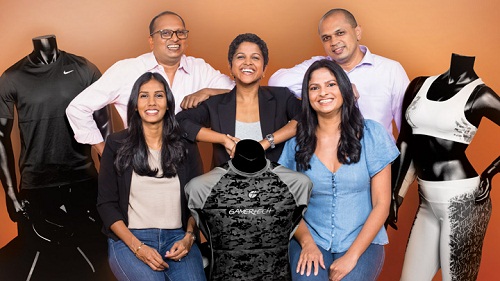 remodeled Colombo warehouse. MAS Holdings also bagged Clarivate’s most influential innovator award in South and South East Asia for this innovation. The award tracks scientific advances and patents around the world. MAS Holdings designs, manufactures and manages supply chain for some world leading apparel brands including Nike and Victoria’s Secret. It has launched many updated processes like the lean manufacturing apparels.
Though MAS has a vertically integrated R&D division, its products help athletes improve performance like the active compression device SPRYNG. The current wearable tech products developed at its group company Twinery in collaboration with universities and companies are exclusive. With Flex, MAS launched many products that address the challenge of mixing hard goods like motors and batteries on sports apparels with water.
Speeding athlete recovery by three times
The newly launched compression device can speed up recovery by almost three times. It wraps around the calf muscles and is secured with Velcro. Its Wavetec compression pattern of pneumatic powered messaging increases the rate at which blood is circulated to the heart. It isn’t an item of clothing at all, unlike most everything else MAS sells.
Most of MAS’ sales are generated from business to business operations. However, the company’s partnership vary as per innovations. It recently adopted the revenue and profit sharing model. Twinery also develops new products for its clients. Since the last five years, the company has been applying its knowledge of human acquired over the last 20 years to address health issues. A pioneer in this field, the company has now inspired many fashion and sports brands across the world.
E-commerce platform Fabric announces $43 million Series A funding round
E-commerce platform Fabric has announced a $43 million Series A funding round led by Norwest Venture Partners. Redpoint Ventures and Sierra Ventures will be the additional partners in this funding round. The investment will be used to accelerate product development of its headless commerce platform, expand the Fabric team and meet the growing demand for its commerce technology.
Fabric’s platform is an API-driven, modular system, built for how growing D2C and B2B brands, including ABC carpet & home, GNC, and Juicy Couture, need to scale. With Fabric, marketers and merchants can execute on creative decisions, without pulling in extensive engineering resources. Companies can utilize either the entire, extensive Fabric suite or incorporate specific tools into their existing system, including an Experience Manager (XM), Product Information Manager (PIM) and Order Management System (OMS). Unlike the traditional laborious processes required to modernize a brand’s e-commerce platform, Fabric takes only weeks to on-board, saving time and money, Fabric said in a media statement.
Following the successful launch of its cloud-native experience and commerce product suite in October 2020, with this latest round, Fabric is focused on expanding its product offerings, accelerating retailer on-boarding and workflow, continuing to meet the ever-changing needs of retailers and eliminating the need for re-platforming. The round will also go toward recruiting top talent, according to Fabric.
The Pakistan Readymade Garments Manufacturers & Exporters Association
(PRGMEA) has sought the duty-free import of fabric along with yarn, as the cotton prices found no respite from an unabated spike with the industrial input trading at season’s highest rates because its muted local production continues to widen demand and supply gap.
As per a Daily Times report, Adeeb Iqbal Sheikh, Vice Chairman, PRGMEA said that a huge number of export orders are being received by the value-added garment industry, however, exporters are not accepting the orders for the calendar year 2021 due to skyrocketing price of fabrics in the country along with short availability, especially of the denim fabric. He urged the government to also abolish duties on the import of fabrics in line with the import relaxation provided on import of cotton yarn, as value-added garment sector is facing severe shortage of basic raw material of fabrics, which may lead to a drastic decline in value-added textile export. It is to be noted that price of cotton of Sindh were Rs10,000 to Rs10,700 per maund. Cotton of Punjab was sold at Rs10,200 to Rs11,000 per maund, while lint from Balochistan was sold at Rs10,500 per maund. Prices also increased in Brazil, Argentina, Central Asia and India.
Due to an increase in the prices of cotton yarn the rates of fabrics are also going up while brokers are also active to stock it maximum, the garments manufacturers appealed to government to get the yarn and fabrics export banned besides allowing duty-free import of them from all countries. Value-added exporters also demanded removal of all types of duties on import of fabrics and yarn.