FW
Gap, Walmart collaborate for new collection of home essentials
Gap and Walmart have collaborated to launch Gap Home, a new collection of home essentials available exclusively at Walmart. The Gap Home launch collection will feature more than 400 items across home décor, tabletop, bedding and bath, ranging in price from $15.88 for a washed denim pillow to $64.98 for a T-shirt soft jersey reversible king comforter set perfect for dressing all spaces, from college dorms to forever homes. The collections will be developed in partnership with Gap’s licensing agency, IMG.
The collection features quality materials like denim and chambray with unique finishes at a price point that is accessible to all customers. It includes items made with organic cotton and recycled materials. This partnership with Walmart enables it to introduce a new category in a smart, scalable way, says Mark Breitbard, President and CEO, Gap. The collection opens a new door for Gap as a lifestyle brand delivering timeless American Style in all new ways, he adds.
South Korean firm builds five textile factories in Bangladesh
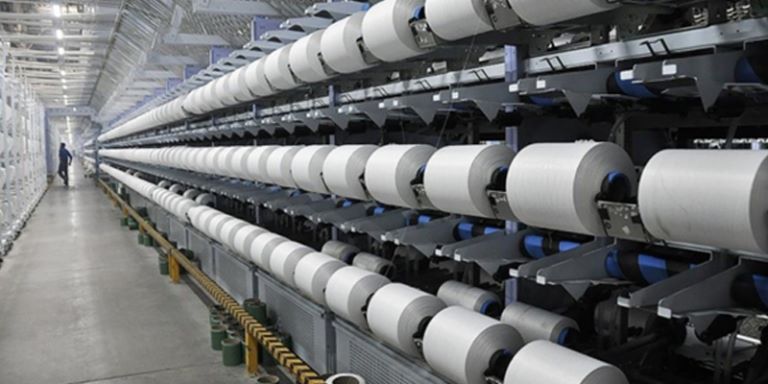
South Korea-based organization Youngone is constructing five state-of-the-art textile factories in the Korean Export Processing Zone (KEPZ) located in Chittagong, Bangladesh. The three factories will produce manmade fiber yarn and finished garments on a combined floor space of 2 million sq. ft. This will reduce Bangladesh’ dependence on imports, views Mohammad Hatem, First Vice President, BKMEA. Since these yarns will be duty-free they will raise the production of high-end garments and increase Bangladesh’s export earnings. Md. Mushfiqur Rahman, Assistant General Manager, KEPZ, adds, the five new facilities will be able to meet 25 percent of the MMF demand in Bangladesh.
Faruque Hasan, President BGMEA, the global synthetic fiber market is expected to reach $62.74 billion in 2021 and this project by KEPZ will enable Bangladesh to take part in that race. Youngone is expanding the scope of Bangladesh-made textile line to include both blended and more sophisticated fabrics, both 100 per cent polyester knit and woven fabrics, polyester blended fabrics, both knit and woven (blended wool, cotton, rayon, spandex, polypropylene (PP) and many more), Merino wool knitwear, and various polyester warp knitted fabrics.
Kering sells $1.0 billion shares in Puma
To increase its focus on higher-end luxury brands, French group Kering sold additional $1.0 billion worth of shares in German brand Puma. Kering sold approximately 8.9 million shares, representing approximately 5.9 per cent of the share capital of Puma through its qualified investors only by way of an accelerated book building process.
The sale reduces Kering’s shareholding in Puma to 4 per cent Kering held 83.7 per cent shares in the German brand in 2018 when it announced plans to gradually wind down its investment. As per the Frankfurt stock exchange, the sale transaction is worth more than €830 million or $1.0 billion. Proceeds from this transaction will be used for the general corporate purposes of Kering and will further strengthen its financial structure.
A global Luxury group, Kering manages the development of a series of renowned Houses in Fashion, Leather Goods, Jewelry and Watches: Gucci, Saint Laurent, Bottega Veneta, Balenciaga, Alexander McQueen, Brioni, Boucheron, Pomellato, DoDo, Qeelin, Ulysse Nardin, Girard-Perregaux, as well as Kering Eyewear. The company set new standards in luxury by placing creativity at the heart of its strategy.
Lenzing Group aims for carbon neutrality by 2025
Lenzing Group has set a target to achieve climate neutrality by 2025. The group recently commissioned a new air purification and sulfur recovery plant at its facility. The plant has been developed with an investment of €40 million and it uses state-of-the-art technologies to reduce carbon emissions by 15,000 metric tons at the Lenzing facility. This will also make the group more self-sufficient in securing vital raw materials for processing, which will bolster the site’s competitive standing in terms of sustainability.
The Lenzing Group is an ecologically responsible producer of specialty fibers made from the renewable raw material wood. As an innovation leader, Lenzing is a partner of global textile and nonwoven manufacturers and drives many new technological developments. The Lenzing Group’s high-quality fibers form the basis for a variety of textile applications ranging from elegant ladies clothing to versatile denims and high-performance sports clothing. Due to their consistent high quality, their biodegradability and compostability Lenzing fibers are also highly suitable for hygiene products and agricultural applications.
Sweden opens world’s first fully automated textile sorting plant
Vinnova, the Swedish government’s research and development agency, and IVL, the Swedish Institute for environmental research have opened the world’s first fully automated textile sorting plant in Sweden. The plant is being designed and built by Stadler and Tamara as a part of the SIPTex project. This is the third phase of the project which began with the start-up of the fully automated sorting plant Sysav Industry AB in Malmö. The plant has a capacity of upto 4.5 ton/hour in one line. The incoming material is delivered in bales comprising pre-and post-consumer textile waste, i.e. industrial waste such as cuttings, yarns, and scrap, and used domestic clothing and textiles.
In the third phase, the project aims to ascertain that the system can all be sorted and separated by type and quality. The company also aimed to determine if it could successfully operate on an industrial scale, and the output fractions can achieve the purity and recovery required for recycling and reutilization also there is no industrial-scale technology for recycling textiles without down-cycling them.
Physical retail metamorphoses with new store formats and locations
 Physical retail went through a huge transformation last year due to the pandemic. As per Euromonitor International estimate, the world lost around 135 million sq mt of selling space as 1.7 million retailers closed stores. The analyst expects in-store shopping to further reduce to 76 per cent by 2025 from 81 per cent in 2020.
Change in store sizes and locations
Around 5 per cent of non-grocery retail stores in Western Europe and North America closed permanently last year. Global retailer Inditex plans to close 1,200 stores globally by 2022 to focus on larger flagship outlets while Coffee giant Starbucks aims to shut around 800 stores in dense metro centres.
High street retailers are also changing their store locations and formats. UK-based retailer Harrods is moving into the surburbs by launching its f H Beauty outlet at Intu Lakeside in Essex. The retailer plans to launch another store at Intu in Milton Keynes.
Emergence of new store concepts
Retailers are also experimenting with new store formats like pop-ups, store-within-a-store and mobile or ‘shop-on-wheels.’ Jewellery brand Swarovski opened 28 temporary Instant Wonder stores in 2021. The first of these instant Wonder pop-ups was launched in Milan in February 2021. It provided consumers with a more premium multi-sensory shopping experience.
Popups like these are likely to gain more popularity as they help retailers create brand-focused and experience-led spaces besides allowing them to sign more flexible, short-term lease agreements. An innovative store concept set to officially launch in Spring 2021, Grocery Neighbor is designed in the form of a truck with two doors, The concept enables retailers to create a mobile grocery stores for consumers.
According to an Euromonitor International survey, the store concept benefits consumers working from home post pandemic, and older consumers’ hesitating to return to supermarkets or convenience stores .Grocery Neighbor aims to expand the store concept to 1,000 trucks outside Toronto within the next five years.
Re-examining retail strategies
Retailers are also converting stores into warehouses or micro fulfillment centres. Spanish retailer El Corte Ingles has converted a Bricor DIY store into warehouse to fulfill online food orders in just 10 days. Such local micro-fulfilment centres are likely to gain more popularity with Walmart planning to roll out local fulfilment centres at dozens of stores in the US in 2021.
Moving forward, retailers will need to re-examine the size, location and role of their stores. They would have to redesign these stores to play multiple roles as fulfillment centres and engagement areas. They would also have to adopt an omnichannel strategy to tap consumers from smaller cities.
Fashion companies’ revenues drop by 20%
Revenues of all major fashion companies such as Minor Group, the marketer of Esprit, Bossini, Charles & Keith and Anello brands; ICC International Plc, the marketer of Arrow and Guy Laroche; and Greyhound Co, the marketer of Greyhound and Smileyhound by Greyhound lifestyle fashion brands, have fallen by an average of 20 per cent.
DhitibhumWongkiatkachorn, Marketing and Business Development Director, Greyhound Co, says, the company’s online sales are also suffering compared to the first outbreak last year because of weakened consumer confidence. Greyhound believes the tepid market sentiment will continue until the third quarter this year. As a result, the company is postponing the launch of new sporting product lines for its two fashion brands, Greyhound and Smileyhound, as well as a new fashion brand until the fourth quarter this year. However, the firm has expedited the launch of its sales campaign for its summer collection by two to three months, running from May to June 30 this year.
Minor Group’s retail trading business (MINT) in the first three months this year dropped by 31 per cent to 473 million baht, mainly due to weak consumer spending in the fashion business, the temporary closures of some stores and the slowdown of the tourism sector amid COVID-19.
At the end of the first quarter of this year, MINT reported the number of its shops dropped to 428, down from 473 in the same quarter last year, primarily from the closing of the OVS and Etam brands. Of the total 428 retail trading outlets, 77 per cent are operated under fashion brands, including Anello, Bossini, Charles & Keith, Esprit and Radley, while 23% are operated under lifestyle brands including Joseph Joseph, Zwilling J.A. Henckels, Bodum and Scomadi.
According to Chaiyapat Paitoon, MINT's chief strategy officer, non-essential spending could be suspended from 2020-2022 as the group focuses on the hotel and food businesses.
Thammarat Chokwatana, Executive Vice-President, ICC International, said, the company plans to focus on promoting potential brands and explore new channels to drive sales
C&A to set up denim factory in Germany
Retailer C&A is building a factory to manufacture denim jeans in Mönchengladbach, Germany.
As per reports, the factory will produce 400,000 jeans per year, later doubling to 800,000.
C&A will work with Niederrhein University of Applied Sciences, the Textile Academy NRW and RWTH Aachen University on the project, incorporating highly automated sewing and laundry processes.
The Factory for Innovation in Textiles (FIT) will set new standards in textile production, according to C&A.
Rolf Königs, Chairman, Rheinische Textile and Clothing Industry Association, says, this investment by C&A underlines that the textile industry in the middle of Europe is back. First jeans from the factory will be available next year.
In 2018, C&A worked with mill Rajby to develop the first jeans with the Cradle-to-Cradle Gold level certification. In 2020, its Beluga jeans were awarded with a platinum award.
AP spinning mills reduce production by 40%
According to Lanka Raghurami Reddy, President, AP Textile Mills Association, spinning mills in Andhra Pradesh have reduced 40 per cent of their cotton production due to COVID -19 and workers shortage.
While some spinning mills are working in two shifts, while others are running in single shift only. There are 120 spinning mills in the state which produce 687,884 metric tonnes of cotton yarn per annum.
They export Rs 842 crore worth cotton yarn to various countries and states. Spinning mills are directly providing employment to one lakh workers and indirectly generating employment to four lakh workers.
Almost all the spinning mills have reduced 40 per cent of cotton yarn production for the last three months. According to sources in the AP Textile Mills Association, due to the lockdown, textile mills in West Bengal, Gujarat, Tamil Nadu and Maharashtra States are not purchasing cotton yarn.
Every spinning mill on an average has been producing 25 metric tonnes to 30 metric tonnes of cotton during the last three months. Over Rs 350 crore to Rs 450 crore worth cotton yarn stocks are piled piled up in the spinning mills. As a result the mills are facing working capital problem and unable to pay loan installment to banks, maintenance expenses.
When the COVID-19 cases were on rise, the workers working in the spinning mills went to their natives places taking their last year experience into consideration.
As a result the spinning mills are working with the available workers. If the same situation continues, the spinning mills will face severe financial crisis, adds Reddy
Uniqlo clarifies cotton used in shirts blocked by the US not sourced from China
Japan’s clothing retailer Uniqlo Co has clarified that the shirts, whose imports have been blocked by the United States, are made from cotton sourced from outside China. As per Japan Times, the shirts are made at a plant in China using cotton procured from outside the country. Uniqlo emphasized that there has been no confirmation of forced labor during the manufacturing process for the items.
In January, U.S. Customs and Border Protection blocked imports of Uniqlo brand shirts for possible violation of a US ban related to suspected forced labor in China's Xinjiang Uyghur autonomous region.
Uniqlo said its imports of other products manufactured at the same Chinese plant have bee permitted. The shirts are not subject to seizure by US authorities although their import was not allowed. The brand clarified that it has no direct transactions with Xinjiang Production and Construction Corps, a major producer of Uyghur cotton under the wing of the Communist Party of China.
The cotton used in the shirts in question was sourced from multiple countries other than China and the company has submitted certificates of origin to the CBP.