


FW
Fashion for Good's toolkit revolutionizes India's textile waste
Fashion for Good, in collaboration with key partners, has unveiled a groundbreaking toolkit, marking a significant stride in India's journey towards a waste-free textile industry. Celebrating the conclusion of the Sorting for Circularity India Project, a conference in New Delhi on December 1 and 2 will spotlight the launch of the "Re-START" textile recovery alliance. This initiative seeks to position India as a pivotal hub for Next-Gen solutions.
The Sorting for Circularity India toolkit, described as a milestone by Katrin Ley, Managing Director of Fashion for Good, presents insights into India's textile waste landscape, identifying potential, roadblocks, and commercial opportunities. The project, initiated in 2021, brought together industry leaders, including adidas, Levi Strauss & Co., and H&M, emphasizing a collaborative approach.
According to Fashion for Good's Wealth in Waste report, 1,720 KTons of 100% cotton post-consumer domestic textile waste in India goes unvalorised annually. With impending legislation on textile waste management, the value of post-consumer waste is expected to rise, necessitating a focus on developing infrastructure for collection, sorting, and pre-processing.
The conference in December aims to share the toolkit's insights, formally announcing the Re-START Alliance, a collaborative effort by Fashion for Good, Laudes Foundation, IDH, and Canopy. The alliance aims to scale the project's findings, establishing a formal textile waste supply chain, robust infrastructure, policy interventions, and industry appetite, with an official launch scheduled for Q1 2024. Nicole Rycroft, Canopy Executive Director, highlights India's potential to become a global leader in low-carbon Next Gen textile production through sustainable practices and global collaboration.
Global women’s sportswear segment to cross $1 bn in 2024: Deloitte
Deloitte foresees global revenues from women's sportswear to exceed $1 billion in 2024. Within this estimate, a substantial surge is expected in revenues from football-related apparel, reaching $555 million out of the projected total of $1.28 billion.
Despite the expansion of women's sportswear market in Europe, more than 50 per cent of the total revenue is anticipated from North America, highlighting the region's significant market presence. Jennifer Haskel, Lead-Insights at Deloitte's Sports Business Group, notes a remarkable and exponential growth in women's sportswear globally, drawing increased attention and investments from stakeholders.
The growing popularity of women's sports is predicted to result in more prominent broadcasting slots during prime time and increased visibility on streaming platforms. While commercial income still constitutes over 50 per cent of the total revenue, this percentage is gradually diminishing due to larger broadcast deals and increased attendances on match days.
OECD projects a decline in global economic growth to 2.7% in 2023
The global economic outlook, as projected by the Organization for Economic Cooperation and Development (OECD), looks challenging. Ongoing wars, coupled with rising inflation and high interest rates, are anticipated to lead to a decline in global economic growth from 2.9 per cent this year to 2.7 per cent in 2024.
Two of the world's largest economies, the US and China, are expected to experience stagnation in growth next year, with rates dropping from 2.4 per cent in 2023 to 1.5 per cent. The OECD also foresees a decrease in US inflation rates from 3.9 per cent in the current year to 2.8 per cent in 2024 and further down to 2.2 per cent in 2025.
China's economic growth is projected to slow down from 5.2 per cent in 2023 to 4.7 per cent in 2024. Factors contributing to this decline include China's real estate crisis, rising unemployment, and a slowdown in exports. Consumer consumption in China is expected to decrease due to rising unemployment levels and increased uncertainty, leading to a decline in discretionary purchases.
In the Eurozone, consisting of 20 countries sharing the euro currency, collective growth is predicted to marginally increase to 0.9 per cent in the coming year from 0.6 per cent in the current year. The region's growth will be influenced by factors such as rising energy prices and surging interest rates. These challenges collectively contribute to a complex economic landscape with potential implications for various regions and sectors.
Robust Q3 results leads to PVH Corp raising full-year earnings outlook
PVH Corp, the owner of renowned brands Tommy Hilfiger and Calvin Klein, has revised its earnings outlook for the full year following a robust third quarter performance, where revenues experienced a notable 4 per cent surge, reaching $2.363 billion. Based in New York, the company now anticipates an increase in earnings per share (EPS) to around $9.75, up from the previous estimate of approximately $9.60. The full-year revenue projection has been adjusted to a roughly 1 per cent increase, deviating from the earlier forecast of 3 to 4 per cent growth in the last fiscal year.
In Q3, Tommy Hilfiger's revenues saw 4 per cent rise, driven by a 3 per cent increase in international sales and a substantial 6 per cent growth in North America sales. Likewise, Calvin Klein experienced a 6 per cent revenue boost, propelled by a remarkable 10 per cent surge in international sales. However, Heritage Brands faced an 11 per cent decline in revenues compared to the same period in the previous year.
The company observed an 8 per cent uptick in revenues from direct-to-consumer channels, attributed to a surge in revenues from both owned and operated stores and digital commerce businesses across all regions. The total digital revenue of the company saw a significant 13 per cent increase.
While PVH's wholesale revenues in Q3 registered a modest 1 per cent increase, the net income demonstrated remarkable growth, reaching $161.6 million, a noteworthy turnaround from the net loss of $186.7 million in the same period of the prior year. This positive performance underscores PVH Corp's resilience and strategic adaptability in a dynamic market landscape.
Companies may benefit from sustainability and ethics: Survey
A recent survey led by Jung Ha-Brookshire, Chairperson of the Department of Textile and Apparel at the University of Missouri, suggests companies could derive greater benefits by emphasizing sustainability and ethical practices. The survey, which targeted both employees and customers of Nike and H&M—two prominent clothing brands in the US —revealed many successful companies face challenges in making their customers aware of their social initiatives, despite their employees understanding the broader societal impact.
The study implies companies should strive to enhance awareness among potential consumers regarding their community projects. Ha-Brookshire emphasizes that corporate social responsibility holds particular significance for clothing brands seeking to expand their consumer base. The findings of this research have been published in the journal Fashion and Textiles, conducted in collaboration with Kyung Hee University, South Korea, and Texas Tech University.
BGMEA, BKMEA instruct members to halt new worker recruitment
Facing a backlash due to wage protests within the industry, Bangladesh apparel owners, specifically BGMEA and BKMEA members, have issued directives to exporters to halt new worker recruitment. This decision comes in the aftermath of over two weeks worker protests demanding wage increase.
Faruque Hassan, President of BGMEA, instructed members to regularly update the biometric database of workers. This is aimed at facilitating various financial benefits, job control, and preventing irregular migration. BGMEA had already announced a suspension of fresh recruitment on November 9, posting a 'no-vacancy' notice at the main factory gate.
Similarly, Bangladesh Knitwear Manufacturers and Exporters Association (BKMEA), through a circular dated November 12, directed members to suspend fresh recruitment and avoid sharing any information without prior approval. AKM Salim Osman, President of BKMEA, also mandates members to collect all personal information of workers from the labor database and ensure regular updates.
Since October 23, the Bangladesh apparel sector was grappling with two-week-long wave of wage protests, driven by demand for an increased pay scale of Tk 23,000, rejecting the owners' proposed figure of Tk 10,400. The government finalized the minimum apparel wage at Tk 12,500 on November 12, and with the prime minister urging workers to return to work, the labor situation has gradually started returning to normal.
Amidst the protests, unfortunate incidents occurred, with at least four garment workers losing their lives, hundreds sustaining injuries, and thousands facing legal implications. The unrest led to the arrest and imprisonment of a hundred individuals in connection with the violence.
Global denim jeans market to grow at 6.3% CAGR from 2022-30: Report
A new report ‘Denim Jeans-Global Strategic Business Report’ by ResearchAndMarkets states, global denim jeans market will grow at a CAGR of 6.3 per cent from 2022-2030.
Currently worth $70 million, the market will reach $114.6 million by 2030. Most of this growth will be dominated by online sales that increase at 12 per cent during the analysis period. The offline channel, on the other hand, will grow by a 4.2 per cent CAGR to reach $77 million.
The growth in the global denim jeans market during the analysis period will be dominated by China that will grow at a 8.9 per cent CAGR to $25.9 per cent in 2030. Japan is forecasted to grow at 3.4 per cent while Canada will grow by 5.1 per cent over the 2022-2030 period. The growth in Europe will be dominated by Germany, which will grow at approximately 3.9 per cent CAGR.
Spring edition of Intertextile Shanghai Home Textiles from March 6 to 8, 2024
Scheduled from March 6-8, 2024, the Spring edition of Intertextile Shanghai Home Textiles will take place at the National Exhibition and Convention Center in Shanghai. This exhibition will feature a diverse range of highly sought-after home textiles, spanning from floor to ceiling. Co-located with Intertextile Shanghai Apparel Fabrics – Spring Edition, Yarn Expo Spring, CHIC, and PH Value, the event aims to facilitate connections and exploration of new possibilities within the industry.
Building on the success of the 2023 edition, which saw 26,538 trade visitors and 283 exhibitors from five countries and regions, the upcoming edition is poised to showcase a comprehensive array of home textiles, including bedding & toweling, rugs, table & kitchen linen, home textile technologies, and textile design. The concurrent textile fairs will create synergies, attracting various segments of the textile value chain.
The exhibition serves as a platform for international buyers to reconnect with Chinese suppliers. The 2023 edition spanned three days, fostering meaningful interactions and collaborations. Notably, China's efforts to streamline loan procedures for home refurnishing have contributed to a 7% year-on-year growth in consumables retail sales, further optimizing allocations for the retail sector.
Overall, the March edition of Intertextile Shanghai Home Textiles promises to be a dynamic showcase of the latest trends and innovations in the home textiles industry, providing a valuable opportunity for industry players to engage, collaborate, and stay abreast of market developments.
Spring Edition of Intertextile Shanghai Home Textiles: China's textile revival
In a much-anticipated return, the Spring Edition of Intertextile Shanghai Home Textiles is set to take place from March 6 to 8, 2024, at the National Exhibition and Convention Center in Shanghai. This event promises a comprehensive showcase of sought-after home textile products, attracting exhibitors prepared to captivate buyers during China's peak sourcing season.
The fair's significance is heightened by its conjunction with other co-located events like Intertextile Shanghai Apparel Fabrics – Spring Edition, Yarn Expo Spring, CHIC, and PH Value, broadening the visitor scope for suppliers.
Amidst a globally sluggish economy, China's domestic market is showing resilience, bolstered by government initiatives promoting household consumption. Measures supporting the home industry and consumers, coupled with optimized loan procedures, have fueled a 7% year-on-year increase in consumables retail sales for the first eight months of 2023. The home textile sector, in particular, is experiencing a profitability upswing, influenced by both domestic demand and successful international trade agreements.
Ms. Rosemary Li of Zhangjiagang Coolist Life Technology Co Ltd notes the industry's swift recovery, citing increased domestic and export orders. The 2024 spring fair is poised to build on the success of the previous edition, facilitating international engagement and showcasing a diverse array of home textiles.
Messe Frankfurt (HK) Ltd's General Manager, Wilmet Shea, expresses optimism, emphasizing the fair's role as a vital platform for the industry to thrive in challenging times. The upcoming event, following a robust 2023 edition, is expected to attract a global audience and further fortify the textile industry's resilience.
Challenges mount as Pakistan's textile exports dips 18% in 2023
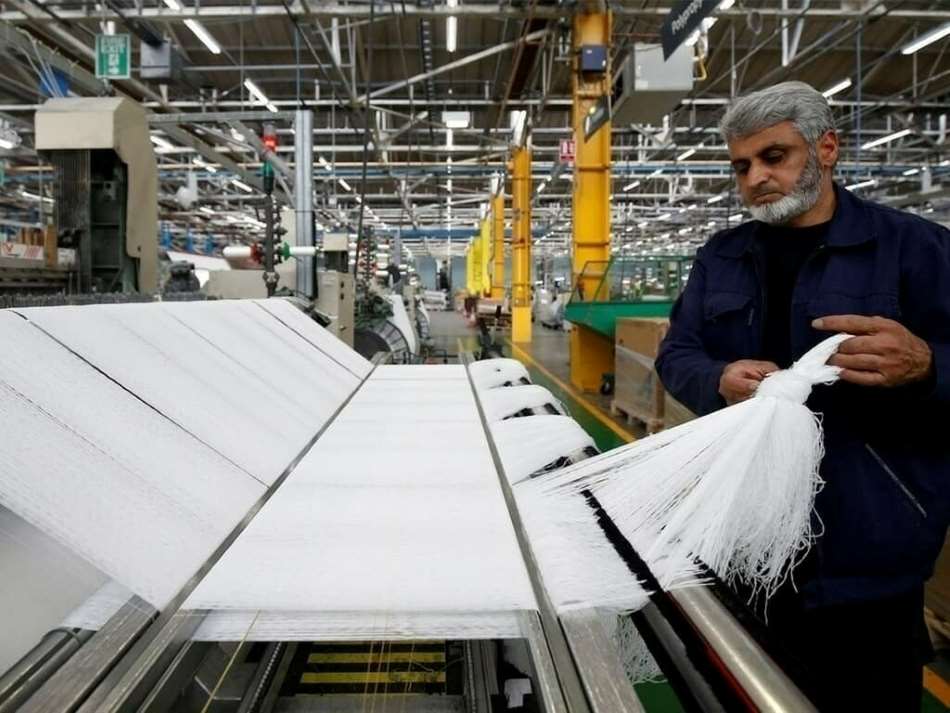
Pakistan's textile exporters faced a challenging year in 2022-23, encountering a significant setback as orders plummeted by almost 15per cent, with a total value of $16.5 billion. This marks a substantial 14.63 per cent decline from the preceding year, 2021-22, when textile exports were valued at $19.33 billion. Disturbingly, data reveals a stark 18 per cent decrease in the country's textile exports during the first nine months of the calendar year 2023, plummeting from $14.5 billion in 2022 to $11.9 billion.
Drop in exports
A report by Samaa TV, a prominent Pakistani news channel highlights, the textile sector's exports in September 2023 was $1.35 billion, down 12 per cent from the $1.53 billion recorded in the same month the previous year. This continuous decline underscores a worrisome trend for the government, grappling with a shortage of foreign exchange. The government heavily relies on non-debt creating dollar inflows, such as textile exports, to bolster its reserves.
The All Pakistan Textile Mills Association (APTMA) released data in October 2023, emphasizing the persistently challenging scenario faced by Pakistan's textile sector. The industry is intricately tied to export markets in the EU, the UK, the US, the UAE, and Turkey. This downturn in textile exports poses a severe concern for the government, which urgently needs to address the diminishing foreign exchange reserves.
Revival on the cards
Minister of commerce Gohar Ejaz, who is also the patron-in-chief of APTMA, conveyed a sense of confidence in the textile sector. As per him, a notable achievement in October 2023 was, cotton arrivals surpassed five million bales, exceeding the previous year's figure of 4.9 million bales—a substantial 34 per cent year-on-year increase. Ejaz attributed this success to the unwavering commitment of local farmers and the resilient nature of Pakistan's cotton industry.
In addition, Ejaz underscored the global growth of textile market, which expanded from $573.22 billion in 2022 to $610.91 billion in 2023, signifying a compound annual growth rate (CAGR) of 6.6 per cent. This positive trajectory hints at a potential revival for Pakistan's challenged textile exports. Traditionally, Pakistan designates 60 per cent of its total textile output for exports, with Punjab playing a pivotal role in the sector. About 70 per cent of the textile industry is concentrated in Punjab, with Faisalabad as its hub. It's noteworthy that Pakistan holds the 8th position among the largest textile product exporters in Asia.
GSP renewal still uncertain
As reported by brerecorder.com, the fourth joint Generalised Scheme of Preferences (GSP) Review Report from the European Commission and the European External Action Service (EEAS) has detailed the progress of eight GSP+ beneficiary countries, including Pakistan. The report assesses the effective implementation of the 27 international core conventions that underlie the GSP+ scheme. Compliance with these conventions is a prerequisite for beneficiary countries to maintain their GSP+ status, covering human rights, labor rights, environmental standards, and good governance for the period spanning 2020 to 2022.
The report flagged several areas of concern, including political instability, constitutional challenges, an economic crisis, high inflation, and a severe shortage of foreign reserves. Notably, Pakistan holds the status of being the largest beneficiary of the GSP+ scheme. As the current GSP Regulation is set to expire by the end of 2023, Pakistan has initiated efforts to secure a renewal of its GSP+ status for the post-2023 period.
However, renewal bid faces challenges due to ongoing human rights violations, contentious blasphemy laws, and escalating religious intolerance and sectarian violence. Additionally, the country has struggled to achieve sustained development and poverty reduction, as expected by the GSP scheme. Italian news site InsideOver has raised concerns, suggesting uncertainty regarding the renewal of Pakistan's GSP+ status for the next decade.











