FW
International Abit Congress 2024 to be held next November in Bahia
The forthcoming International Abit Congress, scheduled for November 2024, will take place in Salvador, Bahia. The previous edition, held from November 8-9, 2023, at the Federation of Industries of the State of Santa Catarina (Fiesc), attracted over 400 attendees. The Congress delved into the significance of fostering new collaborations to enhance competitiveness within the industry.
Themed 'Networks, Connections, and Boundaries,' the event focused on diverse strategies essential for the industry network's growth. Topics included discussions on the 'future of retail,' 'emerging technologies,' and 'ESG initiatives.'
Cem Allan, President of IAF, led the opening panel discussion, outlining plans for the sector and delivering a lecture on the theme 'Market: From Boundaries to Bridges.' This session featured insights from Henry Costa, Director at Renner, and Tiago Inácio Peixoto, CEO of Cataguases.
The first day concluded with the launch of the Fashion and Climate Guide, a collaborative initiative between Abit, ABVTEX, and SENAI CETIQT, aimed at decarbonizing the textile and apparel industry.
The second day commenced with a lecture by Luiz Alberto Marinho, Managing Partner at Gouvêa Malls, discussing the consumer at Omniera. The closing lecture, emphasizing the shared responsibility of sustainable practices in the industry, was delivered by Rachel Maia, CEO of RM Consulting.
ICAC’s 81st Plenary Meeting to be attended by over 400 delegates
The 81st Plenary Meeting of the International Cotton Advisory Committee (ICAC) is set to draw over 400 delegates from 35 countries. Hosted by the Ministry of Textiles at Mumbai's Jio World Convention Centre from December 2 to 5, 2023, the event is held in collaboration with the Cotton Corporation of India (CCI), the Confederation of Indian Textile Industry (CITI), and the Cotton Association of India (CAI). Piyush Goyal, Union Minister of Textiles, Commerce & Industry, and Consumer Affairs, Food & Public Distribution, will inaugurate the meeting.
The four-day event will bring together government representatives, industrialists, business delegates, scientists, and researchers from various cotton-producing and consuming nations. Themed "Cotton Value Chain: Local Innovations for Global Prosperity," the Plenary Meeting will foster discussions on productivity, climate resilience, circularity, and locally developed cutting-edge technologies for sustainability.
Topics on the agenda include 'Technologies to Increase Productivity,' 'Climate-smart Innovations as Game Changers for Cotton Production,' 'Recent Impactful Technological Advances,' 'Industry 4.0 for Textiles: Smart Manufacturing,' 'Global Efforts in Branding Sustainability and Quality Assurance,' 'Genetics, Diversity to Enhance Cotton Productivity,' 'Cotton and Climate Resilience,' and 'Technological Innovations for Global Collaborations.'
The event provides a platform for the Indian industry to showcase its strength, growth, and resilience. Case studies, success stories, and innovative practices of small and marginal farmers will be shared, emphasizing local initiatives to enhance productivity and sustainability, including breakthroughs in carbon sequestration, pest management, advancements in water management, quality assurance, and traceability. The Plenary Meeting will be followed by a Technical Tour in Ahmedabad from December 06-08, 2023, showcasing the industry's journey from farm to fashion.
Hyosung teams-up with Santoni and Tefron to launch suatainable sportswear
Hyosung, alongside leading seamless companies Tefron and Santoni, unveiled a new line of sustainable sportswear and seamless garments at the ISPO Munich trade fair (November 28-30, 2023).
Santoni showcased a new collection crafted with Hyosung's certified, eco-friendly yarns, including creora® Bio-Based elastane and 100% recycled creora® regen elastane. Additionally, they introduced their new SM8-TOP2ST machine for advanced seamless design and sculpted terry patterns.
Susie Barak, Business Director at Tefron, emphasizes the synergy of their seamless knitting expertise with Hyosung's yarns, leading to innovative designs and styles. Simon Whitmarsh-Knight, Global Marketing Director-Textiles at Hyosung, highlights the collaboration's benefits: not only does it offer traceable, certified fibers, but it also unlocks new possibilities for design innovation and versatility.
Myanmar to hold Zhejiang International Trade Fair in December
Myanmar is set to host the Zhejiang International Trade Exhibition led by China in Yangon this December. The exhibition will showcase 25 Chinese apparel brands and over 100 manufacturers, garnering support from Japanese and South Korean trade associations.
Tadaki Kawae, Advisor to the Japan Garment Manufacturers Association, notes approximately 70 per cent garment factories in Myanmar are owned by international companies. The Japan Garment Manufacturers Association is dedicated to generating 600,000 new jobs in Myanmar.
The Myanmar Garment Manufacturers Association records 330 registered Chinese-owned companies, surpassing the numbers from South Korea (70) and Japan (20). Despite this, global fashion giants like H&M and Zara have already halted their sourcing from Myanmar due to allegations of labor law violations.
Textile Ministry to track circular industry growth with HSN codes
The Ministry of Textiles is set to gauge the expansion of circular textile industry by monitoring the trade of products crafted from regenerated fibers. To facilitate the effective management of such product trades, the ministry is in the process of establishing distinct tariff codes, referred to as HSN (harmonised system of nomenclature) codes. These codes aim to assist customs authorities, policymakers, and trade organizations in enhancing their oversight of the trade in these products. Moreover, they play a pivotal role in ensuring adherence to sustainability standards and certifications.
These initiative aligns with the Circular Economy Action Plan of the European Union, introduced in 2020. This plan is designed to tackle sustainability challenges within the textile industry by evaluating both pre- and post-consumer waste generation and pinpointing its sources.
Chandrima Chatterjee, the Secretary General of the Confederation of Indian Textile Industry (CITI), emphasizes this move will provide a distinct identity to the recycling segment. According to the IMARC Group, India's textile recycling market, valued at $308.7 million in 2022, is projected to reach $375 million by 2028. The market is anticipated to grow at CAGR of 3.4 percent from 2023 to 2028.
NCTO allies back Wexton in urging DHS action against Xinjiang forced labor
In a crucial move towards combating forced labor in Xinjiang, National Council of Textile Organizations (NCTO) President and CEO, Kim Glas, has endorsed U.S. Representative Jennifer Wexton's call for intensified isotopic testing of imported products containing cotton sourced from forced labor in China.
Wexton's letter to Department of Homeland Security (DHS) Secretary Alejandro Mayorkas emphasizes the need for bolstering U.S. Customs and Border Protection's (CBP) capability to detect such imports using isotopic testing technology. The appeal follows a Reuters report revealing positive results for Xinjiang forced labor in cotton imports tested by CBP’s current contracted company, albeit with a limited 86 samples at a cost of $1.3 million.
Wexton, a staunch advocate for enforcing the Uyghur Forced Labor Prevention Act (UFLPA), particularly targets Shein, a prominent fast-fashion company currently eyeing a U.S. IPO. The letter proposes scaling up isotopic testing as a strategic tool in UFLPA enforcement, urging DHS to implement a six-month test program.
Wexton seeks a comprehensive report explaining the underutilization of isotopic testing in UFLPA enforcement, reviewing CPB's testing costs, exploring alternative testing providers, and assessing the isotopic expertise within the DHS and CBP workforce. As the U.S. endeavors to eradicate forced labor, Wexton's letter emphasizes the moral and legal imperative for DHS to lead the charge in dismantling such supply chains.
McKinsey's 2024 fashion insights identifies growth amidst uncertainty

McKinsey’s 2024 ‘State of Fashion’ report points towards significant uncertainty looming over the global fashion industry. Prevailing sluggishness in global economic growth and unabated inflationary pressures signal a challenging landscape. With consumer confidence remaining pessimistic, if not weakened, leaders in the fashion industry are now confronted with the imperative task of pinpointing ‘pockets of value’ and uncovering ‘new performance drivers’.
The trajectory of the fashion industry in 2024 is intricately tied to the collective repercussions of its performance in 2023. A year marked by persistent and escalating challenges, the US and Europe have proven to be slow markets throughout, while China displayed promise in the initial half, only to experience a substantial downturn in the latter part.
Demand fluctuations need resilience
Looking to 2024, the industry braces itself for the impact of the tumultuous demand fluctuations witnessed in recent years. Such times of uncertainty often trigger a ‘bullwhip effect’ in supply chains, wherein minor variations in sales lead to heightened volatility. This, in turn, results in factory underutilization, workforce layoffs, and delayed investments in infrastructure.
Navigating through this intricate web of challenges will require resilience and adaptability from global fashion industry. The identification of innovative strategies to uncover value and the pursuit of novel performance drivers will be paramount in steering the industry through the uncertainties that lie ahead. The interconnected nature of global markets underscores the need for a comprehensive understanding of the multifaceted factors influencing the industry's trajectory.
Luxury to continue leading the sector
In 2024, the luxury segment is poised to retain its position as the primary generator of profits, although the growth outlook has moderated in the range 3 to 5 percent. This marks a notable decline from the robust 5 to 7 per cent growth in the preceding year, signaling a tempering of the post-pandemic optimism that characterized 2022 and 2023.
The US, identified as the globe's preeminent luxury market, is anticipated to exhibit a modest year-on-year growth of 2 to 4 per cent in 2024. This projection represents a slight improvement compared to the 1 per cent growth observed in the first half of 2023. Confidence levels among fashion executives, respondents to the study, reveal a lukewarm growth outlook in the US, Europe, and China. Notably, 51 per cent expressed optimism about promising growth prospects in the Middle East, while 39 and 34 per cent harbor similar sentiments for India and the Asia Pacific region, respectively.
The overarching forecast for the global fashion industry points towards a top-line growth of 2 to 4 per cent in 2024. However, it is acknowledged that economic growth disparages globally, leading to regional variations in the predicted growth rates. While Europe and China are expected to maintain subdued performance, the anticipated upturn in the American economy may act as a catalyst for growth there.
Price increase on the agenda
The State of Fashion 2024 report reveals 69 per cent executives plan price increases (1-5 per cent) to counter ongoing inflation. Interestingly, 198 per cent consider holding ticket prices steady, while 12 per cent anticipate a decrease (1-5 per cent) prioritizing inventory movement over profits. Looking ahead, 71 per cent of executives aim to boost sales in 2024, up from 63 per cent the previous year. The industry's net intent to raise prices is 50 per cent, with 69 per cent of executives planning increases (up from 58 per cent). Success in implementing price hikes is expected through a precise and tailored approach, as outlined in the report.
Sustainable models to become strategic priorities
Sustainability, according to the report, is the green field of opportunity as well as the biggest challenge brands can expect in 2024. Around 21 per cent stated their brands are looking towards a balanced implementation of sustainability through scaled improvements, risk reductions and gaining competitive edge through investing in new-age textiles. However, 12 per cent executives aren’t necessarily feeling the optimism as not only rising regulatory pressures from local governments but also the scale of the task of restricting towards greater sustainability in uncertain times poses huge financial implications. And 12 per cent site sustainability as their identified ticket to success in 2024.
The report also covers a slew of other points that will have a significant impact such as the upcoming economic headwinds, fashion systems, influences and prominent trends.
CMAI's ‘Brands of India’ in Dubai concludes: Global success for Indian apparel
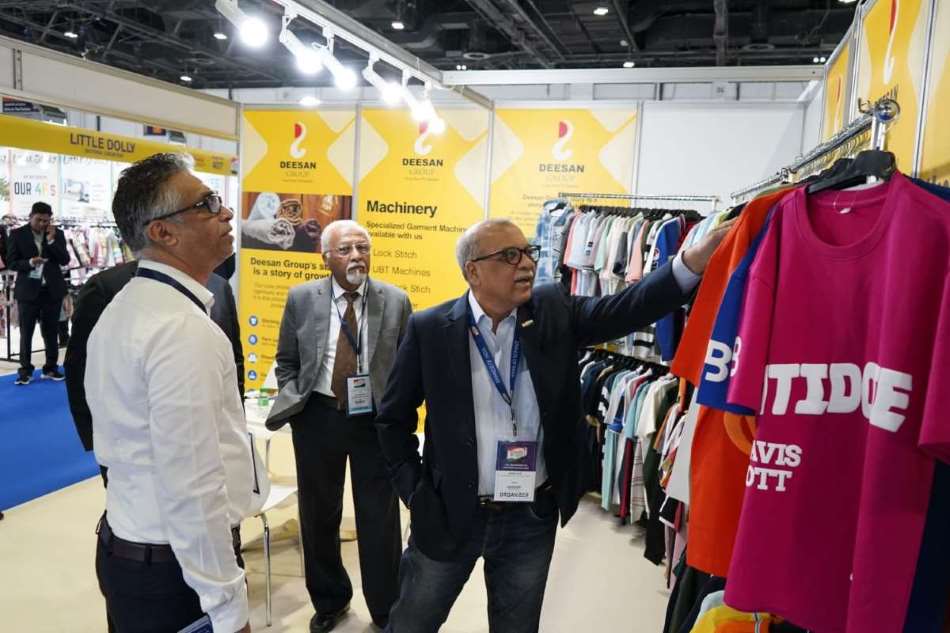
The Clothing Manufacturers Association of India (CMAI) achieved a historic milestone in the global retail market with the triumphant conclusion of the inaugural ‘Brands of India’ trade show at the Dubai World Trade Centre from November 27 to 29, 2023. This event showcased 350+ top Indian clothing brands, solidifying its position as a beacon of success.
Global Recognition
Attracting over 2800 buyers from 67 countries, the event provided a substantial head start for Indian apparel brands in the dynamic Middle East and North Africa (MENA) region. The impressive buyer turnout predominantly included retailers and importers from key markets like UAE, Saudi Arabia, Oman, Qatar, Bahrain, Kuwait, Yemen, Egypt, Ghana, Ethiopia, Nigeria, and more.
Economic Impact
Anticipating an estimated business worth US$ 350 million over the next three years, Brands of India underscored the robust potential and demand for Indian apparel brands in the international market. Rajesh Masand, President, CMAI, expressed elation, stating, “This pioneering initiative... strengthens the economic ties between India and the MENA region.”
Stellar Success
Jayesh Shah, Chairman of Brands of India, and Vice President of CMAI, proudly acknowledged the stellar success achieved in the introductory edition. He emphasized the emergence and acceptance of Indian apparel brands on a global scale, affirming future focused events to sustain this momentum.
Diverse Showcase
Renowned brands like Oxemberg, Louis Philippe, Allen Solly, BIBA, and others showcased their collections internationally for the first time. The variety on display garnered appreciation from industry leaders, with Mr. Kabir Lumba, CEO, Landmark Retail at Landmark Group, emphasizing the huge potential of Indian apparel in the MENA region.
Strategic Timing
The strategic timing of Brands of India, preceding the significant Eid festival in April, aligns with the Comprehensive Economic Partnership Agreement (CEPA) signed between India and UAE in 2022. UAE, the largest importer of Indian ready-made garments, witnessed imports totalling a staggering US$ 1.21 billion in the fiscal year 2022-23, reaffirming sustained demand for Indian fashion in the region.
Positive Industry Feedback
Buyer groups such as Lulu Group, Landmark Group, and Apparel Group actively participated, highlighting the trade show's strategic importance in fostering strong business ties between India and the MENA region. Industry leaders praised the initiative, with Deepak Seth, Group Chairman of Pearl Global Industries Ltd., acknowledging the enormous potential in the Gulf, Middle East, and Africa.
Future Prospects
Participants, including Prem Ranjan, CEO of Gini & Jony, and Rushank Masand of Rushank Clothiers, expressed optimism about future business development. The exposure gained at Brands of India provided valuable insights for potential expansion into new markets, creating a solid foundation for future growth.
VIEW Premium Selection Spring.Summer 2025 successfully concluded
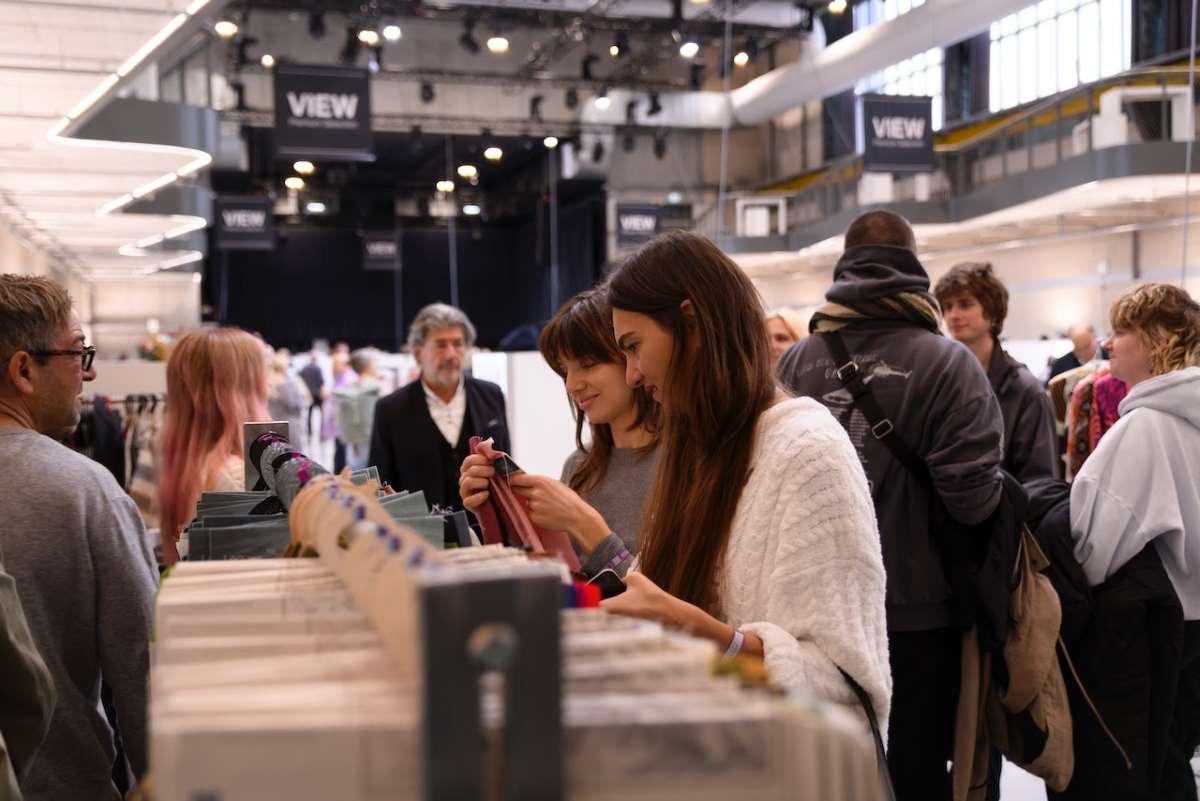
The VIEW Premium Selection Spring.Summer 2025 concluded on a high note, establishing itself as a pivotal event in the fashion industry. Organized by MUNICH FABRIC START Exhibitions GmbH, the textile show featured 250 carefully selected exhibitors, presenting cutting-edge color and material trends, along with the latest technological and sustainable innovations for the upcoming season.
Trend diversity and innovation showcase
The event showcased a diverse range of trends and forecasts for Spring.Summer 2025, with a focus on translating masculine shapes from winter heaviness to summery elegance. The quest for unusual fabrics, 3D prints, and new fibers took center stage, contributing to the creation of captivating collections. Innovative woven materials, inspired by tech and sports aesthetics, garnered positive responses. Discussions also revolved around new fiber blends, including combinations of natural and synthetic fibers, as well as effects with silver and metallic yarns. Quality at attractive prices remained a persistent theme.
Industry recognition and key players
The VIEW received accolades for its quality and attracted prominent visitors from leading brands such as Adidas, Hugo Boss, and The North Face. Sebastian Klinder, Managing Director of MUNICH FABRIC START, emphasized the importance of central platforms and trade shows for the industry, especially in the context of ongoing debates about Germany's role as a fashion trade show location.
Challenges and opportunities in the fashion industry
Karin Schmitz, Business Development Director Peclers Paris, highlighted the fashion industry's current state of upheaval, emphasizing the need for change and direction. She stressed the importance of developing trust and understanding of brand identities, stating that trends alone cannot address the industry's challenges. Instead, inspiration and courage are required to transform impulses into specific solutions.
Looking Ahead to MUNICH FABRIC START 2024
The next major industry event, MUNICH FABRIC START, is scheduled for January 23-25, 2024. The event will showcase around 1,100 collections across eight distinct areas, providing a platform for exhibitors from around the world. Trend forums and sample areas will present the latest innovations, color trends, and materials, offering inspiration and guidance to industry professionals.
Voices from the event
Visitors and exhibitors expressed their enthusiasm for VIEW, citing the importance of early access to new materials and trends. Highlights included reissued fabrics with quiet qualities, a growing interest in glitter and shiny materials, and a continuous demand for sustainable products and solutions.
Conclusion
The VIEW Premium Selection Spring.Summer 2025 successfully concluded with a diverse array of trends and innovations, solidifying its position as a key player in the fashion industry. As the industry grapples with challenges and seeks direction, events like VIEW provide a crucial platform for collaboration, inspiration, and shaping a positive future for brands.
VDMA members triumph at ITMA ASIA + CITME exhibition
ITMA ASIA + CITME 2023 marked a triumphant success for VDMA member companies, with Germany leading the pack in booked square meters among foreign exhibitors. Despite challenging market conditions, the event surpassed expectations in terms of both visitor numbers and the quality of discussions, as noted by Dr. Janpeter Horn, Chairman of the VDMA Textile Machinery Association. The fair showcased solutions for sustainable textile production, with VDMA members presenting technologies under the banner of "Smart technologies for green textile production."
Notable sentiments were shared by industry leaders, including Dr. Uwe Rondé of Saurer Intelligent Technology AG, who highlighted satisfaction with visitor turnout and discussions on recycling, automation, and digitalization. Benjamin Reiners of Reiners + Fürst expressed exceeding expectations, with a positive spirit prevailing despite the current challenging market. Trützschler, Oerlikon Group, and Lindauer Dornier also reported successful engagements with both Chinese and international visitors.
The VDMA Textile Machinery Association and VDMA China were actively present, offering support on intellectual property rights (IPR). An instance involving a complaint application for patent infringement disputes showcased the effectiveness of their intervention. Dr. Harald Weber, managing director of VDMA Textile Machinery, emphasized Asia, especially China, as crucial markets for VDMA members, with ITMA ASIA + CITME serving as a unique platform to exhibit technologies directly to Asian customers.
Looking ahead, the VDMA member companies anticipate the next edition of the fair in Shanghai in 2024. A hopeful outlook is supported by a VDMA survey indicating potential improvement in the economic situation of the Chinese textile industry in the second half of the year. European textile machinery manufacturers are encouraged to remain a presence in this key market, providing advanced technology to meet Asian customers' evolving challenges.