FW
Factory owners and authorities insist on Accord transition
Recent media reports in Bangladeshi suggest factory owners and authorities are insisting the Accord should transition its tasks to a national inspection body by a fixed date and not accept any conditions on the readiness of that body to carry out those tasks. If the government of Bangladesh and factory owners manage to expel Accord, it will reverse significant advances made to factory safety over the past five years and create irreversible reputational harm to the garment industry itself.
As witness signatories to the Accord, Clean Clothes Campaign, International Labor Rights Forum, Maquila Solidarity Network, and Worker Rights Consortium support the eventual transition of Accord inspection tasks to Bangladesh’s national regulatory bodies, including the Remediation Coordination Cell (RCC). Yet, such a process must be made conditional on clear and concrete readiness criteria, as formulated and overseen by the International Labour Organization.
2019 International Woolmark Prize to feature top industry experts
The 2019 International Woolmark Prize, to be held at the London Fashion Week will feature an esteemed line-up of industry experts on the judging panel. The winners of the menswear and womenswear will each receive AU$200,000 to help support the development of their business. They will also receive ongoing industry mentor support, Woolmark certification for their winning collection and the opportunity to be stocked in some of the world’s most prestigious department stores and boutiques. The Innovation Award winner will receive AU$100,000 as well as ongoing industry mentor support and commercial opportunities.
The Woolmark Company has also partnered with online wholesale platform Ordre for the third year to present online showrooms for the International Woolmark Prize winners' and finalists' capsule collections to an invitation-only retail network and will allow wholesale orders to be placed.
Asics to recycle used sports apparels and footwear
Japanese sportswear company Asics, is collaborating with the Charity I:Collect on a sports apparel recycling and reuse initiative in Europe. The initiative will be launched at the Barcelona Marathon on March 10, 2019 where two companies will work together to collect used sports apparels and footwear for reuse or recycling. The programme will enable the recycling and reuse of Asics products at eight marathons happening across EMEA (Europe, Middle East and Asia).
The Japanese brand has claimed that any merchandising and promotional apparel developed for the races is generally made from sustainable materials. The move is followed by announcement made by Asics to collect more than 30,000 pieces of sports apparels from the consumers in Japan. The collected pieces will be further recycled by the year 2020. Both initiatives aim to cut greenhouse gas emissions by 55 per cent across the globe by the year 2030.
New York NGO recycles textiles unsuitable for donation
Enter Fabscrap, a non-profit organisation is dedicated to recycling and reusing textiles that are unsuitable for donation. Every day, 3,000 pounds (some 1,350 kilos) of scraps arrive at the group's massive warehouse in Brooklyn - part of a huge complex that used to belong to the US Army, according to Fabscrap founder Jessica Schreiber. The organisation has established partnerships with about 250 ready-to-wear labels and several haute couture houses - and the waste they collect is representative of that variety.
There is everything in the warehouse piles from luxury pieces by the likes of Oscar de la Renta or Marc Jacobs, to mainstream retail labels like J Crew, to scraps from the workshops of up-and-coming designers. Last year, Fabscrap picked up a total of 150,000 pounds of fabric.
Revoking of duty free access is likely to force brands out of Cambodia
The European Union’s move to revoke Cambodia’s duty-free access could force major clothing brands out of the manufacturing hub and worsen conditions for workers. Cambodia has six months to convince its biggest export market that it has arrested a backslide on human rights and democracy. If it fails, the EU will strike it from the Everything But Arms (EBA) trade scheme, which could trigger a chain of events that advocates fear will rob them of their strongest leverage point in the fight for improved working conditions.
About 700,000 people - mostly women - work in Cambodia’s garment industry, which accounts for the lion’s share of the country’s $5.8 billion worth of exports to the EU each year. The industry is beset by forced overtime, unsafe working conditions and the obstruction of unionisation. But in recent years, worker’s plight has been pushed into the spotlight, with advocacy groups running campaigns that have forced brands to clean up supply chains in a race to retain their share of an increasingly aware consumer market.
US-China trade war may help Indian exports
Indian exports will benefit tremendously if the tariffs proposed by the US on Chinese imports come into effect. US-China bilateral trade will decline and be replaced by trade originating in other countries.
Chemicals and plastics from India will be the top sector benefiting from Chinese tariffs on the US, while on the US side it will be communications and office equipment. India’s exports of machinery are expected to go up by $2.4 billion because of US tariffs, and only $714 million because of China's tariffs.
Motor vehicles and transport equipment may benefit $442 billion from US tariffs and only $22 million from China's. In various other areas, India’s exports are likely to go up $1.9 billion from US tariffs and $222 million because of China's. However, while some countries will see a surge in exports, negative global effects are likely to dominate because of the unavoidable impact that trade disputes will have on the still fragile global economy. The economic downturn will have an important effect on developing countries.
Last year, as the US announced a series of tariffs on imports totaling $250 billion from China, the latter retaliated with tariffs on imports worth $110 billion from the US.
Almost 40 fashion brands commit to COP 24 ‘Fashion Industry Charter’
The COP 24 Climate Conference in Katowice marked a major step forward in the fashion segment as over 40 top fashion brands, including Burberry, Gap and H&M committed to the Fashion Industry Charter, setting the commitments to reduce the industry’s negative impact on the environment. The signatories pledged to cut greenhouse gas emissions by 30 per cent by 2030 and achieve net zero emissions by 2050. The measures include phasing out coal-fired boilers or other sources of coal-fired heat.
The signatories of the Fashion Industry Charter will develop more detailed principles and action plans in early 2019. Greener alternatives include natural (e.g. indigo), low-impact dyes and unbleached fabrics. The certificates issued by the charter give a clue as to how the cloth was produced: for example, “Fair Trade” means that garment workers get a living wage. “Ecolabel” shows that there was minimum environmental impact during production. Some companies communicate their sustainability efforts on clothing tags.
Bangladesh to form a sectoral confederation in RMG sector
Following a proposal by the BGMEA, the Bangladesh government is planning to form a sectoral confederation to resolve the issues of the ready-made garment (RMG) workers. The government has formed 29 committees in the labor-intensive areas to look into the complaints lodged by workers. However, trade unions claimed that more than 11,000 workers of 99 units were terminated from their jobs soon after the recent unrest in the RMG sector on the issue of salary discrimination in the new wage structure. The government will gradually solve the RMG sector workers' problems after discussions with the owners.
Just leave, Bangladesh tells Accord
Bangladesh wants Accord to leave by a fixed date regardless of whether there is a competent safety authority to replace it. Accord was a response to the Rana Plaza building collapse in 2013 that claimed more than 1000 lives.
With no transparency and no verifiable assurance that the unprecedented level factory safety achieved by Accord will be maintained, global brands sourcing from Bangladesh cannot take the risk of a return to conditions that led to the collapse of Rana Plaza in 2013.
Accord had appealed against a court order to leave Bangladesh by a specified date. An appellate court granted Accord a number of extensions, during which time Accord developed a handover plan. The plan is based on transferring responsibility for inspection and remediation of Accord factories in stages, based on a demonstrated capacity of the responsible body, RCC, to take over these functions.
However, both the ILO and the European Commission have repeatedly stated that the RCC is far from being ready to take over the Accord functions. Accord, a platform of more than 200 global apparel brands, retailers and rights groups based mostly in Europe, was formed immediately after the Rana Plaza building collapse to improve workplace safety in the country’s apparel industry.
Milano Unica draws sustained interest
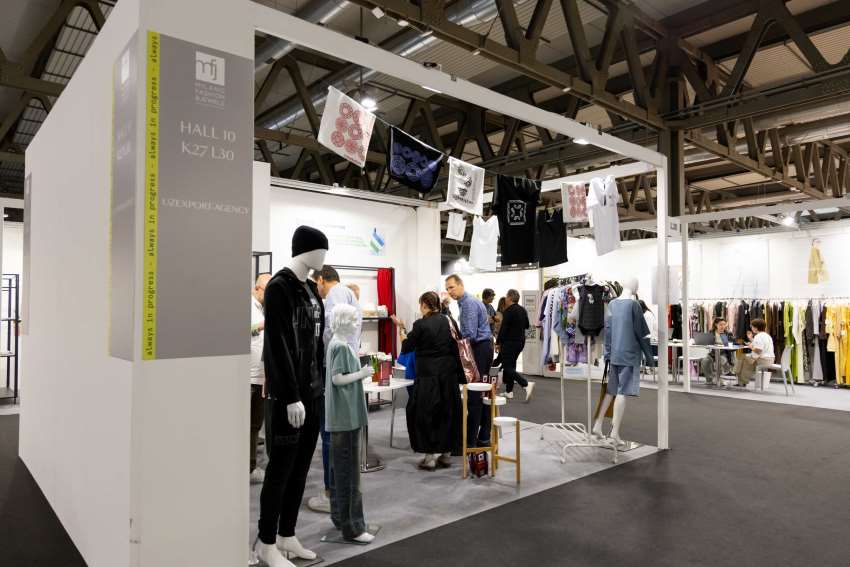
Milano Unica was held in Italy from February 5 to 7, 2019. This is a textile and accessories trade show. Although the overall number of companies was essentially equal to that of February 2018, there was a significant increase in participation by companies from Japan, Korea, Great Britain, Poland, Rumania and Spain, with the USA and Germany holding steady.
The essentially steady number of exhibitors compared to the February 2018 edition was matched by a corresponding presence of visitors from sector companies, both Italian and foreign, numbering about 6,000. There were fewer Chinese companies, as the dates coincided with their New Year celebrations, but that was mostly made up by Korean and Japanese companies in attendance and a good showing on the part of European operators.
The richness of the textile and accessories collections was matched by the encouraging presence of Italian and foreign buyers. Milano Unica launched an online marketplace, which will be fully operative for the July 2019 edition. The initiative is intended to promote the textile-apparel fashion sector by extending traditional trade show activities to the digital world, including marketing, contents and promotions, making it possible for companies and their clients to stay up to date year round.