FW
First edition of Texcare Asia and China Laundry Expo emphasises on RFID
The first combined Texcare Asia and China Laundry Expo (TXCA & CLE) reflected the trends of the ever-evolving industry landscape by emphasising on technology and sustainability, specifically underlining the importance of RFID. The expo gathered a number of field experts to share their knowledge and experience about RFID. Brands including Bundle, Datamars, Dresscode, Etexsys, EWELL, Finove, Spotag and Thermopatch provided visitors with necessary insights and relevant information on the latest technological innovations in their specific areas.
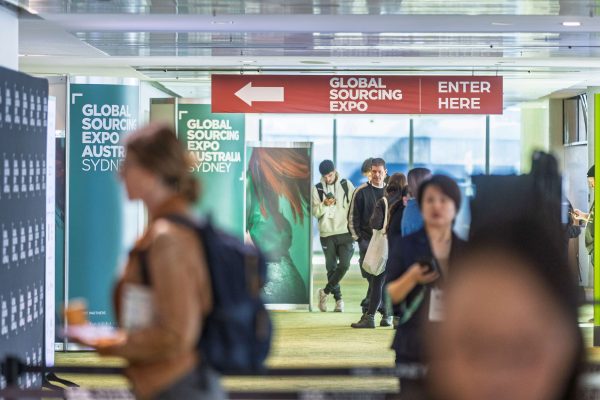
The expo was held at the Shanghai New International Expo Centre from September 25-27, 2019. Over 300 international brands from 21 countries and regions participated in the show organised by Messe Frankfurt Shanghai Co. More than 25,000 visitors from all over the world participated in the show in order to boost their business and grow their global network.
Gap partners with Arvind on reclaimed water
Gap and Arvind have embarked on a water-saving project.
This is at Arvind’s denim manufacturing facility in Ahmedabad. The project will save eight million liters of fresh water a day or 2.5 billion liters of freshwater on an annual basis. The first mill in India to manufacture denim, this will now operate entirely with reclaimed water using Membrane Bio Reactor technology, which will treat domestic wastewater drawn from the surrounding community and avoid the use of chemicals in the process. A newly constructed pipeline will draw wastewater from the local municipal line. In the face of local water scarcity challenges, the facility will also reduce business risk for Arvind, Gap and other brands that source from the facility due to the new reliable source of wastewater.
Apparel retailer Gap and textile manufacturer Arvind are making efforts to reduce the amount of water used in the apparel production pipeline. Gap will have exclusive rights to the water savings through the project, including the annual savings from the project. Arvind aims at eliminating the use of freshwater from 100 per cent of its textile production by the end of 2020. Currently, more than 90 per cent of the company’s water use is from recycled sources.
India ICRA expects cotton yarn exports to decline during FY 2020
As pressures continue to build up on credit profiles of domestic cotton spinners as they continue to grapple with challenges on the demand front, ratings agency ICRA expects India’s cotton yarn exports to decline to an eight-year low during FY2020.
The agency’s note released recently states performance of domestic cotton spinners is likely to weaken considerably in FY2020, with operating margins for the year being estimated to correct by 300-400 bps vis-a-vis previous year. As a result operating profitability is expected at multi-year lows, closer to the level last witnessed in FY2012 when most players suffered sizeable losses on inventory due to steep unexpected correction in cotton prices.
Moreover, competitiveness of Indian spinners could be hurt if there is a significant market intervention by the Cotton Corporation of India (CCI) which triggers a relative increase in domestic fibre prices, vis-a-vis international prices. This is more so as the cotton prices are likely to remain soft globally amid a healthy crop outlook for CY2020.
India’s cotton yarn export quantity fell by 35 per cent YoY during H1 FY2020 as a result of the aforesaid factors. Whereas markets other than China, which has been the largest cotton yarn market for India in the past few years, had supported demand during FY2017 and FY2018 when exports to China fell; pressure is more broad-based now. In comparison to a 57 per cent YoY decline in cotton yarn exports to China during 5M FY2020, exports to the other major markets have declined by over 20 per cent YoY, led by a 42 per cent and 27 per cent YoY decline in exports to Bangladesh and Pakistan respectively.
Monsoon opts for responsible sourcing
More than 90 percent of Monsoon’s clothing will be made from responsibly-sourced materials within the next four years. The fashion retailer is also set to launch a 90 per cent sustainable beachwear collection for next summer. The company will increase the proportion of cotton in its garments that is organic from the current 30 per cent to more than 70 per cent. It will also increase the amount of viscose used and 70 per cent of its jerseys will be sustainable. Monsoon will also introduce new and innovative ways to reduce its environmental footprint and have a positive impact on future generations.
Ethical production has always been at the heart of Monsoon and moving forward it wants the sustainability of its products to become an integral part of the brand DNA. Monsoon is driving an internal revolution to implement impactful changes. By 2023, it wants to become the figurehead for sustainability.
The four-decade-old company currently has over 180 stores in the UK. Monsoon’s vibrant fashion and accessories are inspired by bohemian designs, handcrafted in Asia. The collection features striking prints and embellishments. The company offers clothing, accessories and shoes, dresses, tops, knitwear, tunics and kaftans, beachwear, jerseys, trousers, skirts, coats and jackets, shoes and boots, and work wear for women.
Sintec expands market both in India and beyond
In this fiscal, Sintec Textile not only managed to strengthen its established markets in South India and South America but also set foot in new markets. The company reported a “dynamite” year in the Bangladesh market. It was also received well in North India along with cities like Ahmedabad, Ludhiana and Kolkata. The company was also able to capture the markets in Pakistan, Sri Lanka and Brazil, India, during the year. Its first machine under its own brand was sold in India.
Established in 2011, Sintec Textiles has several international branches and offers remarkable engineering know-how. The company currently manufactures compactors for knitted fabrics and brushing machines for wovens and knitted fabrics. Here, innovation is a continuous process and to offer its best to its customers the company’s research and development team aims to regularly update its products and introduce new products as well.
Swedish company Re:newcell recycles cotton creates new material
Re:newcell has created Circulose, a new, eco-friendly material made by recovering cotton from worn-out clothes. This is then transformed into a pristine, new material for reuse in fashion. Through its patented process, Circulose takes clothes containing cellulose, such as cotton and viscose, and transforms them into a biodegradable material that the fashion industry can make new clothes from. The process reduces the reliance on virgin cotton, oil production, and the harvesting of trees using less water, fewer chemicals, and emitting less CO2.
Re:newcell, based in Sweden, is a sustainable fashion company founded in 2012. It can produce 7,000 tons of biodegradable Circulose pulp a year, equaling about 30 million T-shirts by weight. It spent years creating and perfecting Circulose to ensure it brings the industry a great quality, affordable, circular material. The company’s aim is to upcycle a billion garments a year by 2030.
More than 50 brands have lined up to start using Circulose on a global level. Circulose was developed in response to the waste and pollution currently caused by the fashion industry which generates more greenhouse gases than international aviation and shipping combined. Additionally, less than one per cent of textile clothing is recycled, with the vast majority of unwanted or worn out garments ending up in landfills or incineration plants.
Bangladesh denim makers losing market share in US, Europe
Bangladesh denim makers are losing market share in the United States as their competitors, such as Vietnam, are reaping the benefits of the ongoing US-China trade war. The sector is also witnessing negative growth in the European market, due to the economic slowdown and a looming uncertainty centring the Brexit issue.
The ongoing US-China trade war has brought an advantage for the economies in countries such as Vietnam, Cambodia, Pakistan and Mexico. Those countries are getting more export orders from US buyers due to their preparedness in welcoming the trade redirection, while Bangladesh is not getting the benefits of being the second-largest apparel exporter in the world.
The reasons for losing competitiveness include: bulk investments concentrated on only five items, Bangladesh taka being stronger than the US dollar, and a lack of efficiency in product development and marketing.
As a result, apparel makers are getting fewer orders and are pressured to lower product prices. Small and medium enterprises which produce basic items are facing a tough time under the new wage structure while big companies are fighting for survival.
Cambodia: 90,000 jobs loses expected on suspension of trade preferences
The European Chamber of Commerce estimates that 90,000 jobs in Cambodia would be at risk if the EU suspends its special trade preferences over Cambodia’s record on democracy and human rights. The garment industry is Cambodia’s largest employer and generates $7 billion annually, but it faces uncertainty after the European Union (EU) this year began a process that could see tariffs reintroduced next August.
European companies would “pull out of production” in Cambodia if trade preferences ended, while the head of production at Sweden’s H&M warned of a “substantial backlash”. Workers who lose their jobs - mainly women - would likely end up in the entertainment or service industries, at bars and massage parlours, and be exposed to sexual exploitation. The alternative would be migrating to Thailand where two million Cambodians are estimated to work, many of them undocumented and vulnerable to modern-day slavery.
Cambodia benefits from the EU’s “Everything But Arms” (EBA) trade programme, which allows the world’s least-developed nations to export most goods to the EU free of duties. The bloc is Cambodia’s largest trading partner, accounting for 45 per cent of its exports in 2018. Clothing factories in the country employ 700,000 workers, and garments make up a large share of exports to the EU, worth about $5.5 billion.
Women’s brand Twee in One promotes reversible garments, focuses on sustainability
Twee in One specialises in clothing that is convertible and can be worn in multiple ways to create different looks. This means with each garment it is possible to pull off two different looks. These two looks may be varied in nature. So while one look may be apt for a formal meeting, another would be fit for a party. Capsule collections are launched every few months. The new collection has geometric prints to floral embroideries, pastels to quirky colors. The target customer is every woman who is mindful about fashion, loves to dress up well and is very outgoing.
Women’s wear brand Twee in One was launched in 2017. The reasoning is that reversible garments encourage sustainable fashion consumption as the multiple outfits they create allow consumers to purchase a lower volume of clothing. The brand’s definition of sustainability is that less is more.
The brand is in the process of increasing its commitment to sustainable design and now uses organic textiles and is working to reduce textile waste in the garment manufacturing process. It has launched a line of accessories that are convertible for multiple functions and plans to launch a men’s wear line in the near future.
SACTWU Welcomes Signing of Retail Treaties
The COSATU-affiliated Southern African Clothing & Textile Workers' Union appreciated the signing of Retail, Clothing, Textile, Footwear & Leather master plan. This plan makes a point to lay a firm for future growth and keeping the sustainability of our industry.
It was signed today by major CTFL retailers, manufacturers, labor and government, at the 2nd Presidential Investment Conference in Sandton, Gauteng.
In particular, we are pleased with the commitments made by government to help strengthen the inspections and compliance enforcement capacity of the South African Revenue Services (SARS) to stamp out illegal imports and under-invoicing, major retailers to procure more clothing, textile, footwear, and leather goods locally (up to 65 percent), and CTFL manufacturers to increase investment in modernizing productive capacity in our industry.
This R-CTFL Master plan sets the objective of creating more than 70 000 new manufacturing jobs in our industry, over the next few years. We look forward to the constructive and effective implementation of this new and innovative tri-partite social compact, the first of its kind to be signed by our industry's major stakeholders.