FW
Indonesia’s trade ministry lifts ban on PPE exports
The Trade Ministry has lifted an export ban on personal protective equipment (PPE) amid oversupply in national production as it seeks to restore exports hard hit by the COVID-19 economic crisis.
According to the Ministerial Regulation No. 57/2020, issued by Trade Minister Agus Suparmanto, manufacturers can now export surgical masks, N-95 masks, coveralls, surgical gowns and raw material to make face masks. They can apply for the export permit via the government’s export-import online licensing system Indonesia National Single Window (INSW). They will then be required to provide documents such as a business permit, six-month export plan and statement to prove that they have stocks to meet domestic demand, in order to be granted export approval.
This trade ministry regulation aims to spur national economic growth, particularly for manufacturing, and improve India’s export performance amid the COVID-19 pandemic. The country’s exports fell by 28.95 per cent year-on-year (yoy) in May to $10.53 billion, the lowest level since July 2016, due to reduced shipments of coal, coffee, palm oil, as well as oil and gas.
National Council of Textile Organizations elects new chairman
US-based the National Council of Textile Organizations (NCTO) has elected David Roberts, CEO of Cap Yarns, its new chairman to succeed Leib Oehmig, CEO of Glen Raven Inc. It also elected David Poston, president of Palmetto Synthetics as its new vice-chairman. Palmetto Synthetics is a specialty man-made fiber producer that has provided specialty thermoplastic fibers to companies across the globe.
With the support of its newly elected officers, NCTO will continue to work on behalf of its members to shape policies that will help our industry persevere and thrive. Through a dedicated association staff and a committed group of industry leaders, it will ensure that together it continues to have a seat at the table in Washington.
Monsoon Accessorize ropes in experts to help reopen stores
Monsoon Accessorize has appointed retail property specialist Harper Dennis Hobbs to help it to reopen over 100 stores in the UK. The real estate giant is helping the company to secure new leases with landlords and reopen stores as quickly as possible.
As the Monsoon Accessorize was recently bought out of administration by its founder Peter Simon and plans to soon close a large number of its stores, it is working on an accelerated program of delivery, besides negotiating with multiple landlords to secure leases secured and reopen stores. With restrictions for the UK high street lifting, the company is determined to have stores trading in time for summer.”
According to the company’s COO Nick Stowe, engaging with Harper Dennis Hobbs will help the company to accelerate its conversations. The company aims to secure these leases as quickly as possible to get its retail business working again.
With orders picking-up Tirupur, Noida export units opt for local laborers
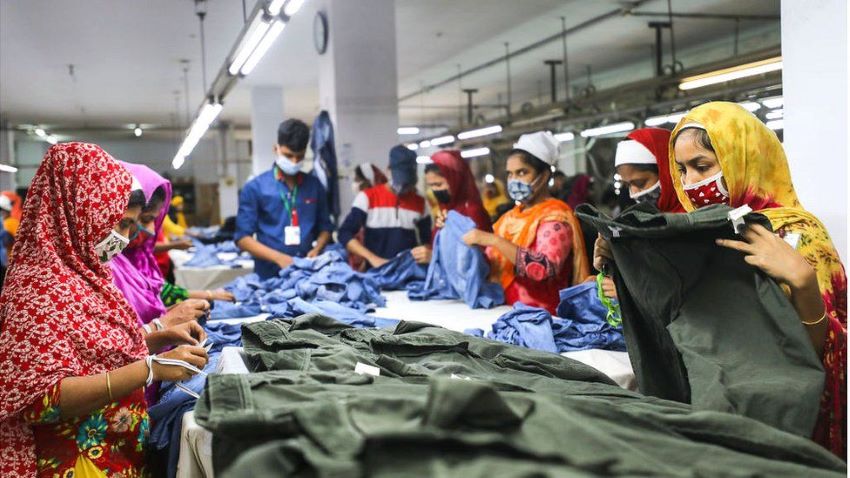
As export orders are trickling in from the US, Europe and West Asia, apparel and knitwear exporting units in Tirupur and Noida are turning to local laborers in the absence of migrant workers who have returned to their native places. While knitwear units in Tirupur have managed to get laborers from the Southern districts of Tamil Nadu to run operations, apparel units in Noida have got about 65,000 workers from Uttar Pradesh. There are 12 million workers engaged in garment manufacturing across Maharashtra, Gujarat, Karnataka, Tamil Nadu, Delhi-National Capital Region and Punjab, among others. Migrant workers constitute about half the workforce.
There are 3,000 garment manufacturing units in the Noida cluster, which generates exports of Rs 20,000 crore annually and also sells garments worth Rs 5,000 crore in the domestic market, he said.
Units in Tirupur, the biggest knitwear cluster in the country, have procured laborers from southern districts of Tamil Nadu to run their operations for the time being. Nearly 40 per cent of the workforce in the state comprises migrant workers. Of these 10 percent have stayed back while others have left, Tirupur exporters will need more manpower from September onwards when garments for the winter season will have to be shipped to the US and Europe.
India’s Cotton Corp to export cotton stock to Bangladesh
The state-run Cotton Corp of India is planning to export cotton stocks procured in 2018-20 (Oct-Sep) marketing years to Bangladesh. However, the export quantum will be decided as per mutual agreement. India has a logistical advantage in exporting to Bangladesh as shipments take the least time. Bangladesh's annual cotton consumption is 8.5 million-9.0 million bales of which the country imports around 2.5 million bales every year from India.
Cotton Corp is the government's nodal agency for procurement under the minimum support price scheme. The agency has so far procured around 10.0 million bales in 2019-20 (Oct-Sep) season. In 2018-19 season it managed to buy only 900,000 bales as spot prices of the fiber were more than its support prices for most of the season.
Exports of around 3.8 million bales have already been shipped in the current season, which started on Oct 1, and another 1.2 million bales will be exported over the next three-four months.
Global textile industry orders could revive by Q4 2020: ITMF study
 To interpret the impact of COVID-19 on the global textile value chain, ITMF recently conducted its fourth Corona Survey amongst 600 members across the world. The study indicated the textile sector orders will revive in Q4 2020.
Textile orders decline by 40 per cent
The survey showed, textile orders across the world have plummeted over 40 per cent from March 1, 2020 when the pandemic began to June 8, 2020. The decline in orders is universal across all sectors. Orders for fiber producers have declined by 42 per cent while their turnovers have declined by 33 per cent.
Similarly, orders for spinners have declined 44 per cent while their turnovers have declined by 33 per cent. And orders for weaver and knitters declined 46 per cent while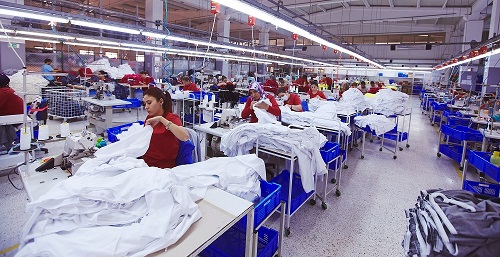 turnovers dropped 33 per cent. Garment producers noted 37 per cent dip in orders while their turnover has fallen 31 per cent.
In future too, textile companies expect orders to fall by 32 per cent. Out of this, 22 per cent companies in South East Asia expect orders to drop while 36 per cent in Asia expect the same.
Sector to revive by Q4 2020
However, there is a silver lining and a sense of optimism among stakeholders. Asked when they expect businesses to reach pre-crisis levels again, around 23 per cent respondents said they expect orders to revive by the first quarter of 2021 while 21 per cent expect a revival by the second quarter of 2021. A third set comprising 14 per cent of respondents expect revival to come by the third quarter of the year, while 20 per cent expect it to come as early as the fourth quarter of fourth quarter of 2020.
Retailers manage unsold inventory with ‘pack and hold’, charity
 Apparel retailers across the world are worried as COVID-19 has not just battered their sales but also raised a bigger concern of dealing with mounting unsold inventory. As retailers begin to reopen stores, they plan to either sell their inventory right away or ‘pack and hold’ it for the next season.
The option of ‘pack and hold’ was first explored by Gap, who in its first-quarter earnings, revealed plans to ‘pack and hold’ its transitional fall merchandise till Summer 2021. This also included the brand’s undelivered merchandise to shops across Gap’s namesake brand as well as Banana Republic, Old Navy and Athleta.
Like Gap, UK’s largest department store Marks & Spencer and children’s wear retailer Carter have also announced plans to pack and hold their unsold inventories. While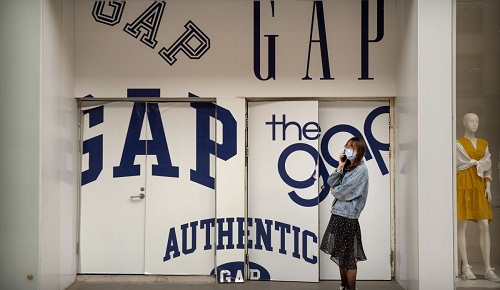 Gap aims to store approximately $252 million worth of unsold seasonal stock in secured storage facilities until spring 2021, Carter plans to pack away as much as $110 million of unshipped spring LQ and summer product and holding it until next year.
An unreliable option
However, the decision to pack and hold may benefit only if shoppers come back to stores later, which hinges entirely on speculation. According to a recent data from Refinitiv, only 34 per cent shoppers expect to visit shopping malls when they reopen while another 35 per cent plan to go only after the introduction of a COVID-19 vaccine.
Hence, UK-based luxury department store Harrods plans to immediately offload its pileup by launching a temporary concept store within a two-story, 80,000 sq. ft. space in Westfield London. The store will sell discounted stock leftover from the spring season as a part of its annual end-of-season summer sale. The pop-up has been designed to support higher levels of social distancing.
Taking the charity route to inventory management
Adopting more charitable steps to offload inventory, Gap-owned Old Navy is donating $30 million worth of clothing to families affected by the pandemic. Another of the its brand Banana Republic is collaborating with Delivering Good to donate $20 million worth of new clothes to those who have recently filed for unemployment during the crisis.
Similarly, Guess has partnered with Good360 to donate 45,000 pieces of activewear and outerwear to consumers in need while Ralph Lauren has donated 1.5 million clothing items to frontline workers and families in need. Donating apparels is the most obvious way to get rid get of unsold clothes. It helps apparel companies take this route to offload their excess stock and also build brand equity.
No excess inventory for footwear retailers
Even though they reported some sales decline, footwear retailers haven’t been impacted much with excess inventory. The first quarter inventory of ShoeCarnival increased merely 4.2 per cent, while that of Genesco, the parent company of Journeys, Schuh and Johnston & Murphy, increased only 6 per cent year on year in its first quarter, despite shutting nearly 1,500 stores in mid-March. The consumer’s appetite for footwear has been stronger as it is a much easier purchase than apparel.
China innovates improved carbon fiber through wet spinning
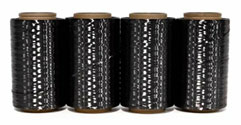 Until the end of last century, China had been staggering in developing its own carbon fiber technology that remained at a low level inefficient for the production in commercialization scale, and the carbon fiber needed for composite materials had to be imported. It is the wet-spinning process, the technological breakthrough laying a foundation for the new product with high-tenacity carbon fiber that characterizes the tensile strength of T700 and the excellent surface structure of T300.
According to the statistics from China Chemical Fibers Association (CCFA), Polyester, of all the manmade fibers, accounts for a lion share of 81.53 percent, with 47.51 million tons of polyester fiber produced out of the total manmade fiber production that reached 58.27 million tons in 2019. However, carbon fiber with its meager output, is the best known for its special properties found unrivalled when it comes to the particular areas of applications like aviation, aerospace, military arms, electronics etc. in national defense, and wind turbines and civil engineering constructions etc.
Despite of high strength to weight ratio, rigidity, corrosion resistance, good tensile strength, carbon fiber has a fabulous array of properties, like brittle, electrical conductivity, fatigue resistance, fire resistance/not flammable, high thermal conductivity in some forms, low coefficient of thermal expansion, non- poisonous, biologically inert and X-ray permeability .
Polyacrylonitrile (PAN) is widely used in a large number of applications in textiles, water purification, air filtration, and protective clothing, and perhaps you are not aware of the fact that the most value-added materials from PAN is the carbon fibers made from PAN precursor fibers in spite of other precursors such as pitch and rayon. 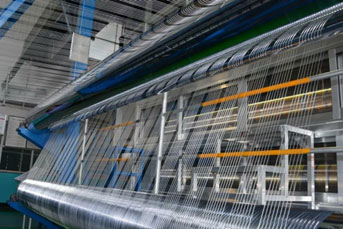
Weihai Tuozhan Fiber Company Ltd. of GF Composite Materials Corporation has established a complete R&D and 1000 ton carbon fiber industrialization system with PAN-based wet spinning process. The technological progress makes it possible for the company to turn out systematic technology and products based on the tensile strength, on the elongation modulus and on the bundle size and specifications, realizing high-performance carbon fiber production and application in large scale.
It is the wet-spinning process that surpassed the similar products level seen in Japanese Toray in terms of the dynamic indicators for the specifications of T300 and T800, and the product performance stability is on par with the Japanese company. In the context of multi-spinning positions, the technological breakthrough at the rate of 300m/min enables the spinning speed to have been raised by as much as over 1.5 times in the wet-spinning process, laying a foundation for innovation confidence in the industry. For the new product with high-tenacity carbon fiber, its tensile strength and modulus has reached the level of Japanese Toray’s T700 carbon fibers. And the interface performance of this carbon fiber-reinforced composite materials is even better than that in Toray because Toray only has dry-wet-jet spinning process with no wet spinning process at all in the T700 category. With this, the experts who gathered here in Weihai Tuozhan Fiber Company Ltd. of GF Composite Materials Corporation for evaluating this innovation project have agreed that the company has independently created a new carbon fiber product that characterizes the tensile strength of T700 and the excellent surface structure of T300.
Until the end of last century, China had been staggering in developing its own carbon fiber technology that remained at a low level inefficient for the production in commercialization scale, and the carbon fiber needed for composite materials had to be imported, as impacted by the lack of the precursor preparation technology. Needless to say, the complete importation of the much-needed carbon fiber posed a latent risk to a healthy development of national economy. It is all the more urgent for China to develop its own in-house technology for carbon fibers used in high-end equipment in many important areas of applications so as to secure a key material supply chain in the country.
 PAN-based carbon fiber preparation has a long process flow, covering precursor manufacturing, spinning, pre-oxidation(stabilizing), carbonizing, surface treating etc., and the carbon fiber out of the wet spinning process in PAN polymer dope has a unique surface groove structure, favorable for increasing the interface performance of the carbon fiber resin-based composites which are used as structural materials.
Weihai Tuozhan Fiber Company Ltd. of GF Composite Materials Corporation has successfully controlled the defects of the carbon fibers made from the traditional wet spinning process that used Dimethyl Sulfoxide(DMSO) as polymer dope and also well controlled the fiber cross-sectional morphological structure and ensured consistency of multi-spinning position plus multi tows process status. By solving the technical problems, the company can meet the needs of the carbon fiber performance for high-end applications compatible to the series fiber specifications. All of these results are made possible, thanks to the collaborative efforts among the company, Beijing University of Chemical Technology, Fudan University of Shanghai and other R&D institutions, to renovate the traditional DMSO precursor fiber process with independent creative technology for commercialization scale, coupled with key-equipment renovations and many other technical breakthroughs.
It is clearly understood that the carbon fiber is as much of the strategic industry in China as are the other sectors of economy found profoundly important to the national development strategy.
Contributed by Mr. ZHAO Hong
He is working for CHINA TEXTILE magazine as Editor-in-Chief in addition to being involved in a plethora of activities for the textile industry. He has worked for the Engineering Institute of Ministry of Textile Industry, and for China National Textile Council and continues to serve the industry in the capacity of Deputy Director of China Textile International Exchange Centre, V. President of China Knitting Industry Association, V. President of China Textile Magazine and its Editor-in-Chief for the English Version, Deputy Director of News Centre of China National Textile and Apparel Council (CNTAC), Deputy Director of International Trade Office, CNTAC, Deputy Director of China Textile Economic Research Centre. He was also elected once ACT Chair of Private Sector Consulting Committee of International Textile and Clothing Bureau (ITCB)
34 fashion brands from Moldova, Belarus to expand in EU
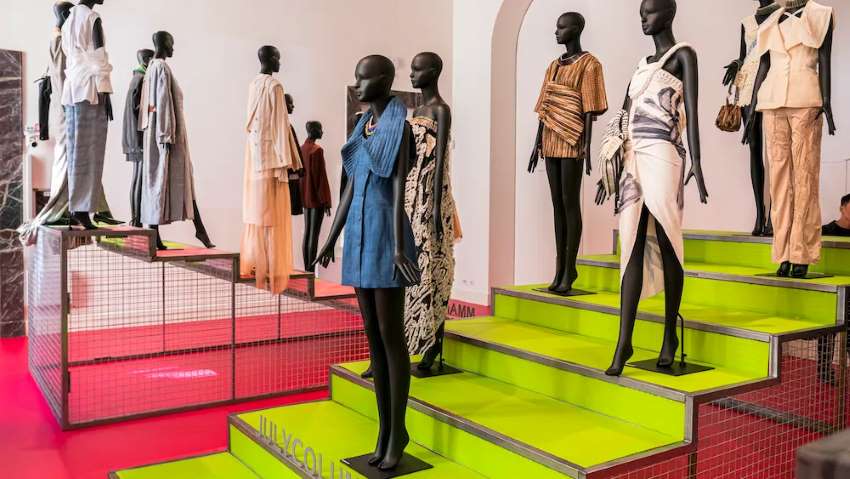
Thirty four fashion brands from Moldova and Belarus are eager to enter the European fashion market through their participation in the Ready to Trade project of the European Union’s (EU) Centre for the Promotion of Imports from Developing Countries (CBI) in collaboration with the International Trade Centre (ITC) and are receiving assistance from sector experts.
The Hague-based CBI initiated the project two years ago, when the Moldovan and Belarusian fashion brands with the most potential on the European market were selected.
The 34 brands are diverse, from ladies fashion and bridal fashion to children’s clothing and industrial clothing. They are successful in their own countries and have done well in neighbouring countries as well.
The brands needed assistance because of several reasons, according to Afke van der Woude, the project’s programme manager. Conducting business in Western Europe is different from the same in Russia. The requirements and tastes vary as well; for example, the fit in the Netherlands and Germany is different from that in the Eastern Bloc. The collections often also feature different colours, explains Van der Woude.
The Ready to Trade project offers training to entrepreneurs in the skills they need for export. The brands recently received help from three Dutch fashion experts with developing their collections, as well as the ins and outs of corporate social responsibility
The brands from Moldova include Alina Art (company is Alina Bradu), Etnika, Vistline, Maxikids (company is Zivax Maxi), Sophie (company is Sophie Design), Julia Allert (company is Allet & Co), Premiera Donna and Georgetta Mir.
The Belarussian brands include Belarusachka, Balunova Fashion Design Studio, Lakbi, Lea Lea, Nelva, Panda, Vladini, Bell Bimbo and Vesnaletto.
Lululemon posts operating surplus in first quarter
Lululemon has emerged as one of greatest retail survivors of the COVID-19 crisis by posting an operating surplus in the first quarter while almost all of its apparel contemporaries were bleeding.
The brand’s net revenue decreased by 17 per cent while it reported $32.8 million income from operations in the quarter to May 3, down 75 percent on the same period last year, but an outlier in the industry.
Though COVID-19 forced the closure of all of its company-operated stores in North America and Europe, its direct-to-consumer revenue soared 70 percent on a constant-currency basis as the company targeted housebound consumers eager to buy comfortable exercise wear in place of their normal office attire. Direct to consumer net revenue represented 54 percent of total sales compared to 26.8 percent for the first quarter of last year.