FW
Cambodia seeks Adidas, H&M’s support for garment industry
Cambodia’s minister of commerce Pan Sorasak recently urged Adidas and H&M to continue ordering garment products from the country. The call was made during a recent meeting between the minister and representatives from Adidas led by Matthew Armstrong and Christer Horn af Aminne, H&M’s production manager in charge of Cambodia and Vietnam.
During a press conference at the office of the council of ministers, municipal labour department director Choun Vuthy said out of the 706 garment factories in Phnom Penh, 121 have temporarily halted operations due to raw materials crunch and production setbacks experienced amid the COVID-19 crisis, according to Cambodian media reports.
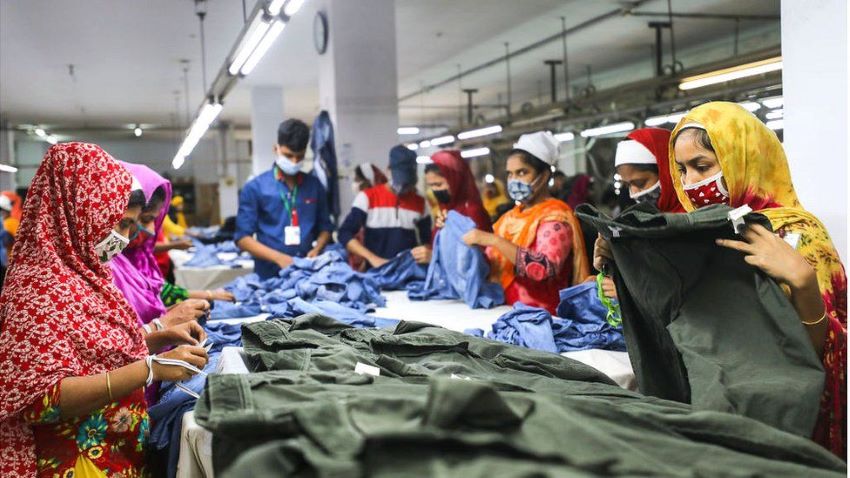
The suspended factories left lakhs of workers unemployed and affected millions of families. The government has provided $40 in wage support for unemployed workers.
Meanwhile, Better Factories Cambodia (BFC) has launched a hotline to provide information to workers in the garment, footwear, travel goods and bag industries regarding measures that help prevent the spread of COVID-19. The hotline, part of the ‘COVID-19: Worker Safety’ programme, uses interactive voice response (IVR) technology.
The contents of the service are derived from guidelines and recommendations from the World Health Organisation and the ministry of health and will be regularly updated in line with the latest official advice.
India’s Nov apparel exports rise, China loses ground in US as B’desh, Vietnam increase share: Wazir Advisors

Apparel store sales from January to November in the US were 7 per cent higher compared to the same period in 2021 however, but due to high inflation, volume growth was limited. At the same time home furnishings store sales are witnessing stagnancy and have seen muted growth of only 1 per cent in the same period, says Wazir Advisor’s November report ‘Apparel Trade Scenario in Key Global Markets and India’ focusing on apparel consumption and import data of the US, EU and Japan and exports stats for India shows.
With lower base value apparel store sales in the UK from Jan to Nov were 21 per cent higher than 2021, as demand in 2021 did not recover to pre-covid levels. Same holds true for apparel imports data from Jan to Aug, which is 19 per cent higher than last year, but the base (2021 data) is quite low. For EU, apparel imports from Jan to Oct have grown 41 per cent over the same period last year, again a reasonable explanation is the lower base value from the same period in 2021. In Japan’s case, apparel imports from Jan to Sep have grown merely 5 per cent in 2022 compared with the values in the same period last year.
For India however, the good news is apparel exports have started to recover from the decline in last quarter. The export value in Nov 2022 is 9 per cent higher than in the same period last year.
Key highlights of US market
Nov 2022, US monthly apparel store sales are estimated to be $18.7 bn which is 7 per cent less than Nov 2021. On YTD basis, the sales are 7 per cent higher than in 2021. Apparel inflation has remained in the range 5.5 to 8 per cent during 2022, indicating nil to negative volume growth, the report shows. In Q3 2022, online sales of clothing and accessories registered a growth of 9 per cent over Q2 2021 but it was marginally lower than Q2 2022 sales.
Store sales of home furnishing in Nov 2022, were estimated at $5.6 bn, an 8 per cent drop compared to Nov 2021 sales. On YTD basis the sales are only 1 per cent higher than 2021.
US Consumer Confidence Index declined to 100.2 from in Nov compared to 102.2 in Oct 2022. The index is on a constant decline for several months considering high inflation and recession.
Apparel import in Oct 2022 was $8.2 bn which is 1 per cent less than in Oct 2021. On YTD basis, the imports are 30 per cent higher than in 2021. China’s share in the US market has dropped 8 per cent since 2019, comparatively Vietnam and Bangladesh’s shares grown 2 and 3 per cent respectively. India on the other hand has seen its share rise merely 1 per cent since 2019.
China, Bangladesh market share increase in UK, EU
In Nov 2022, UK’s monthly apparel store sales were £4.1 bn, 3 per cent higher than in Nov 2021. On YTD basis, the sales are 21 per cent higher than 2021. High growth is mainly on account of low base value. Apparel imports in August 2022 were around 15 per cent higher compared to Aug 2021. On YTD basis, imports in 2022 are 19 per cent higher than 2021 but still below 2019 values.
In terms of market share in the UK, China, Bangladesh and Turkey have seen a growth by 5, 4 and 3 per cent respectively, since 2019.
EU apparel imports in Oct 2022 were 32 per cent higher compared to in Oct 2021. On YTD basis, imports in 2022 are 41 per cent higher than 2021. The high growth is mainly because of high price inflation and low base value. Country wise market share of China has increased 1 per cent whereas Bangladesh’s share has increased by 3 per cent since 2019.
In Japan also China’s share fall
Japanese apparel imports have been on the rise as well. Import figures in Sep 2022 was $2.7 bn a good 7 per cent higher than Sep 2021. On YTD basis, imports in 2022 are 5 per cent higher than last year.
The country’s apparel imports from Bangladesh’s and Cambodia’s increased 1 per cent each, however China’s share declined 1 per cent compared to 2019.
India’s apparel exports revive in Nov
India’s Nov 2022 apparel export was 9 per cent higher than in Nov 2021. On YTD basis exports are 10 per cent higher than in 2021 but considering high
inflation level, there is nil to minimal volume growth over 2019. Country wise, US’ share increased 8 per cent, whereas UAE’s and UK’s share declined 3 and 1 per cent, respectively since 2019.
Apparel retailers focus on digital channels to boost sales
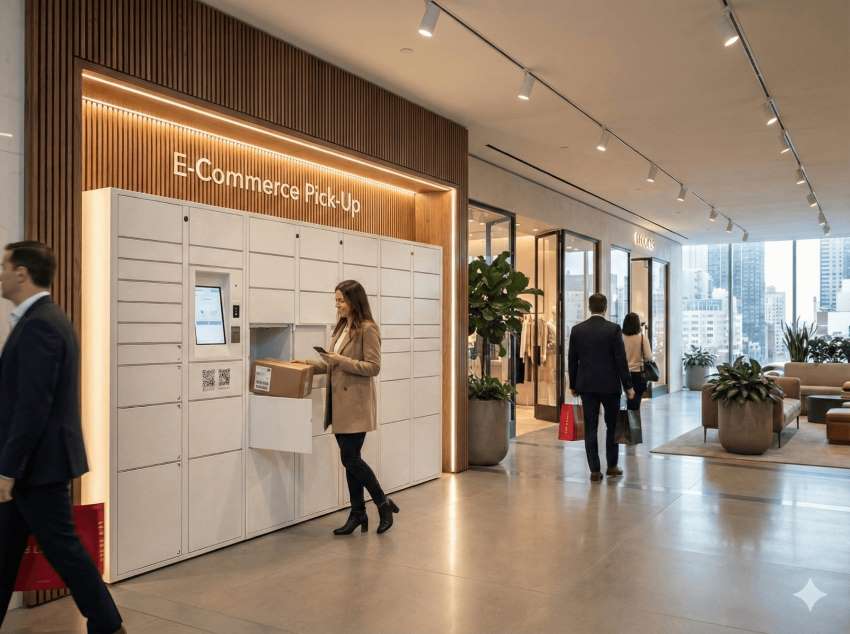
Apparel companies are directing resources toward digital platforms in order to better engage with customers, accelerating fleet optimization initiative, augmenting supply chain and concentrating on improving financial flexibility. They are also focusing on superior product strategy to resonate well with customers and advancing omni-channel capabilities.
The Children's Place, Inc has been making investments to upgrade its omni-channel capabilities as part of its digital transformation strategy .The company has enabled ship-from-store capabilities in roughly 85 per cent of its US stores, which more than doubled its daily shipping capacity. Its e-commerce sales rose 12.2 per cent during first-quarter fiscal 2020, and represented approximately 53 per cent of total net sales, as online sales accelerated following the closure of store effective Mar 18.
The Gap, Inc leveraged its omni-channel capabilities to cater to customers’ demand online, at a time when its stores were temporary closed. This Zacks Rank #3 company witnessed a 13per cent year-over-year increase in online sales in first-quarter fiscal 2020. Moreover, the company recorded online sales growth of 40 per cent in April. Last month, the company registered more than 100 per cent growth in online sales.
American Eagle Outfitters, Inc reported a 33 per cent increase in digital demand, as measured by ordered sales. Its digital demand surged by 75 per cent at Aerie and 15 per cent at AE. The company introduced curbside pickup with re opening of stores. The company is enhancing digital capabilities, strengthening inventory management and reassessing store fleet to position itself for a new future of retail industry.
Indian government to allow export of five million PPE
The Centre plans to allow export of nearly five million personal protective equipment (PPE) suits a month as India is making these suits in surplus quantities. However, government officials added manufacturers will have to comply with international standards and acquire all required certifications to make sure their products are up to the mark.
The textile industry has been seeking permission for the exports of these suits citing PPE surpluses in the country and losses it has suffered because of the pandemic. Exports of these suits were stopped on January 31. The Directorate General of Foreign Trade (DGFT) recently lifted the ban on various kinds of cloth masks that were prohibited in March. Government officials maintain that the ban on medical equipment is also likely to be lifted soon.
South India Mills Association President K Selvaraju said there is no market presently for garments or knitwear and that textile companies have been requesting the government to allow them to export PPE kits. He added they have reached a point where they can produce nearly 10 million kits a month.
The Lycra Company to showcase innovative denim solutions at Kingpins
The Lycra Company, a global leader in developing innovative fiber and technology solutions for the apparel industry, will showcase innovative stretch denim solutions and sustainability initiatives at the Kingpins24 digital event for the Fall 21 Denim season that will be held from June 23-24. The company will use the Kingpins event to promote its EcoMade family of fibers featuring pre- and post-consumer recycled content that offer the same high-quality performance as their original offerings. The event will feature a lineup of live streamed webinars, interviews, panels, informal conversations and more, plus a robust library of on-demand content.
In a session titled ‘Resetting for Growth with The LYCRA Company,’ Julien Born, President of Apparel, will speak with journalist Alison Nieder about the company’s response to COVID-19 and how sustainability, innovation and collaboration continue to fuel its future. Rita Ratskoff, Senior Strategic Account Manager, North America, The LYCRA Company, will join Mark Ix, Director of North America Marketing for Advance Denim, for a conversation titled, ‘Collaboration is Key to Business Success.’ Ratskoff and Ix will discuss the benefits of partnership and how innovations like LYCRA ® dualFX ® have helped drive Advance Denim’s growth.
Additionally, video content on The LYCRA Company’s Planet Agenda Sustainability platform and current denim innovations will be available for on-demand viewing during the Kingpins24 show and until July 7, 2020.
Export earnings of LDCs to fall significantly this year: WTO
In its latest report, the World Trade Organization (WTO) has stated least developed countries like Bangladesh could witness a significant fall in their export earnings this year. The report attributed this mainly to these countries’ dependence on a limited number of markets (export destinations) and product categories. Five principal markets of Bangladesh including the US, France, UK, Spain and Germany have been severely impacted by Coronavirus, which could have an adverse bearing on the country’s export receipts in 2020.
As per reports, Germany accounts for around 15.1 per cent of Bangladesh’s total exports with US following with 13.8 per cent share, Spain 7 per cent, France 6.8 per cent and UK 8.1 per cent. The COVID-19 pandemic also threatens to derail the LDCs hard-won development gains as supply chain disruption and declining demands weigh against their exports; especially the textile and apparel exports.
Also, brands and retailers in these export destinations have already started to file for bankruptcy protection, which could further complicate the suppliers’ problems from the LDCs as the contracts that have been signed already now run the risk of getting cancelled.
USDA estimates 15 per cent decline in world cotton use in 2019 marketing year
US department of agriculture (USDA) estimates world cotton mill use to plunge nearly 15 per cent year-on-year in marketing year 2019. Cotton mill use generally follows global economic activity. When the world economy weakens— as during the COVID-19 pandemic—consumers often defer purchases of items such as clothing, and the associated industries adjust their operations accordingly. For the textile and apparel industry, these adjustments have included temporary closures or substantial reductions in manufacturing operations as postponement or cancellation of orders have had ripple effects throughout the entire supply chain, from raw fiber procurement to retail sales, said the Economic Research Service of the USDA in its 'Cotton and Wool Outlook' report for June 2020.
COVID-19 and developing global economic slowdown has significantly reduced recent USDA monthly forecasts for world cotton demand for marketing year ’19. Based on USDA’s June 2020 forecast, marketing year 2019 global cotton mill use is estimated at a 16-year low.
Global cotton mill use has declined by over 5 per cent year-over-year in only 10 other years since MY 1920, with most of those reductions associated with global recessions, including the Great Depression. More recently, uncertainty surrounding the global financial crisis significantly limited world cotton demand in marketing year 2008, while a dramatic run-up in marketing year 2010 cotton prices to levels not experienced since the US Civil War hampered mill use in marketing year 2011.
Celio places subsidiaries under judicial protection
Unable to reach an agreement with the banks, French men’s wear brand Celio has decided to place its holding company Celio International and its French subsidiary Celio France under judicial protection. The Corona crisis has caused €100 million sales loss for the brand as around 1585 of its stores remained closed for almost two months. However, its other foreign activities, including the thirty Belgian stores, are not affected by the measure.
Catering primarily to the Continental European market, Celio aims to provide fashionable men’s clothing. Most of the brand’s stores are located in shopping centers, with a smaller percentage to be found in the shopping districts of cities and large suburbs. With establishments in 56 countries on 6 continents, Celio has around 1,000 points of sales.
Autumn edition of Intertextile Shanghai Home Textiles to reestablish connections across cultures, generations
 Recognizing the need to healthy and sustainable lifestyle in today’s uncertain times, Intertextile Shanghai Home Textiles has collaborated with the NellyRodi Agency for its 2021 Autumn edition that will focus on the design theme ‘Bound’ with three trends: Cozy Warmth, Past Future and Bold Clash; providing new insights into the interior textiles segment.
The fair will be held from August 24 to 26, 2020 at the National Exhibition and Convention Center in Shanghai. It is organized by Messe Frankfurt (HK); the Sub-Council of Textile Industry, CCPIT; and the China Home Textile Association (CHTA), “The fair will give industry professionals a chance to capture market opportunities in the current and next year” says Wendy Wen, Senior General Manager of Messe Frankfurt (HK). “One of the first large-scale, international events for the home and contract textiles sector since Heimtextil, the Intertextile Shanghai Home Textiles fair will provide global home textile industry an opportunity to reconnect, recalibrate and make the most of the current as well as the coming year,” she added.
Reconnecting humans with technology
Highlighting the latest trends and innovations in the industry, Intertextile Shanghai Home Textiles serves as a source of information and inspiration for professionals in the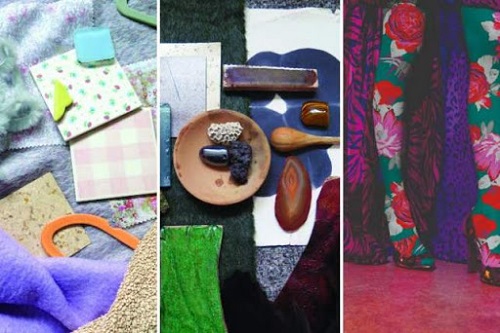 industry. The design theme ‘Bound’ encourages industry players to reestablish their connections across different cultures and generations besides reconnecting humans with technology.
The trends for the event are formulated by a committee led by France-based NellyRodi Agency and four top French forecasters including Vincent Grégoire, Carlotta Montaldo, Studio NOCC, Juliette Lamarca and Chinese forecaster Shein Lee.
Cozy Warmth: Harmonizing soft colors and light materials
Of the three trends for the 2020 event, the Cozy Warmth trend focuses on the modest harmony between luminous pastels and natural beiges. These soft shades help create a cocooning atmosphere at the event which is further as: centuated by the display of voluminous, cozy, light and fluffy materials, such as angora, foamy polyamides, wool / acrylic / Lyocell blends, etc.
Past Future: A combination of dark colors with wild materials
Combining natural, telluric tones with dark, mineral colors, the past future trend expresses the duality of hot and cold. Fabrics in this trend include wild and mineral – grainy crepes, rustic hemps, patented leathers, 3D-treated denim, devoré linens and crackled jacquards.
Bold Clash: Bold colors with opulent fabrics
The Bold Clash trend focuses on regal gold, intense blue, flamboyant red, dark green and cameo pink shades. Its fabrics in focus include Maxi jacquards, button-padded velvets, precious braids, colorful faux furs and beaded floral embroideries.
Tajikistan’s textile imports from Uzbekistan increase from Jan-July’22
From January through July 2022, Tajikistan’s imports of textile products from Uzbekistanincreased as per a Trend reports referring to the State Committee of Uzbekistan on Statistics.
According to the committee, Uzbekistan exported textile products worth $21 million to Tajikistan in seven months of this year, which is almost 2.3 times more than in the same period of 2021 ($9.2 million). The largest share of Uzbek textile exports from January through July 2022 was held by Russia ($698.3 million) followed by Türkiye ($373.8 million) and Kyrgyzstan ($273.2 million).
Meanwhile, the total value of Uzbekistan's exports to Tajikistan in the reporting period increased by 6.3 per cent to $257.2 million compared to the corresponding period of last year ($241.9 million).