FW
United Colors of Benetton launches new store in Florence
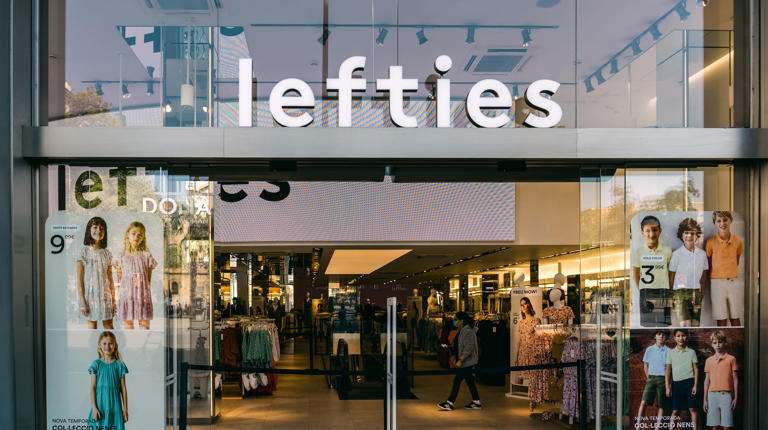
United Colors of Benetton has launched a new store in Florence. The tore is well decorated with intensive use of sustainable material and state-of-the-art energy-saving technologies. The 160 sq m, single-floor boutique uses recycled natural materials. The floor is built out of gravel from the river Piave and waste wood from beech trees. The walls are treated with a mineral paint with antibacterial and anti-old properties that can reduce the pollutants in the environment.
As per Massimo Renon, Chief Executive Officer, Benetton Group, the new boutique is a benchmark in terms of power consumption, as it uses 20 percent less energy than normal store. A system based on tiny sensors, AI and data analysis increases the energy efficiency of the points of sale and guarantees comfort for the consumer.
Benetton Group S.r.l. is a global fashion brand based in Ponzano Veneto, Italy founded in 1965. Benetton Group has a network of about 5,000 stores worldwide. It is a wholly owned subsidiary of the Benetton family's holding company called Edizione.
Government to lower turnover and investment thresholds in draft PLI scheme
The government plans to lower the turnover and investment thresholds, and include cotton-based products, according to its draft Rs 10,683-crore production-linked incentive (PLI) scheme. The scheme aims to offer 11 per cent incentive to large companies for investments over Rs 500 crore in Greenfield projects in technical textiles. However, the companies to record an incremental turnover of Rs 1,500 crore in the first year and a 25 per cent rise in turnover each year after that.
Firms with an annual turnover of Rs 100-500 crore will receive an incentive of 9 per cent for brownfield projects. This will be subject to an increase in turnover 50 per cent each year. Similarly, companies with a turnover of Rs 500 crore or more will be granted a 7 per cent incentive in the first year. However, the turnover has to increase by 50 per cent in the first year and by 25 per cent each year after that. The incentives in all the categories will be trimmed by 100 basis points each year after the first year and granted for a total of five years starting FY22.
The draft PLI scheme marks a paradigm shift in the government’s decision-making on two counts. First, it earmarks big bucks for big companies, shedding its long and costly bias towards small businesses. Second, it seeks to correct India’s historical policy preference for a cotton-dominated value chain, which is contrary to the global trend. The idea is to reclaim India’s export markets after ceding substantial ground to Bangladesh and Vietnam in recent years.
ITM International Exhibition 2021 postponed to June 2022
To be held at the Tuyap Fair and Congress Center in Istanbul, from June 22-26, 2021, the ITM International Textile Machinery Exhibition has been postponed due to the ongoing pandemic. The exhibition will now be held from June 14-18, 2022. Uniting hundreds of domestic and foreign textile leaders, the exhibition ranks among the leading exhibitions of the sector. It also has a place in the world's textile exhibitions calendar with its feature of international arena where cutting-edge technologies are exhibited.
Prioritizing protecting its exhibitors and visitors’ investments and all rights, the organizers believe the exhibitors and buyers will understand and cooperate with its decision to postpone the exhibition.
Value of US’ apparel imports drops 18%
The value of apparel imports by the US dropped by 18 per cent to $5.52 billion in January ’21 as compared to $6.76 billion in January ’20. As per Apparel Resources, the import volume tumbled .70 per cent to 2.13 million SME in the first month of 2021. The unit prices of the imported apparels sunk by 11.64 per cent to $ 2.58 per SME in January ’21 as against $2.92 per SME in January ’20.
Imports from all major destinations such as China, Vietnam, Bangladesh, India and Indonesia tumbled in January, while those from countries such as Pakistan, Egypt, Ethiopia and Colombia improved on Y-o-Y basis. However, as compared to December ’20, the import values surged indicating a M-o-M recovery.
In January ’21, apparel imports by the US surged by 14.28 per cent from $4.83 billion worth of apparels imported in December’20.
AAFA adds 13 new board members
American Apparel & Footwear Association (AAFA) has added 13 new members to its Board of Directors for 2021-22 besides re-electing several other board members.
The members confirmed as AAFA’s Board of Directors for the 2021-2022 term included Colin Brown, CEO, Under Armour Inc as the new Chairman; Sarah Clarke, Executive Vice-President, Supply North America, PVH Corp as the Vice Chairman; Ted Dagnese, Chief Supply Chain Officer, Lululemon Atheletica as the Secretary and Kurt Cavano, CEO, Nimbly as the new treasurer.
Newly elected members included Deborah Weinswig, Coresight Research Inc and Sid Howard, Amann Group. The re-elected members included Halide Alagoz, Ralph Lauren Corporation; Lisa Bate, Bureau Veritas Consumer Products; Ted Dagnese, Lululemon Athletica; Bill Ells, Vibram USA; Mike Fralix, Textile/Clothing Technology Corporation; Katherine Gold, Goldbug Inc; Todd Kahn, Tapestry Inc; David Miller, Minnetonka Moccasin Company, Inc; Steve Mostofsky, TTI Global Resources; Josue Solano, BBC International and Sunny Tan, Luen Thai.
Global Fashion Group to accelerate marketplace and platform services
Online fashion and lifestyle destination in growth markets, Global Fashion Group (GFG), plans to accelerate its marketplace and platform services by focusing on technology development. For this, the group has placed seven year senior, unsecured bonds convertible as per their terms and conditions in an aggregate principal amount of €375 million.
As per report, these bonds also support the group’s ambition of becoming a €10 billion Net Merchandise Value (NMV) business in the next 7-9 years. They enhance the group’s capacity to accelerate fashion e-commerce adoption in key markets and fuel the next chapter of its growth, say Christoph Barchewitz and Patrick Schmidt, co-CEOs. GFG also plans to expand its adjacent categories, acquire new customers, and introduce innovations in delivery. This will facilitate the expansion of its Global Fashion Platform, strengthening its position in the digital fashion market.
The group will issue the convertible bonds at 100 per cent of their principal amount with a coupon of 1.25 per cent payable semi-annually. The initial conversion price was set at a premium of 42.5 per cent above the reference price of €12.60.
Levi Strauss launches new program for Bangladesh women workers
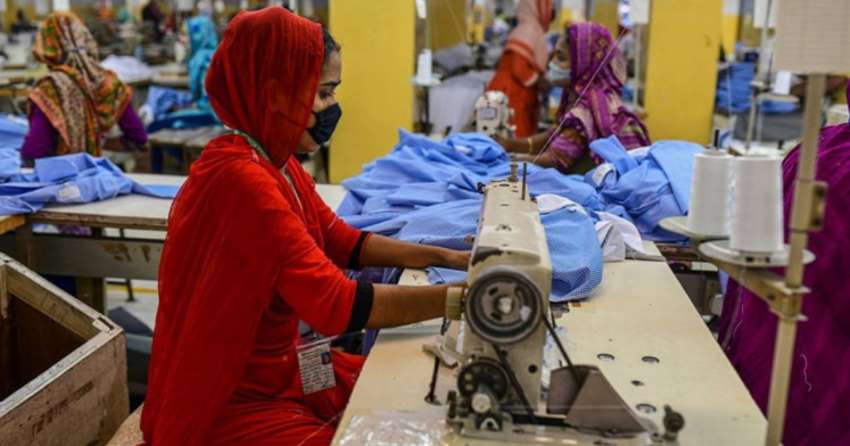
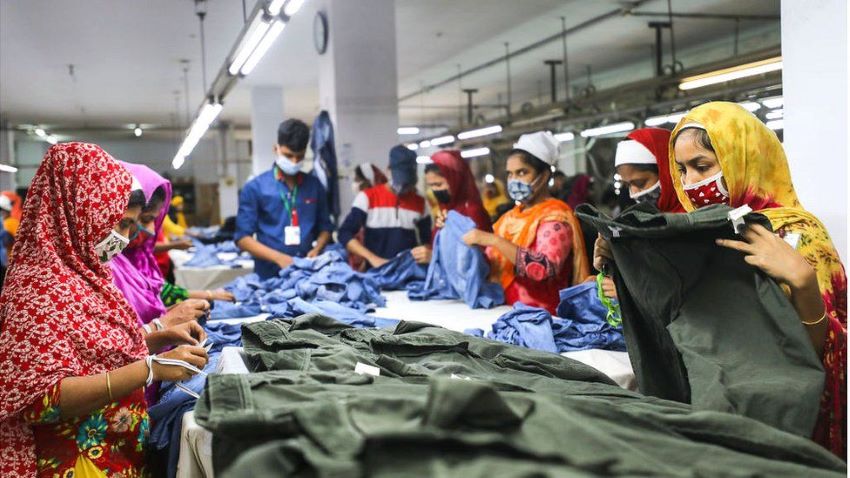
US-based renowned denim giant Levi Strauss has launched the COVID-19 Response for RMG Women Workers in Bangladesh Program, which will deliver cash aid to 1,000 female ready-made garment (RMG) workers who lost their jobs due to the COVID-19 pandemic’s effect. Around 600 apparel workers in Dhaka and 400 workers in Chattogram would get Tk5,000.
Besides, 600 more apparel workers – 360 in Dhaka and 240 in Chattogram – would get hygiene kits including soap, detergent and reusable face masks, worth more than Tk1, 200 per person. NGO ActionAid Bangladesh would distribute the cash aid and hygiene kits among the workers through its two associates – Safety and Rights Society in Dhaka and Sangsaptak in Chattogram.
Sekender Ali Mina, Executive Director, Safety and Rights Society, said they will list the project recipients from their RMG workers database. Moreover, they will gather information from the RMG workers. Mina said, they had already prepared 50 volunteers for the aid payment. By mid-March, they expect to reach out to the RMG workers with the aid. Annually, Levi’s sources 39.5 million pieces of denim from Bangladesh.
Pakistan approves cross-border import of cotton yarn
Pakistan Prime Minister Imran Khan has approved cross-border import of cotton yarn as the shortage of industrial input is feared to stymie recovery in textile exports.
As per reports, Pakistan’s cotton production declined to 5.5 million bales from as much as 15 million bales recoded annually in previous years, causing unstoppable rise in its prices.Its textile and clothing exports increased by over 8 percent to $8.8 billion in the seven months of the current fiscal year.However, traders warned that the growth pace can slow down amid the shortage of raw materials.
Pakistan Yarn Merchants Association expressed deep concern over the unavailability of cotton yarn and its price reaching to an all-time high. It asked the government to immediately allow duty-free import of yarn and cotton from India to save the textile industry from collapse
If export orders are not fulfilled on time, the business will adversely be affected, according to the association.
The association’s office bearers said a large number of export orders from China, Bangladesh and India were transferred to Pakistani exporters, which led to an increase in production activities. However, these days the cost has risen sharply due to non-availability of raw materials as per the demand of the textile industry and the high price of yarn in the local markets.
Nudie Jeans to create 15,000 pairs of jeans from discarded denims
Nudie Jeans aims to create 15,000 pairs of jeans from the company’s unsold denim. The Swedish denim brand, celebrated for its use of organic cotton and its jeans repair program, will take its own jeans it considers to be “second-quality” and turn them into fabric for new jeans. Second-quality jeans are those with slight defects such as a discolored wash, inconsistent stitching or irregular cut. Historically, they are either sold at a discount or otherwise discarded.
Post-industrial waste recycling is a $350 billion opportunity in the Western hemisphere, according to a report from Accelerating Circularity, a collaborative initiative formed by sustainable materials community Textile Exchange. The denim brand teamed with United Nations Industrial Development Organization (UNIDO) as part of the EU-funded circular accelerator, SwitchMed, to bring denim recycling to Tunisia. Nudie Jeans produces the majority of its jeans in Tunisia through companies Denim Authority and Universal Colours.
In December, Nudie and UNIDO developed a two-phase pilot project to test the recycling process at scale. Phase one involves taking 8,000 pairs of second-choice jeans and combining them with virgin denim material to make 20,000 meters of new fabric. By May 2021, the project will have produced 15,000 pairs of new jeans. The second phase will then focus on developing a post-industrial denim recycling program with Tunisian designers to further circularity efforts. Tunisia has seen increased water scarcity in recent years, making circular design an even greater priority for the denim brand.
Intertextile Apparel Fabrics to hold Spring Edition 2021 from March 17-19
The Intertextile Apparel Fabrics will hold its Spring Edition 2021 from March 17-19, 2021, at the National Exhibition and Convention Centre, alongside Yarn Expo Spring, Intertextile Shanghai Home Textiles, CHIC, and PH Value. The show attracts a line-up of global companies, to help them seize business opportunities in China’s recovering textile market.
This edition, exhibitors from Argentina, Denmark, Ethiopia, France, Hong Kong, Italy, Japan, Korea, Spain, Switzerland, Taiwan, Turkey, and the UK are taking part. Visitors will also be able to source from country and region pavilions from Hong Kong, Japan, Korea, and Taiwan, along with the Korea Textile Centre group pavilion. In addition, Chinese exhibitors will be grouped by product-end use.
For buyers who cannot attend the fair in person, Intertextile’s online business matching platform, Connect PLUS, will be accessible two weeks before and four weeks after the fair. With a database of over 4,500 global exhibitors and buyers as well as AI-driven matching recommendations, users can search for products, chat via instant messaging and video call functions, and schedule online or onsite meetings. Online exhibitors can also join the fair’s Hybrid Showcase to display their products for onsite buyers to touch and feel. Complemented by the Intertextile mobile app, live-streams and webinars, these digital solutions maximise product exposure for exhibitors while enhancing sourcing efficiency for buyer.