FW
Bangladesh: LFMEAB seeks reduction in limit of local value addition to leather products
The Leather Goods and Footwear Manufacturers and Exporters Association of Bangladesh (LFMEAB) has sought a reduction in limit of local value addition to leather products to 20 per cent. As per a Dhaka Tribune report, the rate cut will help enhance the sector's competitiveness on the global market. On May 9, Bangladesh Bank (BB) lowered local value-addition rate for the country's textile-sector exporters to 20 per cent from 30 per cent for the current fiscal year, in view of the current crunch time.
Currently, leather goods exporters enjoy 15 per cent cash incentives against their export shipments. During the past 10 months of the current fiscal year (FY), Bangladesh’s exports of leather and leather goods and footwear grew by 33 per cent. The export volume of leather and leather goods, and products like footwear and bags grew to $1.29 billion in the July-April period of FY22.
Bangladesh imports most of the accessories of the footwear sector as it does not have sufficient factories to manufacture them
Famous brands and buyers operating in the country nominate foreign accessories suppliers to maintain the product quality and compliance. Manufacturers import the required raw materials in a short span of time due to 'lead time' constraint set by the brands and customers concerned.
As a result, exporters cannot maintain the current 30 per cent domestic value-addition threshold is not possible to maintain, as per the LFMEAB. This leads to most exporters, especially non-leather goods exporters, being deprived of cash incentives and losing competitiveness capacity, adds the association.
In the last fiscal year, Bangladesh exported leather and leather goods worth $941.67 million. It plans to export $10 billion leather and leather goods by 2030, says Tapan Kanti Ghosh, Secretary, Ministry of Commerce.
Bluezone collaborates with Transformers Foundation
The International Denim Trade Show Bluezone has collaborated with Transformers Foundation in Munich this summer.
The Foundation was invited and accepted to participate in the Bluezone seminar series on August 30 and 31 in the main lecture centre at Keyhouse to present two information sessions on sustainability in our beloved denim industry. With a core pillar of Transformers Foundation being open education, this was a no-brainer partnership.
On August 30, presentations and discussions will revolve around the topic of energy. As we put all of our efforts into decarbonizing the industry, this timely topic will equip you with the tools to reduce your impact while providing networking opportunities for strategic partnerships.
The theme of day two, August 31, is Innovation. With an over saturation of marketing concepts promoting new developments as the latest and greatest, we will provide you with a vetted round-up of the truest innovations on the market and your chance to meet the people behind them.
Transformers Foundation is the unified voice representing the denim industry and its ideas for positive change. It was founded to provide a thus-far missing platform to the jeans and denim supply chain, and a central point of contact for consumers, brands, NGOs, and media who want to learn more about ethics and sustainable innovation in the industry. We represent the denim supply chain: from farmers and chemical suppliers to denim mills and jeans factories.
EU’s new Carbon Tax can impact and reduce RMG exports from Bangladesh

To transform Europe into a carbon neutral continent, the European Union (EU) plans to impose carbon tax as a part of the EU's Green Deal in several sectors. The risk list currently does not include Bangladesh’s main export products, garments and leather items. However, they are likely to be added at any time in future. Their addition to the list could hurt exports, warn experts, they also advise Bangladesh to introduce carbon tax and carbon market in the country besides focusing on renewable energy.
Transforming EU into a resource-efficient economy
A new growth strategy, the European Green Deal aims to transform the EU into a modern, resource-efficient and competitive economy with zero greenhouse gas emissions by 2050. A part of the Green Deal, the Carbon Tax will be levied on imports from foreign companies by EU listed buyers. The Carbon Tax will also make it mandatory for EU importers to declare emissions embedded in imports and surrender the corresponding number of certificates each year. If importers can prove that a carbon price has already been paid during production of the imported goods, the corresponding amount can be deducted.
Carbon tax to hinder exports
According to initial assessment of RAPID, the EU might include apparel, leather and footwear in its list of 63 sub sectors deemed at risk for carbon leakage in future. Taxing these products can hinder exports and competitiveness. They may reduce exports of the targeted carbon-intensive sector from developing countries by 2.4 per cent, says United Nations Conference on Trade and Development (UNCTAD). However, apparel entrerpeneurs continue to remain unfazed by EU’s move. Md Fazlul Hoque, Managing Director, Plummy Fashions opines, Bangladesh will continue to march ahead of other countries in green initiative.
Focus on renewable energy
Rumana Huque, Economics Professor, Dhaka University believes, Bangladesh may lag behind competitors if it does not immediately begin to study the issue in detail and prepare in light of the standards of buyer countries. MA Razzaque adds, if Bangladesh is already preparing to pay the carbon tax, then it will not have to pay for export of goods to EU countries. It can instead focus on renewable energy.
Rising yarn prices, labor scarcity threaten India’s position as a leading garment exporter
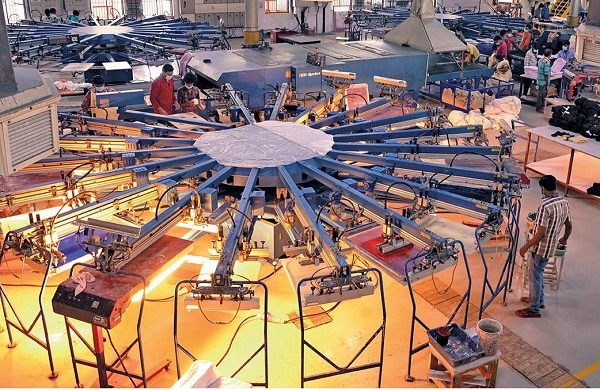
At Rs 1 lakh for a single candy, cotton yarn prices are making a bigger hole in yarn spinner’s pocket than they did 18 months ago. The rise in prices is incapacitating small and medium-scale garment exporters, who now have to pay Rs 30 to Rs 50 more for a kg of yarn, says Krish, Managing Director, Victorian Clothings. Accounting for 45 per cent of a garment’s costs, yarn prices are generally absorbed by buyers during production. However, since prices have more than doubled, spinners have refused to absorb this rise, explains Ramu Raju, Partner, Fashion Knits, a Rs 75-crore manufacturer of jackets for brands like Esprit.
Spinners’ margins reduce
K Venkatachalam, Chief Advisor, Tamilnadu Spinning Mills Association (TASMA), says, yarn price rise has reduced the average spinner’s margins from 8 to 5 per cent as they have been unable to pass on the entire hike to garment manufacturers.
To control this rise, government has withdrawn the 10 per cent import duty on cotton from April 14 to September 30, 2022, to boost supply from Australia, the US and Africa. However, duty-waiver pacts by Bangladesh and Vietnam enable these countries to offer 10 per cent duty benefit to spinners. Bangladesh is also significantly more price competitive that encourages American and European buyers to place orders with Bangladesh exporters. Every year, business of 100,000-200,000 pieces per style goes away to Bangladesh, avers Krish.
FTAs help competitors surge ahead in garment exports
Over the last five years, India’s garment exports have stagnated between $16 and $17 billion. Both Bangladesh and Vietnam have surged past India thanks to their duty-free exports to Europe, points out Sakthivel, President, Federation of Indian Export Organisations (FIEO) and Ex-Chairman, Apparel Export Promotion Council (AEPC).
China is also marching ahead by increasing its share of man-made fiber garments in swimwear, winter items and long dresses worn by women, points out Raju. Competitors’ are offering clothing items, that are 85 per cent made from polyester fibers, adds Sakthivel. Spinners should aim for a 50:50 balance between MMF and cotton, he opines.
Lack of technical know-how in MMF production
Around 60 per cent of global trade is in MMF, says Thirukkumaran. However, India does not have the technical knowledge to make these garments at competitive rates. The performance-linked incentive (PLI) scheme will facilitate new joint ventures, collaborations and technology transfer agreements with South Korea and Taiwan and India may start making synthetic fabrics in a year’s time, opines Sakthivel.
India’s recent free-trade agreements (FTAs) with Australia and the UAE will facilitate duty-free garments exports to these country and duty-free cotton imports from them. Indian exports also plan to sign similar pacts with the UK and EU. Exporters are perennially troubled by labor scarcity in India. The country suffers from a 10 per cent shortage of skilled labors.
India also lacks required infrastructural support to scale up MMF production, says Raju. On the other hand, sound infrastructure enables China to hold 40 per cent of the export market share despite not having any FTA with importing nations, he adds.
To tackle the labor problem, The Tamilnadu Exporters and Manufacturers Association (TEAMA) is setting up a garment manufacturing park in Vedharanyam. However, this model is not likely work for high-fashion garments with embroidery and embellishments as it involves a lot of back and forth between various departments, rues Krish. Labor problem also threatens to take away India’s independence in garment industry and turn it into a garment importer in the next 20 years, he warns.
Value of US T&A imports rises by 34.3% in March
The latest data from the CCF Group shows, the value of US textile and apparel imports in March 2022 increased by 34.3 per cent Y-o-Y to $12.18 billion. The imports volume reached increased by 38.6 per cent Y-o-Y to 9.35 billion sq m. The value of US apparel imports rose by 43.1 per cent Y-o-Y to $9.29 billion and the imports volume reached 3.11 billion sq m, increasing by 24.6 per cent year-on-year.
The US textile and apparel imports volume from China in March 2022 declined by 1.1 per cent Y-o-Y to 2.84billion sq m. The imports value increased by 24.5 per cent Y-o-Y to $2.66billion. US apparel imports value from China in March 2022 declined by 5.1 pe cent Y-o-Y to $0.9 billion while the imports volume increased by 39.6 per cent Y-o-Y to reach 1.73 billion sq m
Itema forms new subsidiary in Turkey
Leading provider of advanced weavingsolutions including weaving machines, spare parts and integrated services, Itema has formed a new company in Turkey. The Turkish subsidiary, that operates under the name İtemaTekstilMakineleriServisSanayiveTicaret Limited Şirketi, began its operations in Istanbul and Bursa in April 13.
The operation aimsto enhance the local presence and increase efficiency when serving the company’s significantly growing Turkish customer base. The new organization in Turkey relies on the know-how and experience of BilolTekstil, historic Itema partner in the country, and will count on the cooperation with A. Modiano, with whom Itema carries on a long-standing partnership in the market.
With production sites in Italy, China and Switzerland, Itema adds the new branch in Turkey to the existing commercial and service subsidiaries in India, the US, Japan, Dubai and Hong Kong.
Transformers Foundation to collaborate with Bluezone for seminar series
The Transformers Foundation will collaborate with Bluezone, the international denim trade show, to participate in the Bluezone seminar series on August 30 and 31.
To be held in the main lecture center at Keyhouse, the seminar series will present two information sessions on sustainability in the denim industry.
Presentations and discussions on August 30 will revolve around the topic of energy and about decarbonizing the industry, with the aim to encourage the jeanswear and fashion industry to reduce their impact while providing networking opportunities for strategic partnerships.
The theme of day two, August 31, will be innovation, focusing on a round-up about some real innovations on the market while offering a chance to meet the people behind them.
Transformers Foundation is a platform gathering different players of the jeans anddenim supply chain. The organization was founded, along with various denim insiders, by Andrew Olah, also founder of the Kingpins Shows. The aim of the organization is to give voice, raise awareness, actively support ideas for positive change, and create an opportunity for consumers, brands, NGOs, and media who want to learn more about ethics and sustainable innovation in the industry.
Indian Chambers of Commerce, Cambodia signs new MoU
The Indian Chamber of Commerce, Cambodia has signed anMoU with the Cambodian Women’s Entrepreneurs Association.
The two MoUs were signed during the Mega Silk Exhibition & Buyer Seller Meet (BSM) cum Display of Make India products. The MoUs aim at close cooperation and sharing of information regarding investment, trade, maintaining quality standards, technology transfer, sharing of market intelligence, economic cooperation and participation of members of either side in fairs and exhibitions, especially in the Indian International Silk Fairs cum Reverse Buyer Seller Meets.
The exhibition was inaugurated by the Indian Ambassador to Cambodia DevyaniKhobragade. A vast collection of silk and other allied silk products including silk carpet miniatures and jewelled silk carpets were on display at the exhibition.
Over thirty Indian silk exporters held discussions with more than two hundred potential buyers from Cambodia during the BSM event. Various items of silk, including silk fabrics and yarns, sarees, high fashion accessories, home furnishing products, miniature silk carpets, silk jewelled carpets, wall hangings, madhubani silk paintings (on silk with golden thread), silk-blend products of jute and wool, tribal weaves from the Northeastern states of India and GI products from Uttar Pradesh, Madhya Pradesh, Chhattisgarh, Bihar and Union Territory of Jammu & Kashmir were on display.
Top officials of various organisations, including the Indian Chamber of Commerce, Cambodia, Cambodia Women Entrepreneurs Association, trade associations, heads of garment factories and local apparel producers and buyers, visited the exhibition.
Fiber and yarn prices rise by Rs 10/kg
Sturdy shopping from downstream industries is benefitting recycled fiber and yarn producers with their prices increasing by Rs10 consistent with kg today, even as polyester-cotton (PC) yarn costs had been stable.
Ashok Singhal, a dealer from Ludhiana, says, his enterprise is seeking out inexpensive exchange as cotton yarn and PC yarn have become unviable after steep rise in costs. The rate of 20 per counted number PC (recycled-O/E) PSF yarn (40/60) extended via way of means of Rs 5 consistent with kg on sturdy call for.
As the costs of cotton and PC yarn have extended, garment producers are finding it difficult to retain production. On the other hand, acrylic yarn misplaced Rs10 consistent with kg as call for slowed down. Traders stated that acrylic yarn is on the whole utilized in wintry weather put on that’s presently now no longer in call for because of the continued summer time season season.
In Ludhiana marketplace, 30 be counted number PC combed yarn (48/52) became offered at Rs285-305 consistent with kg (GST inclusive), in step with Fibre2Fashion`s marketplace perception device TexPro. 30 be counted number PC carded yarn (65/35) became priced at Rs265-270 consistent with kg. 20 be counted number PC (recycled-O/E) PSF yarn (40/60) became traded at Rs210-215 consistent with kg. 30 be counted number poly spun yarn became offered at Rs190-2 hundred and recycled 30 be counted number poly spun yarn at Rs175-185 consistent with kg. Acrylic NM (2/48) became priced at Rs320-330 consistent with kg, even as acrylic NM (2/32) became at Rs275-285 consistent with kg. The rate of PSF remained unchanged at Rs123 consistent with kg.