FW
Nike's Q3 revenue set to rise on back of Adidas' split with Kanye West
Nike's third-quarter revenue is expected to increase, and the company is poised to expand its market share through 2023. This growth is attributed, in part, to major rival Adidas' split with Kanye West, which resulted in a loss of about $600 million in quarterly sales for the German company.
In addition to Adidas' loss, Nike is expected to benefit from strong sales of its Jordan Retros and newer product launches. With innovative product lines, Nike continues to outperform its rivals, and there is an opportunity for the company to capture more market share from Adidas, which has struggled to produce as many bestsellers as Nike.
Nike has also focused on expanding its presence in the growing Chinese market, where it has outperformed Adidas due to better inventory management and more localized products.
However, Nike's margins may be squeezed in the quarter as it continues to offer promotions and discounts to reduce excess stock.
M&S set to increase sales of external fashion brands in push towards department store model
UK retail giant Marks & Spencer (M&S) is reportedly poised to ramp up sales of external fashion brands alongside its own label, as it moves closer to a traditional department store model.
M&S, which currently shares co-leadership of a select group of brands with Next, has been adding other labels through wholesale concession deals, licensing agreements and outright ownership.
According to the Telegraph, M&S plans to increase the number of third-party brands it sells from 60 to 100. The move is part of the company's strategy to compete with Next and mid-market department store John Lewis.
M&S's management team reportedly believes third-party sales could reach £1bn ($1.37bn), a significant increase on the previous medium-term goal of £400m in sales.
India: Lalit Kumar Gupta appointed as new CMD of CCI
The Appointments Committee of the Cabinet (ACC) has approved Lalit Kumar Gupta as the new Chairman and Managing Director (CMD) of the Cotton Corporation of India (CCI), a public sector undertaking under the Ministry of Textile.
The Department of Personnel & Training (DoPT) has issued an order stating that Gupta will immediately assume the role of CMD of CCI for a term of five years.
Gupta is currently serving as the Director (Finance) within the same organization. Gupta has an MBA in Marketing from the ITM Business School in Navi Mumbai and is a certified Chartered Accountant (CA) by the Institute of Chartered Accountants of India (ICAI). Additionally, he is a member of the Institute of the Company Secretaries of India (ICSI).
Gupta has an extensive background in Finance and related sectors, with approximately 25 years of experience with the Cotton Corporation, having joined in August 1994.
The Cotton Corporation of India (CCI) is a public sector undertaking under the Ministry of Textile. Established in 1970 CCI is responsible for the procurement, trade, and export of cotton, as well as providing support to farmers through various initiatives.
With Lalit Kumar Gupta appointed as the new Chairman and Managing Director of CCI, the organization is set to continue its mission of promoting the cotton industry in India.
India's imports of viscose staple fiber surge as cotton prices hit record highs in 2022
India's import of viscose staple fiber has been on the rise in recent years, with a significant jump recorded in the first eleven months of 2022.
The shift in consumption towards viscose was due to the record levels of cotton prices seen in April 2022. During January-November 2022, India's import of viscose stood at $221.348 million, representing a more than 50 percent increase in both value and volume compared to the same period in 2021.
In 2021, India's import of viscose reached a new high of $135.116 million, up from $86.252 million in 2020, indicating a bounce-back from the pandemic slump.
The import of viscose fiber from Indonesia accounted for the highest share of 29.57 percent, followed by Austria at 17.17 percent, Hong Kong at 15.62 percent, China at 10.68 percent, and Singapore at 10.02 percent.
This trend is a clear indication that the Indian textile industry is shifting towards alternative fibers in response to rising cotton prices. It will be interesting to see how this trend continues in the coming years and what impact it will have on the textile industry in India.
February sees US apparel store sales grow as India’s exports share rise: Wazir Advisors
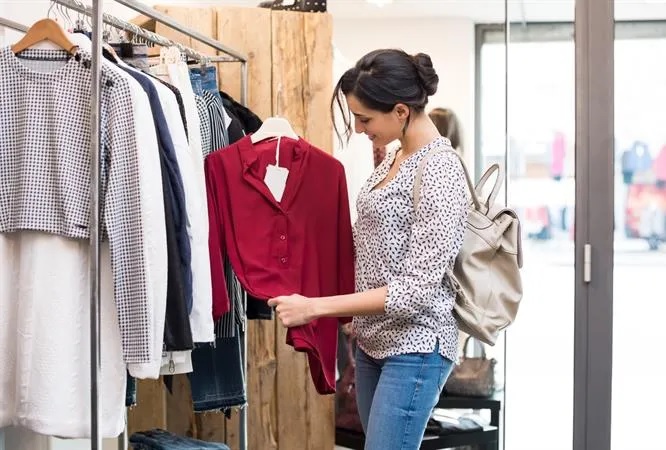
Despite inflationary pressures, monthly apparel store sales in the US for February 2023 recorded a 13 per cent increase to reach an estimated $14.9 billion compared to the same month of 2022. In 2022, sales were 7 per cent higher than in 2021. This was revealed in Wazir Advisors March 2023 ‘Apparel Trade Scenario in Key Global Markets and India’. The report goes on to show, in February 2023, US monthly home furnishing store sales touched $5.4 billion, up 15 per cent over February 2022. In 2022, sales were 1 per cent higher than in 2021.
Positive sales in the US, UK
Wazir Advisors report also shows, in Q4 2022, US online sales of apparels and accessories went up 5 per cent over Q4 2021 and were 42 per cent higher than Q3 2022. Overall, in 2022 sales were 7 per cent higher than 2021.
In the UK too apparel store sales have gone up this year. The study shows in January 2023, UK’s monthly apparel store sales were £3.1 billion up 19 per cent compared to January 2022. And 2022, sales were 21 per cent higher than in 2021, mainly on account of low base value. UK’s Q4 2022 online sales of clothing in grew 1 per cent compared to the same period in 2021 whereas overall online sales in 2022 saw a de-growth of 18 per cent over 2021.
Global import export scenario
The study also takes a deep look at the import-export scenario. It indicates a slight dip in US apparel imports in January 2023, at $7.3 billion, which is 3 per cent lower than same month of previous year. Moreover, China’s share in the US apparel market has gone down 8 per cent since 2019, while Vietnam and Bangladesh’s have seen their share go up 2 per cent and 3 per cent respectively. India’s apparel export to the US has gone up 8 per cent, the study shows since 2019.
UK’s apparel imports in December 2022 were similar that of December 2021. On YTD basis, imports in 2022 are 16 per cent higher than 2021. In terms of market share, China, Bangladesh and Turkey’s have increased by 6 per cent, 4 and 2 per cent respectively, since 2019.
EU’s apparel imports in November 2022 were 10 per cent lower compared to November 2021, mainly because of inflation and low base value. However, interestingly in the EU, China’s share went up 1 per cent while Bangladesh’s share increased 4 per cent since 2019.
Japan’s apparel imports in December 2022, was $1.8 billion that figure is equal to that of December 2021. On YTD basis, imports in 2022 are 5 per cent higher than last year. In terms of apparel import share, Bangladesh and Cambodia have seen their share increase 1 per cent each, whereas China’s declined 2 per cent compared to 2019.
India scenario
In February 2023, India’s apparel exports were estimated $1.4 billion, 13 per cent lower than in February 2022 exports. In 2022, exports were 12 per cent higher than in 2021.
Meanwhile India’s apparel exports to the UAE and UK has gone down 3 per cent and 1 per cent respectively since 2019.
As inflation impacts sales, fashion brands look for ways to cope with pressures

Global fashion industry, just like most other consumables industries have realised the ongoing inflation isn’t going to slow down any time soon as the world couldn’t find time to recover from the pandemic before being hit by the economically-disruptive Russian invasion of Ukraine. High inflation is a challenge, but adapting to a flexible pricing strategy can help retailers and brands control costs, protect margins, and retain customer loyalty.
Dealing with inflation
Apparel companies are getting squeezed between rising supply chain costs and falling consumer confidence. Experts point out, fashion brands need to cope with inflationary pressures and protect their margins, and brands and retailers may need an approach that includes action on pricing, merchandising, and supply chains. If not, it could mean end of business.
As it is already 2023, leading brands are dealing with unforeseen rise in operational costs impacting margins as inflation continues to escalate. While some apparel companies could consider passing on their costs to consumers, either through higher ticket prices or fewer promotions, but these are no guarantee. Apparel brands and retailers have to take on a holistic approach that aims to both protect margins and drive value for consumers. To cope with inflationary pressures and changing consumer purchasing behaviors, they need to adapt a comprehensive action on pricing, merchandising, and supply chains.
Even as they seek to protect their margins, apparel companies may have to act surgically to avoid alienating customers who are already contending with price increases.
In the US for example, price gains are still trailing CPI growth by about one percentage point. In this environment, apparel retailers and brands are getting squeezed. Not only do they face rising costs on everything from inputs and freight to fuel and wages, but also they have to deal with a slowing growth environment and falling consumer confidence. Indeed, the percentage of consumers who reported feeling optimistic in the McKinsey May Consumer Pulse survey fell to 38 per cent, from 44 per cent in October 2021. The drop in optimism was sharpest among high-income consumers.
Meanwhile, consumer confidence also fell sharply in the Eurozone during the latter half of 2021 and the first months of 2022 as inflation heated up. Consumers have started to adopt more value-conscious shopping behaviors. The Consumer Pulse survey found that more US consumers reported switching brands and retailers in 2022 than at any time since the pandemic began, and most of them say they intend to keep switching, primarily to find lower prices. Among those who switched, slightly more than one-third opted to buy private-label products.
Shein stands defiant in face of inflation
As the global supply chain got disrupted and operational costs hit the roof, the newbie often labeled as the upstart, Shein stands undefeated and tall. Selling mass fashion (mass-produced inexpensive items marketed as luxury) to Gen Z who can’t seem to have enough of it proves a point that end of the day, the upholders of climate change by far, Gen Z seems to go against their own principles and purchase from the likes of Shein that stand for fast fashion at its worst. This raises the question if Shein is a success story then do fashion brands need to minimize operations and underplay quality to hit the right numbers, sustainability being thrown out of the window?
Global inflation hits some countries harder
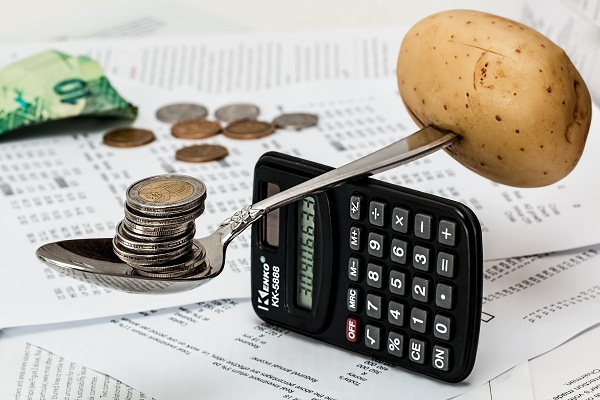
Top apparel exporters have been hit badly by ongoing inflation and unstable prices across the globe.Retail outlets are finding it tough to pay electricity bills,shipping charges and other logistics. At the same time, food prices have almost doubled leaving consumers cash-strapped in many countries and may soon trigger a global crisis that will drive millions more into extreme poverty and malnutrition.
According to US-based Trading Economics stats a global website that provides accurate information for 196 countries, by late 2022, Turkey saw extremely high inflation rates of 88.5 per cent, Sri Lanka 66per cent, Laos 36.8 per cent, Pakistan 26.6per cent, Myanmar 19.4 per cent, Sudan 103%per cent, Argentina 88per cent and Zimbabwe 269per cent. Even the economically richer countries of Europe saw double-digit inflation, although the US by comparison, was relatively lower at 7.7 percent.
Sri Lanka, Turkeysuffering mostdue to inflation
As per World Bank estimated Lebanon, Zimbabwe, Venezuela, Turkey and Sri Lanka are the five countries with highest food price inflation.Food prices are a basic concern in poorer countries, where a far larger share of per-capita income is spent on food compared to high-income countries.
Sri Lanka has been the worst affected bythe political and economic crisis, after the president declared bankruptcy last year which devalued the rupee, food inflation spiralled as high as 70per cent. Sri Lankan Apparel Exporters Association leaders say, in the apparel segment, small manufacturers have been hit the worst as they had to cut wastage at all levels.
Yohan Lawrence, president of the Joint Apparel Association Forum (JAAF) has been quoted in an interview with Women’s Wear Daily (WWD) saying, some companies have been giving food rations to their workers, adding to the amount of monthly salary andgiving employees bonuses, to help poverty-stricken workers over the last few months. It is always the small manufacturers who are affected the most while the larger companies are able to fight inflation better. In November 2022, Sri Lanka’s apparel exports for the year stood at $5.14 billion, up from $4.57 billion for the same period in 2021.
Turkey is another country greatly affected by inflation as it was rocked by major earthquakes and at least 9,210 apparel, footwear, and textile manufacturerswere affected and the country was left reeling with soaring prices and a plummeting currency. The annual inflation rate in Turkey in the end of 2022, was 85.5 per cent, according to the Turkish Statistical Institute, and prices of food and beverages increased102.6 per cent, while costs for transportation rose by 107 per cent.
The depreciation of the Turkish lira has caused inflation and cost increases with competitiveness and profitability being negatively affected. Analysts point out, over the last year, electricity prices have gone up 400per cent, gas prices areup 300 per cent, and wages rose 100 per cent, leading to fear and apprehension about what will happen this year.
Inflation expected to move north in FY ’23
Closer home, India’s Economic Survey for 2022-23 has pointed the apparel and footwear segments are among the ones most hit by inflation as prices have risen consistently over the last three years with average annual retail inflation at 9.7 per cent in FY ’23. According to their survey, the average Annual Retail Inflation (based on consumer price index) for clothing and footwear as a category stood at 1.6 per cent in FY ’20 and it touched 3.4 per cent in FY ’21 before more, then doubling to 7.2 per cent. In FY ’23, the average annual retail inflation in clothing and footwear was 9.7 per cent.
In India too, the inflation rate was the highest in April 2022 at 7.8 per cent before coming down to a moderate 5.7 per cent in December 2022 as a result of good monsoons as well as government incentives that ensured adequate food supply. The Indian apparel retail industry like its global counterpartsneeds help to tide over inflation.Well-planned budgets and lower taxes could bring in some redemption as they await the light at the end of a dark tunnel.
Minister promises to address liquidity crunch for Pakistani garment exporters
Federal Commerce Minister Syed Naveed Qamar has responded positively to the demands of Pakistani apparel exporters, promising to address the liquidity crunch caused by blockage of sales tax refunds, which is affecting the cash flow of garment exporters.
Speaking during an interactive session held in Sialkot on request of the Pakistan Readymade Garments Manufacturers and Exporters Association (PRGMEA), Qamar pledged to convene a meeting with the Federal Board of Revenue to urgently resolve the issue. He also emphasized the government's commitment to reducing the cost of doing business and providing a level playing field for export-oriented sectors, including textiles.
Qamar praised the efforts of Sialkot-based garment exporters and expressed his support for the establishment of a Sialkot Garment City, as well as the completion of the Garment Technical Training Centre. These initiatives, according to the IAF regional chief and ex-chairman of PRGMEA Ijaz Khokhar, would double the export value of Sialkot garments to $1 billion.
Khokhar also called for the implementation of the Textile and Apparel Policy 2020-25, which includes provisions for product diversification, value addition, and skill development. He suggested the restoration of the Duty Drawback on Taxes and Levies and the Drawback of Local Taxes and Levies, which would help Pakistani exporters to remain competitive in the global market.
The apparel industry in Pakistan is a major contributor to foreign exchange earnings, employment generation, and tax revenue.
Sharaf Group plans to open 17 new stores globally
Sharaf Group, a prominent retail conglomerate, is planning to open 17 new stores globally in 2023 as part of its growth plans.
The group has recently expanded its footprint in the Middle East's lifestyle market with the opening of two new Forever 21 stores in Muscat, Oman. With the opening of the new Forever 21 stores, Sharaf Retail further cements its strong presence in the Middle East, where it already has stores in Bahrain, Kuwait, Qatar, Saudi Arabia, and the UAE.
The new stores, located in popular shopping destinations Mall of Oman and Oman Avenues Mall, offer a combined shopping space of 20842.12 sq. ft., in line with the group's expansion strategy in the region.
The new stores will provide a wide range of trendy and affordable clothing, shoes, and accessories for men and women, including the latest styles and classic pieces suitable for any occasion.
UAE, Cambodia conclude talks on Comprehensive Economic Partnership Agreement
The United Arab Emirates (UAE) and Cambodia have recently finalized discussions on a Comprehensive Economic Partnership Agreement (CEPA) after three rounds of negotiations that began in December of the previous year.
The agreement, which covers trade, customs procedures, sanitation and phytosanitary, investment, digital trade, intellectual property, small and medium enterprises, dispute resolution mechanisms, and provisions for services, is expected to be signed by both parties this year.
Cambodia aims to explore the export potential of various products, including garments, footwear, and travel goods, to the UAE.
CEPA will contribute to the strengthening of bilateral relations by opening market channels more widely, providing more investment opportunities for mutual benefits, and deepening cooperation in other economic activities.
This agreement marks a significant milestone in the economic relations between the UAE and Cambodia and is expected to boost trade and investment between the two countries.