


FW
Companies focus on empowering women
Though the global garment industry has always been a female-dominated industry, garment companies have started focusing on women’s empowerment only now says UK-based data analytics and consulting company GlobalData. Several companies are taking action individually and in collaboration with other members of the industry to promote female empowerment within their value chains. A worker training toolkit includes best practices for training of women and promoting gender equality in the supply chain. Care Australia and the Cotton On Group are also collaborating for a two-year project which will help increase the number of women in leadership positions within garment factories in Bangladesh. Shop Direct, Next and Varner have been working on improving the work conditions for young women in South India's fabric mills. They have been able to engage with around 9,500 women in the first phase of this scheme.
With increasing pressure on retailers and brands to ensure the ethical treatment of workers in their supply chains, there has been a focus on empowering women in their roles, allowing them to have a voice and access to better opportunities. This is starting to happen as these initiatives gather pace, and companies are also ensuring they use their collective influence to ensure these programs have a lasting impact.
H&M offers body scan
H&M has partnered a startup Unspun on a project that recreates a 3D body scan into a pattern that can be used to customize jeans. H&M will begin implementing the project in its stores next year. Since last September, H&M’s innovation hub, The Laboratory, has been making the first software tests with one hundred clients of the Weekday chain. Customers are given the opportunity to customize Weekday jeans styles changing its trim, stitching and pockets and then using their body scan to fit the jeans. For its production H&M uses its own suppliers, with a lead time of ten days.
The next challenge for H&M will be to scale it up. The group feels this has the potential to be very disruptive and redefine the entire system. 3D body scanners are 3D scanning systems designed to capture in three dimensions the full body of a person. The result obtained is an accurate 3D model (also called 3D avatar), allowing to visualize the exact body shape and get accurate data such as body measurements, posture analysis etc. Originally developed for the fashion industry as a fast and accurate 3D measurement solution, 3D body scanners are now used in various fields such as healthcare, 3D figurines and 3D photo, fitness or entertainment.
India’s exports to Vietnam up 48 per cent
Indian textile and clothing exports to Vietnam grew 48 per cent during the last two years. India’s share in Vietnam’s imports of manmade fiber textile is 3.34 per cent. Of Vietnam’s total textile imports, India has a 2.29 per cent share. So there is significant untapped potential for trade in textiles between the two countries. In the first 10 months of 2018, bilateral trade was up 47 per cent over the same period in 2017, bringing the countries closer to the target of 15 billion dollars in two-way trade in 2020.
India is among major material suppliers of Vietnam’s garment and textile sector. India hopes to be a reliable partner in supplying yarn, fabrics, and machinery at competitive prices. Under the India-Asean FTA most types of yarns, woven and knit fabrics can be imported duty-free from India.
Vietnamese companies have been invited to participate in a buyer seller meet to be organised in Coimbatore, March 17 to 29, 2020. Visitors from 40 countries are expected to participate in the event for sourcing varieties of yarns, fabrics, made-ups, home textiles and technical textiles from India. Buyers from Vietnam will be eligible for full hospitality, including complementary return airfare, accommodation and transport.
Global apparel retailers disclose parts of supply chain
More and more fashion retailers are now disclosing details of apparel supplier factories. Amazon has disclosed on its website the names, addresses, and other details of more than 1,000 facilities that produce Amazon-branded products. It follows similar moves in the past from Fast Retailing, Primark, Adidas and Gap.
Similarly, Fast Retailing has published a list of the core fabric mills used, while Walmart’s fashion brand, George, is to start publishing a list of second tier apparel factories – those typically dyeing, printing and finishing garments – on its website. However it’s doubtful if the information a tier one supplier list provides can truly empower end consumers to think and act more sustainably.
It’s a commendable first step to promoting better conditions for workers, but clothing supply chains are highly complex and can span several international markets, each with differing labor laws. The question is why all brands and retailers aren’t disclosing supplier lists for the product’s entire journey, particularly if they are taking steps to prevent labor abuses in their supply chains. This is the sort of information consumers need to enable them to make informed choices about their purchases and to influence how they use and take care of those products.
Luxury brands open up to plus-size fashion
"Though traditionally luxury fashion has always been size exclusive, in recent times, it has been forced to incorporate the concept of inclusivity into its DNA. As a recent Coresight Research notes, demand for plus size women’s clothing in the US is growing by around by 3 per cent to reach $36.3 billion by 2025. Of this demand for luxury plus-size apparels, only 6 per cent is being sold online, reveals the data from Edited Retail."
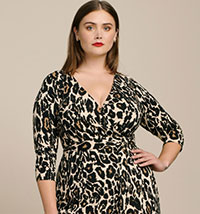 Though traditionally luxury fashion has always been size exclusive, in recent times, it has been forced to incorporate the concept of inclusivity into its DNA. As a recent Coresight Research notes, demand for plus size women’s clothing in the US is growing by around by 3 per cent to reach $36.3 billion by 2025. Of this demand for luxury plus-size apparels, only 6 per cent is being sold online, reveals the data from Edited Retail. According to the firm’s market analyst, there is a huge demand for inclusivity in all areas of retail, be it dress sizes in apparel or skin tones in lingerie and beauty. This demand for size-inclusivity is likely to increase in future also.
The first brand to launch its extended sizes collection was DVF, maker of the iconic wrap dress. The brand’s collection was launched in collaboration with retailer 11 Honoré. However, DVF isn’t the only luxury brand to turn its attention to plus-size consumers. Italian luxury house Dolce & Gabbana has also announced plans to extend its sizing chart.
Applying inclusivity to store merchandising
Brands are applying the idea of inclusivity to store merchandising too. They are integrating all their clothing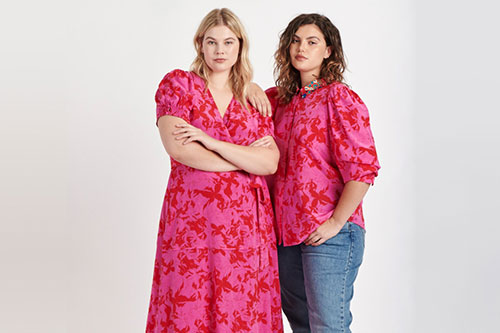 sizes together. Traditional retailers including Saks Fifth Avenue and Nordstrom have already expanded their plus-size offerings. Nordstorm plans to expand its collection of size-inclusive apparels. The retailer started a size inclusivity initiative in October 2017and in less than two years, offered extended sizing in more than 100 brands in over 30 stores and online.
Meanwhile traditional, new retailers are also taking up the plus size market. Retailer 11 Honoré was launched in August 2017 with the goal of merging high-end designers with size-inclusive fashion. The retailer offers clothes starting at size 10 and going up to 24.
Designers face limited retail options
Though designers are extending the size range of their lines, they expect these sizes to offer the same fit and integrity as their straight-size garments. However, for this to happen, they first need to master the grading and pattern development.
As designer Tanya Taylor-a pioneer of plus-size fashion, women in this market do not have access to bold, bright and optimistic fashion options as women in regular markets do. Though their fashion choices have improved, their retail options to leverage these choices are limited.
Taylor expanded her collection two years ago by hiring a new tech team and fit model to help produce a wide range of sizes for her collection. However, the designer is still not able to produce every style in its full size range as a majority of its partners don’t go above a size 14.
Returns are a bugbear for retailers
Returns are harmful to retailers. A customer may order 20 items, wear half a dozen, then return the lot after 28 days, in various states of disrepair. Online fashion retailer Asos has increased its returns policy from 28 days to 45 days. At the same time, on noticing an unusual pattern of returns activity that doesn’t sit right, that is, if someone is actually wearing their purchases and then returning them or ordering and returning huge bags, Asos deactivates their account.
There are four types of serial returners, compulsive shoppers, wardrobers, social media wardrobers and bracketers. The latter purchasing multiple items in different colors and sizes with no intention of keeping most of them, simply hedging their bets. It is estimated that just 50 per cent of returns goes back into store inventory. The other half comes back in a battered state and has to be returned to the manufacturer or resold. But often they are sold at a fraction of the original cost to discounters or liquidators. Or they are just dumped in landfills since that’s less expensive than carting them here and there.
On the other hand it’s also a fact that the people who return the most are the most profitable customers, with the top five per cent of returners being 30 per cent more profitable.
New sustainability report outlines 14 strategies
In a new report titled ‘The Future of Sustainability in the Fashion Industry’, experts from across the globe have painted a bleak future for fashion if we continue with business as usual. However, the report says that a sustainable sector is possible within 16 years if we take the right efforts, have courage and remain committed to the cause.
The report outlines 14 strategies for achieving sustainability, evaluating each for its potential impact and the earliest timeframe in which it could become mainstream.
The strategies include: increased global awareness, fibers and processing innovation, detailed sustainability reporting, worker-driven initiatives, high concentration / cooperation, extended producer responsibility, wages in the fashion industry, clothing as a service, automation revolution, circular economy, consumer level sustainability index, resale/second-hand models, majority of clothing is locally produced and tax regulations for increasing sustainability. These strategies are seen as being achievable by 2035, while two-thirds could even reach mainstream within a decade.
As per the report, one of the immediate priorities is to build a global awareness movement that takes advantage of heightened concern over sustainability issues, such as that generated by Greta Thunberg and the Fridays for Future movement, among others.
It will require huge effort and cooperation from brands, government and policy makers, even consumers. But against the context of heightened concern about environmental and social justice issues, positive change can take place quite rapidly.
Zimbabwe government launches schemes to revive cotton production
The Zimbabwe government is implementing several schemes to revive the cotton sector. These include the Government Support Program through which the government increased cotton production from 28 000 tonne to 144 000 tonne last year. The scheme supported 400 000 farmers, contributing about 90 percent of the output, with the remainder funded by private firms. It now plans to surpass this figure in 2019-2020.
Another scheme is the the Presidential Inputs Scheme that has distributed more than 8 000 tonne of cotton seed to 400 000 farmers across the country since 2015. The scheme is administered by Cottco, who distributes the cotton seeds to vulnerable households. The team is currently moving around cotton growing areas, launching the 2019-2020 inputs distribution, teaching farmers on good agronomic practices as well as discouraging cotton growers from side marketing, arguing it militates against Government efforts of creating a revolving fund that benefits the sector in the long run.
Apart from inputs, government has also indicated willingness to offer competitive prices to farmers to ensure viability.
Span’s fashion brand Mango back on profitability path
According to the documentation sent by the Alyternative Fixed-Income Market (Marf), one of the biggest European retailers is in its way back to profitability after being in low for three years. The company recently concluded the investment phase of the last years,
The levers that Mango is using to improve profitability combine product with distribution and operations. The company is focusing on improving brand positioning, increasing its online sales, continuing to reduce its store of stores and cutting its costs.
Marf gave the company the green light to a payment program for 200 million euros. Through this program, the company plans to diversify its financing sources. Mango has undergone a reorganisation process during the last years to face the weak evolution of its sales and, above all, to the fall in its profit.
In 2018, Mango had net losses of 35 million euros, although it managed to improve its gross operating result (ebitda), which stood at 135 million euros. The company’s debt stood at 315 million euros at the end of 2018. At the end of that year, Mango refinanced a debt of 500 million euros with its main banks to postpone its loans four more years.
US ruling enthuses Taiwan yarn exporters
The US has imposed anti-dumping and anti-subsidy tariffs on Chinese and Indian polyester textured yarn exporters. The justification is that exporters from China and India have dumped polyester textured yarn in the US market at margins ranging from 76.07 per cent to 77.15 per cent and 17.62 per cent to 47.51 per cent. The decision was taken after companies in the US, Nan Ya Plastics and Unifi, brought a petition against Chinese and Indian exporters.
With heavy tariffs now imposed on Chinese polyester textured yarn, Taiwanese companies see a chance to enter the US market. Though they are not sure whether the ruling will result in any benefits, they think it will serve as a bargaining chip for the US in its negotiations with China as the two countries seek to resolve their trade disputes. Chinese firms that face heavy tariffs in the US are likely to sell their products on the domestic market, which would tighten the competition for Taiwanese companies operating in China, including Nan Ya Plastics.
After the petition was filed with US authorities, polyester textured yarn exports from China and India to the US fell to 229 tons and 341 tons per month on an average, respectively, as of September of 2019 from 1,939 tons and 1,006 tons as of January 2018.










