FW
LVMH promotes Anne de Vergeron as CEO of Repossi
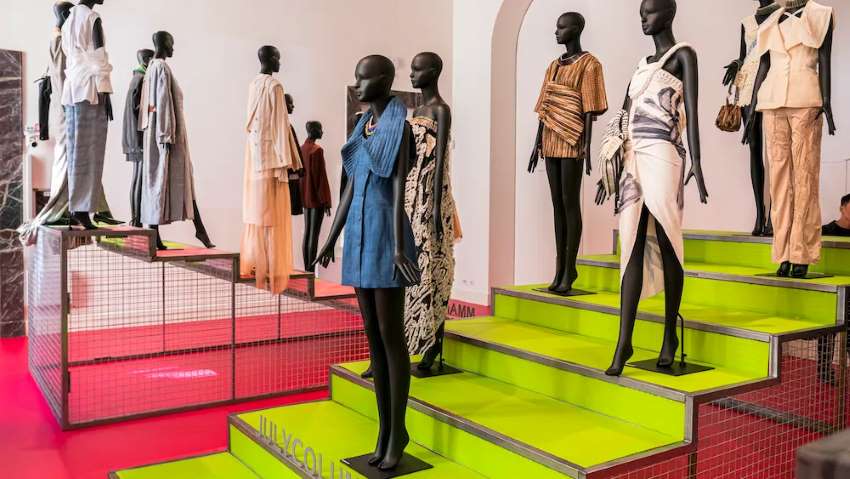
LVMH has promoted board member Anne de Vergeron as the new CEO of fashion house Repossi. An experienced investment banker, De Vergeron joined Repossi four years ago, when LVMH bought its first stake in 2016. In May 2019, LVMH acquired majority control on Repossi. Founded in Turin in 1950, the house has been guided for the past decade by Gaia Repossi, the fourth generation of the family. It now plans to roll out own e-commerce platform in February. The online platform will have 30 signature; statement pieces whose prices will range from €600 for ringsto €30,000 for some pavé versions. The fashion house will reserve its more precious items of jewelry for its physical stores.
Repossi has already been retailing online with few e-tailers, albeit with limited selections: Dover Street Market; Net-A-Porter; Matches and the websites of Selfridges, Saks and Bergdorf Goodman. The brand remains resolutely design forward. It has collaborated with Flavin Judd of the Donald Judd Foundation to revamp the brand’s historic boutique in Monaco. It has two flagships – Paris and Monaco – and four other shop-in-shops.
Worldwide, Repossi sells with 50 stockist having reduced its distribution during the pandemic to focus less on wholesale.
Indigo knitwear helps address need for flexible denims: Experts
Indigo knitwear is addressing consumers’ needs for flexible denims by expanding into loungewear, casualwear, sportswear and workwear categories. Adriano Goldschmied, Founder, Genius Group says, Indigo knits stand in a much stronger position today and competes with traditional denim in consumer wardrobes. Genius Group started using indigo dye knits in 1980s and launched the first AG collection in 1990s in Italy.
Carme Santacruz, Creative and Denim Designer, Jeanologia, believes indigo knits can be the way forward for denim in a lockdown world where comfort and coziness drive new essentials. According to him, the new sustainable and technological versions of indigo knit help reduce environmental footprint in the garment finishing stages.
Lucia Rosin, Founder and Head-Design, Meidea views indigo knits to be a fundamental part of denim’s future as it gives shape, through technology and sustainability, to a wider expression of products that help live better. Patrick Silva Szatkowski, Marketing Department, Santoni Spa believes knitted fabrics not only possess stretch properties and provide freedom of movement, but also are highly breathable.
Entrepreneurs launch new initiative for sourcing needs
Gurgaon-based entrepreneurs Kapil Kamra, Ashish Tanwar and Wesley Brono have launched a new firm to fulfill the sourcing needs of export houses and leading buying agencies. Called Common Sourcing Solution, a range of fabrics like rayon with pigment, reactive, discharge prints and yarn dyed, 100 per cent cotton with/without spandex within category of solid, prints yarn dyed for both shirt weight and bottom weight, 100 per cent silk and silk cotton in solid and prints, single jersey, double jersey, interlock, fleece, rib, polar fleece, knitted denim or fabrics with special finishes.
With a deep understanding of products as well as working of all stakeholders of the industry, the firm caters to the fabric sourcing needs of garment manufacturing industry. It offers win-win solution to its clients through its low cost, good quality and timely delivery. The firm has multiple resources in China that will help it to procure best negotiated prices from China and help exporters to get one-point solution.
Founder Kapil Kamra is a B Tech, Fashion and Apparels from The Technological Institute of Textile and Sciences (TIT). He has rich experience of working as a fabric manager with Asmara Group, Triburg, Newtimes Group of Companies and Nahar Fabrics.
Similarly, Ashish Tanwar also from TIT has experience of working with Orient Craft and Maral Overseas. On the other hand, Wesley Brono holds a diploma in textile technology and has worked with Li & Fung and Fab India.
Gurgaon-based entrepreneurs launch new initiative for garment sourcing needs
Gurgaon-based entrepreneurs Kapil Kamra, Ashish Tanwar and Wesley Brono have launched a new firm to fulfill the sourcing needs of export houses and leading buying agencies.
Known as the Common Sourcing Solution, the firm offers all kinds of fabrics like rayon with pigment, reactive, discharge prints and yarn dyed, 100 per cent cotton with/without spandex within category of solid, prints yarn dyed for both shirt weight and bottom weight, 100 per cent silk and silk cotton in solid and prints, single jersey, double jersey, interlock, fleece, rib, polar fleece, knitted denim or fabrics with special finishes.
With a deep understanding of products as well as working of all stakeholders of the industry, the firm caters to the fabric sourcing needs of the garment manufacturing industry. It offers win-win solution to its clients through its low cost, good quality and timely delivery. The firm has multiple resources in China that will help it to procure best negotiated prices from China and help exporters to get one-point solution.
Founder Kapil Kamra is a B Tech, Fashion and Apparels from The Technological Institute of Textile and Sciences (TIT). He has rich experience of working as a fabric manager with Asmara Group, Triburg, Newtimes Group of Companies and Nahar Fabrics.
Similarly, Ashish Tanwar is also from TIT and has experience of working with Orient Craft and Maral Overseas. On the other hand, Wesley Brono holds a diploma in textile technology and has worked with Li & Fung and Fab India.
15 countries sign RCEP to launch world’s biggest free trade bloc
On November 15, 2020, 15 countries alongwith the Association of Southeast Asian Nations, China Japan, the Republic of Korea, signed the Regional Comprehensive Economic Partnership (RCEP) agreement to launch the world's biggest free trade bloc, after 31 rounds of negotiations over eight years, reports CCF Group.
According to this trade pact, it will not exert great impact of this part of the commodity trade as current ASEAN countries enjoy preferential tariff policies. For example, the actual import tariff for nylon 6 chips is 0, and the actual import tariff for caprolactam is 6 per cent (lower than 9 per cent MFN rate).
South Korea and Japan will directly reduce CPL import tariff from China to 0 after the RCEP trade pact. In addition, Japan, Thailand, Indonesia and other countries will reduce tariffs on other nylon products from China directly or gradually to zero. These changes will benefit the nylon exports by China.
Each country or region has a different rate of tariff implementation without or with the Certificate of Origin on the same commodity. For example, South Korea’s tariff for nylon filaments from China is 4 per cent if there is the Certificate of Origin, and 8 per cent is levied if there is no Certificate of Origin.
In Chapter 3 of the RCEP Agreement text, “Rules of Origin”, the implementation of (b) and (b) undoubtedly makes more goods comply with the "source of origin" and have certificates of origin. Therefore, the actual tariff levied will be lower than those listed in the above three figures, which will definitely strengthen the export competitiveness of China-made products.
Sign FTAs with ASEAN nations to boosts exports, urge Bangladesh’s experts
At a recent webinar organized by the Bangladesh Ministry of Foreign Affairs experts, including economists and business leaders, have urged the government to sign free trade agreements with ASEAN countries to boost exports to the bloc.
Experts and industry insiders recommended rigorous efforts to diversify the export basket and focus on marketing those overseas as the country will face stiff competition after graduating to a developing country by 2027, when the European market will withdraw its tariff concession.
In a presentation, Economics Professor DrSelimRaihan said in 2019, against an import bill of roughly $9 billion, Bangladesh had export earnings as low as $846 million from ASEAN.
Prof Raihan said signing of the Regional Comprehensive Economic Partnership (RCEP) -- made up of 10 Southeast Asian countries, as well as South Korea, China, Japan, Australia and New Zealand -- means that intra-regional trade and investment will be boosted significantly in the region.
DrRubanaHuq, President, BGMEA also urged the signing of an FTA with a Rules of Origin clause favorable to ASEAN. She said that by 2030 ASEAN as a bloc would be the fourth largest economy in the world.
NihadKabir, President, Metropolitan Chamber of Commerce and Industryadvocated for a pro-active and comprehensive trade policy, taking lessons from competing countries that are doing better in terms of drawing foreign investments and boosting exports.
She said that Bangladesh should appoint trade representatives overseas to promote trade and woo foreign investments.
SaminaNiaz, Bangladesh Ambassador to Vietnam, said high-skilled labour and government's policy support are the major factors why Vietnam is going ahead of Bangladesh in terms of export as well as wooing foreign investments.
However, Vietnam could be a good market for Bangladesh's pharmaceutical products, she said.
Foreign Secretary Masud Bin Momen, who chaired the webinar, asked all the high commissioners and ambassadors to find ways and means of boosting export to ASEAN and send reports to the ministry.
Restrictions on exports to China can cripple the Australian wool industry: Rural Bank report
According to a report by Rural Bank, restrictions on Australian wool exports to China coupled with the lack of viable alternative markets, would have a presumptively crippling effect on the Australian wool industry.
Using average annual report figures from the last five financial years, the report showed China is Australia's largest market for wool exports and has been since the early 1990s, with two-thirds of all Australian wool production exported to China.
China accounted for 77.4 per cent of the value of Australian wool exports in 2019/20, totalling $1.9 billion. This makes wool the most heavily reliant agricultural commodity on China.
At the recent Australian Wool Innovation (AWI) Annual General Meeting (AGM) AWI CEO Stuart McCullough told the meeting the demand for Australian wool overwhelmingly came from China in 2020.
He said China is a unique partner from a manufacturing point of view, but also from a consumption point of view, currently processing about 83pc of the Australian wool clip of which half of that they are domestically consuming."
But he said, AWI is trying to bolster its relations with its industry partners. AWI has had an Emerging Market strategy in place for the past eight years, with good amounts of success. This has seen an increase in processing and consumption of wool in places including India, Vietnam, Bangladesh and Sri Lanka.
Surat manufacturers bag orders for 10 lakh meter fabrics from defense forces
Textile manufacturers in Surat have received orders to manufacture 10 lakh metre of fabric for uniforms of Army, Navy and Air Force. These fabrics are to be delivered by January 2021. Till now the fabrics were imported from China, Korea and Taiwan
The diamond city has been a leading manufacturer of PPE kits, two to six layered masks, and sportswear for the Indian Premier League. However, it is for the first time that 10 lakh meter of fabric for uniforms, shoes and bullet proof vests for the armed forces will be manufactured in Surat.
The central government's decision also comes as a huge opportunity for Surat's textile businesses, which had collapsed during the pandemic-induced lockdown, to revive themselves. Before the lockdown, the fabrics were imported from China, Korea and Taiwan.
Surat also has a thriving technical textile industry for the manufacture of specialised items. Taking these factors into account, Surat's textile industry was tasked with manufacture of fabric for uniforms and non-aesthetic products for the defense forces.
According to a Surat-based manufacturer, the sample order sent to DRDO in early November has already been approved. By January end, the entire order will be delivered to garment factories in Punjab and Haryana. The fabric manufactured is so strong that it cannot be torn by hand. Attempting to tear it may even cut your fingers, said sources.
Surat is also moving ahead gradually in the technical textile sector. The industries here are also manufacture strong glass fabrics used to produce helmets, gloves and base for plane landings using carbon yarn. At present, only one or two manufacturers in Surat supply glass fabrics. DRDO officials expect Surat to increase the production of these fabrics.
Remove restriction on additional utilization of electricity, urges PRGMEA
As the industry awaits the notification of the government’s recent energy relief package, PRGMEA has appealed to the Prime Minister to remove the restriction on additional utilization of electricity to make the package more comprehensive and attractive for the SMEs which constitutes over 90 per cent of the industry.
Sohail A Sheikh, Chairman, PRGMEA urged the concerned departments to issue notification of the incentive package regarding power tariff for the large, small and medium enterprises after amendments. He said the role of value-added textile sector is vital in the country’s exports and the government should accord top priority to this sector taking necessary steps and measures to enhance its export efficiency. He said that electricity rates are high in Pakistan and it is for the first time that power rates are being reduced.
Sheikh further said that the export-oriented industry, for a long time, had been facing multiple challenges in the wake of high cost of manufacturing, exorbitant utility tariffs and high labour wages comparing to the competitors on the world markets.
IjazKhokhar, Chief Coordinator observed that an industrial support package for SMEs through power tariffs is imperative to sustain some early positive signs in the industrial sector. However, the exporters are confused about its actual shape until it is set in motion through a proper notification for implementation, he said
Doubts regarding the International Monetary Fund’s loan program have also been affecting business confidence, as the economic managers would have to devise a clear road map on power sector and revenue reforms committed to the IMF for continuation of the loaning ahead of the next budget, Khokhar added.
According to reports, the industrial relief package had initially involved around Rs350 billion over three years but later it was amended to avoid completely derailing the IMF program.
Global kidswear market to reach $252.2 billion by 2027: ReportLinker
As per ReportLinker, the global market for kidswear will reach $252.2 billion by the end of 2020. The market is projected to reach a revised size of $325.9 billion by 2027, growing at a CAGR of 3.7 percent over the analysis period 2020-2027. The US market is estimated to grow to $68 billion. In the infants and toddlers category, the US, Canada, Japan, Chile and Europe markets are likely to reach $51.4 billion this year. These markets are expected to grow to $68 billion by 2027.
A report from the Brookings Institute suggests paired with an economic recession, the public policy organization predicts the U.S. will see births decline by 300,000-to-500,000 next year. According to Cotton Incorporated’s September 2020 US Coronavirus Response Sruvey, majority of the US consumers have seen a decrease in their personal finances since before the pandemic Additionally, 36 percent say their emotional well-being has suffered with anxiety and depression feeling worse due to COVID. Around 63 percent of shoppers said buying clothes was not a priority for the, right now.
According to Statista, retail sales of apparel and clothing accessories increased 11 percent from August to September. However, brick and mortar stores suffered due to lack of demand and the shutdown. The Children’s Place plans to 200 stores in 2020 and another 100 next year. Similarly, Carter’s will close at least 200 stores, including OshKoshB’gosh, in the next couple of years. And even though Gap’s baby and kid categories accounted for nearly $4 billion in sales last year, the company plans to shutter 225 locations by 2024.
Around 43 per cent report shopping online more compared to mid-summer, according to the September Coronavirus Response Survey. Most shoppers made their purchases online as they believed it to be safer option than going to a physical store.