FW
US’ jeans imports decline 5.36% in January: OTEXA
US’ jeans imports dropped 5.36 per cent to a value of $251.8 million in January 2021 compared to a year earlier before the affects of coronavirus were felt in the United States. As per OTEXA, US’ jeans imports from Bangladesh increased by 73 per cent to a value of $56.4 million, imports from Mexico rose by 1.31 percent to $42 million after declining 40 percent for the year through January.
Imports from Pakistan also increased by 21.54 percent to $26 million, while those from Nicaragua increased by 39.35 percent in the month to $7.16 million and from Lesotho, they climbed to 64.9 percent to $8.27 million. On the other hand, imports from China declined 16.42 percent to $28.44 million, those from Vietnam by 34.49 percent to $24.97 million, Cambodia by 9.1 percent to $14.63 million, Egypt by 41.86 percent to $8.82 million and imports from Sri Lanka declined by 35.95 percent to $3.84 million. Among Tier-II suppliers, imports from Madagascar jumped 153.97 percent to $5.05 million and shipments from Turkey increased by 40 percent to $4.4 million.
US Cotton Trust Protocol adds Byford as new member
The US Cotton Trust Protocol has included luxury brand Byford as its new member. Founded in UK, Byford has over 1,500 sales points in over 20 markets around the world. The brand is committed to using sustainable fibers through the US Cotton Trust Protocol as it aims to reduce its carbon footprint. The Trust Protocol verifies the brands’ sustainability progress through sophisticated data collection and independent third-party verification. It enables brands and retailers to track the cotton entering their supply chain by working with Field to Market: The Alliance for Sustainable Agriculture and Control Union Certifications North America. Brands members of the Trust Protocol get an access to aggregate year-over-year data in six areas: water use, greenhouse gas emissions, energy use, soil carbon and land use efficiency.
Additionally, the Trust Protocol’s unique credit management solution provides visibility and transparency across the brands’ supply chain.
Inditex records positive performance in 2021
The performance of fashion retail giant Inditex has been encouraging as its S/S21 collections was well received by customers. The company aims to open all its stores by April 12, the date on which non-essential shops in England are allowed to reopen.
As now, only 15 per cent stores remained temporarily closed and in the first week of March, excluding the five most relevant markets in lockdown at the moment, total sales grew by 2 per cent. The retailer’s total sales reached €20.4 billion during FY2020 meanwhile its gross profit fell to €11.4 billion from €15.8 billion and the gross margin dropped 6bps to 55.8 per cent. The retailer’s operating expenses fell by 17 per cent while its EBITDA declined by 40 per cent at €4.6 billion. Its net income declined by 70 per cent to €1.1 billion during the first half while in the second half it declined by only 38 per cent.
Online sales in constant currencies increased 77 per cent and reached €6.6 billion. Although the company launched Zara online in as many as 25 new markets last year, it said 95 per cent of its online sales growth was organic. The group’s online visits reached 5.3 billion, which was a rise of 50 per cent from the previous year.
Kusumgar Corporates teams up with TAF to manufacture outdoor fabrics
Technical textiles leader Kusumgar Corporates has teamed up with Thai Acrylic Fiber Co (TAF) of Aditya Birla Group to manufacture outdoor fabrics in India from the Durashine fiber. Durashine fiber can be applied to awnings, outdoor furniture, carpets and marine exterior etc.
Founded by Yogesh Kusumgar, Kusumgar Corporates is an accomplished manufacturer of textiles as well as a total solution provider in the complex technical textiles industry in India. The company aims to upgrade its products with a high-quality solution dyed acrylic fiber and opines Durashine’s durability alongwith its long-term strengthe and usage for outdoor applications make it an ideal fiber.
Thomas Varghese, Business Head-Textiles, Aditya Birla Group says, high quality outdoor fabrics have huge potential in India due to the heat and humidity. Durashine can add a lot of value to the Indian hotels and resorts as well as residential projects by offering the best-in-class outdoor fabrics for shades, awnings and outdoor furniture.
Adidas expects strong sales rebound in 2021
German sportswear maker Adidas AG expects a strong rebound in sales in 2021, particularly in China, the rest of Asia and Latin America. However, the brand expects profits to be trimmed by costs associated with divesting the Reebok brand, says a report by Business of Fashion. The brand’s fourth-quarter sales rose 1 per cent to €5.55 billion ($6.59 billion), while its operating profit slipped slightly to €225 million. Its online sales grew 43 percent during the quarter.
As a part of its new strategy, Adidas will separate its Greater China market from the rest of Asia. It has integrated Europe, Russia and emerging markets into a new Europe, Middle East and Africa (EMEA) region for which it expects sales growth in mid-to high-teens.
The brand expects net income from continuing operating to rise between €1.25 billion and €1.45 billion. However, it expects its operating profit to decline to €250 million while net income is expected to decline to €200 million.
BTMA urges for increase in alternative cash incentives
The Bangladesh Textile Mills Association (BTMA) has urged the government to increase alternative cash incentives for the upcoming fiscal year from 4 per cent to 7 per cent to fight the economic fallout of the COVID-19 pandemic. As per Dhaka Tribune, the association also urged for a reduction in source tax to 0.25 per cent from the existing 0.50 per cent for the next fiscal year. It placed a set of demands to the National Board of Revenue (NBR) for the tax regulator's consideration ahead of the national budget in June, to help the textile sector turnaround from the pandemic.
Due to the devastating impact of the pandemic, 4 per cent alternative cash incentives is not enough for the sector, says Mohammad Ali Khokon, President, BTMA. After the LDC graduation, there will be new challenges for the sector due to erosion of duty benefits enjoyed as a least developed country, he added.
Export earnings from the apparel sector have witnessed a negative growth due to the pandemic, which also hit the backward linkage industry badly, Khokon added. In the given context, the government should set source tax at 0.25 per cent for the next fiscal year, he said.
$20 billion opportunity available for MMF exporters in India, say buying houses
At the virtual B2B meeting with MMF garment exporters and fabric suppliers, buying houses said, Indian manmade fiber (MMF) garment exporters can aspire to grab $20 billion business in global MMF garment trade even as the domestic apparel industry works at resolving its limitations. The meeting organized by Apparel Export Promotion Council (AEPC) was attended by buying houses like Triburg Apparel and Impulse. Sanjay Shukla from Triburg Apparel urged attendees to create a supply chain starting with design, product development, fabric development, and, garmenting to target 10 per cent of the $200 billionl.
R A Sakthivel, Chairman, AEPC said, government measures like the PLI scheme for MMF segment and creation of seven mega textile parks will increase production and export of MMF garments from India. Fabric producers assured they have ample machinery and technology to produce fabric of international standard, and that they are already supplying to the exporters in a big way. They said that the exporters need to ask for their needs and they will facilitate.
Ajay Sardana from Birla Group of Companies said his company will do everything to produce all types of viscose fabric and is willing to further hire global consultants if certain viscose based fabric with the required finish is not available in India.
Sudhir Sekhri, Chairman (Export Promotion), AEPC, in his concluding remarks said, the government's PLI scheme and the mega parks will expand the MMF weaving and processing sector.
Consumers more worried than four months ago: EY survey
The sixth EY future consumer index survey of 14,500 international consumers, found consumers are more worried than four months ago, about their health, their families and future. The Index found the pandemic has made people more concerned about the health of their family, access to necessities, personal finances and basic freedoms. However, the level of this concern varies globally.
Respondents in India and Brazil have consistently been the most concerned overall throughout the pandemic, while people in other countries are now more worried about their family's health than they were four months ago. Respondents in China and Germany said they’re increasingly worried about their finances and freedom to enjoy life since October 2020.
Nearly half of consumers believe post-COVID life will be better than before the pandemic. In fact, the pandemic may have accelerated changes that were already happening that contribute either to a better quality of life or an easier way of living, such as moving out of cities, shopping online more and prioritizing health, affordability and sustainability.
Nearly 91 per cent global respondents intend to take the vaccine, although some countries have more people with reservations than others, such as 15 per cent in the US and 19 per cent in France. Around 56 per cent would be more likely to shop with retailers that require employees to take the vaccine, while 48 per cent of respondents think that those who refuse to take the vaccine are selfish.
Around 58 per cent said they’d be more aware and cautious of their spending in the longer term and 63 per cent said price will be the most important purchase criteria for them three years from now. And 57 per cent aimed to make healthier choices in their product purchases in the longer term.
As many as 56 per cent say they will also be more likely to buy from companies that ensure what they do has a positive impact on society, while 38 per cent will buy more from organizations that benefit society.
AATCC renames International Conference as Textile Discovery Summit
The AATCC International Conference has been renamed as the AATCC Textile Discovery Summit. Name change will not affect the event’s nature and it will continue to serve as a valuable opportunity for the textile community to connect, share, and learn.
To be held from November 16-18, 2021 at the Sheraton Imperial in Durham, NC, the event will include educational presentations, networking receptions, interactive breakout sessions, special onsite activities and resources, an exhibitor showroom, a poster session, the Herman & Myrtle Goldstein Graduate Student Paper Competition, and the awards luncheon.
The event also provides tabletop exhibits and sponsorships to share news about products, services, and processes directly with attendees. This year’s exhibitor and sponsorship package also includes new offerings and opportunities.
COVID-19 crisis demands more initiatives for Bangladesh garment workers
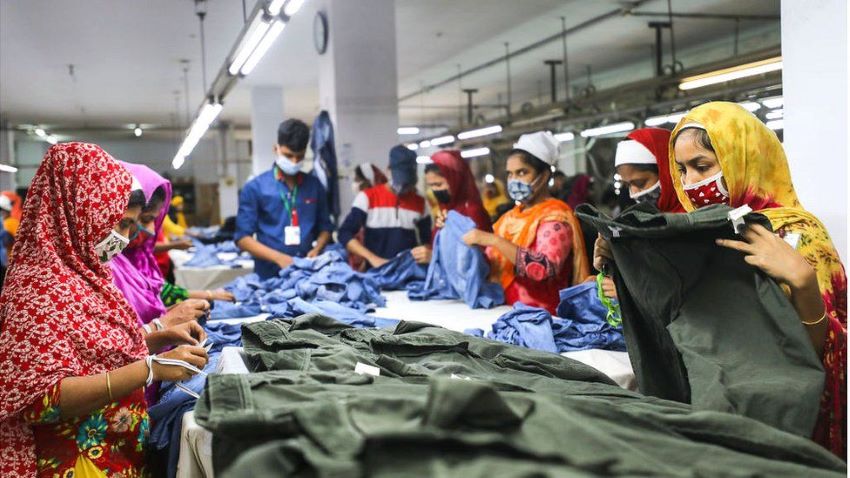
 The impact of COVID-19 on the world’s second largest RMG exporter, Bangladesh was much more devastating than that on the rest of the world. As per reports, the country lost an estimated 357,000 jobs between January and September 2020 as brands cancelled over $3 billion worth of orders. Brands such as Topshop, Hema and TJ Maxx failed to pay for completed or in-production orders, says the Workers’ Rights Consortium’s COVID-19 Tracker.
Jobless workers face poverty and hunger
Garment workers who lost their jobs did not receive any outstanding pages or severance pay despite the government rolling out a $ 590 million stimulus package in March 2020. Workers who managed to retain their jobs faced reduced work hours resulting in reduced pay. This resulted in extreme poverty for workers who died more of hunger than the disease.
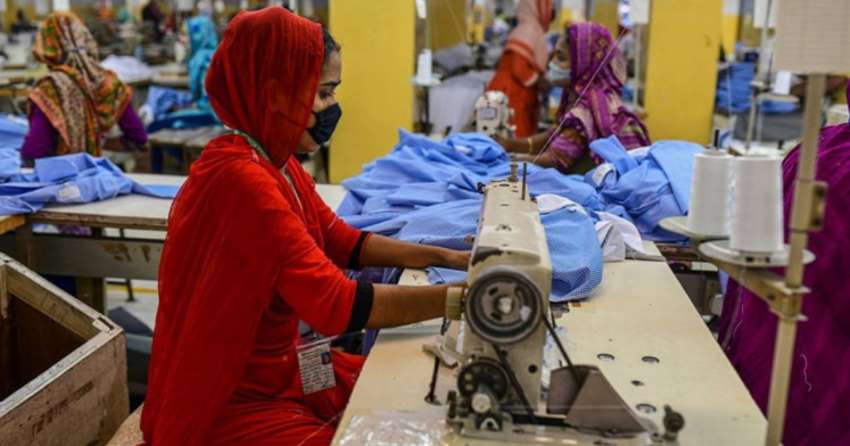
Female garment workers in Bangladesh are often underpaid and overworked. Many of them are financially responsible for their family members both back home and in the city. Many workers returned to their villages last year after losing their jobs due to the pandemic while others remained in the cities, struggling to make a living.
COVID-19 reveals workers’ anxieties
As per a recent study of 610 garment and textile factories conducted by the Centre for Policy Dialogue and Brac University’s ‘Mapped in Bangladesh’ project, over 357,000 garment workers lost their jobs in 2020. Over the years, Bangladesh garment industry has witnessed some of the worst industrial disasters. On November 24, 2012, a fire broke out at the Tazreen Fashions garment factory, killing around 17 workers. On April 24, 2013, the Rana Plaza factory building in Dhaka collapsed, killing some 1,134 people and thousands more injured. This incident alerted the whole world about the appalling working conditions of the Bangladesh garment workers.
The COVID-19 pandemic has further demonstrated the incredibly difficult lives of garment workers. As per a July 2020 study, many of workers are battling anxiety over the possibility of catching the virus, meeting daily expenses and returning to old factory jobs. These workers earn approximately $96 in wages, which is almost half of the prescribed living wage.
Benefactors’ aid to rescue
This leaves garment workers at the mercy of aid provided by different benefactors, including trade unions, NGOs and donor agencies. They receive staples including rice, potatoes, cooking oil, onions and pulses from these benefactors, and are likely to soon receive a welfare fund worth €113 million from the European Union and Germany.
One of the trade unions that have been helping jobless garment workers, Akota Garments Workers Federation also donates things like food, masks and hand sanitizers. However, Kamrul Hasan, General Secretary, believes Bangladesh garment workers need more initiatives to deal with social and financial consequences of COVID-19.