FW
Morrow raises funds from 9 unicorns
Bengaluru-based women’s footwear brand Monrow has raised an undisclosed funding from 9 Unicorns. The company plans to use the funds to strengthen its presence in tier 2, 3 towns by opening brick-and-mortar stores this year The company had earlier raised funds from early-stage investors such as Venture Catalysts, Blume Ventures, Lets Venture, and angel investors Aprameya Radhakrishna, Sweta Rau, Archana Priyadarshini, and Ravi Soni.
Monrow currently sells its products across 14 locations in the country through partnerships with Shoppers Stop, Future Group, and Reliance Retail, etc.. The brand also sells online through its website, Myntra, and Ajio. Being a first-of-a-kind digital footwear seller in the Indian shoe market, along with its focus on delivering unique value to the highly aspirational and comfort-loving millennial generation, gives a competitive advantage to the brand over its retail-focused peers.
BGMEA election board chairman resigns
Syed Ferhat Anwar has resigned from his position as election board chairman for the Bangladesh Garment Manufacturers and Exporters Association (BGMEA).
Anwar, director of the Dhaka University's Institute of Business Administration, submitted his resignation letter to BGMEA President Rubana Huq on Wednesday.
As a part of the biennial election procedure of the garment sector's apex trade body, on February 4, the BGMEA formed a board headed by Anwar. The election to select the BGMEA's new committee for 2021-23 is scheduled to be held on April 4.
However, sources at the BGMEA and contesting candidates said the resignation came following a disagreement centring on the placement of candidates' names on the ballot paper.
Usually, the names of contestants are placed through a lottery and the winner gets the priority in placing their names on top or as they wish.
On the ballot paper, the winning panel gets to place the names of its candidates from 1 to 35, while the other team members' names are placed from 36 to 70.
The election commission held a lottery to place the names of candidates and declared a panel winner. But the losing panel was not present during the lottery, a candidate said seeking anonymity.
Later, the panel raised questions about the transparency of the lottery and sought clarification about the process. Following a debate on the matter, Anwar tendered in his resignation, he added.
Bangladesh’s apparel exports to US decline by 16% in January: OTEXA
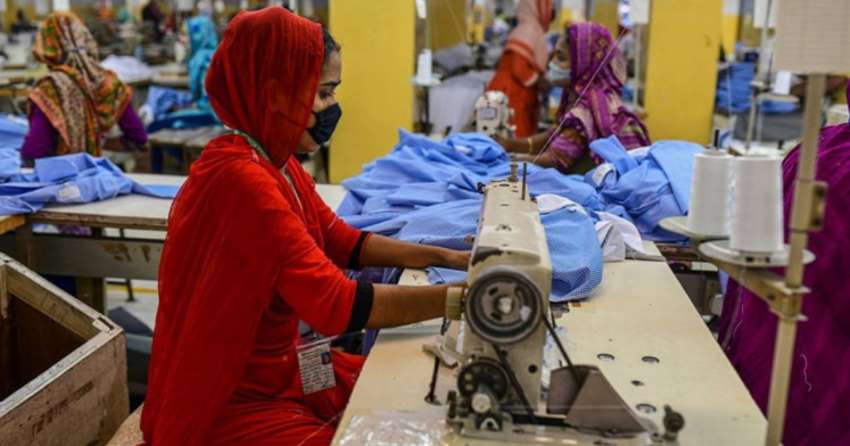
As per OTEXA, Bangladesh’s apparel export to the US, the country's single largest destination, registered over 16 per cent decline in January 2021 year-on-year mainly because of the Covid-19 pandemic.
Bangladesh fetched $ 519.37 million in January 2021 through apparel export, down from $622.82 million over the corresponding month of 2020, according to data of the Office of Textiles and Apparel (OTEXA) - affiliated with the US Department of Commerce.
In the first month of 2021, Bangladesh shipped 198.66 million sq m of apparel items, whereas the export was 219.08 million sq m in January 2020.
The country fetched $5.22 billion in 2020, which was $5.92 billion in 2019, according to data.
Experts and exporters attributed the poor performance of ready-made garments (RMG) export to the US to sluggish demand, higher COVID infection rate, change in sales pattern, and election-related uncertainties.
However, some of the local exporters were still upbeat, as they were getting more queries in the recent months compared to three to six months back.
Fazlee Shamim Ehsan, director of the Bangladesh Knitwear Manufacturers and Exporters Association (BKMEA), said local RMG export to almost all major destinations witnessed a negative growth throughout last year mainly because of the coronavirus outbreak, and the US market was not an exception.
The pandemic also squeezed the demand, followed by the shutdown of retail shops amid lockdown in the US, he explained.
The virus outbreak also changed the sales pattern that resulted in placing small quantity orders instead of bulk ones.
US’ jeans imports decline 5.36% in January: OTEXA
US’ jeans imports dropped 5.36 per cent to a value of $251.8 million in January 2021 compared to a year earlier before the affects of coronavirus were felt in the United States. As per OTEXA, US’ jeans imports from Bangladesh increased by 73 per cent to a value of $56.4 million, imports from Mexico rose by 1.31 percent to $42 million after declining 40 percent for the year through January.
Imports from Pakistan also increased by 21.54 percent to $26 million, while those from Nicaragua increased by 39.35 percent in the month to $7.16 million and from Lesotho, they climbed to 64.9 percent to $8.27 million. On the other hand, imports from China declined 16.42 percent to $28.44 million, those from Vietnam by 34.49 percent to $24.97 million, Cambodia by 9.1 percent to $14.63 million, Egypt by 41.86 percent to $8.82 million and imports from Sri Lanka declined by 35.95 percent to $3.84 million. Among Tier-II suppliers, imports from Madagascar jumped 153.97 percent to $5.05 million and shipments from Turkey increased by 40 percent to $4.4 million.
US Cotton Trust Protocol adds Byford as new member
The US Cotton Trust Protocol has included luxury brand Byford as its new member. Founded in UK, Byford has over 1,500 sales points in over 20 markets around the world. The brand is committed to using sustainable fibers through the US Cotton Trust Protocol as it aims to reduce its carbon footprint. The Trust Protocol verifies the brands’ sustainability progress through sophisticated data collection and independent third-party verification. It enables brands and retailers to track the cotton entering their supply chain by working with Field to Market: The Alliance for Sustainable Agriculture and Control Union Certifications North America. Brands members of the Trust Protocol get an access to aggregate year-over-year data in six areas: water use, greenhouse gas emissions, energy use, soil carbon and land use efficiency.
Additionally, the Trust Protocol’s unique credit management solution provides visibility and transparency across the brands’ supply chain.
Inditex records positive performance in 2021
The performance of fashion retail giant Inditex has been encouraging as its S/S21 collections was well received by customers. The company aims to open all its stores by April 12, the date on which non-essential shops in England are allowed to reopen.
As now, only 15 per cent stores remained temporarily closed and in the first week of March, excluding the five most relevant markets in lockdown at the moment, total sales grew by 2 per cent. The retailer’s total sales reached €20.4 billion during FY2020 meanwhile its gross profit fell to €11.4 billion from €15.8 billion and the gross margin dropped 6bps to 55.8 per cent. The retailer’s operating expenses fell by 17 per cent while its EBITDA declined by 40 per cent at €4.6 billion. Its net income declined by 70 per cent to €1.1 billion during the first half while in the second half it declined by only 38 per cent.
Online sales in constant currencies increased 77 per cent and reached €6.6 billion. Although the company launched Zara online in as many as 25 new markets last year, it said 95 per cent of its online sales growth was organic. The group’s online visits reached 5.3 billion, which was a rise of 50 per cent from the previous year.
Kusumgar Corporates teams up with TAF to manufacture outdoor fabrics
Technical textiles leader Kusumgar Corporates has teamed up with Thai Acrylic Fiber Co (TAF) of Aditya Birla Group to manufacture outdoor fabrics in India from the Durashine fiber. Durashine fiber can be applied to awnings, outdoor furniture, carpets and marine exterior etc.
Founded by Yogesh Kusumgar, Kusumgar Corporates is an accomplished manufacturer of textiles as well as a total solution provider in the complex technical textiles industry in India. The company aims to upgrade its products with a high-quality solution dyed acrylic fiber and opines Durashine’s durability alongwith its long-term strengthe and usage for outdoor applications make it an ideal fiber.
Thomas Varghese, Business Head-Textiles, Aditya Birla Group says, high quality outdoor fabrics have huge potential in India due to the heat and humidity. Durashine can add a lot of value to the Indian hotels and resorts as well as residential projects by offering the best-in-class outdoor fabrics for shades, awnings and outdoor furniture.
Adidas expects strong sales rebound in 2021
German sportswear maker Adidas AG expects a strong rebound in sales in 2021, particularly in China, the rest of Asia and Latin America. However, the brand expects profits to be trimmed by costs associated with divesting the Reebok brand, says a report by Business of Fashion. The brand’s fourth-quarter sales rose 1 per cent to €5.55 billion ($6.59 billion), while its operating profit slipped slightly to €225 million. Its online sales grew 43 percent during the quarter.
As a part of its new strategy, Adidas will separate its Greater China market from the rest of Asia. It has integrated Europe, Russia and emerging markets into a new Europe, Middle East and Africa (EMEA) region for which it expects sales growth in mid-to high-teens.
The brand expects net income from continuing operating to rise between €1.25 billion and €1.45 billion. However, it expects its operating profit to decline to €250 million while net income is expected to decline to €200 million.
BTMA urges for increase in alternative cash incentives
The Bangladesh Textile Mills Association (BTMA) has urged the government to increase alternative cash incentives for the upcoming fiscal year from 4 per cent to 7 per cent to fight the economic fallout of the COVID-19 pandemic. As per Dhaka Tribune, the association also urged for a reduction in source tax to 0.25 per cent from the existing 0.50 per cent for the next fiscal year. It placed a set of demands to the National Board of Revenue (NBR) for the tax regulator's consideration ahead of the national budget in June, to help the textile sector turnaround from the pandemic.
Due to the devastating impact of the pandemic, 4 per cent alternative cash incentives is not enough for the sector, says Mohammad Ali Khokon, President, BTMA. After the LDC graduation, there will be new challenges for the sector due to erosion of duty benefits enjoyed as a least developed country, he added.
Export earnings from the apparel sector have witnessed a negative growth due to the pandemic, which also hit the backward linkage industry badly, Khokon added. In the given context, the government should set source tax at 0.25 per cent for the next fiscal year, he said.
$20 billion opportunity available for MMF exporters in India, say buying houses
At the virtual B2B meeting with MMF garment exporters and fabric suppliers, buying houses said, Indian manmade fiber (MMF) garment exporters can aspire to grab $20 billion business in global MMF garment trade even as the domestic apparel industry works at resolving its limitations. The meeting organized by Apparel Export Promotion Council (AEPC) was attended by buying houses like Triburg Apparel and Impulse. Sanjay Shukla from Triburg Apparel urged attendees to create a supply chain starting with design, product development, fabric development, and, garmenting to target 10 per cent of the $200 billionl.
R A Sakthivel, Chairman, AEPC said, government measures like the PLI scheme for MMF segment and creation of seven mega textile parks will increase production and export of MMF garments from India. Fabric producers assured they have ample machinery and technology to produce fabric of international standard, and that they are already supplying to the exporters in a big way. They said that the exporters need to ask for their needs and they will facilitate.
Ajay Sardana from Birla Group of Companies said his company will do everything to produce all types of viscose fabric and is willing to further hire global consultants if certain viscose based fabric with the required finish is not available in India.
Sudhir Sekhri, Chairman (Export Promotion), AEPC, in his concluding remarks said, the government's PLI scheme and the mega parks will expand the MMF weaving and processing sector.