FW
Benetton Group includes all sustainability initiatives in Project Green B
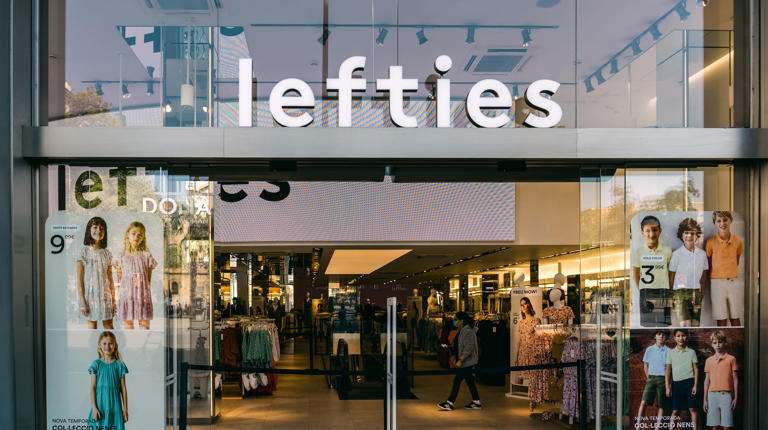
Benetton Group has brought together all its sustainability initiatives under the project Green B. Launched on World Earth Day, the project will be executed across all touchpoints of the Benetton Group. Its symbols will be included in stores, on digital platforms and on the tags of the garments that reflect the values embodied by the project.
The project’s logo is the bee. It is a graphic reinterpretation of the group’s iconic knit stitch and symbolizes the contribution of each individual within an organically expanding hive, an accurate representation of the commitment of the company and its people to sustainability.
Over the coming years, the Group plans to distribute more sustainable products, create a more responsible supply chain and increase the efficiency of its headquarters and stores in terms of energy use and waste management, following the example set by the new shop inaugurated in Florence at the beginning of March.
Higher stakeholder collaboration to help Bangladesh dominate global RMG market
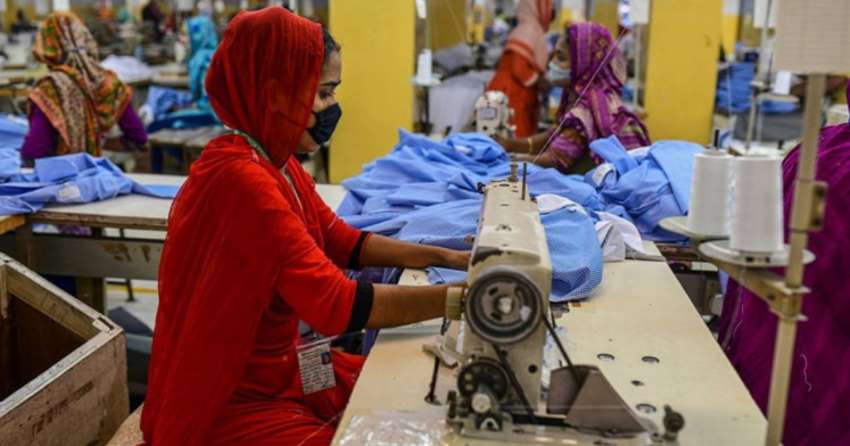
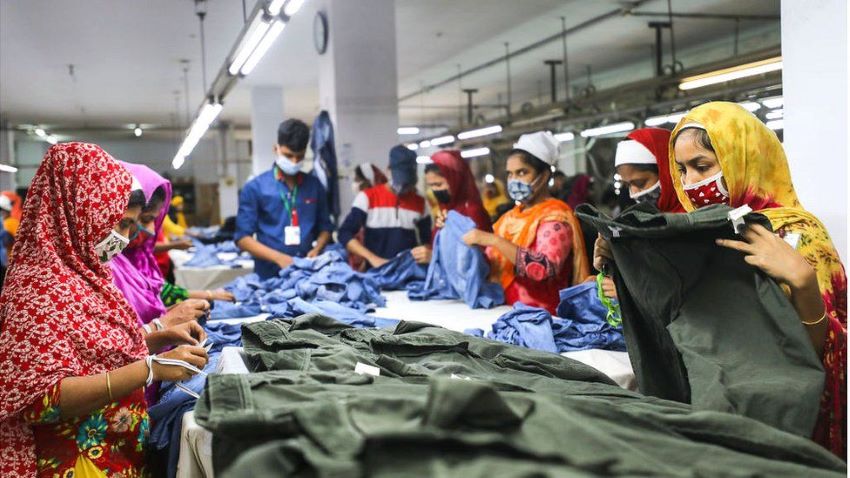
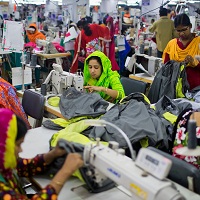 Despite COVID-19, Bangladesh will continue to dominate the world apparel sourcing market, says a new study by the Centre for Policy Dialogue (CPD) and the Institute of Policy Studies (IPS) of Sri Lanka. The findings of the study were recently presented at a webinar titled 'Recovery of the apparel sectors of Bangladesh and Sri Lanka: is a value-chain-based solution possible?'
The webinar began with the acknowledgment that Bangladesh is currently facing reduced demand from key markets such as the US, UK and EU. As a per Daily Star report, its success in dealing with these challenges will depend on how far the country is able to control the impact of COVID-19 on its garment industry. Many sourcing countries have either re-shored their orders to a limited number of sourcing countries. This led to a 2 per cent decline in Bangladesh share in global knitwear market last year. The country’s share in woven segment also declined 1 per cent during the period.
Need for a redistributive approach to orders
Bangladesh further risks losing $2 billion worth of orders to China if it fails to adopt a redistributive approach. The country failed to support its apparel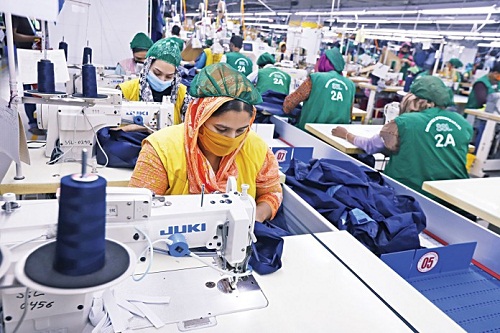 sector during the crisis due to fiscal constraints. It was unable to disburse the allotted $1.2 billion subsidized credit to all garment factories. Also by October 2020, over 360,000 workers lost jobs. The country could reimburse only 14 per cent of retrenched workers. Fifty-eight per cent of workers faced financial difficulties, and 82 per cent struggled to meet daily needs.
Buyers also failed to respond to manufacturers call during the crisis, said Mostafiz Uddin, Managing Director, Denim Expert who does not expect to recover all his arrears from buyers as COVID-19 has impacted not just lead times but also contracts and prices.
Resilience and digitization for rescue from disasters
Husni Salieh, Director, MAS Holdings, advised stakeholders to work collaboratively, particularly during the crisis. He said, only resilience can help them face the current crisis successfully. Pierre Börjesson, Head-Sustainability, called for speeding up digital marketing to ensure supply chain remains immune to the effects of any natural or human disasters. Dan Rees, Director, Better Work, a flagship program of the ILO, urged for more cooperation amongst stakeholders and a long-term plan for workers.
US’ import of dressing gowns increases by 1.88%
US’ import of dressing gowns increased significantly in January-February 2021 due to the demand from American buyers.
As per Textiles Today, the country imported $ 80 million worth of dressing gowns in January-February ’20 period, reporting a 1.88 per cent increase over the corresponding period last year. About 60 percent of this entire value was exported by China and Vietnam jointly. Nowadays, the leading exporters of dressing gowns to the United States are China, Vietnam, Colombia, Turkey, India, and Bangladesh. Among them, China is the vastest exporter of dressing gowns.
China exported the dressing gown worth $ 35.84 million during January-February of this year, indicating an annual increase of 7.59 percent. On the other hand, exports by Vietnam declined by 40 percent to the $ 12.77 million in the review period.
Following in line were Cambodia, Turkey, and India with a shipment value of $ 9 million, the $ 4.12 million, and the $ 4.86 million. The exports of these three nations increased by 77.23 percent, 52.34 percent, and 8.54 percent on a Y-o-Y basis.
L Brands sees sales rebound in flagship brands
Fashion retailer L Brands is seeing a sales rebound in both its signature brands, Victoria's Secret and Bath & Body Works. In March the company raised its guidance for the year, citing revenue increases thanks to federal stimulus and the easing of pandemic restrictions in some area.
As the pandemic wore on last year, the sales drop-off and cash crunch raised the financial risks for L Brands. The company appeared on Retail Dive's bankrupty watch list in October, based on ratings from CreditRiskMonitor.
The sale of Victoria's Secret, or a major stake in the banner, could give L Brands a further financial boost. The company indicated last year it intended to move forward with separating Victoria’s Secret in some fashion. In February, the company announced Martin Waters, then CEO of Victoria's Secret Lingerie, as the new CEO of the Victoria's Secret business. It also targeted August 2021 for a separation of Victoria's Secret, with all options — including a spin-off IPO of Victoria's Secret or a private sale.
However, within a month, the entire retail and financial world upended with the spread of COVID-19 in the U.S. L Brands, along with most other major discretionary retailers, shuttered its stores to combat the spread of the new coronavirus. It also furloughed most of its employees, drew down its revolver and took numerous other steps to preserve liquidity and wait out the pandemic and stay-at-home orders.
By April, Sycamore looked to back out of the deal. The private equity firm, no stranger to retail, called the store closures and staff layoffs a violation of their sale agreement. The retailer and financial firm traded words and legal action, before mutually agreeing to call off their deal by May.
Textile 2030 commits to reduce carbon footprint by 2030
Signatories of the 10 year voluntary agreement, Textiles 2030 launched by not-for-profit organization Wrap (Waste and Resources Action Program), have committed to reduce carbon footprint in the industry by 50 per cent, and reduce the aggregate water footprint of new products sold by 30 per cent by 2030.
As per Drapers Online, signatories also committed to make the industry more sustainable by focusing on three actions; agreeing good practice principles that focus on durability, recyclability, and minimizing waste; implementing circular business models and setting up partnerships to supply and use recycled fibres for new products.
Textiles 2030 builds on Wrap’s Sustainable Clothing Action Plan (SCAP), a voluntary commitment to reduce the industry’s environmental impact, which launched in 2012 and had been signed by more than 90 brands, retailers, trade bodies and other organisations.
Marcus Gover, CEO of Wrap, said: Textiles 2030 will create a fashion sector fit for the future and lower the environmental impacts of other household textiles. With clothing having the fourth largest impact on the environment after transport, housing and food we simply cannot afford for sustainability not to be the next big thing in fashion.”
Philippines garment industry may lose 30% revenues: FOBAP
Robert M Young, President, Foreign Buyers Association of the Philippines (FOBAP) said that the garment industry may lose 30 percent to 40 percent of $1.5 billion—which is the lower end of 2021 target industry revenues—if more shipment delays persist.
This translates to potential losses of $450 million to $600 million, or roughly P22 billion to P29 billion, this year.
This year, Fobap was targeting its yearend shipments to reach $1.5 billion to $2 billion, but the consequences arising from the lockdown protocols may block the industry’s goal.
Young explained that the garment manufacturers are experiencing delays of one month, even up to 45 days in some instances, in their shipments.
Adding fuel to the fire, he said, are the lack of factory workers and logistics amid the lockdown protocols.
Meanwhile, securing export permits and other necessary documentation is also a challenge given that the government agencies are operating with a skeletal workforce, he said, adding their systems are down in some events—all of which bring further delays to the process.
The Fobap official also expressed worries over the fulfillment of orders the country recently received from Myanmar as the latter struggles with a political turmoil.
Indonesian economist urges for a harmonized tariff structure for TPT industry
Enny Sri Hartati, The Economist Institute for Economic Financial Development has urged the Indonesian government to apply a harmonized tariff structure from upstream to downstream for the textile and textile products (TPT) industry.
As per Indo Textiles, this tariffs structure should include temporary trade security tariffs in the form of security or the imposition of Safeguard Measure Import Duty (BMTP). He Hartati believes, this will enable garment producers to absorb domestic raw materials more optimally while at the same time obtaining market certainty.
The implementation of this tariff structure will offer two benefits, adds Hartati.It would encourage creation of added value by boosting use of local raw materials, as well as import substitution.
Hartati says, the current import structure of the textile industry is reversed with the tariffs on the upstream and middle sides being higher from the downstream side. Such contradictory trade policies can have a huge impact on the absorption of national labor, he said Moreover, during the economic recovery, it requires a lot of jobs to fill the millions of workers who are victims of the pandemic.
Turkey to open foreign logistics centers
Turkey plans to open foreign logistics centers in its major export markets including the US. This would help local exporters' access these markets and stimulate the exports believes the Turkish Exporters Assembly, TIM. As per SRTEPC, these logistics centers will work as a regional base for exporters, reduce the costs of market access and accelerate access to new markets.
Turkey's apparel and home textiles exports are expected to keep growing like last year when exports to the US increased more than 20 per cent year-on-year to cross the $10 billion-mark. While sales of carpets increased by more than 30 per cent over the previous year, exports of ready-to-wear and apparels climbed by more than 20 per cent in 2020 over 2019.
This year too, Turkey's exports to the UK have grown during January-March 2021 period due to the finalization of the post-Brexit free trade agreement. They are expected to reach monthly average of $1.80 billion during January-August 2021, with a rise of 7.48 per cent compared to the monthly average exports of $1.68 billion in 2020.
India’s yarn exports expected to surge as fabric exports remain stable
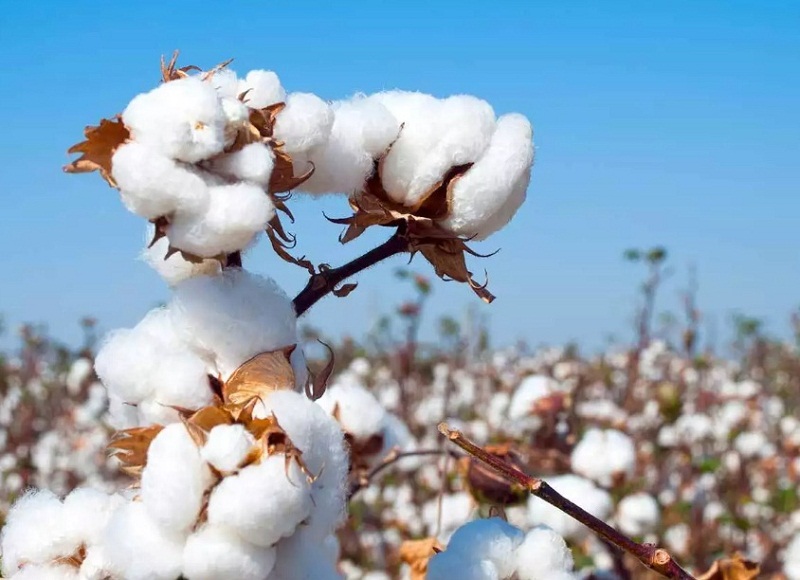
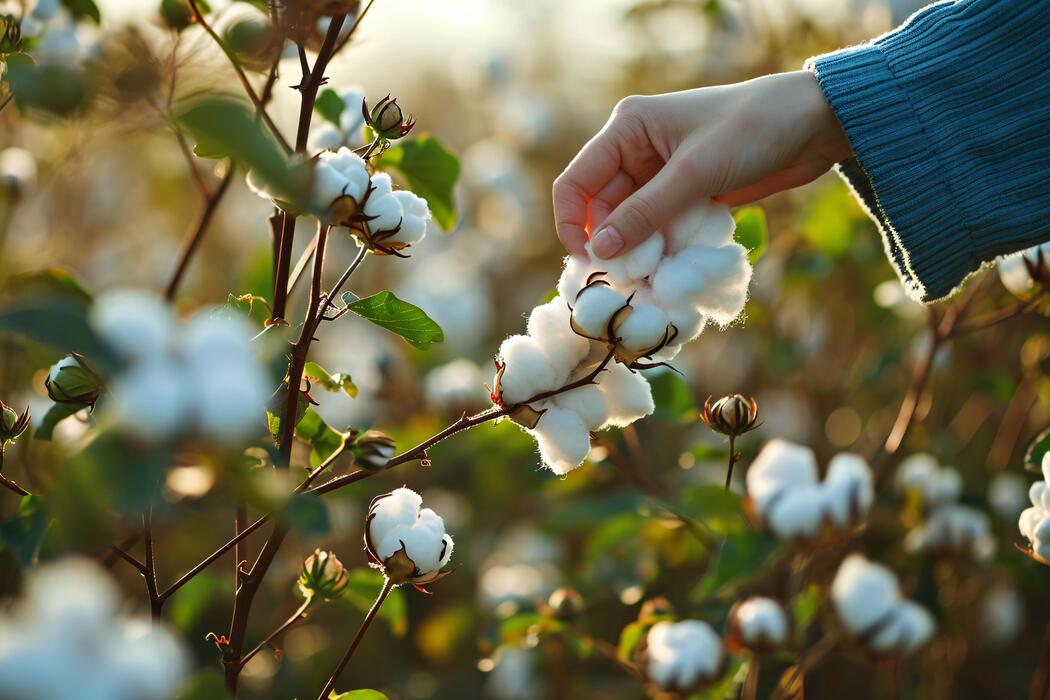
The boost provided by the US-China trade war to India’s cotton exports in marketing year (MY) 2019-20 was offset by the spread of pandemic. However, the country was able to control the pandemic’s impact through lockdowns and vaccination, reports SRTEPC. This also boosted area under cotton cultivation by 5.56 per cent to 13.30 hectare and production by 14.34 per cent to 29.50 million 480-lb bales in MY 2019-20.
Increase in cotton production to boost prices
India’s area under cotton cultivation is expected to reach 13.40 hectare while production is expected to increase to 29.50 million 480-lb bales in the year. Cotton exports are expected to increase 42.86 per cent in the MY 2020-21 to 500 million 480-lb bales while imports are expected to decline by 56.14 per cent to 1.00 million 480-lb bales.
Prices of Indian cotton fibers have been growing considerably since January 2021. For example, price of DCH-32 from Karnataka and V-797 from Gujarat increased 20.14 per cent and 22.87 per cent to Rs 71.23/candy and Rs 33.89 candy in March 2021 up from Rs 59.29/candy and Rs 27.58 /candy in January 2021, respectively. Price of other cotton varieties such as J-34-RG from Bhatinda, MCU-5 from Andhra Pradesh, MECH from Maharashtra, Mech-I/H-4 from Madhya Pradesh and Shankar-6 from Gujarat have also increased by 4to 7 per cent.
Growing demand for value added cotton textiles
There is increased demand for value added cotton textiles since the beginning of MY 2020-21. Most demand is being generated from countries like China, Bangladesh, and Vietnam. In the first half of MY2020-21 India’s monthly average yarn exports surged 15.67 per cent to 89.64 thousand metric ton and is further expected to increase 6.64 per cent from January to July 2021.
Meanwhile, fabric exports are expected to remain stable at a slightly lower value from January to July 2021. In the first half MY 2020-21, fabric exports surged 36.61 per cent to 169.52 thousand metric tonne from the monthly average exports of 124.10 thousand metric tonne in the MY 2019-20.
The boost provided by the US-China trade war to India’s cotton exports in marketing year (MY) 2019-20 was offset by the spread of pandemic. However, the country was able to control the pandemic’s impact through lockdowns and vaccination, reports SRTEPC. This also boosted area under cotton cultivation by 5.56 per cent to 13.30 hectare and production by 14.34 per cent to 29.50 million 480-lb bales in MY 2019-20.
New Textile Exchange standard ensures responsible wool sourcing
The new voluntary standard launched by global industry non-profit Textile Exchange (TE) ensures responsible sourcing of alpaca wool from farmers with high animal welfare standards. As per Eco Textile, known as the Responsible Aplaca Standard, it addresses farm-level animal welfare as well as land management and social welfare practices. It also ensures proper identification and tracking of the fiber from certified farms.
The standard provides the industry with a tool to recognize the best practices of farmers; ensuring that alpaca fiber comes from farms that have a progressive approach to managing their land, practice holistic respect for animal welfare, and respect the 'five freedoms' of animal welfare.
The RAS requires all sites to be certified, beginning with the alpaca farmers and through to the seller in the final business-to-business transaction. Individual sites are certified by independent third-party certification bodies while alpaca wool is tracked from farm to final product using transaction certificates. The new standard will also join the Responsible Animal Fiber (RAF) framework, along with the Responsible Wool and Mohair Standards.