FW
Growers’ participation doubles since launch last year: US Cotton Trust Protocol
The US Cotton Trust Protocol announced that cotton growers’ participation in the program has doubled in 2021/22 since its launch last year. The Trust Protocol aims to bring quantifiable and verifiable goals and measurement to the key sustainability metrics of US cotton production.
The initiative aims to set a new standard in sustainable cotton production where full transparency is a reality and continuous improvement to reduce our environmental footprint is the central goal. The program’s core values include a commitment to U.S. cotton’s legacy of authenticity, innovation and excellence, environmental stewardship, caring of people, and personal and corporate integrity.
Virtually all the top 100 global brands and retailers have created lists of sustainable raw materials and publicly committed that 100% of their sourcing will come from these lists over the next 5-10 years. The Trust Protocol was designed to meet and exceed the rigorous criteria for these lists.
The Trust Protocol has welcomed more than 600 brands, retailers, mills and manufacturer members since its launch in 2020. This includes J Crew, Madewell, Levi Strauss & Co and Gap Incas well as global apparel manufacturer Gildan.
The US Cotton Trust Protocol aligns with the UN Sustainable Development Goals, recognized by Textile Exchange and Forum for the Future. It is a part of the Sustainable Apparel Coalition, Cotton 2025 Sustainable Cotton Challenge, Cotton 2040 and Cotton Up initiatives. The program has also been recognized and published in the ITC Standards Map.
HSE raises Rs 40 crore funds from Stride Ventures
The parent company of women’s fashion brands FabAlley and Indya, High Street Essentials (HSE) has raised Rs 40 crore from Stride Ventures. As per an Inc42 report, the company will use the funds to expand offline presence by launching exclusive brand outlets, franchisees and an additional 100 large format stores in the 12-18 months.
High Street Essentials will also set up its first offline store in Malaysia. The company currently has 30 exclusive brand-owned stores across India. It’sIndya brand will also foray into occasion and festive wear category.
Founded in 2012 by ShivaniPoddar and Tanvi Malik, HSE has two women-focused brands – Indya and FabAlley. Under the brand Indya, it sells women’s ethnic clothes and jewellery, while it sells women’s western apparels and lounge wear under FabAlley brand.
HSE sells products and accessories via its website, online marketplaces, offline retail stores and large format chains including Lifestyle and Shoppers Stop, etc.
Scaling up can help India explore the $100 billion textile export opportunity by 2030
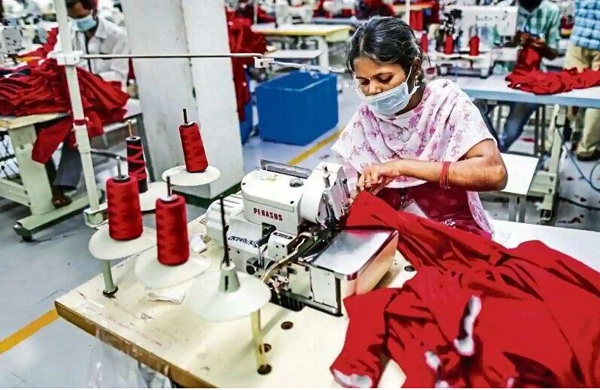
Reducing dependence on China, international brands have been diverting their orders to India since the last three years. Exporters in the Tiruppur cluster have received more orders leading to a $44 billion jump in textile exports in 2021-22, says Raja Shanmugham, Managing Director, Warshaw International. CRISIL Ratings projects, India’s readymade garment exports will grow y 12-15 per cent this fiscal as customers across the world are diversifying their sourcing away from Sri Lanka and China.
Explore China Plus One strategy
Since 2020, global textile trade has been moving away from China due to the pandemic and supply chain disruptions. In December 2021, the US banned imports from Xinjiang. Other markets followed suit by adopting the ‘China Plus One’ strategy that encourages business with more countries.
India can leverage this opportunity by exploring the US, EU and UK markets that account for nearly half of its textile and apparel exports. The government can introduce policies to develop a business-friendly environment in the country and best-in-class infrastructure to attract more investments, recommends a report tabled by the Standing Committee on Commerce on Budget. The report also recommends the government to sign new Free or Preferential Trade Agreements (FTA) or interim and mini trade agreements with countries that seek to invest in India under the ‘China Plus One’ strategy.
Target $65 billion exports by 2026
A CII-Kearney report titled, ‘Creating a competitive advantage for India in the global textile and apparel industry’ says, to achieve $100 billion textile and apparel exports by 2030, India needs to increase textile exports to $65 billion by 2026. Gautam Nair, Owner, Matrix Clothing, points out, China too has been losing share in the global apparel market due to an increase in increase minimum wages and labor shortages. However, the loss of business to China has not benefitted India as textile exporters have not been able to cash in on the opportunity.
Obstacles remain despite advantages
Despite this, India offers several advantages including an integrated market with enough raw material supplies, and new government initiatives to boost textile manufacturing including the MITRA and the PLI schemes. India has also initiated negotiations for a trade agreement with the UK. It plans to sign an FTA with EU to allow duty-free access to Indian textiles besides other agreements with moderate-sized markets such as Australia, Canada and Japan. However, it would be difficult for Indian companies to replace Chinese supplies, as banks hesitate to offer credit to small and medium textile units says Shanmugham. One reason for this is fragmented manufacturing of Indian companies in most parts of the value chain, adds Dhall. Also, the suboptimal investment-to-return ration in India is below the capital cost.
Shanmugham believes, the MITRA scheme could help India create large textile players. However, setting up a textile park in the country requires up to three years, around 1,000 acre and many clearances, he adds. India’s high labor and power costs also make it exports more uncompetitive, affirms Nair. The government needs to restrict cotton and yarn exports by introducing quota systems and levying heavy duties.
As per an analysis by the CRISIL, India’s working capital requirement will increase marginally this fiscal. Domestic as well as export demand will also remain healthy with RMG manufacturers having enough capacity to meet the expected surge, says the report.
India has an opportunity to lead industry growth. To explore it, textile manufacturers need to expand scale, improve production processes and delivery timelines.
Government to launch PLI 2.O
The government plans to launch the second edition of production-linked incentive (PLI) scheme for textiles and has begun consultations with the industry.
PLI 2.0 for the textile sector is being considered as the ministry has an unutilized budget of about Rs 4,000 crore after it approved 64 applications with an investment potential of Rs 19,798 crore and projected turnover of Rs 1.93 lakh crore in the next five yeaRs under the fiRs t phase of the scheme last month.
Industry has demanded inclusion of knitted fabrics in the scheme, besides manmade fibre and technical textiles and a lower investment threshold of Rs 25 crore instead Rs 100 crore now. It also does not want the government to impose any condition to set up a new company for the purpose of investment.
One of the key demands of the industry is a lower investment threshold. In part-1 of the PLI schemes, the minimum investment required is Rs 300 crore and the minimum turnover required to be achieved for incentive is Rs 600 crore. In part-2, the industry has sought minimum investment threshold of Rs 100 crore and the minimum turnover ofRs 200 crore.
Fespa Berlin Global Print Expo to showcase Polyprint’s latest technological advances
To be held from May 31-June 03, 2022, the Fespa Berlin Global Print Expo will showcase the latest technological advances of expert DTG printer manufacturer, Polyprint. The expo will showcase next generation direct-to-garment printers, new Texjet DTG Inks, and the upgraded automatic pre-treatment machine, PreTreater Pro by the company.
Polyprint’s next generation DTG printers are designed, developed, and manufactured in-house by Polyprint experts. Equipped with a bulk ink printing system, a white ink recirculation system, and an auto CMYK/White agitation system, these printers offerseamless production, cost-efficiently, with superior print quality up to 4800dpi. Fourteen different snap-on platens deliver a wide application range with direct-to-garment and direct-to-film printing capabilities, the company said in a media statement.
The machinery features three industrial print heads, a grand print area of 50x70 cm (ideal for the fashion industry), and multiple print head configurations that include 1xCMYK, 2xWhite, 1xCMYK, 1xRGB, 1xWhite for increased colour gamut, 2xCMYK, 1xWhite for faster production on lights, and 3xCMYK for maximum production on lights.
The company will display the leading DTG ink formula for garment decoration. Specifically created for all TexJet DTG printers, these new TexJet DTG bulk inks come with an enriched colour gamut for lavish designs, and quick fixation times for faster production. These water-based textile pigment inks are environmentally friendly and offer enhanced stretchability and superb washability for long-lasting prints.
YKK Corporation completes one year of Digital Showroom
YKK Corporation recently marked the one-year anniversary of the YKK Digital Showroom, which was launched in April 2021 as a space for communicating with customers and introducing products.
Taking the real-world YKK London Showroom in England as inspiration, the YKK Digital Showroom is an online space that consists of six virtual floors showcasing company products from zippers and buckles to hook and loop fasteners, snaps and buttons, and more. Since its opening in April 2021, the space has continued to grow with new content such as product information, product development stories, and customer feedback, and language support in Japanese, English, and Chinese. It has received over 470,000 visitors from Japan and around the world.
With popular content that includes region-specific products from Europe and the US, China, and Japan, a chance to experience the wearable TouchLink® zipper pull with built-in NFC chip, sustainability stories, and more, the showroom provides information of interest to customers that goes beyond just product information.
Teejay Lanka’s sales grow to $ 250 million in 2021-22
Teejay Lanka PLC achieved sales worth $50 billion sales at Group level for FY 2021-22, achieving its first annual sales of a quarter of a billion in US Dollar terms at the rates of exchange that prevailed during the year.
A strong fourth quarter during which revenue grew 38 per cent to Rs 13.5 billionenabled Sri Lanka’s largest textile manufacturer to achieve 12-month sales growth of Rs 17.8 billion or 56 per centduring the year
The Group posted profit before tax of Rs 2.887 billion and net profit of Rs 2.517 billion for the year ending 31st March 2022, recording healthy growth of 11% and 18% respectively. Net profit for the fourth quarter was Rs 826.2 million, reflecting an improvement of 9%.
At company level, Teejay Lanka increased revenue by 40% to Rs 29.4 billion for the year, and reported pre-tax profit of Rs 2.6 billion and net profit of Rs 2.4 billion, achieving growth of 23% and 24% respectively.
Elaborating on the Group’s performance, AjitGunewardene, Chairman, said, the revenue increase was the result of increased demand from the region. The enhanced volumes were delivered with the increased capacity within the Group and the support of outsourced partners, he said.
However,margins had been impacted during the year because of the upsurges in the prices of cotton, oil, freight, dyes, chemicals, and auxiliaries. The increase in the costs of inputs has been the biggest challenge during the year, he added, disclosing that enhancing efficiency within the Group and increasing prices to customers were the key strategies to counter the challenge.
Women’s plus size apparel sales revenues grow by 18% in 2021
Compared to 2019, sales revenue for women’s plus-size apparel in the US grew by three times faster by 18 per cent in 2021, compared to 2019, which is over three-times faster than consumer spending on the remaining women’s market, according to The NPD Group.
After casual apparel, basics make up the largest share of apparel units sold in plus-size apparel, at 27 per cent, compared to 19 per cent for the rest of the market, based on the new Inclusive Apparel Market Trends report from NPD. Inclusivity has also been in focus in basics for brands and retail most recently with Lizzo’s announcement of her new shapewear line, Yitty. On the other hand, jeans, tops, and swimwear are the top categories where consumers want more options in their size.
Kristen Classi-Zummo, Apparel Industry Analyst, NPD Group, says, the intimate apparel market has been a pioneer in inclusive sizing, proving that the consumer will spend on categories where she feels well-represented.
Uniqlo eyes small size stores
Uniqlo plans to open a majority of its upcoming stores in India in a smaller format in the range of 10,000-15,000 sqft - compared to most of its current store sizes in the range of 20,000-35,000 sq ft.
Uniqlo has slashed the store size in Vegas Mall in Dwarka by almost half to about 10,500 sqft and reduced it from earlier version spanning two floors to just one floor.
The company has no plans to reduce the sizes of any other existing store in the NCR where the company has all of its six India outlets. It aims to provide Uniqlo and its LifeWear offerings to customers and we explore appropriate opportunities to expand Uniqlo's footprint further.
Uniqlo is adopting a hub-and-spoke strategy of one large flagship store in a city with others being smaller stores. It plans to open most of its upcoming stores in the range of 10,000-15,000 sqft barring some flagship stores.
The brand aims is to continue working closely with partners, including developers, to create longstanding and successful endeavours that benefit the communities we operate in.
IFAI renamed as Advance Textiles Association (ATA)
Industrial Fabrics Association International (IFAI) has been renamed as the Advanced Textiles Association (ATA) with effective from June 1.
As per a Textile World report, the new name, Advanced Textiles Association, reflects the evolving textile industry and is designed to position the association to meet the needs of its members and the industry as a whole. IFAI’s Board of Directors, staff and industry partners have been researching the IFAI brand for over a year, with the goal of ensuring the association is well-positioned for the future.
That market research and discussion with members found the need for a new brand. After more than 40 years as IFAI, the updated name not only speaks to those core markets, but also reflects the fact that members are working in markets that may not be readily identified as industrial fabrics.