FW
India’s leather exports to grow in 2022-23
India’s exports of leather and leather products are expected to grow in 2022-23 on account of growing demand for these products in global markets, says the Council of Leather Exports. Changes in global market dynamics caused by the pandemic have created huge export opportunities for the sector. Also with a slew of trade agreements signed and in the pipeline and active support of the government are helping sustain the export growth in the remaining months of this year.
Shipments from the sector rose by 32.5 per cent in 2021-22 from the previous year. The healthy export growth witnessed in 2021-22 is continuing this year also, with export of leather, leather products and footwear increasing in April to May 2022 from April to May 2021. In this period exports to the USA registered a growth of about 78.5 per cent. Shipments to India's largest market Europe too registered a growth of 44.6 per cent during the first two months of this fiscal. Exports to other markets like Canada, Australia, the UAE have also grown this year. Signing of trade pacts with the UAE and Australia are expected to help in further boosting outbound shipments.
Preference for ‘Made in the USA’ clothes on the rise in America
Even though most apparel sold in the US is made overseas, many designers and brands in the country continue to flaunt their garments as ‘Made in the US’.
As per a Lifestyle Monitor report, the US currently makes 97 per cent of its apparel overseas. This is in sharp contrast to the 1960a when about 95 per cent of the apparel sold in the country were made in the country, says the American Apparel and Footwear Association. However, change in the trade policies in the 1990s led the industry to seek low-cost manufacturing from developing countries. The apparel and textile industry lost 81 per cent of its jobs from 1979 and 2019, shows data from the US Bureau of Labor Statistics.
Focus on local manufacturing
To control the steep decline in manufacturing activities, American apparel makers and retailers need to focus on manufacturing, according to 61 per cent of surveyed Americans by the Thomas Network. Nearly 45 per cent of them opined, the quality of American products is superior.
Rob Magness, Founder and Lead Designer, Grown & Sewn, the Brooklyn, NY-based brand, says, the desire to offer American quality fuelled his ambitions to start his company more than a decade ago. Known for its cotton twill and canvas pants and shirts, Grown & Sewn also offers cotton work shirts, T-shirts and a railmen’s-inspired jacket. Its goal is to offer good value to customers through clothes that people wear every day, says Magness.
Around 52 per cent consumers to the 2020 and 2021 Cotton Incorporated Lifestyle Monitor Survey consider it important to buy clothes made in the US. Nearly 38 per cent say, they always or usually check the country-of-origin information before purchasing clothing, according to the Monitor™ research. Another 36 per cent say they check it sometimes while 53 per cent and 43 per cent of women say their clothing choices are often determined by the country of origin.
Most apparels, sold both online and in-store at Grown & Sewn’s location in Brooklyn, as well as other store locations in the US and Japan, are manufactured at a family-owned factory in San Francisco, says Magness.
Despite the pandemic, both long-term and newcomer American-made brands continue to operate smoothly. Starting as the Ashland Shirt & Pajama Company in Ashland, PA in 1932, the company metamorphosed into Gitman Bros., a boutique shirt maker, in 1978 and continues to cut and sew its shirts in Lafayette, TN. Its neckwear is made in Pilot Mountain, NC. The company recently presented its collection at the Man/Woman Paris SS23 show. Meanwhile, created by sisters Jakki and Connie Wang, Wee Monster offers kid’s wear designed and produced in Los Angeles. The brand not only creates local jobs but also supports local vendors.
Local garments over sustainable
MonitorTM research shows, customers are mostly likely to purchase apparel marketed ‘Made in the US,’ over clothes marketed sustainable, environmentally friendly or recycled. The virtual event held by The Fashion Institute of Technology showcased over 6,500-plus Garment District businesses operating in New York’s garment center. Attendees viewed the offerings of factories in Manhattan including Super Rush Trims, Majo Sourcing and Thready Made.
Some customers’ definitely appreciate Made in USA apparel from brand, says Magness. However, others don’t where the product is made. American brands should just focus on their niche products and clientele and continue to offer them good and consistent products, he opines.
Future outlook for apparel retail globally remains positive despite obstacles

Even as a few sectors continue to reel under the COVID pressures, across the world, apparel retail, is booming. Figures show, 2022 was particularly a good year for fashion retail as it managed to navigate through all challenges, be it the Omicron scare or the ongoing Russia-Ukraine conflict.
US leads retail sales growth at 13.76%
As per an Apparel Resources report, the growth in global fashion retail was led by the US, whose retail sales revenues grew by 36.37 per cent to $264.05 billion in 2021 over 2020. This growth continues in 2022 with sales in the country growing by 13.76 per cent to $81 billion during the January-April’22 period. Clothing imports by the country also grew by 40.55 per cent Y-o-Y to $32.43 billion, show statistics from OTEXA.
Imports from Bangladesh dominate with 65% share
Most of the clothing imports by the US during 2021 and the first four months 2022 have been from India and Bangladesh. In 2021, the share of US’ clothing imports from Bangladesh and India increased by 36.71 per cent and 38.74 per cent to $7.15 billion and $4.19 billion respectively. In the first four months of 2022, this further increased by 65 per cent and 56 per cent to $3.30 billion and $2.10 billion respectively.
Pent-up demand, revenge buying fuelling growth
Growth has been stimulated by factors including a pent-up demand, wage growth, revenge buying and reopening of the economy across the US and the UK. Introduction of new fashion styles by retailers is also fuelling growth, believe experts. The top five most sold garments in the US during 2021 included T-shirts, trousers, jackets and blazers, undergarments and denim apparels.
Apparel sales in the UK grow 15%
The scenario in the UK is similar to the US with apparel retail sales growing 15 per cent to £38.10 billion in 2021. UK’s clothing imports too declined by 9.50 per cent to £20.80 billion during the year. UK’s clothing imports surged 39 per cent on Y-o-Y basis in January to February ’22 to £ 3.70 billion, whereas store sales grew by 58 per cent to £12.50 billion in the first two months of 2022, as per the latest data available on Office of National Statistics, UK. Figures from Eurostat also show, EU’s apparel imports increased by 5.60 per cent to €72.30 billion in 2021 after a massive slump recorded in 2020. Imports from Bangladesh grew by 20 per cent to €14.30 billion.
From January-March 2022, EU’s apparel imports grew by 30 per cent to €21.70 billion compared to the corresponding period last year. Imports from Bangladesh and India grew to €4.77 billion and €1.10 billion worth of apparels during Q1 ’22, respectively.
Japan’s apparel retail market to grow 4.13% till 2026
Apparel retail sales and imports by the third largest apparel market in the world – Japan- fluctuated from 2019-2021. In 2021, Japan’s apparel imports declined 1 per cent to $23.80 billion. In the first three months of 2022, these imports further dropped by 0.7 per cent to $5.90 billion.
However, despite this decline, the apparel retail market in Japan is slated to grow at a CAGR of 4.13 per cent till 2026. Apparel sales in chain stores associated with the Japan Chain Stores Association (JCSA) grew by 7.30 per cent Y-o-Y to $518.57 million in April’22. Most of the growth was reported in menswear with women’s wear and kid’s wear also staying positive.
However, experts are skeptical about sustaining this growth in coming months. As recent reports suggest, US retailer Target has canceled orders of home textiles and apparel from suppliers besides cutting prices to clear unsold inventory. Notwithstanding these occasional hindrances, the overall outlook for the industry appears bright.
E-com can spread across value chain: Study
A report offered by Global Data Plc shows how e-commerce can be integrated across the apparel value chain. The report will act as a guide for companies and will recommend whether they should invest, ignore, or explore specific aspects of e-commerce.
Global online apparel sales were estimated at $425 billion in 2020. As consumer spending shifts from physical stores to online channels, e-commerce will remain the fastest-growing area of retail. Moreover, COVID-19 has led to an unprecedented number of high-street closures and caused foot traffic to fall, leaving shoppers with little choice but to purchase items online.
E-commerce websites facilitate the online transaction of goods and services through the transfer of information and funds over a network. There are different e-commerce websites for every field, including online retailers, auction websites, and business-to-business services. Increased smartphone ownership and the need to enhance customer experience have resulted in e-commerce businesses offering both a website and an app. The popularity of mobile devices is driving e-commerce businesses to focus on mobile apps, although operating an app-only format is no guarantee of success.
Amazon was an e-commerce pioneer, starting as an online bookstore in 1994, before expanding rapidly into related areas like fashion, music, consumer electronics, games, and toys.
Bangladesh set to reduce 30 per cent emissions by 2030
Readymade garment manufacturers and exporters of Bangladesh have a target to reduce 30 per cent GHG emissions by 2030. They will use at least 50 per cent of sustainable materials mix and will reduce 50 per cent of blue water footprint by this time. The sector will be able to reduce energy consumption by 30 per cent and will use at least 20 per cent of renewable energy by 2030.
They have also set a $100 billion apparel shipment target by 2030, which is more than double the country fetched in the just-concluded financial year. During the initial months of Covid restrictions, the country’s readymade garment exports were hit badly due to the closure of garment units, as also the cancellation of orders by buyers in the global market.
Overcoming many challenges the Bangladesh apparel industry is flourishing. Sustainability has always been a key strategic priority for the readymade garment industry of Bangladesh. Sustainability is not only about fulfilling social, ecological and community obligations; it is also about how to remain economically viable through innovation, digitization, diversification and being more productive.
BGMEA has been serving as the beacon for the industry for many years, needing to adopt changes in its philosophy, vision, mission, and in its corporate identity.
Japan May textile and apparel imports up 13 per cent
Japan’s textile and apparel imports in May were up 13 per cent year-on-year and 10.4 per cent month-on-month. Imports from China increased 15.3 per cent compared to the same period last year and 21 per cent compared to last month. Japan’s textile and apparel imports from n January to May were down 0.1 per cent from the same period last year and 2.7per cent compared with the same period in 2019.
Both in terms of import volume and value, Japan’s textile and apparel import demand recovered in May, showing a large rise, and Japan’s textile and apparel imports value from China was only slightly lower than that of the total imports.
In recent years, the proportion of import volume and value of Japan's textile and apparel imported from China in total imports has a certain seasonal rule, with the largest share in September or October every year, which gradually falls back to a relatively low level in April or May next year and then fluctuating. Japan's textile and apparel imports growth hit a new-2022 high because of the low base in the same period of 2020.
Chinese firms coping with drop in orders, situation likely to aggravate
Chinese textile manufacturers are struggling with decreased orders amid increasing rivalry with regions without Covid-19 restrictions. For 85 per cent garment enterprises there is a significant loss of orders. Since the second quarter of this year, North American and European offline exhibitions have reopened. This is having an adverse effect on China's orders. Domestic firms are struggling to develop new customer relationships abroad and show their products offline amid the country's Covid Zero strategy and rising logistics costs.
In the first half, some $6 billion worth of textile orders were transferred out of China, mainly to India, Bangladesh, Vietnam, Indonesia, and Cambodia. It is expected that in the second half, the trend may accelerate. The effect can be felt at the grassroots level. This year, orders tally were at least 40 per cent less than last year.
But there are bigger issue is poor demand. In the first half, domestic textile and apparel consumption fell nearly 20 per cent, and foreign markets are also shrinking. The overall loom operating rate in Jiangsu and Zhejiang provinces is currently less than 50 per cent, the lowest in the past five years.
China’s PSF exports increase while imports decline in May 2022
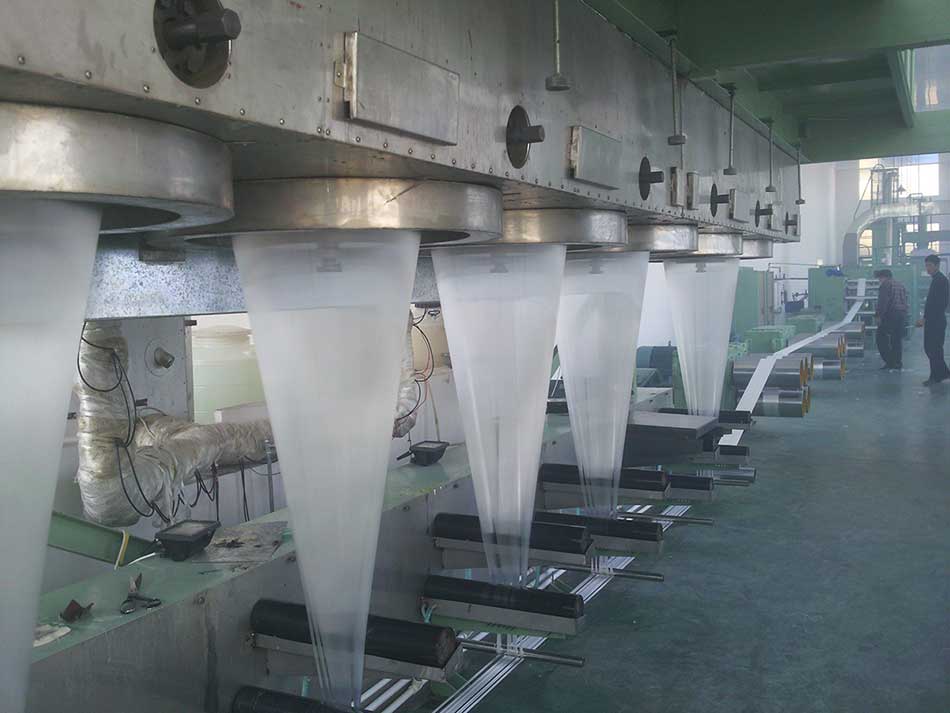
In May 2022, China’s PSF exports increased 24.4 per cent Y-o-Y and 0.8 per cent M-o-M to 90,000 tons. Imports declined 44.4 per cent Y-o-Y and 8.5 per cent M-o-M to 6,500 tons. However, in the first five months of 2022, exports declined by 4.6 per cent Y-o-Y to 19,200 tons, says a CCF Group report.
China gave inadequate orders for export of recycled PSF in the first half of 2022 imports from Southeast Asia and Africa increased. China’s imports were impacted by supply recovery in the overseas orders. China’s PSF imports declined by 51 per cent to 38,900 tons during January-May 2022 compared to the same period last years. China’s PSF imports from Myanmar declined sharply in 2020. In 2021, imports were mainly impacted by the epidemic and February 1 coup. China imported only 378 tons of 2021 while in 2022 it has not imported any PSF till now.
Imports from Vietnam decline 77.4%
Imports from Vietnam in 2018 had grown to 13,113 tons and reached 30,567 tons in 2021. The increase was mainly attributed to demand recovery, larger price spread between virgin PSF and recycled PSF and speculative demand around the Lunar New Year. In 2020, a few new plants engaged in solid re-PSF became operational, with a capacity of 50 tons per day, and the products are mainly delivered to China. This helped China’s imports from Vietnam to rise higher Year-on-Year.
In September 2021, imports totaled 729 tons, however, in October it declined to lowest 459 tons, due to strict lock-down measures. Later, with epidemic control and relaxation of power rationing, imports climbed to nearly 2,000 tons in November-December, 2021. Affected by surging sea freight, China-origin cheap fibers were hard to sell to Vietnam. From January, 2022, imports from Vietnam reduced largely, lower than the same period in previous years. In January-May, 2022, imports from Vietnam declined 77.4 per cent Y-o-Y to 4,106 tons.
Imports from Thailand, Cambodia dip
China’s imports from Thailand tripled in 2019 to 45,000 tons compared to 2016. In 2020, imports declined to 42,127 tons, and in 2021 they further declined to 31,996 tons. In January-May, 2022, imports were 8,950 tons.
In 2021, the imports from Cambodia were 1,261 tons. In January-May, 2022, they declined to 542 tons. Imports from Southeast Asia have been on the decline from 98,390 tons in 2019 to 78,779 tons in 2020, 76,245 tons in 2021 and 17,298 tons in January-May, 2022.
Imports from Africa rise
Interestingly, China’s PSF imports from the African market have been gradually rising in recent years. In 2018-2019, China transferred a few domestic production lines to Africa. This helped boost PSF exports to China. In 2020, China’s PSF imports from South Africa and Nigeria grew 28 per cent. But, in 2021, imports from South Africa shrank sharply affected by the riots, which caused disruptions of plant operation. Imports from Nigeria reached 2,728 tons in March’21. But imports from Africa were nil in the fourth quarter of 2021. In 2022, China imported only 455 tons of PSF from Uganda.
Bangladesh terry towels exports rise to $1.2 billion annually
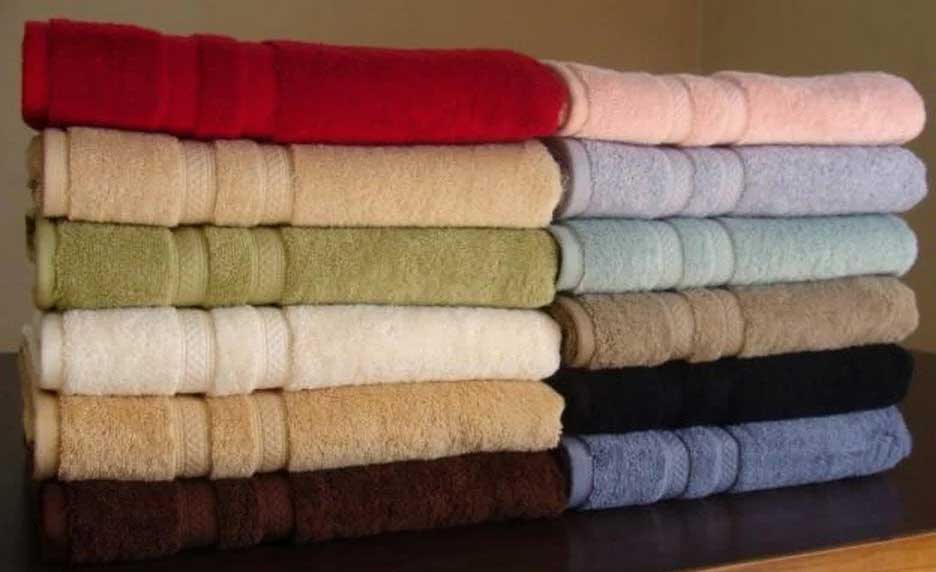
Around 110 companies produce home textile and terry towel items in Bangladesh currently, according to the Bangladesh Terry Towel & Linen Manufacturers & Exporters Association. Their factories employ nearly 65,000 workers and have investments totaling around $1.20 billion.
The success of the terry towel business in Bangladesh is attributed to Sonar Cotton Mills, the first towel factory in the Chattogram Export Processing Zone. According to The Business Standard, the factory has helped Bangladesh increase towels and home textiles production and exports to $1.2 billion annually.
Terry Towels a booming business
Established in the 1984 by Rais Khan, a Pakistani-born US citizen, Sonar Cotton Mills produces around 30,000 kg of towels per month. The company exported terry towels worth over 1.62 million in FY2021-22. Its products are now sold at multinational shops such as Amazon. Currently, the factory is run by Khan's son Shariq Khan who joined the production unit in 2002.
Shariq attributes the company’s success to the local towel-making sector and fashion quota system for the least developed countries through which the US sourced 1.2 million kg of towels from Bangladesh. He affirms, Bangladesh has a good reputation for skilled workers, many of whom joined the factory in 1984 and contributed to its current success.
The company faced many challenges along its journey, says Shariq. The factory was hit by a cyclone in 1992 which damaged all machines. It took him seven years to restore production in 1998. Barely recovered, it was once again hit by the 2007-08 global recession, which forced it to allow local investments in the factory.
Since 2003, Sonar Cotton has exported products worth $19.73, as per the Bangladesh Export Processing Zones Authority (BEPZA).The company has many new orders despite using its full manufacturing capacity. It now plans to set up a new factory in Mymensingh to double production in the next two years, Shariq asserts.
SACTWU settles wage dispute in worsted textile sub-sector
The COSATU-affiliated Southern African Clothing and Textile Workers’ Union (SACTWU) has settled its wage dispute in the Worsted textile sub-sector.
It is a 2-year collective agreement, effective from 1 July 2022 to 30 June 2024.
It provides for wage increases ranging between 7.5 per cent and 8 per cent for this year, and for next year, it provides for wage increases between 7 per cent and 7.5 per cent, as set out below.
This new 2-year collective agreement was successfully concluded under the dispute processes and procedures of the National Textile Bargaining Council (NTBC), with employers represented by the National Association of Worsted Textile Manufacturers (NTMA).
In a new precedent-setting provision for industrial workers in our industry, this Worsted textiles collective agreement provides for an extra day's paid annual leave per year, for workers who have completed 8 years' consecutive service on permanent staff.
The settlement was achieved after four negotiation rounds which commenced on 6 April, inclusive of a dispute conciliation round.