FW
Kenya partners with India in developing textile industry
Kenya and India have partnered to promote trade and investment in the textile and manufacturing industry.
The Kenya National Chamber of Commerce and Industry (KNCCI) will become an official partner in the preparation and planning of the International Textile and Manufacturing Expo- India ITME, set to take place in India from December 8 to 13, 2022.
Kenya will leverage on its competitive advantage in leather and textiles to roll out a labour-intensive agro-processing industrialisation program. The textiles and apparel sector is estimated to account for six per cent of the overall manufacturing sector in Kenya and contributes 0.6 per cent to Kenya’s GDP.With a large and well-established apparel subsector, Kenya has become a leading exporter in Africa and top exporter to the US under the African Growth and Opportunity Act (AGOA).
East Africa has become an emerging hub in Africa for sourcing apparel, and buyers have increasingly established regional sourcing offices in Kenya. The manufacturing and textile sector is expected to contribute significantly toward the attainment of Vision 2030.The aim is to raise the share of the sector to GDP from the current 8.3 per cent to 15 per cent.
KNCCI’s focus is to urge private investors in the textile industry to take advantage of the opportunity as Kenya aims to increase the industry investment from $350 million to $2 billion and create 5,00,000 cotton jobs and 1,00,000 new apparel jobs.
Global golf clothing market grows at six per cent
The global golf clothing market is growing at six per cent a year. The Asia-Pacific region, especially India and China, is offering lucrative opportunities to players in the market.
The emergence of trend of golf tourism, a surge in fitness consciousness among consumers and the trend for fashionable sports apparel have driven the growth of the global golf clothing market.North America contributes the highest share in terms of revenue.
The bottomwear segment is expected to be the fastest growing segment during the forecast period. This is due to the increase in the number of participations in sports tournaments and physical activities, especially golf.On the basis of distribution channels, the online store segment is anticipated to register the fastest growth, as users are inclining more towards online shopping due to the easy accessibility of different sports apparel.Heavy discounts and offers on sporting goods, apparels, including golf clothing provided by these online platforms, boost the sales of golf clothing.
Depending on the user, the women’s segment is anticipated to grow at a higher CAGR due to the fact that nowadays women all around the globe are increasingly participating in various sports activities.
Some of the major players in the industry are Callaway Apparel, Linksoul, Nike, Puma and Under Armour.
Puma embraces recycled materials
Sports giant Puma is embracing recycled materials with the launch of Re:Collection, a line of products for sportstyle, running and training and motorsport that are made with recycled cotton and polyester. It’s all part of the German firm’s Forever Better sustainability strategy. This has seen it setting ambitious targets for using materials from more sustainable sources and increasing the amount of recycled content in its products.
By 2025, 75 per cent of the polyester used in its clothing and accessories will come from recycled sources.In this case, the pieces contain between 20 per cent and 100 per cent recycled materials since this creates a look of perfect imperfection in neutral colours. Waste from cutting has been used to reinforce the uppers of the lifestyle footwear launched as part of the collection.
The offer, which launches for the autumn season, includes performance products for running and training such as the PWRFrame TR, a high-performance raining shoe that's engineered for foref oot support and features at least 30 per cent recycled material in the upper.Meanwhile, also in the training category, the tights are made with at least 70 per cent recycled material but retain the performance characteristics such as the moisture-wicking properties of Puma’s DryCell tech.
Buyers want Berlin Fashion Week rejigged
Brands feel the format of the Berlin Fashion Week needs to move forward. They would like to see more investment and rethinking. First and foremost, they would like to see designers integrated into the planning of the event since Berlin is a creative melting pot and designers could come up with a lot of ideas that would benefit everyone.
Berlin has always had the desire to be noticed and to dance along on the international fashion parquet but that remains a considerable challenge. Brands do not see a direct effect on business from the runway presentations. For many of them, the cooperation is primarily about getting their clothes out there in real time. So they say the show doesn't do them any good anymore from a wholesale or order point of view since the buying round has long since been completed. So the concept works well for already established labels with a stable customer network but not for most of the designers at Fashion Week in Berlin, especially the up-and-coming ones.
Exhibitors like the freedom Berlin gives them but many have decided to show their collection in Paris as well. One of her reasons, probably the decisive one, is that there are more buyers in Paris, especially international buyers.
Metaverse event planned
RLTY, Fabricant and World of Women have collaborated on a metaverse fashion event.
RLTY is metaverse event business. Fabricant and World of Women are metaverse fashion behemoths. Fabricant is a digital fashion brand that aims at infusing the metaverse with a sense of style. World of Women is a massive global NFT collection that was made possible by the contributions of tens of thousands of authors.
The main object of the event to be held between September 20 and 22, 2022, is to draw women and fashion into the metaverse. WoW and Fabricant designers will be dispersed across the event area to build up pop-up exhibits and sell memorabilia. To launch the event, WoW and Fabricant have collaborated to present a 27-piece digital fashion collection.
A 1000-piece collection that will be issued later includes the 27 items. One of these 27 pieces can be purchased by participants via OpenSea or during the event using MANA.One of the most well-known events in this category is the fashion show. Many major fashion brands have entered the metaverse by publishing their digital collections and exhibiting them there, including Nike and Zara. An earlier metaverse fashion week was held in March 2022. Numerous upscale fashion companies attended the festival.
Gap and West end deal
Kanye West and Gap have terminated their partnership. The brand they worked on, Yeezy Gap, was launched to be a disruptive, highly creative endeavor — one that aimed at attracting new, younger and more diverse customers. While they shared a vision of bringing high-quality, trend-forward, utilitarian design to all people through unique omni experiences with Yeezy Gap, how they worked together to deliver this vision was not aligned.
However West will now promptly move forward to make up for lost time by opening Yeezy retail stores. He says Gap has abandoned its contractual obligations under the strategic agreement and failed for over two years to sell a single product in a single Gap store, including any of its 500plus stores in North America, and failed to open a single dedicated store anywhere in the world.Specifically, he argues that the company has failed to sell Yeezy products in Gap’s stores or open dedicated stores to the line. The deal was signed after the start of the pandemic.
The real question now is what it may cost West to walk away, either in terms of legal fees or a possible settlement with Gap, and what the separation will mean for the value of Gap.
Faire and WGSN highlight trends
Faire has partnered with WGSN. Faire is an online wholesale marketplace connecting 6,00,000 independent retailers with 85,000 brands.
It empowers entrepreneurs through data-driven insight, backed by access to an unrivalled network of brands and retailers around the world. Faire is home to millions of products in the apparel category from over 12,000 apparel and footwear brands globally, making it a perfect bellwether to offer trusted fashion industry insights and trends.
WGSN is a forecasting agency. The partnership aims at spotlighting key consumer fashion trends to help guide independent brands and retailers globally via a toolkit. This comprehensive guide outlines spring/summer 2023 trends across silhouettes, colors, details, and patterns within women’swear and footwear. A second toolkit, outlining autumn/winter 2023 consumer trends, which will launch later this autumn, will be focused on creating emotional connections with consumers and exploring fashion trends that make them feel nostalgic.
These trends, insights, and their expertise in the industry have been instrumental in providing reliable fashion forecasting that allows independent brands and retailers to meet consumer lifestyle shifts and meticulously prepare for the buying season.
During Faire Fashion Week, Faire’s exclusive apparel and footwear preorder event, taking place on September 22, 2022, Faire and WGSN will host an Instagram Live discussion where industry experts will answer trend questions ahead of spring/summer 2023.
Curve launches intimate apparel tradeshow
Curve launched its first intimate apparel tradeshow in Montreal called Curve Montreal on September 18 and 19, 2022.
The tradeshow was originally planned in 2020. However, due to the pandemic and travel restrictions, it was postponed. The Curve event was brought to Montreal by MMode, an organization whose aim is to bring together players of the Québec fashion industry.
Canada was on a very strict lockdown, so this is the first time many of the retailers were traveling.Expectations were quite high as the Canadian lingerie community was looking forward to network and having a chance to preview collections more locally. MMode brought the curated Curve experience of the 50 best intimate apparel and swim collections to Montreal with ample opportunities for discovering new designers and learning new business strategies. Brand MRKNTN was selected as one of the ten talented designers for the prestigious Making the Cut reality TV fashion competition. By introducing new talents, the organisers were listening to the demands of the market.
Buying is always the focus of the Curve shows. However post-Covid retailers are craving experiences. Consequently, panels and special networking events have become equally important. After two years of shutdown, buyers want to feel connected to the lingerie community, make some memories and have fun too.
Global custom T-shirt printing market to clock in 9.7 CAGR: Study
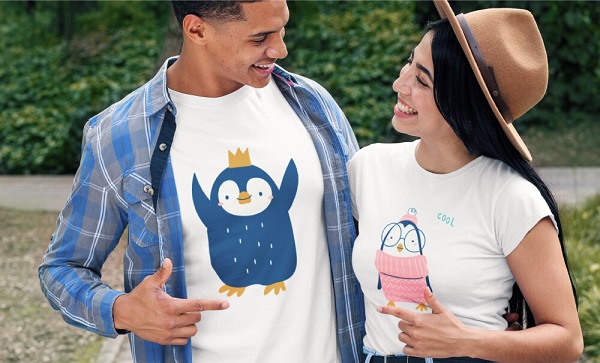
Global custom T-shirt printing market is expected to surpass $9,009.3 million with a CAGR of over 9.7 per cent to 2023 says a new study by Future Markets Insights (FMI) a premier provider of market intelligence and consulting services. In its latest report, FMI cited customized T-shirts are gaining immense popularity among the younger generation and a growing trend of wearing graphic, pre-printed T-shirts with movie logos and slogans is propelling sales in custom T-shirt printing market. Today, many prefer wearing printed T-shirts because of their unique design and trendy look on both men and women. These prints are usually extracted from computer. Usually, graphic professionals provide design to the fashion designers.
Printed tees a hit among Gen Y
Popularity of customized T-shirts among the young is attributable to availability of a wide range of color, pattern, garment, words or images that can be printed on tees. As a result, sales of pre-printed and creative graphic T-shirts are increasing. Subsequently, availability of trendy, fashionable, stylish, and unique customized T-shirts which reflects individual personalities is favoring its growth.
Another factor is the cost-effective prices of these T-shirts, especially across emerging economies that accelerate sales in these markets. Another popular use of custom printed T-shirts is to raise social awareness, raise a voice, and support a cause. Customers in industries such as hospitality, logistics, construction, industrial, and medical, are increasingly providing custom printed T-shirts to their employees as a marketing tool.
Growing influence of bloggers, promotional strategies, and improved standard of living are also driving up demand. “Increasing preferences towards customized, fashionable and unique clothing along with the rising income of the younger generation are major factors driving demand for custom t-shirts worldwide.” says an FMI analyst.
As per the report major players in the custom T-shirt printing market are: CafePress Inc., Custom Ink, LLC., CustomThread, Printful Inc., RushOrderTees.com, Spreadshirt, THEBLUEGECKOPRINTING, THREADBIRD, UberPrints, Inc., Vistaprint, among others. Manufacturers of custom t-shirt printing are focused on aggressive promotional strategies, advertisements, and new product launches that have driven sales growth globally.
As for techniques, screen printing segment is expected to hold over 52.1 per cent market share in 2021. Based on design, the artwork segment is expected to register a CAGR of 12.5 per cent from 2022 to 2032.
The US custom T-shirt printing market will contribute over 78.9 per cent share in North America whereas sales in Japan are expected to rise at over 15 per cent CAGR over the forecast period. India is expected to spearhead the growth in South Asia for custom T-shirt printing market, with sales increasing at 16.6 per cent CAGR through 2022 & beyond.
India builds up technical textiles
Some 23 research projects in the areas of specialty fibers, sustainable textiles, geotextiles, mobiltech and sports textiles have been cleared in India.
Among these 23 research projects are 12 projects of specialty fibers having application areas in agriculture, smart textiles, healthcare, strategic application and protective gears, four projects from sustainable textiles having application areas in agriculture and healthcare, five projects from geotextiles, one from mobiltech and one from sportech.
The growth of technical textiles in India has gained momentum in the past five years.The area of technical textiles in India has a technological gap, which is being addressed by identification of the area of research in technical textiles with industry interaction and promotional activities like conferences, exhibitions, and buyer-seller meets to promote the use of technical textiles in the country. Since industry and academia connect is essential for the growth of research and development in the application areas of technical textiles in India, priority is being given to building convergence with academicians, scientists and researchers.
India targets a fivefold increase in the export of technical textiles. There will be production-linked incentives for the textile sector including affordable infrastructure for textile manufacturing like cheap land and power and alignment with the best standards in textile manufacturing.