FW
Christmas bells jingling for India with export of festive items on the rise

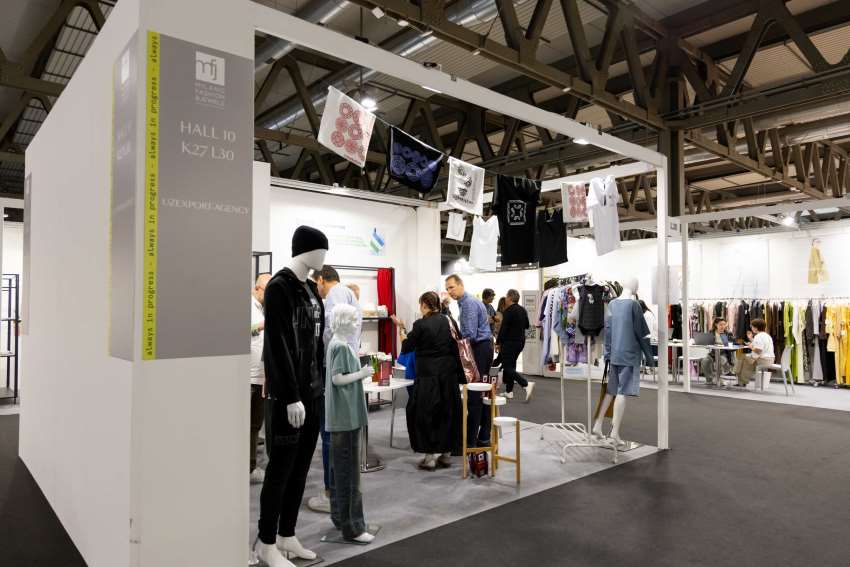
The Yuletide is a couple of months away and Indian exporters of Christmas offerings have reasons to deck their companies with successes. It has been reported that India now ranks among the top five countries that makes the festive season merry in the US with offerings of festive T-shirts and decorations. According to US Customs, the total value of festival-related goods has jumped roughly three times compared to last year, with a value of $20 million.
Indian exporters gain edge
India edged out fellow competitor Philippines as buyers spread out with their orders, prompted by China’s strict lockdown as Covid-zero regulation came in to force coupled with rising labour costs. As Amit Malhotra of Asian Handicrafts says, orders are up 20 per cent from a year ago and they have increased production capacity accordingly. This year they have shipped over 3.2 million Christmas products, up from 2.5 million last year.
Even though China exports a sizable portion of Christmas items, a lot of first-time customers have just begun approaching Indian exporters. India exported festive items to over 120 countries already and in 2020-21 (April-Nov), such exports were valued at $39.3 million. Indian government stats show, export of festive-season items increased over 54 per cent from the fiscal 2020 levels in the year that ended in March, while exports of handicrafts increased by about 32 per cent over the same period.
United Arab Emirates, US, Mexico, Thailand and Philippines are the top five importers Indian Christmas items together accounting for 43 per cent of exported items. As Siddharth Jain, Partner in Kearney’s operations and performance practice says, China’s continuous decoupling from the global economy and the post-pandemic recovery presents an opportunity for India to accelerate its investment in lengthy competition and prioritize ‘capable of winning’ areas.
Tapping a growing market
The opportunity doesn’t end with Christmas. Over the past three years, India’s export of handmade carpets has grown substantially. India accounts for roughly 40 per cent of global exports of handmade carpet exports worth $1.37 billion in FY20. From April 20 to February 21 India’s the total carpet exports stood $1.33 billion. It seems global markets have acquired a taste for handmade goods from India. The list includes: woolen, embroidered & crocheted goods, hand printed textile & scarves, brocade among others.
Indeed, India has the potential to overtake China in handcrafted items that not only bring merry during the holiday season but also throughout the year. The big companies that are importing from India include: Walt Disney, Target, Harrods in London and Dillard’s Inc.
Inflation shakes up low-cost China markets
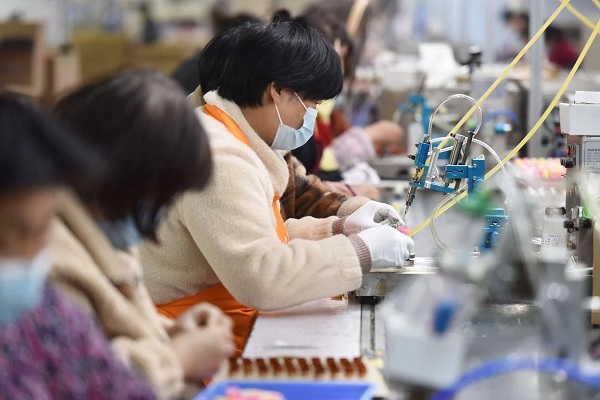
China has always been synonymous with low-cost and mass production. However, the ongoing slow recovery from pandemic has led to rampant inflation in pricing, since the lockdown has changed demand in the goods sector and interrupted supply chains. The new virus has led to a further lockdown and there is no knowledge what the economic future of the country would be.
Headwinds with inflation and supply chain pressures
Although experts feel global inflation should come down soon as the situation improves, it’s still true that the world is on the verge of a global inflation regime after Covid. Supply chain disruptions due to China’s zero-Covid policy have resulted in brands looking at reshoring production. The global market is dependent on China not only in the luxury segment but also for low-cost mass production.
Experts are concerned the deflationary drag may go into reverse in China. Its working-age population is expected to shrink significantly in the next few years, while rapid wage growth means labor is now more expensive. The government’s policy of ‘common prosperity’ for all threatens to drive wages even higher. If common prosperity leads to centrally-mandated increase in wage growth that far exceed productivity, then it could be more troublesome. Rising labor costs have historically tended to cause external competitiveness to deteriorate, resulting in import substitution and the destruction of domestic industry.
Meanwhile, these structural changes are happening against a backdrop of more hawkish trade policies towards China that threaten to break up supply chains. In contrast to other countries such as Mexico, which has seen similar increase in earnings, wage growth in China appears to have been justified in large part by rapid increase in productivity. Most workers in China have been paid more for producing more goods, keeping unit labor costs down and in the process becoming even more competitive.
Although Chinese customers spent on luxury brands in spring 2020, the ensuing revenge spending after Covid has encouraged many brands to open new stores or refurbish others while investing in digitalization efforts. A more significant decline in the number of workers will drive up output prices in the longer term.
Labor market a cause of concern
There is a hidden slack in other parts of China’s labor markets that need to be focussed on. Although construction has been a major source of employment before, post-Covid, there is not much need to sustain rapid house building and this will free-up workers. Also, China has a casual and unprofessional labor market with almost half of all workers operating in the shadow economy. Not all workers are mobile or possess the required skills to enter new industries. Also, absorbing these workers into more productive sectors is a must for the country to thrive.
The clothing and footwear sectors are labor-intensive, so these could be candidates for inflationary pressures to emerge but delving into data shows that a transformation here is already happening. China’s share of global textiles exports has already peaked, at around 40 per cent in 2015.
With many labour-intensive manufacturing apparel brands already having left China, the future of the country looks bleak, But global market experts know that life is like a wheel and will always come back to where it all started.
Vietnam hopes for bigger UK market share
Vietnam’s garment exports to the UK were up 88 per cent in August 2022 as compared to August 2021.
Vietnamese enterprises are taking advantage of the UK-Vietnam Free Trade Agreement to expand their presence in this market.The UK accounts for less than two per cent of Vietnam’s total export value of garments.
However, with the advantage of lower tariffs thanks to the agreement, Vietnam has a big chance to expand its market share. Under the agreement, about 42 per cent of Vietnamese textile and garment exports will be liberalised at entry into force, while some garment products will see tariffs eliminated after six years.
Vietnam is the world’s third largest exporter of garments. But the industry is facing many difficulties including a steep fall in export orders due to soaring inflation in major markets and rising input costs. China’s strict pandemic control, where more than 50 per cent of raw materials for the Vietnamese textile and garments are sourced, has pushed up input costs.
In addition, the EU has introduced new regulations on the textile industry, including replacement rates, green products and switching from fast fashion to sustainable fashion, which makes it harder for Vietnamese apparel products to enter this region.In this context, the UK is emerging as a promising market.
Tirupur India turns to turmeric, bamboo and new fibers
Tirupur garment manufacturers are now finding a wider use of natural products like banana fiber, hemp, bamboo, and coconut fiber.
Hosiery makers in this knitwear town are experimenting with different natural products for fibers, colors, and even printing. Apparel and fashion brands in the international market are promoting sustainability, and since customers of these brands do not mind spending a little more, these brands are looking for suppliers of naturally dyed garments. This trend is encouraging many manufacturers in Tirupur to explore different natural sources for dyes. While cotton is a natural fiber used to make apparels, disposal of garments is a problem because of the dyes and chemicals used. So there is a big demand for natural dyes, even in domestic garment brands.
Apparel producers are not using turmeric or banana fiber directly on the garments. Instead, these natural products are processed and the by-products are used for dyeing. The company also plans to explore natural dyes sourced from suppliers for T-shirts.
US apparel spending drops
For the past five months, spending growth on apparel in the US has been lower than growth in overall spending,
Several spending categories have experienced price decreases. US gasoline prices have been declining since June. The rate of year-over-year increases in US clothing prices has slowed from rates near seven per cent to those below five per cent.
While there has been a deceleration in hiring in August, jobs are still being added at a rate above the long-term average. The US economy added 3,15,000 jobs in August. The unemployment rate increased marginally, from 3.5 per cent to 3.7 per cent. This was primarily due to a substantial month-over-month increase in the labor force. The larger increase in workers relative to the labor force over the past year implies a tightening in the labor market.
In July, overall consumer spending increased 0.2 per cent month-over-month in inflation-adjusted terms. Year-over-year, real spending was 2.2 per cent higher. Spending on garments rose 0.7 per cent month-over-month and was up 2.1 per cent year-over-year.
Import volumes have been strong. Import costs continue to rise. In July, the average import cost per square meter of cotton-dominant apparel was up 23 per cent year-over-year, reaching the highest value since 1990.
India asks for duty relief on cotton imports
The Southern India Mills Association (SIMA) has appealed to the union government not to levy import duty on cotton during the next cotton season, which starts in October.
This, says SIMA, will enable the industry to achieve its potential growth rate and sustain its financial viability apart from protecting the jobs of over 35 million people employed in the cotton textile value chain.Cotton prices even during the beginning of the cotton season (October 2022 to September 2023) when arrivals will be high are anticipated to be more than the minimum support price.
Hence, duty free imports would not affect farmers. If needed, the government can consider levying the duty only during the peak arrivals of the season (December to March) to avoid recurrence of a crisis during the end of the cotton season 2022-2023.
Following the removal of the import duty on cotton in April and the changes brought about in MCX cotton trading, domestic prices have softened. MCX cotton prices have reduced over 25 per cent in the last one week. Domestic cotton arrivals have started early and the cotton prices have reduced. However, Indian cotton prices are still higher by 15 per cent to 20 per cent compared to international prices, especially with countries such as Pakistan and China.
Kraig works with textile expert to develop spider silk supplies
Kraig Biocraft in association with Jeff Dorton is developing new and innovative yarns and fabrics.
Kraig Biocraft is a biotechnology company focused on the development and commercialization of spider silk and supplies materials to brands eager to incorporate spider silk into their products. Jeff Dorton is a top textile expert. Kraig is leveraging Dorton's expertise and proven record of innovation in textiles to create new and exciting composite yarns and fabrics utilizing spider silk. Kraig and Dorton will further collaborate to create several additional yarns and textiles, for applications spanning the performance and luxury textiles market and beyond.
Utilizing his extensive network of mills and spinners around the globe, Dorton is currently working to drive the manufacture of the first spider silk fabrics. He has a passion for material development, a proven track record of innovation, and a wealth of experience working with some of the best textile mills worldwide.
He has led some of the most disruptive innovations in next-generation textiles that permeate the performance wear segment. He is a highly regarded textile expert with a storied history of developing new textile technologies. He has directed key initiatives for some of the planet’s biggest brands. His ability to develop high-performance yarns and fabrics is unmatched.
Pak’s Gadoon Mills joins ITMF
Gadoon Textile Mills has joined the International Textile Manufacturers Federation (ITMF).
Established in 1988, Gadoon, a part of the Yunus Brothers Group, is one of the largest spinning and textile companies in Pakistan and is a pioneer of quality and innovation in the textile manufacturing sector of Pakistan. The company manufactures and processes all types of cotton and manmade fibers at its state-of-the-art manufacturing plants. ITMF founded in 1904 is the international forum of the global textile value chain from fiber to finished products. Its members are from textile and apparel-producing countries representing 90 per cent of global production.
By becoming a corporate member of ITMF, Gadoon Textile Mills will join associations and companies from around the world that are active in the entire textile value chain like fiber, textile, garment, home textile, textile machinery or chemical producers as well as other organisations and companies affiliated with the textile industry. This exclusive exposure will provide Gadoon Textile Mills with additional and unique access to international partners from around the world. On the other hand, ITMF and ITMF’s members will benefit from Gadoon’s extraordinary expertise and experience. ITMF brings like-minded people together for a better understanding
India: SIMA appeals against new power tariffs
The Southern India Mills Association (SIMA) has appealed for a reduction in power tariffs.
SIMA says Tamil Nadu’s textile industry would become uncompetitive with the recent steep increase in the power tariff. Since power cost accounts for over 40 per cent of the cost of production, with the revised power tariff, spinning and weaving mills in the state would become uncompetitive. Competitiveness of the downstream sectors like power loom, handloom, garment and made-ups segments would be badly affected.
SIMA estimates that for a spinning mill having 25,000 spindles, the power tariff increase per year would be to tune of Rs.1.2 crores. The global competitiveness of power intensive sectors like textiles would be eroded. The association feels the revised tariffs would nullify the effects of attractive industrial policies in attracting new investments.
Tamil Nadu has revised energy charges. The tariff revision has come after a period of five years.The Tamil Nadu textile industry is a third of the country’s textile industry and has around 45 per cent of the spun yarn manufacturing capacity of the country. However Tamil Nadu does not have the raw material base (cotton and manmade fibers) and sources over 97 per cent of its raw material mainly from states like Gujarat, Maharashtra and Telangana.
ReshaMandi, natural textile platform steps into Mena zone
ReshaMandi has entered the Middle East and North Africa. The hope is to become a one-stop sourcing solution for all natural and recycled fabrics.
With this move, ReshaMandi hopes to contribute to the global natural textiles ecosystem and become the world's largest natural textile sourcing partner for customers seeking sustainable solutions powered by technology.
ReshaMandiis one of India’s largest farm-to-fashion natural fibers digital ecosystemand has supplied more than ten million meters of natural fiber fabric to 500-plus domestic fabric, apparel and home furnishings manufacturers in India. Among these 500, more than 200 are exporters providing products to well-known brands across geographies.
It offers a wide range of natural fabrics while adhering to sustainability, fair trade and ethical sourcing norms. These include silk, cotton, viscose, bamboo, hemp and other natural fibers. The group is committed to providing the benefits of technology to stakeholders so that they can achieve consistent quality, lower prices and complete just-in-time fulfillment.
The Mena region has been a strategic focus for ReshaMandi because it is a rapidly emerging market with enormous growth potential. Serving as a significant hub for the apparel and textile industries, the region has grown to become one of the world's largest textile hubs for products, including apparel, fibers and home textiles.