


FW
NZ Denim launches new low-impact denim fabrics for S/S 2025
A specialised textile manufacturer from Dhaka, Bangladesh, NZ Denim launched a new range of low-impact denims fabrics for S/S 2025 during the last edition of Texworld held in Paris.
The company aims to expand its denim fabric range besides increasing its annual productive capacity from the present 36 million meter to 72 million meter by developing new weaves, new surface effects and lower impact materials.
Amongst the new styles launched by the company includes the pro-biotic denim fabric treated with biochemical based substances produced by Proclean, an Indian chemical company, used to age fabrics. The company has also dyed its fabrics with natural indigo substances by AMF Herbal, another Indian chemical company that develops bio-based and vegetable origin dyeing substances.
NZ Denim has also launched a new fabric made with 83 per cent cotton, 1 per cent spandex and 16 per cent Spinnova, a natural fiber developed by a Finnish company that obtains special cellulosic fibers from wood pulp through a mechanical process that requires no water and only uses a very low energy amount, mostly from solar power.
Other products launched for the S/S 2025 collection include fabrics made with Tex2Tex Earth Protex, special polyester that can also be recycled through melting. It can be reused up to a 40 per cent percentage and can be added to virgin cotton for new denim and cotton fabrics.
A part of NZ Tex Group, NZ Denim is a vertical mill-setup including four integrated business units employing 7,000 workers.
Through its different divisions the group produces dyed yarns and linen fabrics. As the only Bangladesh company manufacturing 100 per cent linen fabrics it exports to Belgium, France, Japan and Korea.
Crocs’ Q1 FY24 revenues to decline by 1.5%
Colorado-based footwear company Crocs expects Q1 FY 2024 revenues to decline by 1.5 per cent Y-o-Y. The company plans to reinvest in several key areas as it continues to gain durable market shares.
During Q4 FY23, Crocs; revenues increased by 1.6 per cent to $960 million Y-o-Y with direct-consumer-revenues increasing by 6.8 per cent. The company’s sales surged by 11.5 per cent to $4 billion during the quarter.
By brand, Crocs revenues surged by 10 per cent to $732 million, while HeyDude revenues declined by 18.5 per cent to $228 millionfrom the same period last year.
During the three months, the brand’s net income grew to $253.9 million, up from $137.7 million, in the prior-year period.
Capped off by a strong fourth quarter that exceeded expectations across all metrics, Crocs Inc delivered a record year in FY23, says Andhrew Rees, CEO. The company’s revenues grew by 11 per cent to $4 billion underpinned by industry-leading operating margins and double-digit earnings per share growth. The brand
Crocs grew across all regions and channels, highlighting the power of the company’s strategy and disciplined execution. The HeyDude Brand returned to a pull-market position resulting in improved gross margins and healthy inventory levels exiting the year, he adds.
M&S to strengthen third –party offering with new products from Puma, Reebok
Marks & Spencer will introduce a range of products from Puma and Reebok to The Sports Edit platform on M&S.com to strengthen its third-party offering.
Home to five out of the top ten global sportswear brands, M&S.com will have 140 products from the two sportswear brands throughout February and March, including a range of performance and lifestyle apparel and footwear. Currently, the platform houses 90 third-party brands.
This year The Sports Edit will also celebrate its first year of partnership with the platform that saw 110 per cent growth in sportswear searches during the period.
Estimated to be worth over £15.3 billion in 2022, the UK sportswear market is expected to continue to grow by 16.3 per cent between 2022 and 2027.
Nishi Mahajan, Director - Third-Party Brands, M&S, says, the platform has been carefully curated to cater for every style, energy level and price point, complementing and completing the strength the brand has in its Goodmove range.
Nick Paulson-Ellis, Founder and CEO, The Sports Edit, adds, carefully curated edit of sportswear partners on The Sports Edit platform on M&S.com now includes five out of the top ten global sportswear brands, with more to follow later in the year.
Suspend transshipment of Bangladesh cargo through Delhi airport, urges AEPC
The Apparel Export Promotion Council (AEPC) has urged the government to temporarily suspend an order permitting the trans-shipment of Bangladesh export cargo through the Delhi Air Cargo complex, citing logistical and cost concerns.
In a communication to the Central Board of Excise and Customs (CBIC), AEPC highlighted the strain caused by the Red Sea crisis, which has escalated transportation costs for domestic exporters and prompted a shift from sea to air freight.
Sudhir Sekhri, Chairman, AEPC expressed concern over the daily arrival of 20-30 loaded trucks in Delhi, slowing cargo movement and facilitating undue advantage-taking by airlines. This situation has resulted in soaring air freight rates, processing delays, and severe congestion at the Cargo Terminal of the IGI Airport, making Indian apparel exports less competitive, he said.
AEPC petitioned the CBIC to suspend the implementation of a circular issued on February 7, which expanded the trans-shipment permissions to the Delhi air cargo complex. Previously, such trans-shipments were restricted to the Kolkata Air Cargo complex. Bangladesh's significant presence in the textile sector poses a competitive challenge to India.
Centre extends RoSCTL scheme for apparel exporters
The Central Government has announced an extension of the Rebate of State and Central Taxes and Levies (RoSCTL) scheme for the export of apparel/garments and made-ups until March 31, 2026.
This scheme offers benefits of up to 6 per cent to exporters in these sectors. Initially set to conclude on March 31, 2024, the uncertainty surrounding its expiration hindered exporters from accepting new orders beyond that date.
Bharat Chhajer, Former Chairman, Powerloom Development and Export Promotion Council (PDEXCIL), says, the extension will ensure stability in the policy regime, lower the tax burden and provide a level playing field on the principle that “goods are exported and not domestic taxes. The decision is particularly significant for the textile industry in Gujarat, a prominent textile hub, he adds.
The RoSCTL scheme aims to offset state and central taxes and levies through rebates, alongside the duty drawback scheme, for exports of apparel-garments and made-ups. The central principle is to prevent the exportation of taxes and duties, fostering a level playing field for exports.
Rahul Shah, Co-chairman, Textile Committee, GCCI, highlights the challenges facing the textile sector. Citing a decline in India's textile and apparel exports from April to November 2023, he says, the extension of the RoSCTL scheme provides much-needed support to exporters of garments and made-ups, offering a potential boost to the industry.
RMIT researchers develop new fabrics with Nanodiamonds
RMIT University researchers have launched an initiative to enhance fabrics with nanodiamonds, aiming to expedite the body's cooling process. Through a technique called electrospinning, they found that fabric treated with nanodiamonds could lower temperatures by 2-3 degrees Celsius compared to untreated cotton.
Shadi Houshyar, Project Head and Senior Lecturer, RMIT, says, this technology could be used in numerous applications such as making innovative materials for sportswear and personal protective equipment like firefighter underlayers.
Additionally, the study reveals, nanodiamond-coated cotton provides improved UV protection, making it suitable for outdoor summer attire.
Houshyar emphasises, the integration of nanodiamonds into fabrics could potentially reduce the need for air conditioning, resulting in energy savings of 20-30 per cent.
Spearheaded by the Centre for Materials Innovation and Future Fashion (CMIFF), the research comprises RMIT engineers and textile researchers renowned for crafting next-generation smart textiles. Aisha Rehman, Research Assistant, RMIT, explains, nanodiamonds were selected for their robust thermal conductivity properties.
Texcare International gains substantial interest from stakeholders
The renowned trade fair for the laundry, dry cleaning, and textile service industry, Texcare International is generating significant anticipation within the sector.
Scheduled to reconvene in Frankfurt am Main from November 6 to 9, 2024, this event by Messe Frankurt has already garnered substantial interest from global stakeholders.
With nine months remaining until the opening, 247 companies hailing from 30 countries have already registered for the exhibition. The surge in registrations underscores the industry’s eagerness for this event.
Many market leaders are poised to leverage this premier platform to unveil their latest innovations to a diverse international audience, says Johannes Schmid-Wiedersheim, Director, Texcare.
This year, in addition to established machinery, chemical, and textile manufacturers, Texcare will also feature new players from robotics and IT sectors, promising attendees a comprehensive insight into textile care advancements across product categories.
Texcare 2024 will be hosted in Hall 8 and the Galleria, maintaining a layout similar to its previous iteration. Notable exhibitors such as Alliance Laundry, Christeyns, Danube, and others have already confirmed their participation , ensuring a diverse showcase of industry offerings.
Elgar Straub, Managing Director, VDMA Textile Care, Fabric, and Leather Technologies, emphasises Texcare 2024 holds great significance amidst industry challenges, including regulatory shifts, labor shortages, and geopolitical uncertainties. The event will focus on key themes such as digitalisation and automation to enhance operational flexibility, sustainability, and quality.
Andreas Schumacher, Managing Director, German Textile Cleaning Association, says, physical interaction plays an important role in the industry, especially amid rising costs and labor scarcities. Texcare's role as a catalyst for innovation and collaboration among industry stakeholders remains pivotal, he adds.
The event's agenda encompasses an array of products and services tailored to commercial laundries, textile service providers, dry cleaners, as well as sectors like hospitality, healthcare, etc.
Texcare International 2024 will spotlight solutions to prevailing challenges such as labor shortages and emphasise the role of digital technologies in streamlining operations. The event will focus on themes like circular economy, energy efficiency, and textile hygiene will also feature prominently, reflecting the industry's commitment to sustainability and innovation.
Pakistan textile exporters accuse interim government of intrusion into economic matters
Citing soaring energy prices and poor policies, textile exporters in Pakistan have accused the interim government of intruding into economic matters and causing a disaster.
Muhammad Jawed Bilwani, Chief Coordinator, Value-Added Textile Forum; Mubashar Naseer Butt, Chairman, Pakistan Readymade Garments Manufacturers & Exporters Association (PRGMEA); Muhammad Usman, Towel Manufacturers & Exporters Association and Khalid Majeed, Chairman, Denim Manufacturers & Exporters Association jointly held the interim setup for the economic downturn.
According to them, repeated gas and electricity price increases, coupled with a weak rupee, have escalated input costs and stifled manufacturing growth.
The industry faces gas cuts twice a week with high discount rate of 22 per cent, and expensive export financing. Exports have plunged by 12.71 per cent Y-o-Y, falling short of the target by 16.61 per cent.
Many exporters have stopped production or fear closure due to unviable trade conditions. Gas tariffs have risen by a staggering 191 per cent, with exporters forced to pay a premium compared to other sectors.
Many of the exporters have also accused the government of planning further gas price hikes and lacking industry representation in regulatory bodies. They have urged the Prime Minister to intervene, meet with stakeholders, and find solutions to the energy crisis plaguing the textile industry.
Indian Textiles on the Brink: Can a new policy save the day?

The Indian textile industry, once a global powerhouse, is facing significant challenges. Declining exports, ailing infrastructure, and fierce competition threaten its future. In a recent report, a Parliamentary Committee recognized the need for urgent action and called for a comprehensive National Textile Policy (NTP) to revitalize the sector. As per the Minister of Textiles, Government of India, "The textile industry is a vital contributor to our economy and job creation. A new National Textile Policy is essential to address the challenges and unlock the sector's full potential."
The need for a new policy
To begin with, India's textile and apparel exports have fallen by 11 per cent in the last five years as per Textile Ministry data. This decline is attributed to factors like rising production costs, outdated technology, and inadequate infrastructure. Over 100 textile units are currently classified as ‘sick’ impacting thousands of jobs and hindering industry growth. The industry struggles to compete with countries like Bangladesh and Vietnam due to lower labor costs and policy advantages. Also, the lack of a unified policy hinders progress
Table: Statistical overview
India's Textile and Apparel Exports: $42.4 billion in 2022-23
Number of Textile Mills: 2,500+.
Job Creation in Textile sector: 4.5 crore+
Then there is the issue of past policy limitations. The outdated National Textile Policy formulated in 2000, is outdated and lacks a holistic approach. Multiple state policies create inconsistencies and hinder national-level planning. Varying support across states creates an uneven playing field. Inadequate power supply, poor transportation networks, and limited access to quality raw materials hinder efficiency and raise production costs. Shortage of skilled workers, especially in technical areas, impedes innovation and productivity.
Stopping the export slide
There is an urgent need to limit the export slide. The focus needs to be on value-added products. Shift from basic textiles to technical textiles, functional apparel, and design-driven segments. Also, there is a need for fresh Free Trade Agreements (FTAs). Better trade deals with key markets to reduce tariffs and boost exports. Need for investing in automation, modernization, and R&D to improve efficiency and product quality. And building strong brands and promoting Indian textiles globally.
Strengthening ‘Make in India’
Another reason for a new policy is to attract investments. Create investor-friendly policies, infrastructure development, and single-window clearances. Establishing PM MITRA parks with integrated infrastructure and support services can attract investments and create job opportunities. Streamlining regulations, reducing bureaucratic hurdles, and providing single-window clearance can attract domestic and foreign investors
Self-reliance in raw materials
Promote domestic sourcing and reduce dependence on imported raw materials and encourage local production. Promote high-yielding cotton varieties, improve farming practices, and reduce wastage. Encourage domestic production of synthetic fibers like polyester and nylon. Promote sustainable sourcing and recycling of raw materials. Implement comprehensive training programs to create a skilled workforce. Ensure adherence to environmental and labor regulations to meet international quality demands. "Skilling and reskilling the workforce is crucial for the industry to compete globally and achieve self-reliance," points out President, Confederation of Indian Industry - Textiles Committee
The Indian textile industry stands at a crossroads. A comprehensive National Textile Policy, coupled with focused action on modernization, skill development, and self-reliance, can be the thread that weaves a brighter future for the sector. By addressing the limitations of existing policies and implementing strategic solutions, India can regain its position as a global textile leader.
Textile Tussle: Anti-dumping duties spark trade friction between India and China
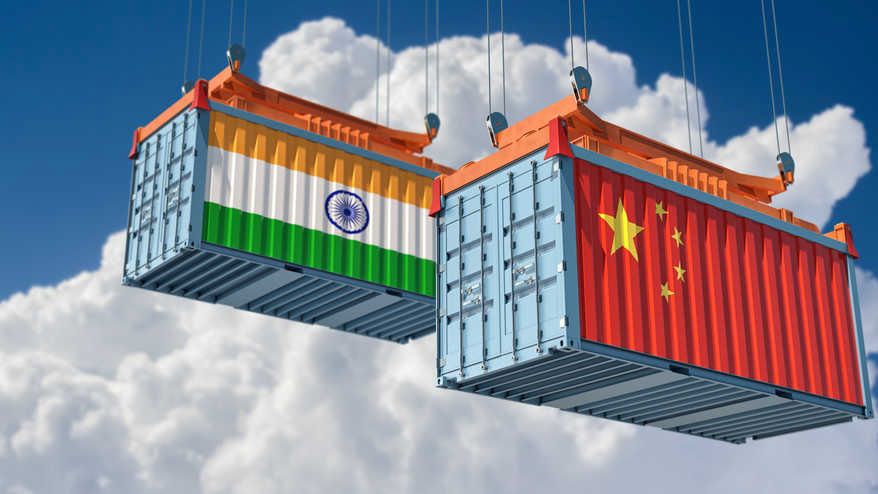
The textile industry, a crucial spoke in India and China’s GDP economic growth, has become a battleground for anti-dumping duties (ADD), raising concerns about business losses and the future of trade relations.
Tit for tat ADDs
Both India and China have imposed ADD on imports from each other. For example India in 2021, imposed ADDs on Chinese viscose staple fiber (VSF), citing dumping margins of 3.71per cent to 15.72 per cent. This led to a 7 per cent decline in VSF imports from China, impacting garment manufacturers reliant on affordable Chinese VSF. Similarly, China in 2022 imposed ADDs on Indian cotton yarn, alleging dumping margins of 3.1 per cent to 7.2 per cent. This resulted in a 25per cent drop in Indian cotton yarn exports to China, impacting Indian spinning mills. As Amitabh Yadav, President, Clothing Manufacturers Association of India (CMAI) opines, "These ADDs are protectionist measures that distort trade and harm consumers."
| Year | India's ADDs on Chinese textile imports (in $million) | China's ADDs on Indian textile imports (in $million) |
| 2021 | 203.24 | 231.57 |
| 2022 | 251.43 | 278.92 |
| 2023 (YTD) | 112.37 | 145.21 |
Source: World Trade Organization (WTO) Trade Statistics Database
Reasons for ADDs
Several factors lead to the imposition of ADDs. On major reason is protecting domestic industries. Countries like India and China use ADDs to shield their domestic textile industries from allegedly unfair competition from foreign players. ADD investigations based on complaints from domestic industries alleging unfair trade practices look at key factors like: Dumping or selling goods below their normal value in an export market; evidence that the dumped imports harm the domestic industry; Proof that the dumping caused the injury. Trade disputes can sometimes be fuelled by broader political and economic conflicts as well.
The other reason is correcting unfair trade practices. ADDs aim to counter dumping, where a country exports goods at prices below their domestic market value, harming domestic producers in the importing country. ADDs aim to level the playing field by raising the price of dumped imports, making them less competitive with domestic products. Proponents argue that ADDs protect jobs in domestic industries threatened by unfairly priced imports. As an Indian yarn manufacturer says, "The anti-dumping duty on Chinese yarn impacted our raw material costs, forcing us to raise prices and lose some customers to cheaper competitors."
Case for India and China ADDs
The impact of these duties is evident in trade figures and industry reports for both India and China. India's imports of Chinese viscose staple fibre fell by 40 per cent in 2022, while China's imports of Indian polyester textured yarn declined by 25per cent. Indian textile exports facing anti-dumping duties in China experienced a 10-15 per cent drop in value.
Indeed, anti-dumping duties offer temporary relief to domestic industries, but their long-term consequences for trade relations and global competitiveness can be detrimental. The use of ADDs in the India-China textile trade is a complex issue with significant economic and political implications. ADDs can protect domestic industries, they also have negative consequences for businesses and consumers.
Both India and China need to engage in constructive dialogue and explore alternative solutions to protect their industries without jeopardizing wider economic interests. Open communication, transparent investigations, and adherence to WTO rules is key to navigating this complex situation and ensuring a sustainable future for the textile industry. Finding a balance between protecting domestic interests and promoting fair trade remains a crucial challenge for both countries.











