


FW
Clariant’s Q2 profits up 16 per cent
For the second quarter Clariant’s profits were up 16.1 per cent. Sales clocked up Rs 256 crores as against Rs 244 crores for the corresponding quarter of the previous year. Sales were Rs 521 crores for the first half of the year as against Rs 502 crores for the corresponding half of the previous year.
The company’s initiatives to upgrade product portfolio is paying dividends, despite the uncertainties like the depreciating rupee and a surge in crude oil prices. Clariant, based in Switzerland, is a specialty chemical company operating in care chemicals, catalysis, natural resources and plastics and coatings. Its corporate strategy is based on five pillars: focus on innovation through R&D, add value with sustainability, reposition portfolio, intensify growth, and increase profitability. It is with several external sustainability initiatives such as the Global Product Strategy and the United Nations Global Compact. Clariant is one of the top European chemical companies being part of the Dow Jones Sustainability Indices.
In India the business includes pigments, masterbatches and additives, which deliver solutions for the emerging industry sectors in India. Clariant has also invested in a state-of-the-art regional innovation center in Mumbai, with an aim to co-create tailormade solutions with customers for the industry.
Puerto Rico to reintroduce smallholder-grown cotton
Puerto Rico, in collaboration with the SFA (Smallholder Farmers Alliance ), plans to conduct a feasibility study for reintroducing smallholder-grown cotton in the country later this month. With the support of brands, Puerto Rico hopes to replicate the agronomic revitalisation experienced by Haiti through its cotton reintroduction project – conducted by the SFA and Timberland.
The cotton reintroduction project was conceived at the 2017 Textile Exchange conference, as the effects of Hurricane Maria were emotively discussed in relation to the nation’s smallholder farmers. Subsequently, the Puerto Rico Cotton Fund was launched and over $30,000 was pledged to support the immediate implementation of measures such as emergency micro-grants for smallholder farming families and the development of a smallholder recovery program. Cotton production in Puerto Rico collapsed in the early 1930s following a major hurricane and the failure of the nation’s growers to successfully combat plagues and pests such as pink bollworm and cotton boll weevil.
Around five decades later, Haitian cotton growing stopped due to governmental policies of the time, but now with the support of Timberland and the Smallholder Farmers Alliance a new phase of cotton expansion is now underway in the nation.
Hyosung TNC to raise its production efficiency
Hyosung TNC, the textile and trading arm of South Korean fibre giant Hyosung, plans to increase its production efficiency by improving the production process with an optimal quality algorithm, which will be prepared by analysing the data of each machine vision. The company recently transformed its five Spandex factories into smart factories in China and Vietnam as it looks forward to boost the product quality as well as capacity while preparing its business for the Industry 4.0 era.
The company completed the installation of the smart factory in September at the company’s spandex factories in Quzhou City, Jiaxing City, Guangdong Province and Zhuhai City in China, and in Dong Nai in Vietnam.
With the beginning of the next generation production system environment, it will now be easier to manufacture products of identical quality at each of its global factories and monitoring their status in real time for better quality control. The new system comprises of a process monitoring system, quality control system, and smart IoT among the other elements.
The company’s IT division, Hyosung ITX has launched smart factory solutions brand-XTRM Factory so that it can also enter the smart factory systems market in Korea and overseas by using its experience of establishing smart factories for Hyosung TNC.
MCCI going through a tough phase
The Mewar Chamber of Commerce and Industry (MCCI) in Bhilwara is going through tough times with no new member enrolled in the last three months, Instead, existing members urging it to change their registration — from textile units to other businesses.
For the last two years there has been no growth in the textile industry, the mainstay of Bhilwara’s economy. The city is home to 850 textile units that create direct employment for 85,000 people and indirect employment for 60,000. Unlike in other industrial towns, here migrants make up just 20 per cent of the workforce, which means it is locals who are employed in the units. Bhilwara is the state’s largest textile center, producing cotton yarn, polyster or viscose-blended yarn and fabrics, denim and other textile products. Its decline started with demonetisation in November 2016, which reduced purchasing power for few months.
The Supreme Court order directing industrial units to not use petcoke in order to control air pollution, increased their dependence on coal and lignite. The worst fear of MCCI is a lockdown of units if the government remains indifferent to industry needs. They have also been requesting a rebate in power tariffs.
Sewing machines set for rapid growth globally
Global sewing machine market is expected to grow at a CAGR of 4.6 per cent from 2018 to 2026. The increasing popularity of the do-it-yourself culture is an important factor contributing to the growth of the sewing machine market. People in order to give a personalized touch to their garments are increasingly practicing home arts such as sewing and knitting. Moreover, sewing machines have witnessed significant advancements in recent years. These advancements are focused upon efficiency and precision. Another prominent factor aiding the sewing machine market growth can be attributed to the declining cost of electronic sewing machines. This has enabled their adoption even across households with modest income. Furthermore, in coming years, the demand for industrial sewing machines is expected to be on the rise, mainly owing to fact that garment manufacturers are increasingly opting for high end sewing machines with a focus to save time, energy and reducing complexities.
In recent years, sewing machines have witnessed significant technological advancements. Apparel manufacturers are transitioning from manual sewing machines to digital sewing machines. Moreover, sewing machines have been bestowed with a plethora of new features and functionalities.
For instance, Kinoshita introduced sewing machines have automatic bobbin changers. Similarly the sewing machine market has witnessed other innovations in the form of real-time monitoring in sewing machines, modular sewing machines, convertibility in sewing machines, smart sewing machines and digital feed system in sewing machines, among others.
Asia Pacific is the largest market for sewing machines. The presence of a large number of sewing machine manufacturers headquartered in the region is an important factor propelling market growth in the region.
Some of the major players operating in the sewing machine market include China Feiyue, Brother, Juki, Jack, Singer, Bernina, Pegasus and Million Special, among others. Research and development is one of the most common strategies adopted by the market players and it helps companies stay afloat in the market by addressing the increasing competition.
Puma may shift out of China
Puma is thinking of shifting its footwear and apparel production out of China and possibly to Bangladesh, Cambodia or Vietnam. Reason: US threat of hiking tariffs as high as 25 per cent on footwear. This has forced Puma to lock in capacity at facilities in hubs like Vietnam earlier than usual. Currently, the company makes about one-third of its products in China. The tariffs mean Puma has to accept a lower US margin or raise prices. But tariffs are not the only reason for Puma’s shift. The company has been shifting production away from China over the past couple of years because of rising labor costs.
The US and China have not yet reached an agreement to de-escalate the trade war. Moreover, the US has threatened to slap duties on another $325 billion of goods. In the light of this, more companies are pulling out of China to save themselves from unwarranted losses.
Tariffs on shoes made in China are expected to be catastrophic for consumers, the companies and the US economy as a whole. However, Chinese consumers are shielded because the factories that once churned out products for the world increasingly serve domestic customers’ needs now.
CPTPP will open Vietnam to competition
The Comprehensive and Progressive Agreement for Trans Pacific Partnership will provide greater market access to Vietnamese firms but also open up the country to foreign products, increasing competition. In particular industries such as automobile and agriculture would face intense competition.
Clothing and leather products, chemicals, plastic products, and transport equipment and machinery are expected to get an export boost while imports will grow in almost all sectors. Under the CPTPP average trade-weighted tariffs would drop from 1.7 per cent to 0.2 per cent for Vietnamese exporters. Non-tariff measures are predicted to reduce by 3.6 percentage points in terms of tariff equivalence.
With strict rules of origin, Vietnam would have to develop supporting industries to benefit from the trade deal. The country plans to improve the investment environment and protect intellectual property rights to attract investors. Institutions and administrative systems need to be reformed to take advantage of the CPTPP.
It is also necessary for Vietnam to focus on small and medium-sized enterprises. These account for a majority of the economy and labor market and have to be aligned with global supply chains. CPTPP was signed last March following a period of turbulence caused by the departure of the United States.
RCEP faces hitches, may not be implemented by year end
The Regional Comprehensive Economic Partnership is unlikely to be signed by year end. This is being negotiated by 16 mostly Asian countries. The RCEP negotiating countries are the ten Asean countries — Brunei, Cambodia, Indonesia, Laos, Malaysia, Myanmar, the Philippines, Singapore, Thailand and Vietnam — plus Australia, China, India, Japan, South Korea and New Zealand.
After more than five years and 24 rounds of negotiations since May 2013, RCEP countries are still struggling to try and forge an agreement. Concluding the pact by year-end looks unlikely due to differing levels of development among the countries involved, as well as political factors including general elections next year in India and Australia.
India has issues in goods and services. It is of the view that there are many issues that are yet to be resolved, including the extent of commitments India would take in opening up its goods market and what it would get from other members in terms of increase in mobility of professionals. Giving substantial concessions to members, especially China, could lead to protests from a large section of the Indian industry. Once concluded, the RCEP is likely to result in the largest free trade bloc in the world covering about 3.5 billion people and 30 per cent of the world’s GDP.
Shima Seiki to host Shima Seiki Europe Apex show
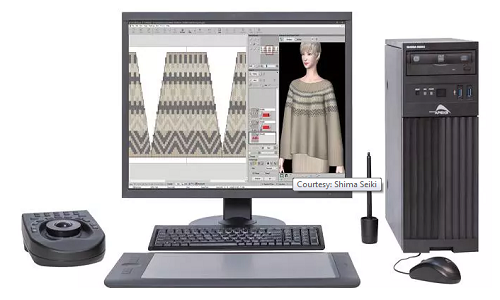
Leading flat knitting machine manufacturer Shima Seiki, together with its UK subsidiary, Shima Seiki Europe, will hold a private expo in association with Hong Kongbased spinner UPW in London, on November 7 and 8, 2018. The Shima Seiki Europe Apex show will feature the SDSONE APEX3 3D design system, high-lighting the company’s digital yarn project.
SDSONE APEX3 3D design system is at the core of the company’s ‘Total Fashion System’ concept of unifying the fashion supply chain. From yarn input, planning, design, and machine programming to sales promotion, APEX3’s offers comprehensive support of the entire knit production process. Its greatest strength lies in its unparalleled capability for virtual sampling. Photorealistic simulation capability allows virtual sampling to minimise the need for actual samplemaking, effectively reducing time, cost, and material—and environmental impact—from the supply chain equation. APEX3 is capable of transforming the fashion industry through smart, speedy, and sustainable production, Shima Seiki said.
The key to realistic simulated sample making can be found in the least common denominator of knitting: the yarn. Shima Seiki’s digital yarn project aims to digitise yarn with the cooperation of spinning companies so that its customers can select yarn for their design and produce simulations for digital sampling, while programming data allows the required amount of yarn to be calculated so that the yarn can be ordered as soon as approval is obtained for that design. UPW is one of the most advanced collaborative partners in this Project, offering access to its inventory of digitised yarn online. (GK)
Apparel Manufacturing of the Future
With 300 3D flatbed knitting machines, Stoll and Project I restore high-tech domestic manufacturing jobs
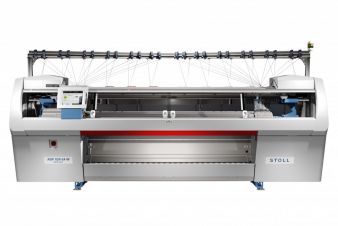 With 300 3D flatbed knitting machines, Stoll and Project I restore high-tech domestic manufacturing jobs with a full-scale, next generation facility that moves fully-fashioned knit production to the US and helps retailers meet demand.
Project I is an apparel manufacturing group started by fashion executives Jon Lewis and John Elmuccio with the goal of reshoring high-paying fashion jobs to the United States.
John Elmuccio
“We’re partnering to create the apparel manufacturing and supply chain facility of the future,” Elmuccio said. “The collaboration with Stoll will strengthen America’s fashion market, restore apparel production jobs using the latest technology, and revitalize the fully-fashioned knit sector.”
The driving force within the knitting industry
Between this new founded collaboration with Project I and the kick-off of the company’s 145th anniversary, Stoll consistently proves to be the driving force within the knitting industry.
Project I and Stoll’s advanced apparel manufacturing facility results in the largest single order of Stoll’s latest 3D knitting machinery and software solutions within the United States. This impactful collaboration will bring a revolutionary output of jobs and help position the US as a key player of the apparel manufacturing and supply chain market. “The apparel, fashion, and luxury markets are ripe for disruption and resurgence in the U.S.,” Lewis said. “By shortening the supply chain and locating production in the U.S., fashion brands and retailers will be able to keep pace with emerging trends and react to — not just anticipate — customer demand.”
The installation of these 300 high-tech flatbed knitting machines will happen throughout the next three years. Stoll will install the latest generation of ADF machines, which feature yarn carriers that are independent of the carriage and can move horizontally and vertically, and the latest CMS 830 C&S knit & wear (seamless knitting) machines. Stoll will provide programming, training, manufacturing and on-site production support while guiding new and existing customers alike to Project I.











