FW
London Textile Fair seas the emergence of sustainable fabrics
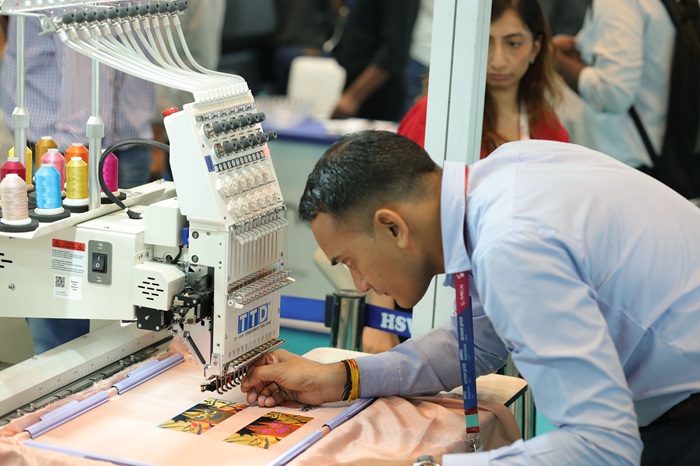
London Textile Fair was held on January 9 and 10, 2019. London Textile Fair is the UK's premier platform for fashion fabrics, clothing accessories, print studios and vintage garments. It provides manufacturers and their agents with the opportunity to showcase their products to the most influential British buyers and designers.
There were more than 500 exhibitors, up from 472 last season. Most came from Europe – among them were textile manufacturers from Turkey, Italy, Portugal and the UK. There is a strong textile market in Turkey and a strong garment manufacturing market. Because of the small distances people choose to do both in the same place to save transport costs, and lots of mills now are also manufacturers.
Buyers from several big-name brands and retailers attended, including River Island, Karen Millen, Oasis, Ted Baker, Jaeger, John Lewis, Boden, Mr Porter and Gieves & Hawkes. Demand for sustainable fabrics was one of the biggest trends at the show. Interest in sustainable alternatives was at an all-time high. There was a surge in interest for recycled fabrics and for BCI cotton. Teal was a trend for this season.
The next edition of the London Textile Fair will be on July 16 to 17, 2019.
India faces poor cotton prospects
India’s cotton crop this year may be the lowest in a decade. Deficient rainfall is the main reason. There has been no scope for third and fourth pickings and hence farmers have uprooted the plant. In fact, farmers have been advised to uproot cotton plants by the end of December 2018 to give room for rabi crops such as pulses and to ensure against pink bollworms.
Plant sizes were not more than four feet in October when the average is about five feet or six feet. Currently, there is no cotton plant on the ground in Gujarat. Those with irrigation have already planted pulses. Seed cotton (kapas) prices in India are ruling above the minimum support price, which is positive for farmers. Other factors that influence cotton planting in the next season is the excess global availability of palm and soybean oils. This situation may not encourage Indian cotton farmers to divert to other options in the next season.
Yarn demand is not that high, which may influence cotton pricing and post-harvest sectors. India’s 2010-11 crop was 34.5 million bales and the highest since that time has been 40.2 million bales in the 2013-14 crop year. Wide range data fluctuations affect the spinning sector, particularly in making decisions about cotton purchasing and stocking.
Indian Silk Weaving Federation urges for 10% duty on silk imports from Vietnam
Bharat Gandhi, Chairman, The Federation of Indian Art Silk Weaving Industry has averred that the phenomenal rise in the import of silk fabrics from Vietnam in last two years has deteriorated the conditions of silk fabric manufacturers hailing from Indian cities of Bhagalpur, Varanasi, Bengaluru, Surat and some parts of Tamil Nadu. Therefore, the Federation has urged the government to levy 10 per cent duty on the import of silk fabrics from Vietnam so as to create a little more favourable scenario for Indian domestic market.
Import from Vietnam has increased more than two-fold from two lakh sq. mt. in 2015-16 to 5 lakh sq. mt. in 2016-17. Currently, import of silk fabrics from Vietnam attracts zero per cent duty, which makes India’s silk fabrics expensive. This has significantly affected the domestic market of India. Also, several Chinese manufacturers have, lately, started their factories in Vietnam and, most importantly, dumped Indian silk fabrics.
BIS approves first ever Indian Standard on bullet resistant jackets
The first-ever Indian Standard (IS ) on bullet resistant jacket for protection against small arms and ammunition for defence, paramilitary and police forces was recently approved by the Bureau of Indian Standards (BIS). These Bullet Proof Jackets (BPJ): IS17051:2018 prescribes minimum requirements against small arms and their evaluation procedures.
The standard was approved after a draft finalised by the Textiles Protective Clothing Sectional Committee was authorised by the Textile Divisional Council. It was formed keeping in mind the Indian needs. Until now, the bullet proof jackets and helmets provided to the Indian security forces were based on the NIJ III+ Standard, which refers to ballistic resistance of a body armour.
The main challenge was: reducing the weight of the jacket from 10.5 kg to 6 kg matching the scientific criteria. Moreover Indian Standard for bullet resistant jackets is expected to accelerate the procurement process by the user agencies and in testing of materials. It is mandatory that all standards should be adopted in all procurement orders of the security forces.
Fast fashion creating mountains of waste worldwide
Overabundance of fast fashion has created an environmental and social justice crisis. Fast fashion is readily available, inexpensively made clothing. Increased consumption patterns have created millions of tons of textile waste in landfills and unregulated settings.
Negative consequences at each step of the fast-fashion supply chain have created a global environmental justice dilemma. While fast fashion offers consumers an opportunity to buy more clothes for less, those who work in or live near textile manufacturing facilities bear a disproportionate burden of environmental health hazards.
From the growth of water-intensive cotton, to the release of untreated dyes into local water sources, to low wages and poor working conditions, the environmental and social costs involved are widespread. Potential solutions include sustainable fibers, corporate sustainability, trade policy and the role of the consumer.
In North America, the fast fashion market is likely to face tremendous growth in the coming years owing to swiftly increasing number of fast fashion retailers in the region. The European market is pegged to foster high revenue in future owing to growing adoption of new fashion trends. In India, China, and Japan, the market is poised to expand further in the coming years due to high purchasing capacity and penetration of major fast fashion retailers in the region.
American landfills overflow with discarded clothes
On an average, Americans throw away no less than 10 clothing pieces a year. Not having proper awareness on how to take care of the clothing they buy, they opt to simply purchase more instead. One of the main causes of the dissatisfaction and eventual abandonment of apparel among Americans is a dislike of finicky fabrics that may require more specific and labor-intensive care routines. Chief among them is silk, followed by cashmere, suede, leather and sequined clothing.
Consumers over-launder their garments, especially those made of quality fabrics. Often they never bother to read the care instructions that come attached to their garments. Suits, dress shirts, blazers and sport coats are said to be the hardest to maintain. Sweaters and dresses follow on the list, along with boots, shoes, denim and outerwear.
Storage can be an issue in keeping clothing in top shape. Many are unaware that sweaters should not be hanged. Understanding the different fabrics and the best ways to clean them can make laundering clothes a lot easier and will keep clothing last longer. For instance there is no need to wash jeans after every wear. One of the marks of premium denim is that they don’t need to be washed in order to regain their shape.
Harrie Schoots elected President-elect by AATCC
Harrie Schoots from Ascend Performance Materials, LLC was elected President-elect by AATCC at its Annual Meeting. The following regional board members were elected for a two-year term: Jack Bare, StarChemLLC, New England Region; Martha Carper, University of Delaware, Central Atlantic Region; John Crocker, SDL Atlas, Midsouth Region; and Heather Shields, adidas International, Western Region.
Other members of the Board of Directors include Rembert J. Truesdale, III, Immediate Past President; R. Michael Tyndall, Treasurer; Adam Varley, Chair, Executive Committee on Research; Jiping Wang, Chair, Publications Committee; Carol Revels, Chair, Education Advisory Board; Louann Spirito, Chair, Concept 2 Consumer® Interest Group; John Darsey, Concept 2 Consumer® At-Large Member; William (Buddy) Garrett, Chair, Chemical Applications Interest Group; Robina Hogan, Chair, Materials Interest Group; Seshadri Ramkumar, Materials At-Large Member; and Brian C. Francois, Executive Vice President.
Blockchain Technology revolutionises the global cotton market
"Blockchain technology is paving its path into the cotton market. This technology makes transactions and contracts simpler and tracing more accurate. But, the questions of reliability, scalability and governance of this revolutionary technology need to be answered before it is at a bigger scale. In October 2016, the Wells Fargo and Commonwealth Bank of Australia used blockchain technology to process and execute a cotton shipment worth $35,000 from Texas to Qingdao, China."
 Blockchain technology is paving its path into the cotton market. This technology makes transactions and contracts simpler and tracing more accurate. But, the questions of reliability, scalability and governance of this revolutionary technology need to be answered before it is at a bigger scale.
In October 2016, the Wells Fargo and Commonwealth Bank of Australia used blockchain technology to process and execute a cotton shipment worth $35,000 from Texas to Qingdao, China. This transaction – driven by smart contracts – eliminated a lot of paperwork which was otherwise needed to ensure that all the information is up-to-date and the same in both party’s records.
Blockchain to save transaction time
Blockchain technology reduces physical documentation and saves exponential time in receiving payments. It also saves time for the merchant to receive payment from the banks for the sale transaction, as the bill of lading and other supporting documents need not to be mailed physically to the Letter of Credit (LC) opening bank by the seller. The availability of authenticated documents linked in blockchain technology reduces the working capital cycle and the cost, which could be an advantage to all the parties to the trade.
Tracing the authenticity of cotton origin
The complex supply chain of cotton products involves many transactions, which makes it difficult to trace the origin, especially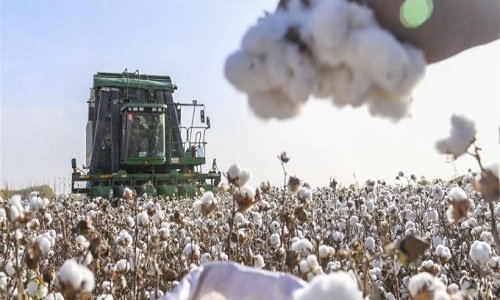 in case of organic cotton and BCI cotton. This transformational technology helps us maintain and check the authenticity of the origin by tracing it from field using GPS technology to fabric and fabric to field.
The technology uses the decentralisation concept, as every user has access to non-restricted data. Private information on a public platform requires a well-designed and secured platform to avoid it from being used for wrong purposes. This questions the reliability and the confidentiality of the information shared on this platform. It would be reliable and trustworthy if this technology is decentralized and yet maintained by an international regulatory, which sets the standards and legalities to ensure smooth functioning for transactions.
Maintaining records for reliable estimates
Blockchain technology also maintains data and records. The records provide reliable estimates every year for cotton for its opening stock, consumption and closing stock in every country. USDA could use this as a platform to source the data for cotton growth, consumption and ending stocks, allowing them to update the estimates based on current available information. This could help avoid unnecessary volatility in the market, and the market price would include all real market information which factors and defines the actual market data.
The International Cotton Association needs to promote this technology and start implementing it with their members. The challenges of security and reliability also need to be addressed for successful implementation in the market. The traceability of data and maintaining records analyses the competency of the parties in the trade and brings transparency to the availability of market data. The blockchain technology is thus beneficial and would revolutionise the cotton market.
Macro slowdown forces investors to focus on company strategies
"Over 150 consumer-oriented public and private companies will make presentations before investors, analysts, traders and executives in Orlando, Fla at the 21st annual ICR Conference. However, before these presentations, companies including Urban Outfitters, American Eagle Outfitters, Lululemon Athletica, and Abercrombie & Fitch Co. will issue certain pre-announcements. The Conference will be held between January 14-16, 2018. Public company presentations will be held on the first two days while discussions with private companies will be held on the final day."
 Over 150 consumer-oriented public and private companies will make presentations before investors, analysts, traders and executives in Orlando, Fla at the 21st annual ICR Conference. However, before these presentations, companies including Urban Outfitters, American Eagle Outfitters, Lululemon Athletica, and Abercrombie & Fitch Co. will issue certain pre-announcements.
The Conference will be held between January 14-16, 2018. Public company presentations will be held on the first two days while discussions with private companies will be held on the final day. Company slide shows at the presentations will feature business updates and strategic plans for the coming year, or longer term.
A strong line up of speakers
Various retail-related names like branded or specialty apparel companies will deliver speeches at the ICR. DA Davidson analyst John Morris expects investors to focus on company strategies in the event of a macro slowdown, including plans for cost cutting.
In addition, buying plans for the second half of the year may also be high on investors’ minds., Morris sees a risk “because most companies are likely extrapolating recent healthy Fall and Holiday demand into next year and if demand doesn’t follow through, margins could come under pressure from promotions.” Moris says rising labor costs will likely be a top issue this year. Early reads on Spring selling will also be of interest. In addition, he will be looking for any shift in the negative sentiment that has prevailed over the branded apparel sector.
According to Jefferies retail analysts, the conference will not reverse the “challenged” sentiment around the specialty softline retailers, which stems from tough holiday and first- quarter comparisons and uncertainty around expenses. But “a string of positive pre-announcements could help partially re-assure the market. Potential 2019 expense headwinds (wages, freight, shipping, tariffs, investments in marketing and e-commerce) are likely to be other key topics of investor interest, outside of a read on sales trends.
Telsey Advisory Group’s Dana Telsey expects a fairly positive tone from specialty retailers at the event. But, with 13 companies that Telsey covers falling an average of 23 percent in the fourth quarter of 2018, clearly there are likely to be major concerns.
Doubts revolve around whether sales strength in the fourth quarter and the new year can flow to the bottom line given labor, freight, and trade costs, as well as digital and marketing investments. Telsey also noted that sales and margin comparisons will become more challenging through 2019 and investors will seek color on the ability to drive leverage while e-commerce continues to grow as a percentage of the overall mix and as the one-time benefit of tax reform anniversaries in the new year.
Uniqlo Japan’s profit down 30 per cent, could come under pressure in China
Operating profit of Uniqlo’s Japan fell 30 per cent in the first quarter compared to the same period a year ago. Uniqlo, known for its simple and affordable clothes such as lightweight down jackets, is battling saturation in its main home market, Japan. It could also come under pressure due to a slowdown in China, where it typically logs a major proportion of its growth. Unseasonably warm weather hit sales of winter clothes.
Japan Uniqlo profit is expected to rise sharply in the second half of the year on strong cost control. Fast Retailing is the owner of Uniqlo. The retailer’s overall operating profit fell eight per cent over September to November. The domestic business is expected to record a larger-than-expected decline in profit in the first half due to the discounting.
The company will increase discounting in Greater China and South Korea to offload winter inventory. However, Uniqlo’s international business is expected to rake in strong first-half revenue and profit growth. Operating profit for the business jumped 12.6 per cent in the reported quarter, boosted by a double-digit growth in China. The firm opened 78 stores in China last fiscal year, expanding to 633 locations, while it closed four stores in Japan, ending the year with 827 stores.