


FW
M&S and British HC launch Responsible Migration project
In its endeavor to spread awareness among migrants to ensure safe migration for work, Dominic Asquith, British High Commissioner to India, launched the ‘Promoting Responsible Migration from Source to Destination in Supply Chain’ project. Partnered with Partnering Hope into Action (PHIA) Foundation, a civil society organisation, the project is jointly funded by the UK government and Marks & Spencer.
Notably, India’s $17 billion apparel export industry and $50 billion worth apparel retail market provides employment to over 20 million people and is majorly dependent on workers who migrate from states of Bihar, Odisha, Uttar Pradesh, etc. The project will strengthen communities besides tackling the problems they face through policy advocacy and awareness.
It will also map the stakeholders involved in recruitment and measuring the scale of the issue in the ready-made garment sector. Stakeholders will implement a research study and awareness building programs for factory workers and communities in Jharkhand and Gurgaon.
India’s NITMA takes to the media to highlight financial crisis
The Northern India Textile Mills Association (NITMA) has highlighted the worst financial crisis and slowdown faced by the textile industry through an advertisement in the Indian Express Newspaper. According to the advertisement, the crisis is forcing spinning companies to cut down their production and shut down their mills. This is likely to result in job losses and add to the already high unemployment rate in the country.
A recent article by the digital news website thelogicalindian.com also highlighted a February report by the International Cotton Advisory Committee (ICAC) that indicated that India’s cotton production is set to drop by 7 per cent due to ‘insufficient rainfall’. To counter this, textile spinning mills in North India are planning to cut down on their production and shut down their mills once a week.
Some textile units are also planning to lower their capacity by 50 per cent in the wake of the unsafe market situation and to have less borrowing/outstanding and stocks.
Acrylic staple fiber prices fall
Acrylic staple fiber prices in July were down in China, India, and Pakistan. Downstream demand was dull as yarn producers themselves witnessed lower sales, which in turn resulted into lower procurement of acrylic fiber during the month. Supply in the market was largely stable with many plants either idle or with reduced production. In China, offers for cotton-type staple fell 19 cents a kg and medium-length staple was down 19 cents a kg as compared to June.
Cotton yarn prices were mostly down in China, India, and Pakistan in July. In China, cotton yarn prices were stable-to-down despite firmer cotton fiber prices during the month. Demand for yarn from the downstream sector remained weak. Spun yarn prices may stabilize in China with a recovery in demand in August, and in tandem with the seasonal rebound of textile production in the country. In India, cotton yarn prices were down amid sluggish demand that month. In Pakistan, cotton yarn prices were talked down amid muted trading during the month. In China, 32s carded cotton yarn was down 11 cents a kg while 21s combed was down ten cents as compared to June. In India, 30s combed for knitting fell 15 cents a kg on the month.
India’s cotton yarn exports down 34 per cent
In the April-June period of this fiscal, India’s exports of cotton yarn fell by 34.6 per cent as compared to the same period last year. The steep fall has been caused by a variety of reasons, including a decline in exports to leading export markets like China, Bangladesh, South Korea and the duty-free access given for import of cotton yarn by China to countries like Pakistan and Vietnam. The slowdown has resulted in the closure of many mills – approximately one-third of the whole spinning capacity across India.
Considering the large scale investment in the spinning sector and the sluggish demand in the domestic markets, exports are the only avenue to ensure uninterrupted production and capacity utilization. Even though cotton yarn is a value added product, it has been excluded from export benefits like interest subvention, the Merchandise Export of India Scheme and the Rebate of State and Central Taxes and Levies schemes. There is no rebate on embedded taxes like agricultural cess, mandi tax, power and fuel surcharge, which are incurred in the production process.
Cotton yarn sector is one of the pillars of Indian textile industry and is also highly modernised and technology driven and also provides sustainable income to farmers.
Zimbabwe reviews clothing rebate
Zimbabwe is plugging loopholes in the rebate scheme for clothing manufacturers. The country has lost huge amounts in tax revenue since some players in the garment making sector abuse the rebate facility. They use transfer pricing, under-invoicing and incorrect declarations to evade local taxes while taking advantage of preferential trade agreements to realise huge profits in regional markets.
Although the rebate facility has assisted manufacturers to reduce production costs, making their apparel competitive on the export market, some beneficiaries of the scheme undermine tax revenue and distort both national and regional value chains and linkages through various malpractices. These include disposal of fabrics intended for value addition on the domestic market and transfer pricing.
Materials eligible for rebate are: manmade yarn and include denim, cotton sewing thread, woven fabrics of polyester staple fibers, chenille fabrics, tulles and other net fabrics. The rebate was devised in order to resuscitate the clothing value chain. It was initially granted on select imported fabrics for use in the manufacture of clothing for a period of one year. The facility, which is due to expire this year after benefiting more than 50 companies, has been renewed over the years after taking into account developments in the textile and clothing industry.
US-based apparel resale portal ThredUp’s app downloads up 71 per cent
Downloads of thredUP’s app from January to July 2019 were up 71 per cent from the same period in 2018. This is an online resale store based in the US. The company re-sells clothes at up to 90 per cent off retail prices and takes a cut of each sale. The company currently has five distribution centers and plans to open a sixth by the end of this year or beginning of next year. By year’s end, thredUP will have processed 100 million used items. The ten year old thredUP is in active conversations with dozens of retailers about how they can help them tap into a $24 billion apparel resale market. The company has received funding which it will use to expand its platform to offer resale clothing services to retailers.
Consumers download the thredUP app or go onto the resale site and then ship their used apparel, handbags, shoes and jewelry items from more than 35,000 brands. Company employees receive the items, process them, make sure they’re in good condition, price them algorithmically, photograph them and ship them out to shoppers when sold.
It’s expected that online resale will grow as much as ten to 15 times faster than fast fashion stores, department stores or traditional off-price chains.
Moroccan sourcing fair in October
Maroc will be held in Morocco on October 17 and 18, 2019. The fair offers a comprehensive overview of the Moroccan textile and garment industry from fast fashion to high-quality production of trend peaks up to offers of sustainably produced collections. Around 1,500 visitors from all around the world are expected. The fair will be segmented into the fields of fast fashion, denim, jersey, knit, lingerie, sportswear, leisure wear, technical garments, leather and shoes. The fair program will be supplemented by special B2B meetings and conferences, which deal with current production topics.
The Moroccan garment industry generates 15 per cent of the industrial GPD of the country and 25 per cent of Moroccan exports. The over 1,600 companies of the industry employ over 1,90,000 workers and have a production capacity of over one billion items. Morocco offers fast delivery by land with short-term delivery dates thanks to its proximity to Europe. The shortening of the delivery routes is also a way to reduce the ecological footprint of the companies, an important aspect in the course of sustainable production, a decisive factor for future competitiveness. Morocco is in a phase of continuous growth due to foreign investments and an expansion of its infrastructure. For this year an economic growth of three per cent is expected.
Kitex Garments aims for Rs 2,000 crore turnovers by 2025
As a part of its Vision 2025, Kerala-based Kitex Garments, the third-largest infant garment brand in the world, plans to increase its turnover from the current Rs 650 crore to Rs 2,000 crore. As a first step towards achieving this goal, the company plans to invest around Rs 900 crore into the manufacturing and sale of new products in the infant apparel category, which includes products like socks for children, baby diapers and baby wet wipes.
The company also aims to expand its knitting and processing capacity to 100 tonnes each. It also aims to strengthen the vertical integration of its manufacturing value chain with the setting up of a cotton spinning mill for yarn production with a capacity of 100 tonnes per day. Plans are also afoot to set up a manufacturing facility for ancillary materials such as trims & packages, which include cartons, tapes, paper tags, labels, hangers, and woven tags, etc.
At present, the company can manufacture 432,000 infant wear articles every day and its total textile capacity is around 50 tonne.
Cotton Incorporated develops performance technologies
Designers and manufacturers who want inspiration and direction regarding technical cotton fabrics can turn to Cotton Incorporated’s Fabricast. This series of cotton and cotton-rich fabrics highlights new and interesting yarns, unique weaving and knitting constructions, dyeing and finishing techniques, and fabric performance technologies. The Fabricast collection highlights cotton materials that work in a variety of categories, from outerwear to shirtings to active wear. The diamond matelasse is a quilted, cotton-rich woven that offers weather-shield properties. A subtly iridescent surface gives it style appeal, while Storm Cotton technology keeps it water resistant, making it a great option for outdoor jackets with the natural feel of cotton. And a single-knit, 100 per cent jacquard features a ruffling blister effect, which provides excellent insulative qualities due to the densely constructed ruffles. Another piece from the Fabricast entry is the satin fabric that is 98 per cent cotton with two per cent stretch.
Cotton Incorporated has developed several other technologies that enhance cotton’s natural performance features. TransDry maintains cotton’s comfort and softness while adding moisture management, making it ideal for cotton active wear. Another popular choice for active wear is Wicking Windows. This unique performance technology transfers moisture away from the skin and to the outside of the fabric, making for a drier, more comfortable experience for the wearer.
Zara’s sustainability moves positive but needs indepth approach
"Making sustainability its immediate goal, fast fashion giant Inditex the makers of Zara pledged to only use organic, sustainable and recycled materials like cotton, linen and polyester in all its eight brand’s collections by 2025. The latest fast fashion brand to join the sustainability bandwagon, Zara was influenced by 81 per cent response to a global survey that urged fast fashion companies to help improve the environment."
 Making sustainability its immediate goal, fast fashion giant Inditex the makers of Zara pledged to only use organic, sustainable and recycled materials like cotton, linen and polyester in all its eight brand’s collections by 2025. The latest fast fashion brand to join the sustainability bandwagon, Zara was influenced by 81 per cent response to a global survey that urged fast fashion companies to help improve the environment. A report by Lyst indicates online searches for sustainable fashion terms such as ‘ethical brands’ and ‘econyl’ have increased 66 per cent. The adoption of sustainable denim has been hailed by 187 per cent of social media bloggers.
Sustainability becomes a global focus
Sustainability has become a global focus. As the UNEnvironment Programme notes, the financial decline of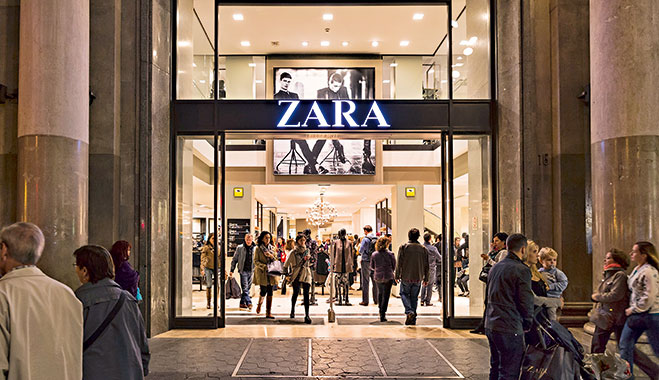 fast fashion giants is already underway with brands like TopShop closing stores, ASOS reporting 87 per cent profit plunge and Forever 21 being on the verge of total bankruptcy.
Zara’s claims therefore, call for further query. Experts have raised doubts over how a company that produces 500 new designs a week and 20,000 a year could ever really become sustainable. Especially considering that trend-focused clothing, the focus of Zara’s business model that brings around $20 billion in annual sales, has an incredibly short shelf life.
Other details to be considered
Though Michael Stanley-Jones, co-secretary of the UN Alliance for Sustainable Fashion views Zara’s claims as achievable as he believes many brands don’t realise their significance. For example, though the company aims to go green with its energy supply, it first needs to consider a number of other details such as water pollution from the fabric dyeing and micro fiber shedding into the ocean from synthetic material, complicate the process of making a fabric sustainable.
However, Zara’s announcement indicates the larger industry is indeed taking notice of these issues. As around 80 per cent of employees in the fashion and textile industry are women, there is a strong evidence of sub-minimum-wage employment and child labor in the sector. This makes it difficult for consumers to determine what the promising announcements from fast fashion brands actually mean in practice.
Growing demand for second-hand clothes
Lauren Singer, environmental activist, Trash Is for Tossers and founder of Package Free Shopin Brooklyn, New York, encourages those interested in sustainable fashion to turn to secondhand purchases. With the Gen Z already shifting towards second-hand clothing these clothes are likely to overtake clothes made by fast-fashion brands in the near future.
Though Zara’s announcement has created a ripple effect within the fast fashion industry, it fails to address the ultimate issues of the rate of consumption. The announcement provides industry leaders with an opportunity to shift to new technology and search. However, leaders believe as long as the current fashion business model exists, Zara’s sustainability announcement should be taken with a pinch of salt rather than interpreting them as the new fashion trend.











