


FW
HEPC to participate in International Sourcing Expo Australia for 8th consecutive year
"Handloom Export Promotion Council (HEPC) will attend the International Sourcing Expo Australia for the eighth consecutive year, furthering solid industry links and cooperation between the Australian and Indian governments in relation to textiles and fashion."
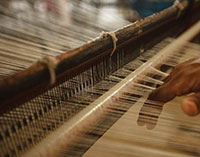 Handloom Export Promotion Council (HEPC) will attend the International Sourcing Expo Australia for the eighth consecutive year, furthering solid industry links and cooperation between the Australian and Indian governments in relation to textiles and fashion.
The product profile of the exhibitors under the HEPC aegis has evolved from just an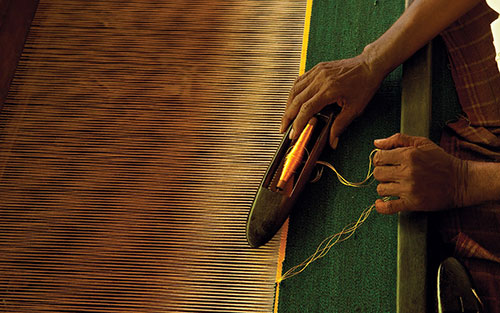 exclusive home textile range of products to the current participants offering the whole gamut of all textile products including an entire range of home textiles such as coir products, clothing, accessories and garments.
Organiser IEC Group anticipates more than 4,000 trade visitors to visit the International Sourcing Expo and co-located Footwear and Leather Show Australia. Along with China Clothing Accessories Textiles Expo, which is held concurrently, more than 700 textile, apparel and footwear manufacturers and agents from 20+ countries will exhibit at the Melbourne Convention and Exhibition Centre from November 12-14 2019.
The trade-only event will showcase exhibitors from China, India, Bangladesh, Pakistan, Hong Kong, Fiji, Indonesia, Vietnam, South Africa, United Arab Emirates, Peru, Taiwan, Turkey, Thailand, Vietnam, Australia, and USA.
Product differentiation to help denim industry tide over 2020 recession
"As was evident from the 2008 recession, the global denim industry is not immune to the effects of economic crisis that looms large in 2020. The 2008 recession hit the denim industry like a storm. It set new standards of the focus of many brands shifting to newer markets such as Asia. Consumers could no longer spend $300 for a pair of jeans and so they “traded down” and sought out new brands and retailers. Increasing casualisation of the workplace gave rise to the birth of new styles such as athleisure, comfort and stretch bottoms, which began to accelerate during the Great Recession."
 As was evident from the 2008 recession, the global denim industry is not immune to the effects of economic crisis that looms large in 2020. The 2008 recession hit the denim industry like a storm. It set new standards of the focus of many brands shifting to newer markets such as Asia. Consumers could no longer spend $300 for a pair of jeans and so they “traded down” and sought out new brands and retailers. Increasing casualisation of the workplace gave rise to the birth of new styles such as athleisure, comfort and stretch bottoms, which began to accelerate during the Great Recession.
The recession also forced brands to squeeze production costs by shifting their sourcing to cheaper markets. It led many fast fashion brands replacing the premium pair of denims in the consumer’s shopping carts as disposable clothing became more acceptable.
The 2020 recession however, paints a different picture and doesn’t focus on fast fashion. The emergence of new e-commerce channels has enabled consumers to buy their desired products at affordable rates. It has also led to the evolution of value-centric retailers like Target who are advancing the quality of their products according to its customers’ needs.
As a result, department stores are likely to suffer the most in the 2020 recession as these are least equipped to customise their products’ quality and prices according to their customers’ needs.
Combining sustainability with practicality
Many denim brands adopted sustainable businesses after the 2008 recession. It became the ‘new premium’ for brand Candiani and also the instigator of its creativity. It also led to new innovations with brands like Re/Done, Ateliere & Repairs and Blue Of A Kind deconstructing and restoring the 5-pocket jeans into a more conic and sustainable piece of clothing.
However, the focus on sustainability is likely to diminish during the 2020 recession, unless it is inbuilt into a brand’s DNA. Companies who tap into sustainability while also keeping their profit margins in view are likely to emerge as winners.
Innovation to be the key to success
The 2008 recession also led to the popularity of new denim styles as consumers were no longer satisfied with a simple pair of jeans. Premium denim styles began paying more attention to their product and details. In 2010, denim overalls propelled Los Angeles-based Frame onto the radar of fashionistas. Today, the brand is expanding its product offerings by adding leather handbags and sneakers to its line.
Similarly, Baldwin, which rebranded itself as BLDWN earlier this year, now aims to be a premium lifestyle brand based on modern American fashion. Another emerging trend is the reduction in the demand for indigo fabrics. People are selling less amount of the indigo dye even though there’s not a major reduction in orders for indigo jeans.
However, simply rebranding itself and focusing on more non-denim items is not likely to pull the industry out of the 2020 recession. For this, the industry needs to a create products are the uniquely different from those already present in their consumers’ closets.
Uster launches new software
 Turkish Company Matesa Textile is using the new software launched by Uster Technologies known as Uster Quality Expert both at its shop floor and top floor.
Going beyond mere data collection, the software supports the company to achieve its targets for yarn production and provides process security by empowering quality managers to intervene quickly to remedy any starting issue at source.
The system delivers real-time notifications to smartphones and tablets. Uster Mobile Alerts app connects users to quality and allows a fast information flow. From one single application, mobile devices receive early warnings about potential quality problems – as well as indications of the source of the issue and advice on saving raw material. Combined data from in-line and laboratory instruments, continuously analyzed by Assistant Q, keeps managers informed about quality issues in production and helps initiate immediate counter-measures.
Uster Quality Expert opens up new horizons for process optimisation in the entire mill. Value modules in software combine to automate costly tasks, prevent faults and elevate process performance to the required quality level, constantly and reliably.
Maroc in Mode Sourcing to offer a complete overview of the Morrocon textile and clothing industry
"The upcoming Maroc in Mode - Maroc Sourcing, to be held from October 17-18, 2019 in Marrakech, will offer international buyers and retailers a complete overview of the Moroccan textile and clothing industry by focusing on varied topics ranging from fast fashion to sustainable production."
The upcoming Maroc in Mode - Maroc Sourcing, to be held from October 17-18, 2019 in Marrakech, will offer international buyers and retailers a complete overview of the Moroccan textile and clothing industry by focusing on varied topics ranging from fast fashion to sustainable production.

The fair will be organised by Amith, the Moroccan Textile Association in collaboration with the Moroccan Foreign Trade Ministry and AMDIE. More than 120 exhibitors will participate in the exhibition that will include segments like Fast Fashion, Denim, Knit, Tailoring, Lingerie, Corporate Fashion.
The importance of sustainability will be reflected in the conference program of exhibition that will discuss topics such as certification, sustainability, water use, etc.

The Denim Cluster will present innovations in the Moroccan denim industry and target new projects around sustainable design, ecological processing, recycling and all new ideas for sustainable development.
With over 40 exhibitors, Fast Fashion will be the largest exhibition area. Its exhibitors will include companies like Advanced Distribution Services, Apparel Mills, Confetex Albo, Elite Sportswear, Filmod, New Line, Textile Harmony, Two One Clothing, Vita Couture, Yara Confection, Etc. The Maille/Knit area will present Bonneterie De L'atlas, Modatric, Sinmatex, Stradyconf, etc. In the Tailoring segment, specialists like Alize Group, Sefita, Etc., Services will be offered by A M D I, Casa Moda Academy, CTTH, ESITH, O F P P T, OETI, etc will present their collections.

The Moroccan technical textile cluster C2TM that will exhibit in the EPI /Sportswear & Leisure segment will highlight Moroccan companies involved in the technical textile sector and new innovative collaborations in this field.
The program of the trade show will be complemented by B2B meetings at the "Espace Création“ – a trend area looking at selected themes of next year´s collections, conferences and panels on sectoral and current topics such as efficiency, sustainability, eco friendly fashion, improvement of the end product offering, financing and banks.
Volatile market, unstable prices compel Chinese weavers to wait and watch
Even though the September-October period is known as the peak season for sale of rayon grey fabric in China, the market did not perform as well as expected. Production in weaving mills of Gaomi, Nantong and Shijazhuang surpassed sales leading to a lot of unsold inventory. Fabric mills in Shandong, Hebei, Shaanxi and Zhejiang shifted their production to polyester/rayon and interwoven fabrics as not only the demand for conventional fabrics shrank but even the supply exceeded demand and prices remained sluggish.
 Even though the September-October period is known as the peak season for sale of rayon grey fabric in China, the market did not perform as well as expected. Production in weaving mills of Gaomi, Nantong and Shijazhuang surpassed sales leading to a lot of unsold inventory. Fabric mills in Shandong, Hebei, Shaanxi and Zhejiang shifted their production to polyester/rayon and interwoven fabrics as not only the demand for conventional fabrics shrank but even the supply exceeded demand and prices remained sluggish. The three days of holidays that weavers had in the mid-autumn festival further dampened their confidence towards the future growth prospects.
Changing demand and consumption patterns impacts production
The uncertain external environment and unstable feedstock prices during the period compelled traders to remain on the sidelines. Though the market started improving from late-August, weavers still held a pessimistic view of the market as sales continued to be weak and prices remained sluggish. Besides external factors, the shrinking sales ratio of end-user products also affected the market.
Changing demand and consumption patterns and a rapid follow-up of apparel production capacity in Southeast Asia has led to fast decline in apparel production in China in recent years. During the first half of 2019, apparel production dropped on basis of a large fall in 2018. From Jan to Dec of 2018, sale of apparels declined by 22.6 per cent to 22.274 billion garments while from Jan to Jun 2019, it declined by 1.09 per cent year-on-year to 10.413 billion garments.
Weavers adopt a cautious approach
Exports of cotton apparels also shrank rapidly. From Jan to Dec 2018, exports declined by 3.2 per cent to 13.03 billion pieces while from Jan to June 2019, they further declined to 6.07 billion pieces.
Some other factors that impacted the rayon grey fabric market in China were the intensification of trade protectionism and asymmetric advantages of textile and apparel in Southeast Asian countries. These led to a low demand from foreign importers further dampening the hope of weavers who are still selling only those stocks whose prices have stabilized.
Viscose yarn dumped into India
Cheap viscose yarn is being dumped into India. The going had been good for spinning mills as demand for manmade fibers, especially viscose fiber, had been grown for the past four or five years, both in the domestic and international market. But over the past nine months, the picture has changed dramatically. With low import duties for viscose yarn, global producers have started dumping it in India, hindering the business of domestic spinning mills. These mills are bleeding as they have to sell their viscose yarn at cheap prices. The global economic slowdown and trade disputes between the US and China have resulted in excess stocks of viscose products in the market and a sharp drop in prices.
The duty differential between the fiber, yarn and fabric of viscose is what is causing the dumping of yarn by other countries in India. While the import duty on viscose fabric is 20 per cent and that on viscose fiber is 18 per cent, duty on viscose yarn is only five per cent. Coupled with the cheap price of viscose yarn in the global market, the low import duty has prompted Indian weavers to prefer it over the yarn from domestic spinners and buy it from traders who import it in bulk from China or Indonesia.
US textile value added up 25 per cent
The value added of US textile manufacturing increased 25 per cent from 2009 to 2018. The size of the US textile and apparel industry has significantly shrunk over the past decades. However, textile manufacturing is gradually making a comeback. Textiles accounted for nearly 70 per cent of the total output of the US textile and apparel industry in 2018, up from 58 per cent in 1998. Clothing accounted for 12 per cent of total US fiber production by 2012, suggesting non-apparel textile products, such as industrial textiles and home textiles, have become a more important part of the industry.
However, manufacturing jobs are not coming back to the US textile and apparel industry. From January 2005 to August 2019, employment in US textile manufacturing and apparel manufacturing declined by 44.3 per cent and 59.3 per cent respectively. However, improved productivity is one important factor behind the job losses.
The US remains a net textile exporter and a net apparel importer. Over 40 per cent of US-made textiles were sold overseas in 2018, up from only 15 per cent in 2000. Meanwhile, from 2009 to 2018, the value of US yarns and fabrics exports increased by 31.3 per cent and 43.6 per cent respectively.
US levies tariffs on UK textiles
The US has imposed a 25 per cent tariff on fashion and textile products from the UK. The clothing and textiles of the UK affected by the decision include wool, cotton and cashmere sweaters, windbreakers and jackets, men’s and boys’ suits, women’s and girls’ pajamas, women’s and girls’ swimwear, blankets and bed linen.
Tariffs will apply even if the UK leaves the European Union with or without a deal. They are part of the ongoing dispute between the US and the EU over subsidies granted to Boeing and Airbus. The UK feels the US has imposed significant tariffs on products that have nothing to do with the aircraft dispute. The US is a key non-EU market for the UK. The US is the third largest export market for the UK behind Europe and Japan. This will have a major impact on the UK knitwear industry. Leading manufacturers will be hit by these punitive tariffs and that will affect jobs and investment. The US consumer happens to have a great affinity with high quality British knitwear.
The US believes subsidies paid by certain EU member states to French aircraft maker Airbus harmed the US industry. In the dispute, which began in 2004, the United States argued that the EU gave Airbus billions of dollars of launch aid that resulted in an unfair advantage for Airbus.
Unions step in to correct abuses
Global framework agreements are being used to boost union organizing, collective bargaining agreements and social dialogue. They are becoming a stronger tool for improving labor relations in the supply chain and combating violence and harassment in the garment sector. Gender-based violence, and particularly sexual harassment, is prevalent in the industry. Most garment workers are women and many are young and migrant workers, who are not aware of their rights. They have little access to safe housing and transportation, while the fashion industry generates excessive overtime, low pay, and long working hours.
Global framework agreements are negotiated at a global level between trade unions and a multinational company. They put in place the very best standards of trade union rights, health, safety and environmental practices, and quality of work principles across a company’s global operations, regardless of whether those standards exist in an individual country.
Trade unions are essential in ensuring that the global framework agreements are implemented in the global brands’ supplier factories. The increase of unionization rate in supplier factories is key to enable trade unions to monitor the agreements and to ensure that workers’ rights are respected in the global garment supply chain. Global fashion brands like Asos, Esprit and H&M have signed such agreements.
18 Italian companies to exhibit at Exootextil Peru
Around 18 Italian companies will exhibit at Expotextil that will be organised from October 24-27 in Peru by Italian Trade Agency and ACIMIT. These 18 exhibitors include Arioli, Biancalani, Bianco, Btsr, Danitech, Ferraro, Itema, Lawer, Marzoli, Mcs, Ms Printing Solutions, Proxima, Pugi Group, Ratti, Roj, Santex Rimar Group, Stalam and Ugolini.
In Peru, the textile and clothing industry is one of the leading sectors of the local economy. In fact, the country is the world's leading producer of alpaca fibers. It also cultivates cotton, especially in the northern area of the country. The sector is also supported by government programs aimed at increasing the quantity and quality of products made in Peru.
The textile industry in Peru has already benefited, over the years, from the partnership with Italian textile machinery manufacturers. Peru is the fourth largest market for Italian sales in South America. In 2018, sales of Italian textile machinery in the Country reached a value of around 10 million euros. Moreover, in the first four months of 2019 Italian exports to Peru increased by 8 per cent compared to the same period in 2018.











