


FW
COVID-19 impact, fashion sector shifts focus on responsible fashion
 Shifts in political, cultural and financial situations across the world due to the outbreak of COVID-19 is forcing the fashion sector to now focus away from niche areas of corporate social responsibility teams and sustainability experts to climate crisis. In place of the old doctrine of shareholder primacy, the sector is now lobbying for a new form of “stakeholder capitalism” that requires companies to consider the interests of employees, suppliers, local communities and the planet, alongside making money for investors.
This new, friendly version of capitalism focuses on purpose of the business. Proponents off this theory believe that any short-term losses they incur now will pay dividends in the future as it will give companies long-term license to operate in an increasingly aware socio-political climate and embed resilience against systemic shocks into corporate strategies.
A report by the Business of Fashion and McKinsey & Company, ‘Coronavirus Update to the State of Fashion 2020’ opines the pandemic will reemphasise values around sustainability by intensifying discussions and further polarising views around materialism, over-consumption and irresponsible business practices.
Focus on responsible business
The Business of Fashion report stated, at the heart of any responsible business is integration of protection of air, water and the land into the business' thinking. Responsible business practices evolve with technological innovations and cultural perceptions. Historically, they have often been limited to piecemeal CSR initiatives that are not embedded into businesses’ overall strategies.
The United Nations has laid out 10 principles of corporate sustainability in its global compact states over 3,000 companies can be certified as B corporations. Within the fashion world, brands like Patagonia, Allbirds and Eileen Fisher have gained the certification. And yet the fashion industry remains addicted to sales growth that sits uncomfortably alongside climate goals. Many companies continue to operate business as usual while touting “sustainable” collections or plans to eradicate virgin polyester, and doing little to address social issues within the supply chain.
Supply chain inequities exposed
COVID-19 has also laid bare the inequities within fashion’s supply chain that leave millions of vulnerable garment workers at risk of destitution and disease. Companies are also being held publicly accountable for their strategic decisions. Brands failing to address these issues are facing scandal, reputational damage and lost consumer confidence.
Despite these challenges, the industry has also been instrumental in lifting millions out of poverty and driving growth in economies like China, India and Bangladesh. And there are signs of progress, even amidst the current criticism, with some companies committing to support their manufacturers and protect employees
Cutting waste
While COVID-19 has forced the industry to face some of its structural inequalities, brands are being tempted to shift focus away from costly initiatives. To be compatible with global climate goals, the industry needs to drastically reduce emissions and cut back the waste it generates. Companies need to put resources into understanding their supply chains down to the raw material level and into transitioning to less extractive modes of operating. Arms-length sourcing practices need to shift to a point where companies are supporting regenerative models of agriculture that sequester carbon and protect biodiversity. Brands need to find solutions to ensure old clothes don’t end up in landfill or incinerated, and find ways to continue to drive profitable growth while producing less.
A tricky business
But balancing demands in a troubled retail climate is increasingly tricky and nuanced. Many businesses have been forced to make painful choices to lay off workers and cut back operations simply to survive.
Even before the current crisis hit, many brands were vague about their spending plans. Hence, analysts see the current crisis as a rare opportunity for radical change.
Building a responsible business
The first step is a reset in corporate culture. Top executives need to shift their mindset away from a profit-first model. Resilient business strategies need to focus on a more holistic approach to success that takes into account positive impact on people and planet as well as financial gain. Executive remuneration should be tied to delivery on environmental and social targets and putting in place mechanisms to ensure those goals are given adequate weight in strategic decision making.
Fixing supply chain issues
For years, a major barrier to fixing many of the social and environmental issues within the fashion industry have been its sprawling and convoluted supply chains that enable abuses and leave businesses ignorant of the extent of their impact. That needs to change. Companies need to monitor and measure their social and environmental impact in the same way they do their financial performance in order to ensure accountability and progress.
Meanwhile, the tools to understand and monitor labour practices have also often proved to be inadequate in a world of distant and sprawling supply chains. Most companies rely on third-party audits to ensure codes of conduct are being upheld within their supply base, but these have frequently failed to identify and prevent abuses.
Fixing such problems requires investment as less damaging materials are often more expensive. Technological innovations to enable the industry to move towards a more circular model require investment to develop and scale. Manufacturers need financial support to shift away from fossil fuels and towards renewables and energy-efficient technologies. Similarly, ensuring that wages are sufficient throughout the supply chain inevitably means spending more on salaries.
Any real change also requires much greater engagement with governments because brands cannot achieve their goals to operate more responsibly without systemic shifts. No individual brand can ensure workers in its supply chain are getting a fair wage if all its competitors continue to undercut it. Similarly, reducing emissions across manufacturers will require a wholesale shift to cleaner energy that will likely need government support to facilitate.
Collaboration is a relatively new concept that is gaining traction in the industry. Over the last few years, initiatives like the UN Fashion Industry Charter for Climate Action and the Fashion Pact have drawn in dozens of brands to collaborate on efforts to reduce the industry’s environmental impact. While both groups’ plans remain somewhat hazy, they provide the industry with a platform though.
Meanwhile the crisis caused by COVID-19 has created an opportunity to bring together stakeholders to address some of fashion’s social issues. Trade union groups have worked with the UN’s International Labour Organisation to issue a call to action for the industry to protect workers from the immediate fallout from the pandemic and establish sustainable systems of social protection for the long-term.
Companies that want to operate responsibly also need to embrace new business models and abandon established systems. The industry is facing a reckoning. Industry watchers have complained of a broken system for years, but Covid-19 has irrevocably exposed the long-standing weaknesses in the sector’s standard business model.
There is no perfect solution. Many may be tempted to return to business as usual in pursuit of a near-term recovery. But the world is changing and brands that start to factor environmental and social considerations into their business strategies now will likely be better-placed to weather future crisis.
Indonesia exempts Vietnamese fabrics exempted from new import tariffs
Moody’s Investor Service revealed that Indonesia has exempted fabrics made -in-Vietnam from new import tariffs imposed on some textile products from May 2020 until November 2022. Aside from Vietnam, Indonesia also exempted the Republic of Korea and Hong Kong from these tariffs for the imports of synthetic yarn and curtains, as well as India also for fabrics.
In 2019, the Indonesian government imposed temporary additional duties on imports of textiles and textile products up to 67.7 percent. The fresh move is a safeguard measure to protect the domestic upstream industry from a recent surge in imports and encourage the use of domestic market products.
Previously, Moody’s Investors Service warned that the US-China trade tensions could lead to an influx of Chinese yarn, fabrics, and garments into Indonesia, potentially disrupting the so far stable levels of demand and supply in the country.
Moody’s explained that tariffs imposed by the US on Chinese textile exports are at 25 percent versus the 10-15 percent that Indonesia has implemented.
Uniqlo Japan performs better even as sales plunge
Though Uniqlo Japan’s May sales declined 19.7 per cent year-on-year, the brand fared better than many other international chains internationally whose 100 per cent of shops were closed in some countries. Last month, around 20 per cent stores in Japan closed temporarily. Hence, it was unable to conduct its regular sales promotions for Japan's annual Golden Week holiday and its own anniversaries. The brand’s comparable sales fell by 18.1 per cent, both figures including its online operations.
However, the brand reported strong sales of its summer ranges and its stores that were open for business managed to see robust sales. In addition, the brand’s e-commerce sales rose considerably in May.
Brands need to adopt responsible sourcing practices: ITMF
ITMF’s recent Corona-surveys have revealed textile orders have plummeted over 40 per cent globally and textile turnover in 2020 is expected to be 33 per cent lower than in 2019. Therefore, ITMF views it is essential for brands and retailers to adopt responsible sourcing practices to enable socially compliant and eco-friendly production.
According to the federation, they need to find solutions to pay their workers and avoid massive layoffs. They should also realize that in a situation of global demand and supply disruptions, cooperation and dialogue are paramount for the entire supply chain. Passing the loss and pain to suppliers by cancelling orders cannot be the answer and further weaken the supply chain further. Founded in 1904, ITMF’s members include associations and companies in the fiber, textile, apparel, home textile, textile machinery and textile chemical industry in almost 60 countries around the world.
AEPC urges for India-Australia FTA
Apparel exporters body AEPC has urged the Indian government to quicken the pace of proposed free-trade agreement (FTA) between India and Australia as it can significantly boost shipment to that country. AEPC says, the agreement will help India increase its exports by $500 million in the next three years. It would also help domestic apparel exports positively.
Australia is the 18th largest importer of apparel with $6.6 billion imports in 2019. Currently, China is the major supplier to Australia with 64 per cent share while India's share is 1.2 per cent with exports worth $206 million. According to AEPC, Indian apparel can make faster in-roads in the Australian market by abolishing the duty disadvantage of 9.6 per cent in the EU market as compared to competitors like Bangladesh, Cambodia, Sri Lanka and Pakistan.
Paris Fashion Week to take the digital route
The Federation de la Haute Couture et de la Mode, the governing body of haute couture shows in Paris will showcase the A/W 2020 Haute Couture fashion shows digitally this year. The event will be held from July 06-08, 2020. The fashion houses will upload a series of videos or a single long-form video that will be uploaded on the platform along with it being sent across prominent international media agencies.
Alongwith the Paris Fashion Week, other notable fashion weeks like London and Milan Fashion Weeks will also go digital this year. While the London Fashion Week will debut from June 12-15, 2020; the Milan Fashion Week will be held from July 14-17, 2020.
Egypt to manufacture of 30 million cloth masks per month
The Egyptian minister of trade and industry Nevine Gamea has revealed the government plans to manufacture around 30 million cloth masks a month to meet local demands. Production of masks will begin in the next few days, with 8 million fabric masks to be manufactured in the first phase. These will be supplied to the Authority for Unified Procurement, Medical Supply and Technology Management (AUPP), who in turn will provide them to state agencies.
As per the government, this project will offer the domestic industry an opportunity to become a major centre for fabric mask manufacturing, especially in light of the increasing global demand for these types of masks. The raw materials needed for manufacturing of these masks are already available in the country.
The Micro, Small and Medium Enterprise Development Agency (MSMEDA) of the government have also prepared an inventory of small textile and garment factories that it has funded since 2015. The ministry aims to link these factories with large ones as part of the value chains in this industry, which contributes to maximizing the benefit from these production capacities and then maintaining existing labor in these factories.
Retailers will have to transform post COVID-19: S&P Global
S&P Global says as soon as restrictions are eased and economies open, retailers will have to rapidly transcend their selling process, their relationships with customers and also make changes to their assortment, supply chains, store bases and store configuration.
One of the biggest challenges for retailers will be to invest and fund this transformation while dealing not only with the pandemic but the accelerated digital disruption most of the sector has endured in recent years. They will have to integrate their supply chains, warehousing, distribution, and stores into a cohesive unit to offer a seamless ‘phygital’ (physical-digital) experience. At the same time, they will need to rethink their strategies aimed at differentiated shopping experiences at stores, given physical restrictions.
Retailers will also have to drastically reduce their cost base, as the pandemic will lead to higher costs and investments in cleaning, hygiene, and health and safety measures to protect employees and customers. This, coupled with physical distancing, will weigh on profitability in the near term, it added. However, the company expects these costs to gradually blend into the industry's cost structure.
America’s apparel sales may outpace its economic recovery
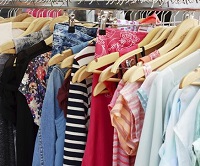 Though it might take over a year for the US economy to reach pre-COVID-19 levels, apparel sales may see a quicker recovery. This can be especially estimated from the high visitor turnouts at recently opened clothing stores. As per latest data from Placer.ai, in year-over-year data comparisons, apparel sales in the US during the week of May 11 fared slightly better with apparel sales declining 71.8 per cent as against the 87 per cent decline in week ending May 4.
During this period, apparel traffic in Florida improved the most. Traffic in this region improved from a decline of 87 percent year-over-year for the week of May 4 to a decline of just 55 percent for the week of May 11. A similar trend was noted in Georgia where traffic improved from a 75 per cent year-over-year decline for the week of May 4 to just 23 per cent decline a week later. A clear indication US retail economy is on recovery path. However, this revival is full of challenges, believes, Ethan Chernofsy, Marketing Vice President, Placer.ai
Financial concerns, rising inflation worry consumers
One of the challenges that the retail sector faces is financial uncertainty that consumers face today. As per Deloitte Global State of the Consumer Tracker, which polls 1,000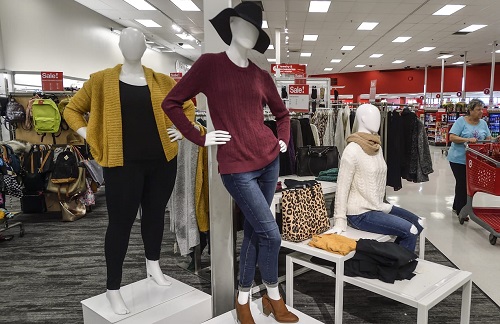 consumers in 15 countries, around 27 per cent consumers are anxious about making upcoming payments while 43 per cent are putting off large purchases. Around 37 per cent fear losing their jobs. According to the survey, the percentage of US consumers visiting stores also increased to 42 per cent in May as against 30 per cent in April. On the other hand, the number of online shoppers is gradually falling, particularly for apparel and electronics. The Deloitte survey reveals that while 82 per cent of Americans plan to “buy online, pickup in store” in the next four weeks, only 40 per cent plan to use this service for safety reasons, down from 48 per cent.
Though consumer confidence appears to have stabilized, they remain concerned about their financial prospects. Rising inflation rates continue to diminish their purchasing power and curtail spending. Beth Ann Bovino, Global US Chief Economist for credit ratings firm S&P, believes retail recovery in the US could stretch to 2021 and beyond and hopes businesses reopen and recall furloughed or laid-off employees by this period.
Two years to road to recovery
Politicians in the US continue to struggle in balancing public health and economic vigor. How long will it take for the economy to recover to r the level it was prior to the COVID-19 outbreak remains a topic of debate. Though analyst believe markets will eventually recover from today’s Great-Depression-esque unemployment levels, the economy to emerge out of this crisis will be different, believes David Rubenstein, Cofounder and Co-executive Chairman of private equity firm The Carlyle Group. He expects another stimulus bill or bailout from the American government next month.
Prior to the pandemic, America was expected to reelect President Trump later this year. However, now the country’s state of the economy will determine who will be the next leader. Whatever, the outcome of the election, the next elected government can’t afford to wait even for a month to restart economy. It will have to start from day one itself.
Luxury fashion to adopt a more socially sustainable structure post COVID-19
 The luxury fashion industry is in the middle of a transformation as fashion designers, executives and retailers are trying to reset the fashion calendar. Earlier this month, Belgian designer Dries Van Noten and others urged designers to not only adjust the seasonality and flow of their women’s wear and menswear collections but also limit discounts at the end of the season.
They also urged designers to reduce the number of clothes being manufactured, engage in less travel, make use of digital showrooms in addition to personal creative interactions, and review and adapt fashion shows.
Addressing overproduction with periodic drops of collections
Calls for change continue to gain steam within the industry though it is not clear what their outcomes might be. On one hand, luxury and high fashion brands may reduce the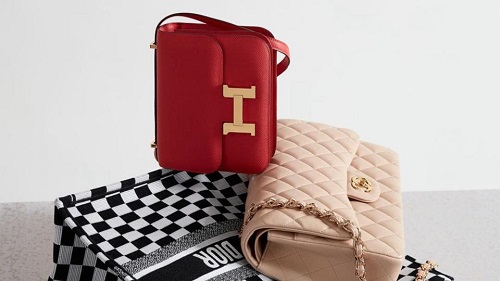
collection size and simplify their business models to meet heightened consumer demands for a more sustainable future. On the other hand, they may opt for smaller drops of products on a more regular basis.
Adopting the first solution may enable them to replace their usual trend-specific creations in favor of fewer offerings. And the second solution may enable them to sell in relatively mass capacity with reduced emphasis on wasteful elements such as excessive runway shows. Though there are greater chance of brands opting for the first solution as it enables them to address the problem of overproduction of garments and accessories that plagues the fashion industry and results in discounting and/or product destruction, particularly as the latter becomes increasingly problematic for brands both socially and legally.
Opting for a more sustainable structure
At the same time, luxe brands may not completely abandon the regular drop model as it helps them to boost revenues and meet shareholder expectations. Brands like LVMH and Kering may instead, adopt a more environmentally and socially sustainable structure and align the newly-released initiatives with customers’ needs. How much of these efforts to address the inherently wasteful and unsustainable elements of the fashion industry play out, needs to be seen.











