


FW
China Chemical Fibers Association reignites Green Fibre programme
 China Chemical Fibers Association (CCFA) recently organized an online fashion show with the leaf motif of “Green Life that Starts with Fibers”, reigniting a sustained endeavor, making a clear stewardship with GF logo (Green Fibers), as the promotional campaign from fibers to fashion.
GF logo is a certified trademark registered and approved by State Administration of Market Regulation, whereas CCFA is the proprietor of the GF trademark that stands for the circular life in green fashion from birth to rebirth. These include the raw materials of biomass origin or renewables and recyclables, low-carbon and environmentally friendly process, the end-products pollution-free or reusable back to streamline. Green fibers are defined in three categories namely bio-based, recycled and dope dyeing manmade fibers.
Ever since China Chemical Fibers Association (CCFA) launched its green fiber program several years ago, about 30 chemical fiber companies have been qualified for the certificate of the green fiber logo and the green fiber-rich products. The online event streamed a live broadcast featuring CCFA signing ceremony with local textile and apparel associations, also some downstream brand owners were present to sign cooperation agreements. Mr. Liu Jianguo, president of Shandong Provincial Textile and Apparel Association, Mr. Wang Qiming, president of Fujian Provincial Textile Industry Association, also Chairman of Quanzhou Haitian Material Technology Co.Ltd., Mr. Wang Yuping, president of Shandong Yuyue Hometextile Co. Ltd., and Mr. Fu Gang, Managing Director of Dezhou Hengfeng Group, respectively representing their own organizations, signed agreements with China Chemical Fibers Association in the conviction that they would jointly work together to promote the green fiber certification program for a green fiber supply chain, a new contribution to the textile industry.
Mr. Li Deli, deputy engineer-in-chief of CCFA , was also on line to share with the viewers about the accreditation and certification work for the green fiber and its products pertaining to the application for GF logo, and he reiterated that only by ensuring a strict accreditation and assessment in the comprehensive factors, like production process, safety and environmental protection, product quality et., can the fibers and the relevant manufactured products be authenticated of being really green.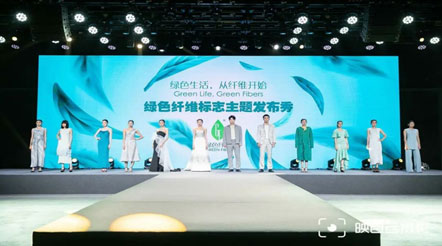
The manmade fiber producers, if they apply for the GF logo, must be eligible for the terms and conditions stipulated in (Regulations on the Application for Green Fiber Logo-2018 Edition), and the applicants for GF products certification must comply with CCFA’s (Technological Requirements for Green Fiber Assessment) that sets forth a series of musts in raw materials purchase, fiber production process, product safety and environmental protection etc.. whoever applies for the green logo, either from manmade fiber producers or from the manmade fiber end-users, must know that the likely impact on human health from heavy metal extractables, chlorophenol, cholorinated benzenes and toluenes, is nothing short of primary consideration in the application and accreditation procedure.
China Chemical Fibers Association (CCFA) issued (Rules on Certification of Green Fiber Products-2020) to guide the applicants from downstream manufacturers for getting themselves through the application procedure, provided that they use the certified green fibers as raw materials for their own products all the way down the industrial supply chain, meaning that these products can be yarn, fabrics, apparel, home-textiles and tech-textiles etc.. It is important to be advised that the green fibers must be rich in these downstream products with different level as is set to be over 40% in weight inside a product if the bio-based fiber is taken in, and over 50% in weight if the dope-dyed fiber or recycled fiber is used in the product composition.
 Besides that, Mr. Li Deli emphatically introduced the credible traceability system closely tied to the GF product certification flow, requesting that either green fiber producers or green fiber products manufacturers should keep the flow details in databank, every nook and cranny of the process flow in logbook, saying, raw material input, product output, transportation documents, production and logistic records, inventory in-and-out bills and list , so as to trace the green fiber footprints to determine the green fiber level inside a product.
CCFA launched the green fiber program with the mission and aspiration to start with greenness from A to Z in the industrial value chain in a green origin- core -product configuration. With this, consumers can really enjoy a comfortable experience characterizing “ green life starting with fibers”. For this goal, CCFA welcomes more companies to join in the teamwork for GF certification in collaboration to facilitate the green integration of the whole textile streamline.
Contributed by Mr. ZHAO Hong
He is working for CHINA TEXTILE magazine as Editor-in-Chief in addition to being involved in a plethora of activities for the textile industry. He has worked for the Engineering Institute of Ministry of Textile Industry, and for China National Textile Council and continues to serve the industry in the capacity of Deputy Director of China Textile International Exchange Centre, V. President of China Knitting Industry Association, V. President of China Textile Magazine and its Editor-in-Chief for the English Version, Deputy Director of News Centre of China National Textile and Apparel Council (CNTAC), Deputy Director of International Trade Office, CNTAC, Deputy Director of China Textile Economic Research Centre. He was also elected once ACT Chair of Private Sector Consulting Committee of International Textile and Clothing Bureau (ITCB)
C2M model to redefine global luxury fashion market in future
 As they say ‘Change is the only constant,’ the traditional authoritative system of brand dictating consumers’ purchases by continually refreshing designs is slowly giving way to a new concept, the ‘Consumer to Manufacturer’ (C2M) model. With two variations at the moment, the C2M model is likely to be the new driver of luxury re-commerce growth across the world. As data from Chinese research company iResearch notes, China recorded 420 million C2M-related bookings and sales during its largest shopping festival in 2019. Currently worth over $2.5 billion, the C2M market in China is likely to reach $6 billion by 2022 as it enables brands to better address issues of inventory, supply chain efficiency, and demand.
Applications and uses of C2M
Different retail platforms in China are developing the C2M model. Retail platform Pinduoduo explores the model by allowing users to tap into the power of social media to create products that reach manufac turers’ required levels. Similarly, JD.com has tested this model since 2017. The company also launched fashion technology research institute in 2018 to explore the application of advanced technologies like AI, VR/AR, big data, and smart supply chains. Meanwhile Alibaba creates C2M products through a new app called ‘Special Offers’. By launching this app on TaoBao, the company aims to help 1,000 industries build ‘super-factories’ over the next three years. The app is being used by manufacturing brands like Anta and Bosideng Group to open online stores.
Besides launching new products, the C2M model also helps brands to integrate their in-store activities and customize online products with the help of new technologies. Eyewear company 3DNA uses this model to offer customers preprogrammed styles in a variety of materials to create bespoke eyewear. According to the brand’s founder, Dennis G Zelazowski, C2M adds value to the online retail experience by creating a highly sentimental limited-edition of their products. The technology lets them deliver their white-glove service digitally after the scanning experience.
A boon for luxury fashion companies
Though the C2M model can help luxury brands address consumer demand, improve supply chain efficiency and tighten inventories, they need to be agile enough to respond to collected data. Also, this model might make it difficult for brands to maintain consistency in the quality of their products. Another challenge lies with supply-chain ownership because few factories can produce this model directly. However, e-commerce platforms are helping to ease this situation down the line
Currently, the C2M model is being used to make low-price goods in China. The model works in China because of its vast size and the nature of its e-commerce market. However, luxury companies in other countries can also use this model to identify consumer demands and create collections accordingly.
ZDHC launches first textile and apparel project in Africa
ZDHC has launched its first project in Africa to strengthen the capacity of Ethiopia’s textile and apparel industry. The two-and-half-year project will be conducted in collaboration with Bahir Dar University. According to the project, ZDHC will incorporate chemical management in the university’s undergraduate curriculum and establish training and consultant infrastructures. The goal is to make Ethiopia’s textile and apparel sectors more sustainable and to protect workers, the environment and local communities.
As a part of a private-public partnership between the German government and Dow Europe GmbH, the ZDHC Foundation will lend its expertise to help ensure a safer and eco-friendlier textile and apparel industry in the country, which has a small but growing manufacturing base.
This project is a milestone for ZDHC as it complements its vision of widespread implementation of sustainable chemistry, driving innovations and environmental best practices in the textile, apparel, leather and footwear value chains.
The project will be implemented by GIZ GmbH, on behalf of the German Federal Ministry of Economic Corporation and Development. GIZ is a service provider in the field of sustainable development with expertise in the textile sector in general and chemical management.
Online business helps Inditex limit COVID-19 shutdown damage
While the company reported it’s first-ever loss in its quarterly earnings, Inditex managed to limit the damage from shutdown of its operations by relying on its online business. A relative latecomer to the Internet, Inditex launched its first online apparel business in 2010 and expanded the digital business with a big bet on technology that ties into its unique logistics and distribution system.
The system has two key pillars: heavy rotation of products that move quickly from commissioning to sale in stores; and proximity of production, with the bulk of garments made in Spain, Portugal, Morocco and Turkey. Almost all clothes are sent to a handful of centres in Spain and re-distributed from there to outlets worldwide.
During the pandemic, the online business had an opportunity to shine as in most major countries where Inditex operates in Europe e-commerce was allowed to continue operating even as brick-and-mortar temporarily closed down. This occurred in Spain, Inditex’s largest market, where the government declared a national lockdown March 14, causing retail sales to drop by a record 14 percent that month.
The company remains in good shape, thanks to its strong balance sheet boasting €8 billion ($9.04 billion) of cash and cash equivalents, the integrated online business and low inventory compared with rivals.
Top brands investigate mass sacking of union workers
Major brands including fashion label Zara are investigating reports of mass sackings of union workers in their supply chains, amid fears from labor advocates that coronavirus has fuelled ‘union-busting’ at factories across Southeast Asia. As the pandemic batters global economy, numerous Western retailers have cancelled orders or demanded discounts from suppliers in countries such as Cambodia, Myanmar and Thailand, leading to many workers going without pay or being sacked.
Unions and activists in the region said factory bosses were targeting and firing union members while keeping on non-unionised workers, and feared that the outbreak could spur a rollback of rights on issues from decent pay to safe workplaces.
Fashion brands Bestseller, Mango, Primark and Zara have launched probes into reports of union-busting in Myanmar. Inditex-owned Zara confirmed it was looking into the issue, while Bestseller and Britain-based Primark said they were also investigating but that the sackings were in line with Myanmar’s labor laws.
Leverage the advantages of intelligent networking, urges Mauritian minister
Mauritian SME and Cooperative Minster Soomilduth Bholah has urged apparel exporters to revamp the textile and apparel industry in the country by leveraging the advantages of intelligent networking so that the sector moves towards Industry 4.0. He also urged exporters to make robotics and 3-D printing must an integral part of the industry.
Bholah said this during a meeting with prominent exporters from the sector at the SME Mauritius Coromandel branch office. The meeting aimed to adopt a collective and coordinated approach engaging all stakeholders to respond to the resulting threats and to identify new opportunities to reorient the sector for sustained development following the outbreak of the COVID-19 pandemic.
Mauritius exports textiles and apparels worth Rs 22 billion per year. The sector, which employs around 31,000 people, is now on its knees because of the pandemic. However, some manufacturers are still receiving orders from the main markets—South Africa, the United States and the United Kingdom—despite the lack of visibility of the sector for the forthcoming months.
Bangladesh: North American RMG platform Nirapon restructures activities
‘Nirapon’, a platform of North America-based apparel brands and retailers, is restructuring its activities to provide increased technical support with three main areas of focus: safety monitoring, training and helpline. Safety monitoring activities of the organization will include protocols that are part of the day-to-day factory operations, including structural, electrical, and fire safety, as well as the ongoing training of workers on fire and building safety.
Incorporating the feedback from numerous factories, the fire safety training will shift from Local Training Providers (LTPs) to a local, trusted and competent organization. They will work to streamline training and explore online options without compromising effectiveness. The “Amader Kotha” helpline, a model for workers’ reporting – not only in Bangladesh but around the world, will continue to operate and provide workers with a safe and anonymous outlet for reporting issues.
Moushumi Khan, CEO, Nirapon since its inception, will be departing the entity, and a new Chief Safety Officer (CSO) will be named at a later date, reflecting its more technical nature. The entity was launched by 21 global apparel brands along with more than a dozen of former Alliance-signatory members, including Gap, Walmart, JC Penny and VF in March last year
India’s textile exports decline 80 per cent in April: IMF
As per International Monetary Fund, due to the lockdown in India and reduced buying by the world’s largest textile importers, such as the European Union and the United States, textile exports by the country have declined 80-90 per cent in April. Overall, these textile exports, which contribute about 25 per cent of total demand, are expected to decline by 30-40 per cent this fiscal owing to the global economic slowdown.
Domestic demand for RMG is also likely to decline on account of lower income levels, postponement of weddings and personal events, and reduced festive activities this fiscal year. Small and medium enterprises (SMEs) command a 30-40 per cent share in the total readymade garment market of about Rs 4.8 trillion. Similarly, demand for the home furnishings segment is expected to decline. However, the segment is expected to recover sooner than garments, on account of the upcoming monsoon and winter seasons.
In home furnishings, the demand for products such as bedsheets, blankets, and towels will be relatively better, compared with discretionary items such as curtains and home decor. In addition, historically better financials (operating margins, gearing and interest coverage ratios) of home furnishing companies, as against other segments of the textile value chain, will also provide relief in these tough times.
Max Fashions to shut 17 stores in New Zealand
Women’s wear fashion brand Max Fashions plans to close 17 stores in New Zealand as it failed to generate any revenue during the COVID-19 lockdown. Max Fashions currently has more than 40 outlets in the country. The clothing chain owned by Chris Grieve, Gary Hitchcock and James Whiting is restructuring and seeking creditor's compromise so it can keep trading.
The company has not paid rent since the end of March and negotiations with landlords have also failed as offers varied significantly. The company is requesting its landlords for a discount in rent in order to avoid its business from being liquidated.
The proposal that Max has sent to landlords says the brand has incurred considerable losses due to the lockdown and it plans to terminate 17 leases by the end of next month. Its shareholders don't have the funds to sustain the company through COVID-19 and the company therefore requests its landlords to take 30 to 40 cut in rents for the 2021 financial year.
Under the deal terms, landlords for most of Max's remaining outlets will receive none of April's rent, and 10 per cent of May's rent, as well as May's turnover. From June this year, the clothing company will pay varying rents based on the compromise, until the end of the lease. The payments will be made to landlords will be calculated as proportion of the base rent and a percentage of sales. For some longer leases, the company has agreed to pay a minimum amount from June 2022.
Li & Fung lays off employees across India, China offices
The Hong Kong-based sourcing pioneer Li & Fung has asked over 120 employees from its India office to leave at just one month. As per the dismissal letter, employees will get a notice period of less than 4 weeks (27 days to be precise).
The company has also decided to lay off 70 per cent of its employees in Hong Kong. Over the last few weeks, the sourcing giant has been sending dismissal notices to its procurement staff based in Hong Kong. Besides, it also plans to lay off employees from its Shenzhen and Shanghai offices too.
The decision is being taken to help to company battle the crisis created out of the deadly pandemic that has gripped the whole world including India. With nearly 17,000 employees worldwide, the company has more than 250 offices in 40 markets and works with more than 15,000 suppliers across the world.











