


FW
Bangladesh denies access to Indian ethnicwear exports
BKMEA has denied access to Indian ethnicwear exports as many local manufacturers also make such products in the country. Indian Textile Ministry had proposed to create a special provision for export of ethnicwear products to Bangladesh who has refused to provide it an access to its market
India and Bangladesh proposed an MoU to enhance trade and economic relations in a balanced manner by expanding business and cooperation in the sphere of textiles, including handlooms, silk, jute, cotton, skills training institutions and clothing and fashion industries.
Reacting to India’s proposal, Mohammad Hatem, Vice-President, BKMEA, underlined the draft memorandum was being examined by them considering the trade benefits for both the countries while adding that technical support from India would benefit the Bangladesh textile sector.
50th IHGF Delhi Fair to be held virtually
The 50th edition of the IHGF Delhi Fair will be held as a virtual trade show and offer sourcing and product solutions for buyers around the world. The event will take place from November 4 to 9 and cover 25 virtual halls featuring a dozen product segments, including residential furniture. An estimated 1,500 exhibitors will showcase home textiles, bath and bath accessories, carpets and rugs, furniture, lighting, accessories, housewares, garden and outdoor furnishings and more.
To be organized by the Export Promotion Council for Handicrafts India, the show will feature themed pavilions and live demonstrations highlighting Indian handicrafts. A separate trend area will feature trend and fashion forecasts and color analysis for the upcoming year. In addition, the organizers have planned a number of webinars and panel discussions during the event.
The show will feature a mix of products produced through sustainable manufacturing processes that meet post COVID-19 consumer requirements.
ATDC, AEPC to participate in Word Bank project
As oer A Sakthivel, Chairman, AEPC both ATDC & AEPC will participate in the World Bank’s Project ‘Strive that would begin in Tamil Nadu. Sakthivel was addressing the 17th annual general meeting of ATDC held virtually. Members from Usha Fabs, Jyoti Apparels, Monica Garments, Cheer Sagar, Goodwill Impex, Neetee Clothing, Trend Setters Intl, Madan Trading, SNQS, PS Exports, KG Exports, Creative Garments and Twenty Second Miles attended the meeting.
The Delhi government has selected ATDC through the Delhi Scheduled Caste/ Scheduled Tribe/ Other Backward Classes/Minorities and Handicapped Finance and Development Corporation (DSFDC) for training 1,000 candidates in program in apparel manufacture and technology and fashion design and technology, said Saktivel.
The National Skill Development Corporation (NSDC) has renewed ATDC’s membership as a non-funded partner for the next three years and as of March this year, ATDC had uploaded over 68,000 candidates through the NSDC portal, becoming one of the biggest vocational training providers in the country.
ATDC is also making efforts to rehabilitate migrant labourers and in Uttar Pradesh, with over 200 such people being trained at ATDC Kanpur, AEPC said in a press release.
Luxury bears the brunt of COVID-19 as brands abandon merger deals
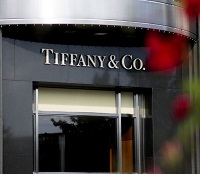 The abandoned deal between LVMH and Tiffany is likely to have wider implications on the luxury market, suggest reports. Estimated to be worth over $16 billion, the deal would have represented the largest ever global investment in the luxury sector. It would have enabled Tiffany to make long-term investments at stores, improve brand image, explore new product categories and utilize LVMH’s expertise to expand in the Chinese market. On the other hand, the deal would have helped LVHM acquire a long-coveted brand in the form of Tiffany which would have helped them to strengthen their positioning in the luxury market.
However, on September 9, LVMH expressed its inability to go through with the deal on account of tariff threats from the US and Tiffany’s weak performance due to the global COVID-19 pandemic. In turn, Tiffany accused LVMH was seeking to acquire the jeweler at a lower price than was previously agreed. This ultimately ended up souring relations between the two.
New opportunities for partnerships and acquisitions
The LVMH and Tiffany deal is just one of a series of abandoned transactions in the midst of the a global pandemic. In May, L Brands exited a $525 million deal with private equity firm Sycamore Partners that would have given Sycamore a majority stake in Victoria’s Secret. Neil Saunders, Managing Director, GlobalData Retail believes the pandemic has changed the fundamentals of many businesses forcing them to explore new ways to reduce costs.
The abandonment of LVMH-Tiffany deal is likely to be more disruptive than destructive for either company, believes Saunders. Though it would not have many implications for LVMH, Tiffany might lose an opportunity to be a part of a larger group. There are also likely to be more consolidations as the market offers new opportunities for partnerships and acquisitions. However, there will be no retailer on retailer deals as most of investment will come from outside the retail world, investors and private equity and property companies.
Smaller luxury players to suffer
Though larger brands and companies may be able to tide over the uncertainties of global COVID-19 pandemic, smaller brands may suffer. These brands would neither be able to produce major shows nor market themselves globally.
The entire luxury market is in state of flux as demand is fluctuating, performances of European and American companies are varying and external factors including tariffs are influencing it deeply, says Saunders. He does not expect the market to stabilize until 2021 which could be detrimental for all big and small players. The smaller players would be particularly vulnerable as they do not have the financial robustness of some of the larger groups.
UCMTF selects Hugues Schellenberg as new president
The French Textile Equipment manufacturers’ Association (UCMTF), has selected Hugues Schellenberg as the new president, following the retirement of Bruno Ameline who has chaired the association since 2004. UCMTF comprises around 30 members companies. Some of them are world leaders in their markets while others are small and medium size companies.
Schellenberg is the CEO of Dollfus-Muller of Heimsbrunn in the French province of Alsace. An engineer, Schellenberg got an MBA from Montpellier University in Southern France. As president of UCMTF, Schellenberg will represent the French association on the board of Cematex, the owner of ITMAs.
As CEO of Dollfus-Muller, Schellenberg spends at least half of his time with customers that he visits worldwide. This is how he keeps a firsthand contact and a deep connection with the needs of the market in order to both manage his company on a day to day basis and design its long term strategy.
In addition to UCMTF, Schellenberg is very active in many national, regional and national associations, including the chairmanship of a trade association to improve the employment of underprivileged workers.
Nepal yarn industry witnesses surge in operations
Nepal’s yarn industry has witnessed a surge in business operations for the local handloom producers by up to 60 percent. Producers have attributed the business bloom to the increasing orders coming from India after the phased reopening and resumption of economic activities post coronavirus lockdown.
The Government of India, under the India-Nepal Foreign Treaty of Trade Agreement imports woven handicrafts and home textile products essential to Nepal’s Textile And Garment Cloth Industries. Nepal’s GDP and livelihood of the small scale textile weaving businesses largely depend on these handicrafts exports. Nepali proprietor Bishnu Neupane, Jagdamba Spinning informed his company has been receiving high demands and orders from India.
Indian states of Punjab and Assam, and Siliguri, Guhawati, Gorakhpur, and New Delhi have been among the largest importers of Nepal’s yarn industry products for over several years. These states place bulk orders that comprise nearly 60 percent of Nepal’s total yarn manufactured goods export.
CCI eyes Bangladesh export contract
In a first-of-its-kind deal by India for any country, Cotton Corporation of India (CCI) is eyeing an important contract that will allow it to directly export around 10 to 15 lakh bales (each bale weighing 170 kg) of cotton to Bangladesh. This would allow the government to directly export cotton to another country.
Bangladesh is an important market for Indian cotton, with the country importing around 25 to 30 lakh bales per year. Private traders corner exports; this would be the first time CCI is trying to enter the export market directly. PK Agarwal, Chairperson-cum-Managing Director CCI, said the contracts were in the final stages with governments of both countries actively negotiating the deals.
Last year, CCI had been able to offload around 58 lakh bales of the inventory it held. Around 20 per cent of the stocks was procured by MNCs who might have exported it further. Pradeep Jain, Founder President , Khandesh Press/Gin Owners and Traders Development Association, said the next cotton season would start with a carryover stock of 100 lakh bales. Estimates by different sources have pegged India’s production to be around 400 lakh bales for the new season.
The increased production notwithstanding, the lockdown-induced slowdown in the sector will make it near impossible the private traders to pay the government-declared MSP (minimum support price) to farmers, Jain said.
For this season, the government-declared MSP for medium staple kapas (raw unginned cotton) is Rs 5,515 per quintal, while that of long staple is Rs 5,825. Market sources feel the average traded price of the lint crop can be as low as Rs 4,500 and might rise to around Rs 5,100 in the season. The role of CCI in such a scenario assumes importance as the government body procures FAQ cotton at MSP.
India’s cotton exports to rise by 30% in 2020-21
Trade sources predict India’s cotton exports will rise 30 per cent from 50 lakh bales in 2019-20 to about 60-65 lakh bales in 2020-21. The International Cotton Advisory Committee estimates global cotton consumption will rise to about 24.31 million tons in 2020-21 from 22.67 million tons in 2019-20. US’ ban on purchase of cotton products from the Xinjiang may unlock opportunities for India.
Vinay Kotak, Director, Kotak Commodities, says, next year, India’s cotton exports will reach 60-65 bales. Exports may depend on multiple factors including the government policy, India-China trade relations and global tensions. The main driver for these exports demand will be the price. Cotton Association of India (CAI) estimates, India’s exports for 2019-20 at 50 lakh bales, of which about 47 lakh bales have already been shipped till August 31, while the shipments may rise this month before the cotton marketing year ends on September 30. India had exported 42 lakh bales of the fibre in 2018-19.
The association’s opening stock for 2020-21 will be about 100-105 lakh bales. But most of this or about 80-85 lakh bales will be with government agencies, and only the rest with mills.
Spinexpo Shanghai held without the presence of organizing team
Spinexpo Shanghai was held at the World Expo Convention & Exhibition Center from September 1 to 3, 2020 without the presence of the organizing team, who were unable to come to China due to COVID-19
Spinexpo was the only exhibition specializing in spinning and knitting in 2020, both in China and elsewhere in the world. Foreign brands from other countries and regions in Asia such as Japan, Korea, Taiwan and Hong Kong were not present, nor were brands from Europe, the United States and other countries outside China.
To remedy this situation, the organizer adopted two working methods. On one hand, its team based in China was able to contact all the representative offices of the brands that normally visit the exhibition, thanks to its database it has been building up for over 20 years; on the other hand, it is organizing two post-exhibition showrooms in Paris (France) and Hong Kong, where exhibitors with agents in Europe or Hong Kong have the chance to present their collections to buyers who all wish to have the opportunity to see the real products as well as the color and product trends of the season.
China registers high demand for cotton yarns
Cotton textile firms in Jiangsu, Shangdong and Anhui have reported a massive decline in inventories of high-count pure cotton yarns and polyester-cotton blended yarns in China due to high demand for last couple of weeks, says Apparel Resources. Demand for ring spinning and OE yarns of C40S (or below) has surged in the terminal consumer market and most of the spinning mills have accelerated their destocking for these products.
According to a medium-scale cotton spinning factory based in Jiangsu, there have been two major trends for mainstream yarn products since August: increase in the output of carded 40S and combed cotton yarns above 40S, while reducing cotton yarns with counts below C32S and increase in the production capacity of T/C 65/35 45S, T/C 60/40 45S and other polyester-cotton blended yarns including T/C 35/65 and other inverse proportion polyester-cotton yarns
However, the situation might not remain intact in long run seeing the USA’s ban of importing cotton from Xinjiang, China. The only satisfactory development for the Chinese cotton mills is that the COVID-19 spread is under full control which has made it possible to get production back on track.











