


FW
H&M to close 250 stores worldwide
H&M plans to close 250 stores next year as the coronavirus crisis drives more shoppers online. The brand has shut more stores and opened fewer over the past couple of years as it adapts to the online shift that is driving more competition. The company’s sales continued to recover in September from the impact of the virus.
Its pretax profit declined to 2.37 billion crowns ($265.6 million) in its fiscal third quarter, from a year-earlier 5.01 billion. Analysts polled by Refinitiv had on average seen a 2.03 billion crown profit.
In the March-May quarter, H&M’s sales halves while they declined by 5 per cent in September after falling by 19 per cent in the three months through August.
Of more than 5,000 of the brand’s stores worldwide, 3 per cent remain temporarily shut against around 80 per cent at the height of lockdowns. The brand’s inventories remained unchanged from a year earlier. Markdowns increased half a percentage point, and H&M predicts they would grow by 1-1.5 per cent in the current quarter.
Government to announce National Textile Policy
At the annual general meeting of CITI, Ravi Capoor, Textile Secretary, revealed that the government plans to soon announce the National Textile Policy that would unleash India’s textile potential, and make it globally competitive, says an Economic Times report.
Capoor informed the government is also working on a Focus Product Scheme, wherein it has analyzed the export data of top-40 manmade fibre (MMF) products and found that India has a miniscule share of just 0.7 per cent in the total global market of $150 billion.
Similarly, in the top-10 technical textile lines, India just has a share of 0.6 per cent out of the total global market size of $100 billion. He further said, a study done by the government has revealed that by 2030, the share of MMF-based textile and apparel products will reach 80 per cent. The share of cotton will decline to 20 per cent as the global demand for MMF based products is more.
Fashion for Good initiates textile project focusing on cellulosic fibers
As per a Textile Focus report, Fashion for Good has initiated ‘Full Circle Textiles Project: Scaling Innovations in Cellulosic Recycling’ a first-of-its-kind consortium project. It focuses on cellulosic fibers and aims to validate and eventually scale promising technologies in chemical recycling from a select group of innovators to tackle these issues. Leading global organizations Laudes Foundation, Birla Cellulose, Kering, PVH Corp and Target have joined the project to explore the disruptive solutions and create new fibers and garments from used clothing and ultimately drive industry-wide adoption.
The project’s aims is to investigate economically viable and scalable solutions for cellulosic chemical recycling to enable a closed loop system converting textile waste – of cotton and cotton-blend materials, to produce new man-made cellulosic fibers.
Over 18-month period, project partners will collaborate with innovators, Evrnu, Infinited Fiber Company, Phoenxt, Renewcell and Tyton BioSciences, to validate the potential of their technologies in this still nascent market. The recycled content produced by four of these innovators will be converted at Birla Cellulose’s state of the art pilot plants to produce high quality cellulosic fibers.
Bangladesh apparel makers expand PPE capacity
Many apparel makers in Bangladesh have expanded their PPE production capacity while others are investing afresh to gain the market share, sources said. Pran-RFL Group has invested $18 million for producing PPEs at the Adamjee EPZ (Export Processing Zone). Similarly Banga Plastic Internationa, a sister concern of the group plans to make 850 metric tons of PPEs, including surgical face masks, KN 95 masks, N 95 masks, surgical hand gloves, shoe cover, mop cap, medical gown, sanitary napkin, diaper and hand sanitizers, a year. The company signed a MoU with the Bangladesh Export Processing Zones Authority (BEPZA) on September 16. It will also produce toys and create employment for 1,900 people.
Likewise, Beximco supplied 6.5 million pieces of PPEs to US clothing giant Hanes within less than two months' time. 'Mapped in Bangladesh', a digital mapping technology that conducted a rapid survey on 3,342 export-oriented readymade garments (RMG) factories in Dhaka, Gazipur, Narayanganj and Chattogram, found that around 143 factories have been producing face masks and/or PPEs along with their regular products while 69 factories were producing PPEs for the global market and 66 factories for the domestic market.
Last month, Snowtex completed a work order by supplying 2.6 million face masks to a French buyer. Currently, the company is producing face masks only for the local market under the brand name of Sara. Rubana Haq, President, BGMEA says, Bangladesh has a great opportunity to diversify into PPEs as these exports have grown to $501 million in just about five years.
However, this would require capacity building in the industry together with the policy supports, Huq said, adding that Bangladesh needs special preparation to cater to this market, particularly it needs to develop special skill sets, technical knowhow, and make the right investments in backward linkages.
H&M returns to profitability as sales decline narrows in September
Though H&M reported lower sales during the nine-month from December 2019-August 2020 loss, it returned to profitability in September as sales recovered in many of its markets. The brand’s sales decline narrowed to 5 per cent year-on-year in September. Currently 166 of its stores are closed, although a large number of stores have opened with local restrictions and limited opening hours.
From June-August, net sales of the Swedish fashion retail giant fell by 16 per cent in local currencies to SEK50.87 billion. Its gross profit for the quarter dropped to SEK24.85 billion from SEK31.81 billion in the prior year’s Q3it. This corresponds to a gross margin of 48.9 per cent.
Profit after financial items was SEK 2.36 billion. Excluding IFRS 16, profit after financial items plunged to SEK2.26 billion from SEK5 billion. The brand’s sales during the nine-month period were significantly affected by the COVID-19 situation. Its net sales fell to SEK134.48 billion from SEK171 billion a year ago as Q2 included the height of the pandemic.
The company made a loss of SEK1.613 billion during the nine months and a net loss of SEK1.24 billion. Excluding IFRS 16, its loss was SEK1.847 billion, much worse that the profit of SEK11.98 billion a year earlier.
The firm is on a recovery trajectory even though it’s far from business-as-usual as fashion sales remain challenged globally.
ACIMIT launches project to define digital certification
Association of Italian Textile Machinery Manufacturers (ACIMIT) has launched a project to define a form of digital certification that can be used by Italian manufacturers to certify the ease of integration of their machinery into the production systems of their textile customers.
The project elaborates a shared reference vocabulary for Italian textile machinery manufacturers, which has led to the creation of a conceptual model of machine and process production management data useful for textile manufacturers for identifying and calculating related productive KPIs (Key Performance Indicators).
This model was developed by the Manufacturing Group of the School of Management of Politecnico di Milano, under the scientific guidance of prof. Marco Taisch, an international expert on digital transformation processes in the manufacturing sector, and within the bounds of the Industry 4.0 paradigm, supported by researcher Elisa Negri.
The project aims to build customer loyalty through a common vision of machine data and an easier and more uniform integration of information derived from the machinery of different manufacturers in the operating systems of client companies. It will create the ACIMIT Digital Label for member companies applying this data model.
This digital label will provide customers with a continuous flow of information and allow them to develop additional services and new business models for greater competitiveness within the industry.
African fashion experts take the local route to sustainability
 To tide over current crisis and ensure sustainability of operations, African fashion experts are tapping into local and traditional solutions, says a Quartz Africa report One of Africa’s most prestigious fashion entities, South African Fashion Week has planned its next edition from October 22 to 24 as non-traditional, environmentally-friendly digital experience at the Mall of Africa in Midrand, Johannesburg. The show will make minimum use of lights and sound systems. It will also have smaller teams and a minimum number of models to help reduce its carbon footprint. Likewise Glitz Africa Fashion Week will also be held in October in Accra, Ghana.
Using recyclable materials
Besides event organizers, online fashion entrepreneurs are also going the sustainable way. UK-based online African fashion retailer Jendaya has banned plastic use from its collection, and is opting for a new recyclable, reusable cardboard-like packaging material. Banker-turned fashion entrepreneur. Ayotunde Rufai is encouraging African designers to produce collections in smaller batches. According to Rufai, African designers are more resourceful in their fabric usage. They ensure minimum fabric wastage by making clothes only on order. The made-to-order business model helps African designers reduce surplus stock and is more economical for smaller companies, says Amira Rasool, Founder, The Folklore.
Insufficient capacity to meet domestic demand
Another way African brands and retailers can practice sustainability is by prioritizing local production and sourcing. For this, countries need to have an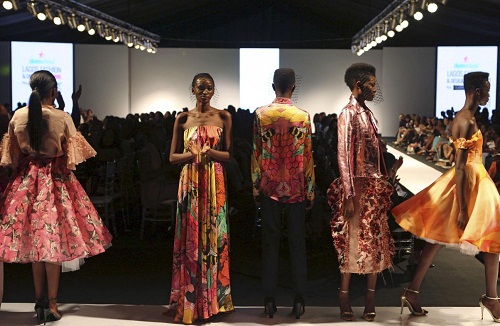 ecosystem that is conducive to local business. However, many African fashion industries do not have required capacity to meet domestic demand for apparels and accessories.
This was not the case in 1945 when African countries had large textile mills. Nigeria had over 180 textile mills while Kenya had 75 textile and clothing establishments. The African textile sector was the second largest employer in 1984 with 52 operating mills for fabric and yarn production.
African governments supported these textiles and knitting mills with protectionist trade policies. However, many of these collapsed in the 1980s and 90s as local economies opened up to foreign trade and cheap Asian garments and secondhand clothes from the West flooded African markets.
Emphasis on local production
Currently, an ethical fashion revolution is weeping across Africa as labels like Nehanda & Co in Zimbabwe, Naked Ape in South Africa, Nigeria’s Nkwo and Awa Meité in Mali are promoting local production, made-to-order models and high-quality blends of natural materials.
The Ethiopian government has set an ambitious industrial agenda to position the country as a net exporter of textiles and garments. Similarly, the Nairobi-based Ethical Fashion Initiative is running an accelerator mentorship program for sustainable African brands while Nigerian-based shoe and accessories brand, Shekudo, incorporates traditional textile technologies to create base fabrics for its modern aesthetic of simple silhouettes and funky colors. Around 98 per cent of the brand’s products are made locally which helps it achieve financial stability.
Skill development in focus as Bangladesh RMG units launch training program
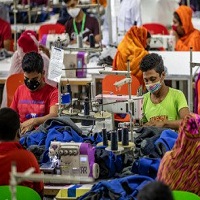 Despite being one of the top garment manufacturers in the world, Bangladesh has been suffering from low labor productivity for the last few years.
Lack of training lowers productivity
Both government and non-government organizations have introduced labor-training initiatives in the country. However, these have been grossly insufficient. Data from 2020 Asian Productivity Organizations show, the average productivity of garment workers in Bangladesh is lower than all competing countries except Cambodia. Its per-worker annual productivity is $10,400 while that of Vietnam is $12,700, India $15,800, and China $23,800. This is mainly attributed to lack of proper training, low wages, unhealthy living conditions, and a lack of proper working environment for women workers, says a report by the Business Standard.
Diversification to boost prices
Low labor productivity further results in low prices commanded by garments in the international market. Bangladesh also risks losing duty-free export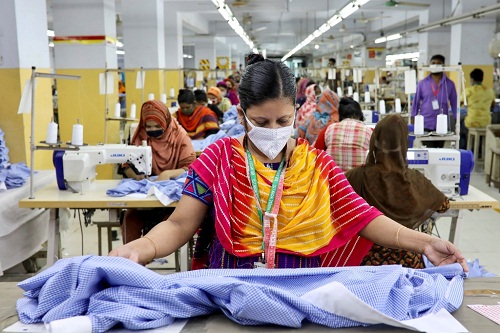 status in many countries after moving to being a developing country in 2026. It also suffers from the changing trends in traditional working styles. To survive, Bangladesh needs to diversify project offerings besides increasing productivity, say experts. Failure to achieve this may result in a negative impact on the industry, says Professor Mustafizur Rahman, Distinguished Fellow, Centre for Policy Dialogue (CPD)
Insufficient government skills programs
Government officials and sector insiders have initiated many plans to address this issue. However, they have done very little groundwork on them. Nazma Akter, Labour Leader and Executive Director, Awaj Foundation believes, the training provided to Bangladesh workers as per the initiatives launched by the government or donors is not sufficient. Workers’ productivity also suffers due to lack of nutritious food which they cannot afford due to low wages, she adds Kalpana Akter, Executive Director, Bangladesh Centre for Workers Solidarity (BCWS), also blames the lack of proper training as well as low wages for low productivity of Bangladesh workers. The lack of a women-friendly environment in workplace as well as a dearth of need based and institutional training are some of the reasons for the low productivity rate in the country, she adds.
Fazlee Shamim Ehsan, Managing Director, Fatullah Fashion and Vice-President, BKMEA states, mental health, nutritional deficiencies, family problems and poor living standards as some of the reasons for workers’ low productivity in Bangladesh. He also blames the lack of initiatives by authorities to increase workers productivity in line with an increase in garment exports.
Moreover government initiatives are mostly on paper. The three days of training provided by the National Productivity Organization (NPO) for mid-level management of factories does not increase the productivity rate of Bangladesh workers. Run by the Ministry of Finance, the Skills for Employment Investment Program also proves inefficient due to lack of transparency while formed in 2019, the National Skills Development Authority (NSDA) program is yet to start. Workers' skills or productivity cannot be increased through isolated programs at the government or private level, says Labor Leader Nazma Akter. They require an integrated curriculum that should be initiated by the government, she adds.
Industry initiatives to boost skill development
The industry has introduced many initiatives to increase productivity through skill development and other measures. BGMEA has established an innovation centre for the relatively advanced workforce including mid-level management. However, the centre is yet to be operational. Abdullah Hil Rakib, Director says, Bangladesh has established several in-house training centres to train unskilled workers. They are trained to use modern and automated machines.
Earlier, Bangladesh made low-cost clothes that did not require many skills. However, now it needs to shed its traditional mindset and start using high-tech machines to produce high-value products, point out Economist Dr Nazneen Ahmed. Workers are rarely trained abroad as manufacturers have installed high-tech machines in factories, says Shahidullah Azim, BGMEA. The concerned foreign companies come to Bangladesh and train workers. Around 70 per cent of Bangladesh’s garment exports are achieved by 450 factories that have introduced training programs for workers. The remaining 30 per cent are expected to join soon.
Government calls for a renewed focus on MMF with growing demand
 Focus on the value added MMF segment, technical textiles and manufacturing of indigenous textile machines, urged Ravi Capoor, IAS, Secretary, Ministry of Textiles at the 62nd Annual General Meeting (AGM) of Confederation of Indian Textile Industry (CITI) held in New Delhi on September 30, 2020. The meeting was inaugurated by T Rajkumar, Chairman, CITI who appreciated the historical reforms introduced in taxation, foreign trade policy, power, labor, MSME eligibility criteria, etc. He also appealed for a special package to boost cotton consumption in the country. T Rajkumar, Chairman, Sri Mahasakthi Mills was re-elected as Chairman, CITI while S K Kandelia, President & CEO, Sutlej Textiles and Industries was elected as Deputy Chairman. RL Nolkha, Chairman, Nitin Spinners was elected as the new Vice-Chairman.
More investments and long term contract farming
Citing a study conducted by the central government, Capoor said the share of MMF based textiles and clothing products is likely to go up 80 per cent by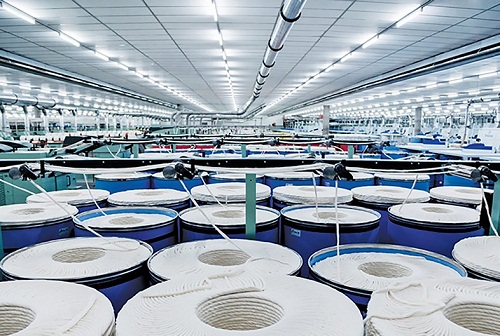 2030 while the share of cotton segment may decline to 20 per cent. To meet growing demand for MMF, spinning companies should enter into long term contract farming for Extra Long Staple (ELS) cotton, advised Capoor. The industry should also focus on specialty cotton like organic and colored cotton.
Capoor advised the industry to use the MSME segment to cater to the low value-added markets in the domestic sector and make huge investments in the forward and backward integration, and Greenfield projects. He also recommended the use of two government schemes in this venture; Mega Textile Park and National Textile Fund.
Extend loan moratorium for two-years
Capoor said, the government has quite bold to introduce historical tax reforms like the implementation of GST, reduction of basic customs duty, removal of anti-dumping duty on all basic raw materials, including PTA, rejection of the proposed anti-dumping duty on several products and introduction of four Labor Codes in place of 44 Labor Legislations. He opined that New Labor Codes would facilitate new investments in the sector besides benefiting its employees.
The government also plans to extend a special export package for top 40 MMF HS lines and 10 technical textiles HS lines, informed Capoor. He appreciated CITI for interacting with the Government on various policy matters, creating a National Committee on Textiles & Clothing (NCTC) and a common platform to enable the Government to get the industry’s demand in a single voice. He advised stakeholders against making conflicting and contradicting demands that might harm the entire textile value chain in the long run. Capoor also hailed the financial relief packages announced for MSME and non-MSMEs. However, he recommended a two years’ moratorium period for all loans and extension of the relief package for all units irrespective of their status of accounts.
Microsoft, Eon to bring 400 million products online by 2025
Microsoft and Eon are partnering to initially bring 400 million products online by 2025, through a collaboration that introduces an industry-wide digital foundation for a connected and circular economy across fashion, apparel and retail.
Eon’s CircularID Protocol and Connected Products Platform powered by Microsoft Azure make it possible for brands and retailers to provide unprecedented customer insight and enable brands to monetize and scale new circular business models such as rental, resale, digital wardrobing, peer-to-peer exchange, styling services, reuse and recycling.
The introduction of Connected Products at scale across industry could overturn the traditional fashion trope of “take, make, waste” by providing brands with the capability to manage, control and monetise these products through new circular business models. Historically, selling two products has always been more profitable than selling one, putting sustainability and business at odds in fashion retail. With Connected Products, brands are able to generate ongoing revenue from products, meaning they no longer need to rely on the production and sale of more new products as their sole means for generating revenue.
Eon’s vision redefines growth and opportunity for brands and retailers by decoupling it from resource consumption. The approach aims to give each and every garment in the world a digital identity, or a “digital twin”, giving each item its own unique digital fingerprint. Eon manages this digital profile, complete with identification data and transparency information, and embeds the data into the garment with a digital identifier that enables the garment to be connected for its entire lifecycle – from production, through sale, use, reuse and recycle.











