


FW
Retail sales continue to remain uncertain in the US
Though the National Retail Federation forecasted growth of 3.6-5.2 per cent in apparel sales during November and December, whether this will be sufficient to offset a downturn in in-person spending in the US remains to be seen. As per Adobe Analytics predictions online sales on Black Friday were to hit a record this year with store closures likely to ease in December.
As per a Business of Fashion report, though most retailers will be able to reopen, they will face certain restrictions in operation hours. Consumers too may not feel confident going to stores as retailers have persuading shoppers to spend as much online as they would in store for months
Many retailers kicked off Black Friday sales early in the hopes of extending the traditional festive shopping frenzy. They also doubled down on e-commerce offering flexible delivery options like curb-side pickups or rewards for consumers who buy early to avoid the Christmas logistics crunch.
Bangladesh to ease rules on use of duty-free imported fabrics
Bangladesh government plans to ease the rules on use of duty-free imported fabrics in making high-end apparels to boost export earnings as manufacturers end up wasting more fabrics while producing high-fashioned apparel. In 1998, the commerce ministry had set the waste ratio for garments between 7 to 9 per cent. Even at that time, local manufacturers and exporters had protested against this waste limit as being too little considering the amount of material used for a finished product. Both manufacturers and exporters have urged the government to increase the limit to 30 per cent or more.
Even experts have agreed with exporters demand. Md Abdul Kashem, Vice-Chancellor, Bangladesh University of Textile opines, the demand made by local garment manufacturers is not invalid as waste levels have increased over the years due to complexities in production. The percentage of waste generated varies from factory to factory because of the use of modern technologies, skilled workforce, efficient use of raw materials and better quality control, he added.
Hence, the permitted waste ratio for fabrics should be updated in view of the practical situation as buyers seek products of various designs, says Md Shawkat Hossain, Commissioner, CBC. A Matin Chowdhury, Former President, Bangladesh Textile Mills Association, adds 40 per cent waste is found in a test involving some factories with the best production practices. According to him, the percentage of waste increased because local garment manufacturers have been shifting to high-end garment items so that they can get better prices from retailers and brands.
New report estimates circular fashion economy to be worth $5 trillion
The New Circular Fashion Report estimates, the potential value of fashion’s circular economy to be $5 trillion. The report has been compiled by a group of industry and academics including PwC, sustainable consultancy Anthesis, Rödl & Partner law firm, Startupbootcamp, ESSEC Business School, Wageningen University & Research and circular fashion blockchain provider Lablaco.
The report terms the concept of a circular fashion industry to be a fast-growing movement to reuse and recycle all materials, eliminating waste and pollution and regenerating the environment in a “circular model”. This rethink of the fundamentals of how the industry operates is gaining traction among sustainable fashion brands, it says.
According to the report, the fashion industry is facing heavy pressure to reduce carbon emissions and waste, not least from a new generation of consumers who demand more environmental accountability. This has given added impetus to the argument for circularity.
The report argues for a product-centric, rather than consumer-centric approach, and digitizing it. It aims to make fashion traceable, transparent and more sustainable for businesses, consumers — and the planet.
Agritask, CropIn Technology Solutions bag Better Cotton Innovation Awards
The Better Cotton Initiative (BCI) and IDH have awarded Israel-based agricultural tech start-up Agritask with the first price at the Better Cotton Innovation Award. Indian agricultural tech-company CropIn Technology Solutions was awarded second the second prize. Both these companies will receive cash prizes of €100,000 and €35,000 respectively.
Agritask offers a holistic agronomic platform that enables agricultural stakeholders, including farmers, to capture and make use of a range of data in a highly flexible manner. The Agritask mobile app is customizable, allowing farmers to adopt digital solutions intuitively in a way that works for them.
While CropIn’s solution is a digital farm management solution that enables complete digitization of farming processes. The platform empowers data-driven decision-making and provides complete visibility of people, processes and performance on a near real-time basis. It enables farmers to efficiently manage farming practices, while also ensuring they are adhering to compliance and certification requirements.
Initiated by BCI and IDH, the Better Cotton Innovation Challenge was launched by Dalberg Advisors in November 2019 to find new and innovative ideas to scale more sustainable cotton production. The challenge aimed to highlight innovations in customized training on more sustainable farming practice and innovations to reduce the time and cost of data collection to enable more efficient BCI licensing processes.
Economic turnaround, COVID-19 vaccine to boost US babywear market
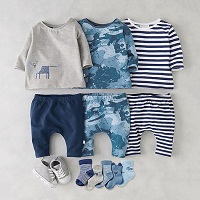 A Brookings Institute report says, the pandemic is likely to lead to long lasting baby bust in the US with births declining by 300,000-to-500,000 next year. However, birth rates are expected to normalize again as soon as the economic downturn recedes. Currently, the US is experiencing 66 per cent decline in kid’s wear shopping due to a fall in personal finances of citizens, says Cotton Incorporated’s September 2020 US Coronavirus Response Survey, Wave 3. Around, 36 per cent consumers also reported feeling anxious and depressed due to the pandemic, resulting in decreased apparel shopping.
Online shopping surges as shoppers avoid stores
Statistica figures reveal sales of apparel and clothing accessories in the US increased 11 per cent during August and September. Parents avoided shopping for new clothes for toddlers, which led to many brick and mortar stores going bankrupt and shutting down. Leading kid’s wear retailer, The Children’s Place closed around 200 stores this year and plans to close another 100 next year. Carter’s also plans to close around 200 stores including OshKosh B’gosh, in the next couple of years. Even Gap plans to shut 225 of its kid’s wear shops by 2024. The retailer has been shifting to an omni-channel retail model over the last six months.
Compared to mid-summer, there is a marked increase in online shopping for kid’s wear with 43 per cent shoppers now preferring to buy online, says a September Coronavirus Response Survey. Almost 60 per cent shoppers consider online shopping to be a safer option compared to visiting stores.
Focus on the fabric
Emphasizing on sustainability aspects in garments, around 27 per cent shoppers plan to purchase eco-friendly garments in the next three months, indicates the September Coronavirus Response Survey. As per Cotton Incorporated Lifestyle Monitor Survey, around 78 per cent parents prefer to dress their kids in cotton as it is a comfortable, soft, durable, breathable and easy to clean material.
Another 84 per cent parents emphasized on the fabric content of their kids’ apparels at least once before buying them, says Cotton Incorporated’s Lifestyle MonitorTM Survey. Even CCI and Cotton Incorporated’s 2019 children’s wear study had said fabric content has some or a great deal of influence on parents purchases of kid’s garments. Even though Brookings Institute reports expects the US to experience baby bust in the next few months, the introduction of a COVID-19 vaccine might put all these fear to rest and convert bust into a boom.
Better policies can create stronger, sustainable fashion future for MSMEs
 Sustainability is making steady inroads in the Indian fashion industry with many micro, small and medium enterprises (MSMEs) partnering big fashion brands to launch collections made from ethical materials. However, these MSMEs still lag behind their global counterparts in adopting sustainability due to lack of technologies and materials to introduce responsible collections. Also, MSMEs struggle with inadequate infrastructural facilities including water, power, and lack of skilled workforce; limited up-to-date information; and unwillingness towards making a better, safer, and relatively-expensive choice. Hence, they are compelled to bypass sustainability aspects in their manufacturing.
Gradual shift to sustainable fashion
The shift from fast fashion to slow fashion is currently at a nascent stage. However, as consumers’ shift to sustainable fashion, more businesses and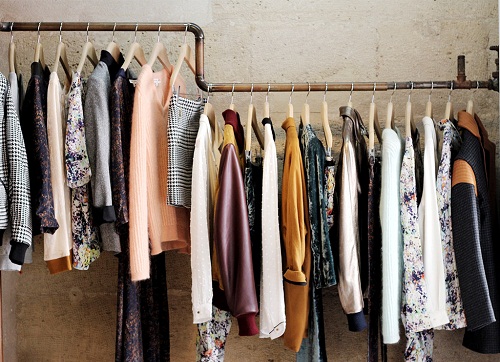 ecopreneurs are launching environment-friendly collections. Fashion marketers are also introducing sustainable marketing trends by creating awareness-building and educational campaigns on social media platforms. They are expanding their narrative beyond PR guidelines to unveil details about clothes’ manufacturing process. This has emphasized the importance of transparency in the industry besides boosting ethical fashion practices.
Recently, a famous international brand was lauded for its new collection made entirely from recycled wool and organic cotton, along with other fibers. Another brand was appreciated for making its list of certifications, first-tier suppliers, and fabrics. Many upcoming brands are also engaged in light-hearted conversations with their audiences through brand campaigns. They are creating awareness about sustainable fashion through traditional, digital and social media campaigns.
Introducing sustainability in fashion curriculum
Despite sustainability becoming a buzzword in the last few years, the fashion industry still has a long way to go in terms of becoming completely sustainable. It needs to introduce sustainability to New Age entrepreneurs during their learning stages. It also needs to attract new students by offering incentives like access to mentoring, funding, other services.
The industry also needs to collaborate with new entrepreneurs and encourage them to create sustainable fashion. They need to be enticed with better policies, lucrative business environments, and better pricing to help create safer, stronger and sustainable future of fashion.
Vietnam textile and garment exports to decline by 14%
As per statistics by the Ministry of Industry and Trade, Vietnam’s textile and garment exports are predicted to decline by 14-15 per cent year-on-year to $ 30-31 billion in 2020.
During the first 10 months of this year, the textile industry’s export turnover declined by 9.3 per cent to an estimated $24.76 billion compared to the same period last year.
Addressing a recent working session to seek solutions to difficulties facing the industry amid the health crisis, Prime Minister Nguyen XuanPhuc suggested the sector strengthen application of digital technologies and make effective use of FTAs.
The ministry said textile enterprises need to take measures, as well as adjust their production activities and business forms to suit the fluctuations of the market due to the severe impacts posed by the COVID-19 pandemic.
Attention should also paid to exploiting the domestic market and forming production chains meeting regulations of origin stated in free trade agreements that Vietnam signed with partners, it noted.
The Government leader also emphasized the need to develop modern and environmentally friendly industrial parks serving the textile and garment industry, and application of circular economy.
UK scientists launch project to reduce environmental impact of textiles
Scientists at the University of York and the Royal College of Art have launched a project to reduce the environmental impact of the textile industry in the UK.
The new £5.4 million project involves researchers at York, alongside the Universities of Leeds, Manchester, Cranfield, Cambridge, and University College London. These researchers will use household waste, crop residues and used textiles to develop new products that can be produced in the UK.
The project is based on a technology developed by a team at the University of York’s Department of Biology, which uses enzymes to deconstruct materials containing cellulose, such as natural and semi-synthetic fibres, crop residues, and solid waste products.
The enzymes help breakdown these materials into simple sugars, which can then be converted back into new cellulose by bacteria. This new cellulose is used to spin fibres that can be woven to produce high quality textiles to supply the UK’s fashion and clothing sector.
The research will form part of the Royal College of Art’s Textile Circularity Centre (TCC), funded by the UK Research and Innovation (UKRI). The Centre supports better social, economic and environmental outcomes through an interdisciplinary consortium of partners from academia, industry, NGOs, and the public sector.
Shima Seiki has launched its own yarn sourcing web service known as the ‘yarnbank’ yarn sourcing web service.
Yarnbank is the world’s first online web service for searching and viewing the latest yarns, developed with cooperation from yarn companies from around the world. Registered users have free access to the yarnbank archive of yarn information and digital yarn data. Users can also download yarn data for free, for use in fabric simulation and virtual sampling on SDS-ONE APEX4 design system as well as APEXFiz subscription-based design software likewise announced last month. Users can thereby avoid the need to scan yarn on their own. By using yarn that is available for actual production, users can further rest assured that their simulations created using yarnbank are not merely realistic images but accurate representations using yarn that can actually be purchased and used in production. Such clear communication is possible with yarnbank by bringing together each player in the supply chain—spinner, knit manufacturer and apparel company—and connecting them digitally to eliminate trial-and-error sample making that is the legacy of obsolete analog fashion production.
With its design system and software, SHIMA SEIKI has traditionally promoted design simulation and virtual sampling as an essential part of its “Total Fashion System” concept wherein virtual samples replace physical samples in an effort to reduce time, cost and materials wasted in the sample making phase, further realizing overall efficiency and reduced waste for a sustainable manufacturing supply chain. Now, with the launch of yarnbank, virtual sampling on SHIMA SEIKI design software provides even more effective digital transformation (DX) for the fashion industry.
Iran’s clothing exports to increase by 30%
As per Iran’s Textile and Apparel Production and Export Union, the country’s clothing exports are expected to increase by 30 per cent during the eight months ending November 30. These exports totaled $35 million in the five months to August 21.
Businesspeople from neighboring countries like Iraq, Afghanistan and Central Asian countriespurchase Iranian clothes in rial and transport them to their countries either legally or illegally, which form of export does not benefit local producers.
Hence, strict supervision needs to be exercised at free trade zones and border markets to safeguard domestic producers’ interests, said MajidNami, an official of the union.
Garment production has registered a 70 per cent growth since the beginning of the current year to November. 20 compared with the corresponding period of last year.
The ban on import of foreign clothing brands, closure of borders due to the outbreak of coronavirus and decline in smuggling contributed to this success, he added.











