


FW
Safety, accuracy can boost ‘Made to Measure’ segment amid retail slowdown
 The pandemic has been a nightmare for retailers with big department store chains going into bankruptcy. This year, the global retail industry faces a 30 per cent drop in revenue as retailers continue to close stores and lay-off employees, says a report by Business of Fashion and McKinsey & Co study.
Returns rate to spike as stores remain closed
As per Be Global Fashion Network magazine, though brick and mortar stores may eventually reopen and offline operations resume, retailers will face significant hurdles in maintaining social distance and ensuring safety of products and environment. Made-to-measure (MTM) businesses will face more challenges as they provide perfectly fitting garments, which require multiple personal fitting sessions with customers. Studio and store closure have made personal fitting sessions impossible. MTM players can’t ask customers to measure themselves as there is no room for inaccuracies in their businesses. Hence, they expect a spike in garments return rate.
Safety, economic concerns affect business
Many countries have advised retailers to keep fitting rooms closed and limit fitting sessions. However, even if these restrictions are relaxed, retailers are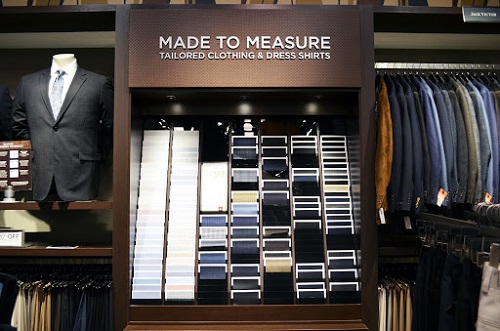 not confident of customers returning to stores soon. A recent survey by predictive analytics company First Insight finds less than 45 per cent consumers feel safe returning to physical stores due to COVID-19.
Also, consumers are likely to pull purse strings in due to economic uncertainty. Experts expect consumer spending on high end garments to contract 39 per cent with MTM businesses being the worst hit. Bespoke brands may also suffer on account of extended lead times due to factory closures and lack of raw materials. These issues will make it difficult for brands to increase their customer base.
Affordable MTM tools to ensure smooth operations
Though the fashion industry has woken up to innovative design, manufacturing and sales technologies few are beneficial to MTM businesses as they are expensive. Also, MTM brands lack the technical knowledge to implement these solutions. These solutions require the knowledge of working in 3D design environments, building fabric and trimming libraries, and using 3D across pattern fit. To benefit MTM businesses, these technologies need to be affordable and simple.
The tools and technologies that the fashion industry currently has access to, fail to address specific needs of MTM sector. A digital process doesn’t require costly hardware or hiring, outsourcing developers. It enables bespoke fashion businesses to operate entirely online through new tools such as 3DLOOK’s Mobile Tailor. The tool was built to address the needs of smaller businesses. Its contactless technology allows MTM businesses to provide additional in-store benefits, such as virtual try-ons. These tool also provide contactless in-store fitting process that combine the safety of a digital process with the convenience of having expert tailors at hand.
Deloitte estimates a strong demand for personalized clothing amongst 41 per cent consumers, majority of who belong to Generation Z. It advises MTM retailers to collect accurate and safe body measurements that would help them provide memorable shopping experiences to customers.
New Cotton Project to pave the way for a global blueprint solution
 As per Ellen MacArthur Foundation, the global apparel industry loses $500 billion every year as over 100 million tons of clothing is thrown into landfills. Lack of recycling initiatives has made circularity elusive in the industry with brands focusing on a few isolated initiatives. To halt climate change and restore biodiversity, the industry needs global-scale solutions, says a Forbes report. As per this report, the industry needs scaled circular solutions to control increasing waste generation and carbon emissions. It also needs active participation from various industry stakeholders to thrive in the fiercely competitive market.
Providing the required scale for recycling
To deliver affordable textile recycling solutions, Finnish biotechnology group Infinited Fiber Company has introduced a €6M European Union research and innovation fund which encourages 12 consortium members, spanning Finland, Sweden, Germany, The Netherlands, Portugal, Slovenia and Turkey, to launch the New Cotton Project to reduce fashion waste and environmental impact. To be developed in collaboration with industry giants like Adidas and H&M, the project will provide the required scale and volume to test recycling technology, says, Petri Alava, CEO, Infinited Fiber.
Spanning three years, the project will provide 3 ton cellulose carbamate fibers to Inovafil, Tekstina and Kipas, partners of H&M and Adidas who operate within the brands’ supply chains. The fibers will spun, dyed, knit and weaved into yarns and fabrics of the brands’ commercial fashion products.
Analyzing new business models
For this project, global consortium collaborators aim to collect and analyze new workflows and processes. For instance, Holland-based Frankenhuis plans to pre-process textile waste, while the South-Eastern Finland University of Applied Sciences (XAMK) plans to launch new solutions for processing waste fibers. For consumers and retailers, RISE (the research institute of Sweden) plans to analyze the sustainability and techno-economic feasibility of the project besides managing its eco-labeling. Finland-based Aalto University also plans to analyze the project’s resulting ecosystem and circular business models on a more macro level
Its magnitude and complexity make EU funding for this project extremely essential. However Katheleen Rademan, Facilitating Stakeholder and Petri Alava, CEO, Infinited Fiber, are confident that the project will achieve commercial viability as there is growing consciousness amongst brands about environment protection. The newly established Fashion Pact further stimulates these brands’ sustainability drive.
Determining the planet’s future health
KirsiNiimimaki, Professor, Aalto University believes, the project will educate the industry on the environmental impact that fashion has on developing countries. Though launched in Europe, project targets apparel producers in China and Bangladesh. Hence, it will pave the way for an immediately implementable global blueprint solution.
The project will take into account the entire value chain, from raw materials through to fiber, yarn and garment production, as well as end-of-life. For this project Infinited Fiber is negotiating with two Chinese companies to license their recycling technology. The company is also exploring other business models that could see it become a large-scale supplier.
Besides determining Infinited’s future business model, the outcome of this three year project will also determine the future health of our planet.
Bangladesh-Bhutan sign PTA to ease trade barriers
Bangladesh and Bhutan have signed a preferential trade agreement (PTA) on 6 December to ease further trade barriers between the two neighboring countries and facilitate an increase in the volume of bilateral trade. As per Textile Today, this is the first such agreement Bangladesh has signed with any country since independence in 1971.
Under the agreement, around 100 Bangladeshi products will get duty-free access to Bhutan while Bhutan will enjoy duty benefit on its 34 products. Some of the Bangladeshi products that will enjoy duty free access include baby clothes and clothing accessories, men’s trousers and shorts, jackets and blazers, jute and jute goods, leather and leather goods, dry cell battery, fan, watch, potato, condensed milk, cement, toothbrush, plywood, particle board, mineral and carbonated water, green tea, orange juice, pineapple juice, and guava juice.
AATCC to recognize outgoing Chairs at Spring meetings
In order to thank the leadership of board members and committee chairs whose terms end in 2020, AATCC plans to recognize all outgoing chairs at Spring AATCC committee meetings to be held from May 11-13, 2021.
AATCC board members include Rembert Truesdale III, Immediate Past President TenCate Protective Fabrics; Martha Carper, Regional Board Member, Central Atlantic; John Crocker, Midsouth Regional Board Member, SDL Atlas LLC; Heather Elliot, Western Regional Board Member, Adidas, etc.
Its Research committees members include Joseph Lin, Fiber Analysis Test Methods Acting Chair, Vartest Laboratories Inc; William (Buddy) Garrett, RA34 Preparation Test Methods Acting Chair, Cotton Incorporated; Andrew Fraser, RA36 Color Measurement Test Methods Chair, InMocean Group LLC; John Crocker, RA38 Colorfastness to Crocking Test Methods Acting Chair, SDL Atlas LLC, etc.
The organization’s Administrative committee members include Administrative committees include Rembert Truesdale III, Appropriations Committee Chair, TenCate Protective Fabrics; John Darsey, Chapin Award committee Chair, Darsey Color; Michael Grigat, Olney Medal Award Committee Chair, Crypton Inc; William (Bill) DiIanni, Millson Award for Invention Committee Chair, Elevate Textiles.
Bangladesh knitwear exports grow by 4.8%
As per the data from the Export Promotion Bureau, Bangladesh’s knitwear exports grew by 4.8 per cent year-on-year to earn $7.13 billion in the period of July to November of the current FY. As per Textile Today, experts attribute the increase in demand to extensive stay at home, which triggered orders and sales of sweaters.
Simultaneously, Bangladesh’s readymade garment (RMG) exports have been bouncing back as the grim year of 2020 almost coming to an end. The RMG sector earned US$ 2.45 billion in November. Although November’s receipts are 8.2 per cent less of the monthly target of $3.35 billion, still the export earnings in the month are the highest in the August-November period. Official data also showed that, from July to November of this year, the sector earned $12.89 billion with a 1.48 per cent growth rate.
As in November, the export of woven garments fell 10.48 per cent while knitwear export grew by 4.97 per cent.
At the same time, home textile exports grew pointedly during the COVID-19 pandemic because of the increase in the use of hospital bed sheets, medical gowns and curtains, especially in the countries that have been severely hit by the rogue pathogen.
APEC applauds RBI for liberalizing rules for unrealized export bills
Apparel Export Promotion Council (AEPC) has applauded Reserve Bank of India (RBI) for liberalizing the rules for writing off unrealized export bills. In a letter to Shaktikanta Das, Governor, RBI A Sakthivel, Chairman, AEPC thanked the central bank for permitting Authorised Dealer (AD) banks to write off unrealized export bills of any amount, which earlier was allowed only up to a certain limit beyond which the AD bank had to approach RBI for approval.
The AD banks have also been allowed to consider refund of export proceeds without insisting on import of goods, which are perishable in nature or had been auctioned or destroyed by an authorized agency in the importing country. Sakthivel believes these changes will not only simplify the procedure but also reduce the time taken for getting approvals and thereby reducing the regulatory cost. These measures will help exporters suffering from non-realization of export proceeds due to bankruptcy and insolvency, he said.
BGMEA seeks fresh stimulus package for the apparel sector
BGMEA has sought a fresh stimulus package for the sector besides urging the government to continue benefits given at the beginning of COVID-19. Since April this year, the Bangladesh government has granted Tk 10,500 crore to the export-oriented garment sector in three phases to help factories pay salaries and allowances to workers at 2 per cent service charge. The government has also unveiled some other packages.
For example, it has introduced a Tk 33,000-crore stimulus package for large industrial units and has made available another Tk 12,750 crore in the Export Development Fund. BGMEA has also demanded an extension of moratorium period for repayment of loans under the first stimulus package to one year from six months now. It has also sought an extension of the payback period to five years from one year as the sector is going through a rough patch
Recently, BGMEA participated in the Call for Action program launched by the International Labor Organization to get back payments from international retailers and brands through discussions and consultations.
Of the major retailers and brands with which the BGMEA held talks and discussions are C&A, Bestseller, H&M, M&S, VF, PVH, KIK, Primark, Tesco, Decathlon, Arcadia Group, Next, New Look, Asda/George, OVS, K-Mart and Target Australia, Camieu, La Halle, and Ny Gard.
Texworld, Apparel Sourcing New York announce speakers for Winter ’21 edition
Texworld and Apparel Sourcing New York City have announced speaker line-up for winter 2021 edition. As per a Textile World report, the New York-based textile events will move to a digital platform for their upcoming edition and open from January 12 -14, 2020.
The events will include Textile Talks and Lenzing seminar series. The sessions will feature a range of expert speakers and panelists leading open discussions and case studies to provide greater insight and knowledge exchange on topics from the latest in trends and technology to challenges within sustainability and climate.
Moderated by the National Science Foundation, the Textile Talk will cover on-farm regenerative practices that brands can support and farmers can adopt. It will be followed by an informative and inspirational discussion to understand how Madewell partners with Fair Trade USA to set sustainability goals and more.
Panelists from The Gap, Lenzing and Textile Exchange will be led by Fashion Takes Action as they delve into the tools needed to address the issue of climate change.
Royal DSM, Team Sunweb partner to launch Dyneema jerseys
Global science-based company in nutrition, health and sustainable living, Royal DSM has partnered Team Sunweb to integrate Dyneema® fabrics into their team’s apparels to raise the standards of protective clothing. The cycling jerseys, made from Dyneema® high-performance fibers – will protect cyclists from abrasions besides allowing their body moisture to transport at the surface of their jersey, thus keeping them lightweight and enabling the cyclists to maintain pace with comfort.
Known for offering maximum strength with minimum weight, Dyneema® fiber is produced in a patented gel spinning process in which fibers are drawn, heated, elongated and cooled. The fiber has a tensile strength of upto 43 cN/dtex and is 15 times stronger than steel at the same weight. It also excels in cut and abrasion resistance and has a high resistance to chemicals and UV. It’s so light that it can float on water.
The bio-based Dyneema® fiber was first introduced to the world by DSM in May 2020 and offers exactly same features as conventional Dyneema® with a 90 per cent less carbon footprint.
Almost 80% of Bangladesh’s apparel exports are low-priced items: BGMEA
Despite being in the business of garment manufacturing for over 40 years, Bangladesh still manufactures low-value garment items. According to BGMEA, around 80 per cent of country’s garment exports fall within the price range of $15 per kilogram, and only 20 per cent items get a price more than $15 and a tiny fraction gets $35.
BGMEA attributes this to the country’s lack of innovative capabilities in areas of designing and product development and expertise, skills and technologies, and limited diversification in the area of non-cotton area.
Ahsan H Mansur, Executive Director, Policy Research Institute of Bangladesh, to produce high-end garment items, Bangladesh needs manmade fibers, which are not produced by the country. The country is strong in making apparels from cotton fiber as nearly 80 per cent of Bangladesh’s garment items are manufactured from cotton.











