


FW
Steve Madden promotes Zine Mazouzi as Chief Financial Officer
Footwear, accessories and apparel brand Steve Madden has promoted Zine Mazouzi, Chief Accounting Officer and Senior Vice President-Finance and Operations as its new Chief Financial Officer, with effective from January 1, 2021.
As per Fashion Network, Mazouzi will succeed Arvind Dharia, who will serve in an advisory capacity through 2021 to ensure a smooth transition. Dharia has served as Steve Madden’s CFO since October 1992.
Mazouzi, who began his work with Steve Madden in 2019, has over 20 years of experience in the footwear industry, as well as a proven record in corporate finance, financial planning and analysis, operations, strategic planning and risk management.
Prior to joining Steve Madden, he served in various leadership roles at Sears Holdings Corporation, including head of Sears and Kmart footwear, home and fine jewelry and chief financial officer of Sears and Kmart footwear.
Previously, Mazouzi held several leadership roles at Nine West Group, including chief financial officer and senior vice president of finance, wholesale and international F&A.
RCEP to promote trade and investment amongst ASEAN countries
The signing of the regional comprehensive economic partnership (RCEP) will enable 10 ASEAN countries and five countries including China, Japan, South Korea, Australia and New Zealand to jointly promote trade and investment, and closely connect China’s textile fabrics with garment manufacturing factories in Southeast Asia.
RCEP will progressively lower tariffs across many areas in the coming years. Tariffs on most products from the Philippines, Cambodia, Laos, Japan, South Korea, Australia, and New Zealand will gradually drop to 0 per cent in addition to the above six countries.
According to estimates by the Peterson Institute for International Economics, assuming the continuation of the Sino-US trade friction, China’s accession to RCEP will bring an additional USD 100 billion in real national income growth in 2030, thereby offsetting about 30 per cent of the negative impact of the trade friction.
Although the pandemic that currently affects the global economy this year has not improved well and the overseas economy has recovered slowly, with the signing of the RCEP agreement, market participants still have certain expectations for the first half of next year.
New Woolmark collection illustrates Merino wool potential
A new prototype collection developed by The Woolmark Company with circular knitting machine manufacturer Santoni and designed by innovative knitwear designers at Studio Eva x Carola aims to illustrate the full potential of Merino wool used in technical seamless performance apparel.
Created in a vibrant colour palette, Woolmark x Santoni x Südwolle collection includes leggings, crop tops and bras, racer-back tank top and a T-shirt, all designed with performance in mind.
It introduces Merino wool to Santoni’s state-of-the-art circular seamless knitting machines. Designated the ‘original performance fiber’, Merino wool is soft next to skin, breathable, naturally elastic and odor resistant. In addition, the eco-credentials of the fibre - namely being 100 per cent natural, renewable and biodegradable - align with yoga’s connection with both nature and mindfulness, it adds.
Combining wool with Santoni Shanghai’s technology means we can create a unique touch experience with fine gauges, no seams and mindful engineering
GSP benefits can help minimize garment exporters losses: BGMEA
According to a study by the Bangladesh Garment Manufacturers and Exporters Association (BGMEA), Bangladesh's garment exporters can minimize their losses from the ending of duty-free trade benefits by European Union (EU) to $3.2 billion, if they avail the generalized system of preferences (GSP) benefits
The EU offers standard GSP for low and lower-middle-income countries. This means a partial or full removal of customs duties on two-third of tariff lines.
Bangladesh currently enjoys duty-free, quota-free access for all products except arms and ammunition in the EU market as a least developed country (LDC) under the EBA (Everything But Arms) facility.
On termination of these benefits, Bangladesh's shipment to the EU will face the worst impact after graduation as the bloc accounts for 61 per cent of the duty-free export from the country.
Applying the standard GSP or most-favoured-nation (MFN) tariff will escalate the cost of sourcing from Bangladesh further. The EU's global average import price dropped 4.35 per cent from 2013 to 2018.
Designer Brands forced to upend merchandise exports
Designer Brands has been forced to upend its merchandise assortment as people, stuck at home for work and play due to the pandemic, have opted for more casual attire.
With signs of increased demand for boot sales earlier this year, the retailer increased its orders but is now stuck with an excess because that demand waned amid the re-escalation of the pandemic, executives told analysts.
The retailer is faring better with its decision to expand its athleisure assortment to 49 per cent of its offer, up from its usual 28 per cent. It is in the midst of a three-year strategic plan that included the introduction of nail salons and shoe repair services into its stores. That's turning out to be poor timing, as the pandemic's recent upsurge is keeping customers out of stores. The company noted in its release that the "decrease in gross profit was primarily driven by the significant reduction in customer traffic with the continuing impact of COVID-19."
After some recovery at the end of the summer, store traffic is back down around 40 per cent in the current quarter. Meanwhile, Designer Brands, once known as DSW, hasn't had much success shifting sales online, with William Blair analyst Dylan Carden in emailed comments noting that its 3 per cent growth falls behind peers.
Futuristic Expo to hold The Trousseau Show on December 21
Futuristic Expo will hold The Trousseau Show, the multi-brand bridal women’s fashion exhibition in Worli, Mumbai on December 21.
As per a Fashion Network report, the upcoming business to customer event will feature product categories including bridal wear, ethnic wear, traditional wear, occasion wear, footwear, accessories, jewellery, and home décor items. The event is designed to be a one-stop-shop for brides to be this winter wedding season.
It will be attended by brands including Jasmyrra, Kavita Creations, Adaa by Sunanda Verma, Lucknowi Kutis and Palazzos, Home Company, Suman’s Lucknowi, Bobby Creations Kolkata, and Libaaz Vatika, etc
Futuristic Expo will hold another bridal shopping exhibition on January 8 at the JW Marriott in Juhu, Mumbai. The Wedding Show will feature a similar selection of women’s traditional wear, bridal wear, accessories, and lifestyle items.
The business held its most recent shopping fair on November 2 at the Four Seasons in Worli, Mumbai. The Diwali and wedding themed event took place with social distancing measures in place, as will Futuristic Expo’s upcoming two events.
Bangladesh leather industry faces acute capital shortage
Bangladesh’s leather industry is facing an acute capital shortage due to the fall in exports, which might result in continuance of serious hardships the leather goods and footwear exporters are facing amidst the COVID-19 pandemic. As per media reports, exports orders for Bangladesh may fall by more than 50 per cent this year!
Such a scenario would put question marks on continuance of operations as entities have been facing losses since last 7-8 months, more so for the small manufacturers, who could very well shut shop for good.
Nasir Khan, Chairman and Managing Director, Jennys Shoes has witnessed a 30 per cent decline in orders this year. The company usually receives orders for next summer during this time.
Khan, who is also Vice-President of the Leathergoods and Footwear Manufacturers and Exporters Association of Bangladesh (LFMEAB) is also not sure when exports would become normal again as buyers are not keen on placing new order amidst the global threat of coronavirus pandemic’s second wave.
Rubina Akter Munni, Owner, Design by Rubina, is also not sure when she will recover from this crisis, reportedly, said another entrepreneur and owner of Design by Rubina. The designer has not received any orders from abroad currently while it has also lost sample orders worth around Taka 1 crore from global buyers on account of the coronavirus pandemic.
Adidas teams up H&M for EU-funded project
Adidas has teamed up with H&M Group for an EU-funded sustainable fashion project that aims to develop a circular economy for clothing. The project will involve recycling of old garments and fibers into new items for major high street brands.
Over three years, the New Cotton Project will see textile waste collected and sorted via consumer apparel take-back programs, then regenerated into cellulose-based textile fibers by Finnish biotechnology specialist Infinited Fiber Company, the 12 project partners confirmed.
The resulting fiber will be used to create different types of fabrics for clothing that are designed, manufactured and sold by global sportswear brand Adidas and retail companies in the H&M Group, they explained.
The project is being led by Infinited Fiber Company, alongside a consortium of 11 other companies and organizations spanning the entire supply chain, including manufacturers Inovafil, Tekstina and Kipas, which will use old garments to produce yarns, woven fabrics and denim, respectively.
Textile recycling specialist Frankenhuis, meanwhile, has been tasked with sorting and pre-processing the textile waste, and South-Eastern Finland University of Applied Sciences (Xamk) aims to develop a technical solution for the continuous processing of textile waste fibers for pre-treatment, they said.
In addition, Revolve Waste has been appointed to collect and manage data on textile waste to estimate feedstock availability across Europe, while RISE — Sweden's state-owned research institute — has been brought on board to conduct sustainability analyses and manage eco-labelling for garments created through the project.
US government’s Xinjiang cotton crackdown to extensively effect retail
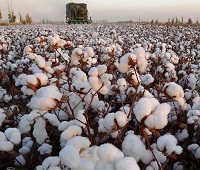 US government’s recent order to seize cotton and cotton products from the Xinjiang country would have far-reaching ramifications for US apparel retail industry, says the Worker Rights Consortium. As stated in a Quartz report, the order is likely to impact the supply chains of virtually every major apparel retailer in the country—from Amazon, to Target, to Zara.
The order directs US Customs and Border Protection to detain incoming products suspected of using XPCC cotton. It is by far the most wide-reaching customs ban on US imports, say Laura T Murphy, Professor, Sheffield Hallam University and Rian Thum, Senior Research Fellow, University of Nottingham. Given China’s status as one of the world’s largest cotton producers, the order is likely to affect 500 million US imports containing XPCC every year.
Already, there is confusion amongst US companies over the implementation of the order, states Steve Lamar, President and CEO, American Apparel &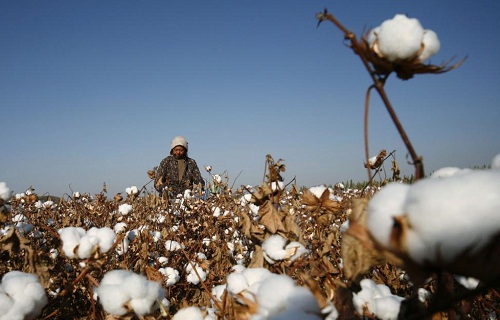 Footwear Association (AAFA). The order applies not only to products made with cotton produced by XPCC, but also to those made by its subordinate and affiliated companies. However, the order does not elaborate on its definition of subordinate or affiliated entity. XPCC is a quasi-milatary organization that has around 86,000 subordinates. The US government has not clarified on these which had created a lot of confusion amongst industry leaders.
Lack of clarity
Moreover there is lack of clarity over the implementation of the order, says Nate Herman, Senior Vice President, AAFA. The Customs and Border Protection (CPB) department has not revealed how it will enforce action, and does the order apply only to products coming from China, or other countries as well, etc. CBP has also not provided additional clarity on the language in the order or how it intends to identify products made with cotton from XPCC or any affiliates
In response to the order, AAFA and other trade groups, have released a joint statement that pointed out forced labor can be kept out of member supply chains by forming a coalition of stakeholders and countries. Companies should have zero tolerance for forced labor in their supply chains, says Lamar. However, labor and human rights groups hold apparel companies responsible for materials that go into their products. Omer Kanat, Executive Director, Uyghur Human Rights Project says, international companies that import goods produced by the XPCC, are complicit in human rights crimes.
Each level of a globalized supply chain is shrouded in a level of obscurity. For instance an American brand that places orders for 100 shirts with a Bangladesh factory, may not be aware of its raw material suppliers. To trace the origin of its cotton, it needs to trace each level of its production process. Often, long-staple cotton used by apparel manufacturers is grown in Xinjiang, India, the US, Brazil, and elsewhere. This raw cotton is processed by factories in China that often employ forced labor these practices. Lack of supply-chain transparency often leads to human rights abuses in the fashion industry.
For the last few years, companies have been tracing their supply chain partners. AAFA’s member companies have also been mapping their supply chains in Xinjiang to avoid any direct links to the organization. As China has 20 per cent of the world’s cotton production, it may be difficult for fashion companies to avoid Chinese cotton. However, they can avoid abetting forced labor by tracing its origin.
For a more responsible supply chain, industry demands an end to union busting
 The aim of any country’s government is to develop an export-oriented fashion industry that earns sufficient forex besides maintaining healthy trade balance. Growing their tax base and providing employment is also an important goal of governments. This is achieved by offering citizens reliable product in a stable business environment. The biggest factor that enables governments to achieve this is cheap labor. However, often governments turn a blind eye to labor issues and do not allow workers to form unions.
Respecting workers’ rights
IndustriALL Global Union, an affiliate of 50 million workers in 140 countries urges the industry to respect workers freedom of association and fight against union busting. This can be achieved by making a systemic change, says a report by IndustriAll. Though brands like H&M and Inditex are working on this, their efforts are inadequate. A recent example of this is the protest by a Uyghur solidarity campaign outside Zara in Oxford Street, London, over alleged slave labor in their cotton supply chain. Zara was unable to control this protest as it did not address the underlying issues.
Global unions should respect the rights of workers at the bottom of the supply chain. They need to carry out factory inspections as per the directions of the labor inspectorate. Also, working conditions should be negotiated by local trade unions, not set by the brand police.
Achieving the balance of power
The best way to achieve a balance of power between employers, unions and governments is by industry-wide collective bargaining. Unions must negotiate with representatives of all factories rather than negotiating with individual ones. This would help them raise workers’ conditions and improve industry quality. Also, global brands need to stay committed to their current country even if it introduces collective bargaining. IndustriALL has signed joint declarations with Inditex and German brand Tchibo through the ACT initiative which encourages brands to secure constructive relations between employers and workers. The organization has introduced a multifaceted strategy for changing the sector. It aims to defend workers’ rights, by campaigning against violations when they happen.
IndustriALL also creates company networks, and builds national structures to unify unions as they confront employers. It fights for job and wage security in the sector. It campaigns brands that violate workers’ rights. It promotes sustainable industrial policies like the ILO Call for Action to create a more resilient garment industry. Though the organization has started making a difference in the industry, to make the sector more responsible towards supply chain, it needs to support collective bargaining and unionization.











