


FW
Macy’s plans to close 45 stores in 2021
Macy’s is looking to close 45 company owned stores. The selected sites may close by the middle of 2021 and liquidation sales were already underway at some locations. Before the pandemic itself, Macy’s had a three-year Polaris plan that called for significant closures, predominantly in Tier C and D malls. The coronavirus pandemic swept the nation, but still Macy’s kept all doors open throughout 2020.
Following the pandemic, some parts of the Polaris plan were put on hold, The retailer had also tested the idea of “dark stores” to fulfill digital orders in October for the holiday season at two locations Littleton, Colo.’s Southwest Plaza and Dover Mall in Dover, Del.
Retailers typically conduct those reviews in the fourth quarter to see how the stores perform during the holidays. The company was reevaluating store closing plan, noting that decisions will depend on projected sales and a store’s four-wall profitability. As practice Store closure announcements usually follow in January.
M&S joins call to action against Xinjiang cotton
With pressure on clothing retailers worldwide to stop remove Xinjiang cotton from their supply chains, British clothing brand Marks & Spencer has signed the call to action over Uighur forced labour. The call to action comes from a coalition of civil society organisations and labour unions who want to end abuses against Uighur people. It may be recalled that in December, BBC had revealed new evidence that China is forcing thousands of Uighurs and other minorities into hard, manual labour in the cotton fields of Xinjiang.
M&S uses around 40,000 tonnes of lint cotton annually from various sources. The coalition asks any brand sourcing apparel, textiles, yarn or cotton from the region is profiting from human rights violations, including forced labour. M&S sources cotton through businesses accredited with the Better Cotton Initiative (BCI).
In March last year, BCI suspended activities in Xinjiang, hence, no new licensed BCI cotton is sourced from the region. Nevertheless, M&S felt it was important to sign the call to action to encourage other companies to examine their supply chain.
Anti-Slavery International welcomed the move and encouraged other retailers to follow suit. "The Call to Action sets out a clear path of action for brands to follow in line with the UN Guiding Principles on Business and Human Rights and we call upon other major brands to follow suit with M&S and commit to the Call to Action urgently," the organisation's chief executive Jasmine O'Connor said in a statement.
Iran’s garment exports rise, domestic units cater to local demand
Iran exported garments worth over $40 million in the first seven months of current Iranian calendar year (March 20-October 21, 2020), the chairman of Iran Textile Exporters and Manufacturers Association (ITEMA) announced. Majid Nami said exit of foreign clothing brands country in the past two years, as well as the government's decision to ban clothing import, has thrown up a huge opportunity for Iranian producers.
Nami has previously announced garment production in Iran increased 70 per cent during the first eight months of the current Iranian calendar year (March 20-November 20, 2020), compared to the same period last past year. Garment production fluctuated from the beginning of this year but production situation has been satisfactory for producers. The share of Iranian brands in the market has increased significantly compared to the last year, Nami underscored.
Iranian garments are exported to Iraq, Kuwait, Australia, Armenia, Azerbaijan, Uzbekistan, Russia, Afghanistan, Pakistan, Turkmenistan, Kyrgyzstan, Germany, Korea, Japan, UAE, UK, Venezuela, Ivory Coast, Italy, Turkey, Canada, Qatar, Oman, Nigeria, Switzerland, Pakistan, Georgia, Spain, and Denmark. Chairman of Tehran’s Union of Garments Manufacturers and Sellers says, domestic units are supplying 70-80 per cent of the requirement for clothing inside the country.
The EU-China deal means India needs to focus on its own FTA and fast
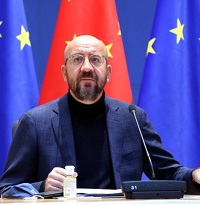 Seven years and 35 rounds of negotiations between the European Union and China finally culminated in the Comprehensive Agreement in Investments (CAI). The deal was announced by the two signatories this week, opens the Chinese market further to EU investors. German Chancellor Angela Merkel played a key role in finalising the deal before the rotating EU presidency went to Portugal. Days before a new administration takes charge in Washington, this is a significant diplomatic achievement for Beijing.
Deal with strategic significance
The importance of the accord between the two economic heavyweights cannot be underestimated. As per estimates, EU-China bilateral trade in 2019 was over $630 billion. Bilateral investments in the last 20 years were about €260 billion — EU companies have invested more than €140 billion in China, and Chinese FDI in the EU is about €120 billion.
The accord expected to come into force in early 2022, indicates the bloc’s determination to focus on economic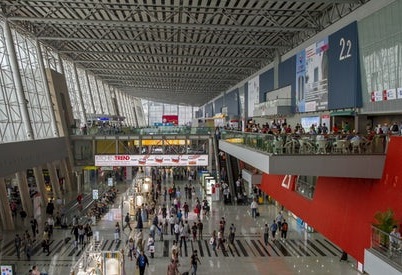 opportunities in Asia despite large scale criticism of Beijing’s human rights. For the EU, it could also mean mudding its relationship with the new US administration, which had urged Europeans to consult them over China’s economic practices.
Indeed, the CAI is not an FTA. But it will serve an important tool to open Chinese market for EU companies. As European Commission president Ursula von der Leyen points out the deal “will provide unprecedented access to the Chinese market for European investors”. The Global Times editorial calls it “a New Year gift from China and the EU to the whole world” and “a portrayal of the two sides’ common strategic courage.”
For EU nations, the deal gives access to Chinese market for foreign investors across sectors. Moreover, it also tackles underlying Chinese policies which Europe and the US feel distorts market in favour of China with its industrial subsidies, state control of enterprises and forced technology transfers.
China gains geopolitically as it becomes more mainstream and may limit risks resulting from a tougher EU stance on Chinese investments in Europe. It also strengthens their longstanding call to begin negotiations on a FTA with the EU, which has insisted on an investment deal first. What’s more the CAI, linked with the Regional Comprehensive Economic Partnership (RCEP), is an opportunity the EU could not ignore easily.
The CAI will put in place a single EU-China investment framework replacing 25 bilateral investment treaties. Under the CAI, China has offered comprehensive commitments in manufacturing, particularly in transport, chemicals, as well as telecommunication and health equipment. It has eliminated or phased out joint venture requirements or equity caps in the automotive sector, banking, insurance, securities and asset management. The real estate services, rental and leasing services, advertising, market research, management consulting and translation services, cloud services are all opened.
Of course, the deal still has to be passed by the European Parliament, where it could face some objections due to China’s human-rights record. However, the buzz is the deal incorporates a Chinese pledge on labor standards meant to address human rights concerns, including a ratification of related United Nations-backed conventions.
India angle
Of course, the upcoming Portuguese presidency of EU has put relations with India on priority. However, India will need to focus anew on its EU strategy given that FTA negotiations are in the cold storage since 2013. With liberal investment opportunities in Chinese market, ‘decoupling’ from China narrative will become weaker in Europe. Beyond geopolitics India will need to make its market more attractive for European companies, including a serious intent of signing FTA.
Policy support, better digital infrastructure in upcoming Budget could help retail sector
 After a hard year, India’s retail sector is now looking optimistically at the upcoming Union Budget. The retail sector estimated at $854 billion, is one of the largest industries with 10 per cent GDP share. It employs approximately 46 million people and hence is very important for economic revival and achieving the long-term vision of creating a $5 trillion economy.
Need for policy boost
Business was wiped out for most of the year, however, last few months has seen some recovery across categories. As per a Moneycontrol.com report in November consumer durables and electronics clocked in12 percent YoY sales, the food and grocery segment also saw YoY sales growth at 5 per while apparel and clothing continued to struggle, showing 12 per cent YoY. After recording a 13-14 per cent growth in CY18 and 7-8 per cent in CY19, the industry is now likely to end 2020 with a decline. However, retailers are optimistic about touching 85 per cent of pre-COVID levels of business in the first six months of 2021.
The report suggests, one way of boosting retail could be by giving more money in the hands of consumers. Last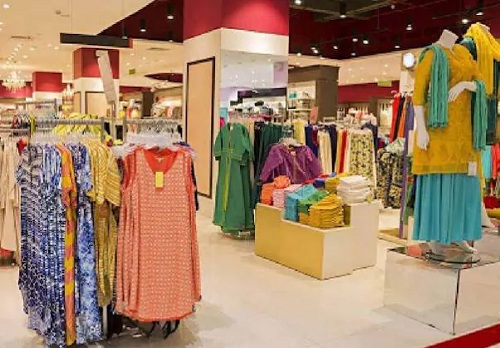 year by introducing a new optional income tax system and incentivising employees to spend more in lieu of leave travel allowance, the government did try to push consumption. However, in the upcoming Budget the sector is expecting larger measures to give that extra flip to consumption.
One long pending demand from the sector is the formulation of a National Retail Policy. A CII report had suggested the policy could give a huge boost to the sector as it will be designed to take growth to the next level. As per the CII report there has to be broad measures like: streamlining approvals and compliance mechanisms to improve ease of doing business; improved access to capital; rapid adoption of technology and modernisation by traditional retailers; bridging logistics and supply chain gap; enhancing labour participation and productivity. Increase in foreign direct investment in multi-brand or single-brand retail will also help in the long run, suggest CII.
Need for better digital infrastructure
Moreover improving small towns and cities digital infrastructure can help retail as seen during the pandemic when e-commerce channels saw a huge traction. Online retail in apparels, footwear, cosmetics, groceries saw a huge growth. In fact, this has pushed big retail players to rethink their strategy with bigger focus on omni channel retail. They are aiming to double the share of e-commerce as it carries fashion to semi-rural and rural pockets. Higher connectivity in rural areas and increased point of sale would drive growth. Better warehousing facilities would also go a long way.
The industry also expects support for labour-intensive sectors such as apparel to boost exports. FTAs with EU and other countries would help as India has an edge with low-cost labour.
Meanwhile to boost Make in India, import duty on certain textiles items were increased from 10 to 20 per cent (recently); on footwear from 25 to 35 per cent (last budget). Similar, extension of import duties on other products in the retail segment could also benefit the industry.
Orders increase but raw material sourcing still an issue for Vietnam
Export-oriented garment units in Ho Chi Minh City have seen a spurt in orders in the fourth quarter of 2020, especially from the US. While this is good however, rising prices have meant raw materials have become scarce, and costs have increased 15-20 per cent in associated industries like packaging, adhesive tapes and chemicals, leading to rising production costs and lower profits. In fact for many enterprises revenue just about covers their costs.
The Vietnam Textile and Apparel Association (VITAS) states, the country’s garment and textile industry imports raw materials, including yarn, fabric, and auxiliary materials, mainly from China. Fabric imports account for nearly three-fifths of the total imports of $13.5 billion in 2019, and fibre imports 55 per cent. With new free trade agreements (FTAs), Vietnam can use raw materials from many countries, as companies have been using raw materials from China for a long time, they reportedly become passive in raising production when orders rise due to scarcity of raw materials. Moreover, raw materials from India, South Korea and European nations do not match either in quality or prices with China.
As per VITAS in 2020, demand from Europe and the US decreased 45 per cent and 40 per cent respectively for garments, and 27 per cent and 21 per cent for footwear. In future, the country’s garment and textile industry is expected to face difficulties when supply of raw materials is inadequate and imbalanced, and there is a blockage in the phases of weaving and dyeing.
Store closings to continue in 2021
COVID-19 accelerated the rationalization of retail’s over-stored environment and the pace of closures isn’t expected to slow down. “We’re not done yet. It’s going to get tougher. When the volume of purchases drops dramatically after Christmas, the expenses remain,” Terry Lundgren, Macy’s former CEO, told CNBC. He says retailers who have a weak balance sheet today aren’t going to get relief in January.
On the upside, there will be opportunities to grow again, green shoots, from that perspective of store closures and that would be soon, Lundgren added. Before the pandemic, expansion of online shopping had dragged down in-store traffic, while during the pandemic accelerated online shift and decimated in-store selling for many retailers. As much as 40 major retailers have filed for bankruptcy and more than 11,000 store closures were announced in 2020. US retail sales of apparel and accessories fell 30 per cent year on year from January through October that may lead to substantial store closure announcements and bankruptcy filings.
It really comes down to how long COVID persists and if we see vaccine roll out and a lot of cases come down, people start shopping more, that will alleviate some strain on the retail sector.
Nata Dvir promoted as Macy’s new chief merchant
Nata Dvir is being promoted to lead all Macy’s merchandising categories and private brands. She will succeed Patti Ongman, who previously announced plans to retire at the end of the 2020 fiscal year. Dvir currently serves as SVP and general business manager for beauty and “center core” merchandise, which includes jewelry, handbags, shoes, intimate apparel and accessories. She began her career as an executive trainee at Macy’s. Since then, she has held various leadership roles within the department store’s merchant organization.
“I’m confident that she will continue our merchandising transformation, influencing our customers’ personal style through accessible fashion, clear value and an enhanced digital and store experience.” said Jeff Gennette, Macy’s Inc. chairman and CEO.
NITMA wants anti-dumping duty on PSY imports from China, Indonesia, Vietnam
The Northern India Textile Mills' Association has urged the government to levy the Anti-Dumping Duty (ADD) on Polyester Spun Yarn similar to the proposed duty for viscose spun yarn imported from Indonesia, Vietnam and China. PSY imports have gone up from 5,833 tons in 2015, to 43,306 tons in 2019 from these four countries. The four countries are: Indonesia, China, Vietnam, and Nepal. Monthly average imports of Virgin Polyester Spun Yarn (under the PUC) have increased 972 per cent between 2015 and 2020. Imports from Vietnam alone increased a massive 10,512 per cent, that is, 107 times.
Average monthly imports for 2020 are 5,212 tons/month out of the total domestic monthly consumption of 22,000 tons/month, which means that imports enjoy 25 per cent of the total market share. “Import numbers have been rising substantially year after year due to an extremely and unreasonably low prices offered by Indonesian and Vietnamese spinners on account of huge idle capacities created owing to their government's incentives,” the NITMA statement said.
According to NITMA President Sanjay Garg, rise in import quantities being dumped into India has the potential to cause an irreparable injury to domestic PSY spinning sector with the cascading effect, from closure of mills to NPAs, and eventually resulting into massive loss of employment.
Pakistan exporters want customs duty waiver on cotton yarn
Pakistan’s value-added textile exporters want the government to abolish customs duty on cotton yarn imports to support the industry and ensure timely completion of export orders. In a statement, Pakistan Apparel Forum Chairman and former Pakistan Hosiery Manufacturers & Exporters Association (PHMA) central chairman Muhammad Jawed Bilwani said the government should immediately abolish customs duty on import of cotton yarn either by passing through a presidential ordinance or by an immediate act of the parliament in the interest of export industry of the country.
He said value-added textile exporters are facing a tough time due to the unavailability of cotton yarn – a basic raw material– while huge export orders are available with the value-added sector. Moreover, the cotton yarn available locally is below standard hence, exporters are unable to meet export commitment. The PHMA had earlier too demanded the government to allow duty-free import of cotton yarn to facilitate value-added textile export sector; however, the government considered removing the regulatory duty only.











