


FW
Dolce & Gabbana cancel physical show at Milan Men’s Fasion Week
Fashion duo Dolace & Gabbana have called off their next menswear physical runway show during Milan Men's Fashion Week owing to the nationwide lockdown imposed in France. The Milan-based house explained in a release that due to contingencies related to Covid-19, the fundamental conditions to create their show were lacking. It was therefore, decided to cancel their upcoming fashion show.
Though Dolce & Gabbana never list their shows on the official calendar of the Camera della Moda, which manages the catwalk seasons for men and women in Milan, their decision to cancel the show further reduces an already meagre season in the Italian fashion capital. The brand has also indicated it does not plan to unveil any digital presentation of the new collection during the season, which features fall/winter 2021 clothes.
After Dolce and Gabbana’ss cancellation, there are only three live shows: Etro, Fendi and K-way (and Etro’s will be staged without any audience) confirmed for the Milanese menswear season. Currently 39 brands are due to participate, though only these three will have runway shows. However, many houses are expected to present their collections in either video form; or with physical presentations, with a few live models but no audience; or on an appointment basis in their showrooms.
Abercrombie & Fitch Co sees holiday-quarter sales decline
Apparel retailer Abercrombie & Fitch Co forecast holiday-quarter net sales declined between 5 to 7 per cent indicating that even strong online demand was not enough to help the company stay afloat after it suffered a blow from temporary store closures and Covid-19 restrictions.
According to IBES data from Refinitiv, the company, which owns the Hollister apparel brand, had previously estimated net sales decline between 5 and 10 per cent for the quarter, with analysts expecting a 5.5per cent fall. Abercrombie also stated it expected fourth-quarter gross profit rate to be up at least 130 basis points, compared to last year’s 58.2 per cent as it discounted less.
Online demand for activewear and loungewear has soared since the start of the lockdowns, but in-store sales have taken a hit as a resurgence in Covid-19 cases in North America and major European markets forced governments to reintroduce certain restrictions.
Asian brands ready to make a big splash in global luxe market
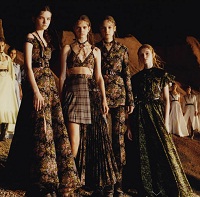 Asian designers have stood out in Western world with their classy styles and unique offerings for long. Chinese, Indian, and other top designers from the continent have styled Western celebs including Michelle Obama, Rehanna, Gigi Hadid for red carpet events. And as per a luxurystylemag.co.uk report, this year, one can expect to see a clutch of Asian brands and designers making a mark on catwalks, transforming luxe wardrobes across the globe. For years French, Italian, American designers attracted high networth individuals with their styles, now, it’s time for Asian fashion brands to lead from ahead. In fact, a luxurystylemag.co.uk has listed out five luxe Asian brands that will make a mark in 2021.
Rokh: This South Korean brand by Tok Hwang has styled model Gigi Hadid. It’s already made a mark across the industry with its cut-open sleeves, exaggerated hemlines and unique twisted seams. And as the report says, “it’s a brand that doesn’t do things by halves, yet despite its daring nature it has managed to capture the hearts of fashionistas the world over with its equally chic and sophisticated casual designs.”
Sretsis: This Thai quirky yet edgy women’s brand is known for its unique slogan tees and “vibrant, cherry-print jackets”. It’s fast becoming a favourite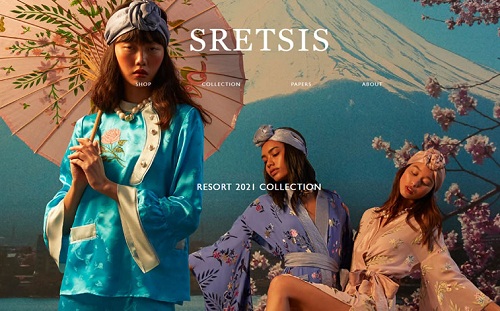 amongst those looking to inject that traditional Asian individuality into the way they dress. Katy Perry and Beyonce are some top celebs to have worn this brand.
With designer Pim Sukhahuta, a Parsons School of Design in New York alumni, at its helm, Sretsis is “centred around the idea of celebration, and with its bold polka dot patterns, whimsical florals and playful shapes.”
Salwar Kameez: This iconic Pakistani brand offers unique and beautiful ethnic ensembles to a largely Asian clientele through its online store. Salwar Kameez is inspired by Eastern beauties, Pakistani brands and iconic celebrities from the world over. An ensemble that offers beautifully designed, high-quality garments for women, men and children. The online store has seen huge traffic over the past year for its unique, designs.
Mimpi Kita: Mimpi Kita, which means ‘our dreams’ in Malaya launched by the Zulkifli sisters offers beautiful hand-finished clothes in line with their own penchant for casual luxury. Mimpi Kita is best known for promoting individuality and unique dressing. The brand’s bridal collection is particularly popular with its line of show-stopping dresses and accessories winning great acclaim across the world.
Lantern Sense: This brand from Hong Kong is known for its edgy fashion sense. Trevor Ng and Lala Yang’s brand draws inspiration from art and photography and offers clean and refined contemporary collection that sets it apart from the other more Asian brands. “Modern, innovative and a projection of its multi-cultural heritage, this is a brand that feels utterly opulent – and it’s just as well, because that’s exactly what it is.”
CAI increases India’s cotton estimate for new season, consumption to rise
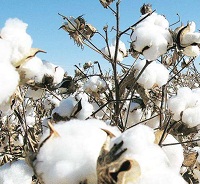 Cotton Association of India has increased its crop estimate for 2020-21 season from previous estimate of 356 lakh bales of 170 kg each (i.e. 378.25 lakh running bales of 160 kg each) to 358.50 lakh bales (i.e. 380.91 lakh running), an overall rise of 2.50 lakh bales.
Production, consumption to go up
As cotton production estimate for the new season (2020-21) is up 2.50 lakh bales, the committee members will closely monitor cotton arrivals in the subsequent months and if any addition or reduction is required to be made in the production estimate, reports CAI.
Estimates of total cotton supply till end of the cotton season 2020-21 that is upto September 30, 2021 was at 497.50 lakh bales of 170 kg each (equivalent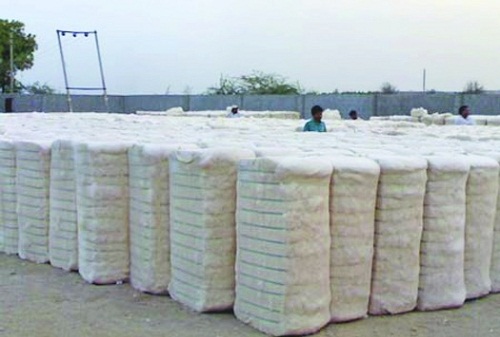 to 528.59 lakh running bales of 160 kg each). This also includes the revised opening stock of 125 lakh bales at the beginning of the season, crop for the season estimated at 358.50 lakh bales of 170 kg each (equivalent to 380.91 lakh running bales of 160 kg each).
The CAI has also retained its consumption estimate for the current crop year at the same level as estimated earlier i.e. 330 lakh bales of 170 kg. each. Comparatively, consumption for the previous season was estimated at 250 lakh bales due to the COVID related disruptions. In fact, consumption is expected to reach pre-lockdown level of 330 lakh bales during the 2020-21 season.
Import down marginally, exports to remain same
Import estimates indicate it will be below at 14 lakh bales of 170 kg. each (equivalent to 14.88 lakh running bales of 160 kg each), less 1.50 lakh bales from 15.50 lakh bales in 2019-20 crop year. Till December 31, 2020, about 4.50 lakh cotton bales of 170 kg each arrived at Indian ports.
Export estimates on the other hand for the 2020-21 season are 54 lakh bales of 170 kg each (equivalent to 57.38 lakh running bales of 160 kg each), against previous years export estimate of 50 lakh bales. Till December end, an estimated 20 lakh bales of 170 kg each were shipped.
Meanwhile cotton stock held by mills as of December 2020 is estimated at 65 lakh bales of 170 kg each (equivalent to 69.06 lakh running bales of 160 kg. each). Mills have on an average about 72 days’ cotton stock in their godowns.CCI, Maharashtra Federation, MNCs, Ginners, MCX among others are estimated to have stock of about 159.85 lakh bales which is equivalent to about 169.84 lakh running bales of 160 kg each.
Therefore, the total cotton stock held by spinning mills and stockists by end of December 2020 is estimated at 224.85 lakh bales of 170 kg each, which is equal to about 238.90 lakh running bales of 160 kg each.
Vietnam retail CEOs urge US to not impose China-like tariffs
More than 200 top retail CEOs, have come together hoping to steering the US away from imposing tariffs on Vietnam. Top executives from athletic giants including Adidas and Nike, designer labels such as Kenneth Cole and Steve Madden, as well as apparel chains J. Crew and Gap wrote to President Donald Trump, asking him implored not to slap punitive levies on goods coming from the Southeast Asian country, considered the second largest supplier of shoes to the US.
They agreed their trading partners must abide by global trade rules, and support enhanced bilateral engagement with Vietnam to resolve concerns. However, responding with tariffs would undermine American global competitiveness and harm American businesses and consumers at a time when they can least afford it, as they are struggling from the impacts of COVID-19.
Late last summer, the Department of Treasury found Vietnam had manipulated its currency in a specific trade case that involved tires. The Office of the US Trade Representative launched an investigation into the country’s “acts, policies, and practices that may contribute to the undervaluation of its currency and the resultant harm caused to US commerce.” In so doing, Washington used Section 301 of the 1974 Trade Act — the law it used to impose tariffs on China, which ultimately launched a protracted trade war between the world’s two largest economies.
Amid rising labor costs and escalation of the Washington-Beijing trade dispute many companies have moved their production from China to Vietnam. Similarly, many companies shifted sourcing to Vietnam as a direct result of the China 301 tariffs and supply chain diversification efforts. Placing tariffs on imports from Vietnam would punish those companies who made the sourcing shift as the administration had asked. If those duties get approval, more than half of all apparel and footwear sold in America could be hit with cumulative tariffs as high as 25 to 50 per cent. Making the situation worse, trade groups are preparing for possible retaliatory tariffs if US ends up taxing Vietnamese products. According to the International Trade Commission, US textile and apparel exports to Vietnam rose $97 million from 2015 to 2019, while US footwear exports increased by $170 million.
US apparel import rise in November 2020
Volume of US’ apparel imports in November was higher compared to same month last year. In November, the country imported 2,004.64 million SME apparels a rise of 9.50 per cent on year-on-year basis. However, import value was down 4.70 per cent to $5.28 billion.
Imports fell 23.70 per cent in November in values terms on month-on-month basis as compared to October 2020, when it imported $6.92 billion worth of garments. Reports suggest the decline in November import values indicates manufacturers who ship apparels to the US reduced prices to grab more orders in festive season and are now anticipating recurring business from buyers after the season is over.
The unit prices in November 2020 were just $2.63 per SME as against $3.02 per SME in November 2019. Unit prices were lower than October’s figure $ 2.75 per SME. While Asian countries dominated the US market both in terms of quantities and values, sourcing from African, Caribbean countries and Latin America also decreased in November.
Cancelled garments orders are returning to Philippines
The Philippine Exporters Confederation (Philexport) says the Foreign Buyers Association of the Philippines (FOBAP) has stated orders cancelled previously due to the pandemic are slowly returning, giving hope of a rebound in garments and hard goods exports between 10 and 15 per cent this year. Local factories have received new orders worth $280 million.
Robert Young, FOBAP president and trustee of Philexport for textile, yarn and fabric sector informed from sewing floor to store shelf, the 2021 outlook for troubled mid to high fashion items are dim and hazy. Therefore, a price re-costing/re-levelling is a must. Only the basics and essentials, such as undergarments, fast fashion are now staying alive.
Young noted fresh confirmed export orders for the country’s soft goods comprising mostly garments worth $200 million will be on sewing floor up to the first quarter. Buyers included Wacoal, Adidas, Ralph Lauren, Ann Taylor, JCPenny, among others.
Almost 70 per cent of the orders are from the US, while the rest are from European Union, Canada, Australia, among others. Young is optimistic about export growth despite the pandemic, as the country’s factories hope to book orders which are not served by other Asian neighbours due to their full production.
Most of these orders are coming from the relocated (moved out) foreign factories in China. Also, the Philippines will have added volume for more complicated items jackets/sportswear which are not the production preference of other countries. To boost exports particularly to the EU, Young urged government to request the EU to grant the usage of imported fabric/textile in the apparel production, thus it will be eligible for zero duty to the trading bloc under the Generalized Scheme of Preference Plus (GSP+).
ITA changes dates of spring Showtime event
The International Textile Alliance has prepended the dates for spring 20201 Showtime market a week earlier to May 16-19. The show was originally scheduled for May 23-26. The ITA hopes to support permanent showrooms and temporary exhibitors by appointment during the Premarket dates of April 25-27 and during the last few days of the rescheduled High Point Market on June 8-10.
Carrie Dillon, Managing Director of ITA informed the decision to offer multiple dates to showcase products in the spring offered the best opportunity to service all stakeholders on a schedule that meets safety and sourcing requirements. The ITA said many manufacturers exhibiting at High Point Market are attending buyers during the Showtime event. The decision to move up the core event in May and provide additional dates in April and June was in response to a feedback from both ITA members and Showtime buyers and us aimed at giving buyers multiple opportunities to shop.
ITA’s leadership also recognized the timing issues on vaccine rollout and supply issues were additional reasons to provide multiple buying opportunities. The ITA will enforce the same social distancing and safety measures during the spring Showtime events as were successful in November 2020.
NCTC appeals for removal of anti-dumping duty on VSF
National Committee on Textiles & Clothing (NCTC) has appealed to the Prime Minister for removing Anti-Dumping Duty (ADD) on Viscose Staple Fibre (VSF) and address the VSF spun yarn availability and price issues to prevent job losses and stoppage of production across the VSF textile value chain. Under the common platform of NCTC trade bodies expressed the textile industry has been facing stagnation for many years mainly due to the lack of availability of basic raw materials of man-made fibre/filament yarn at internationally competitive prices.
NCTC observed “owing to the growing demand for Viscose Staple Fibre and its blended textiles and clothing market opportunities, the demand for Viscose Staple Fibre has increased steeply not only in India, but also across the globe. As the imported yarn price was cheaper due to high anti-dumping duty prevailing on the domestic viscose staple fibre, the weaving and knitting sectors have been importing large volume of VSF spun yarn. The import of VSF spun yarn has increased from 2 million kg during 2016-17 to 56 million kg during 2019-20”.
The VSF Value Chain Industry players concluded removing ADD on VSF will make the domestic VSF prices aligned with the Global VSF prices making the entire Indian VSF textile value chain globally competitive and boost production and exports of these products.
Lidl shops in Switzerland to sell CmiA cotton products
The Swiss subsidiary of German distribution company Lidl, supermarket line has announces the availability of Cotton made in Africa (CmiA) certified clothing on its shelves. This is a standard for cotton grown in sub-Saharan Africa, which respects the environment and improves the living conditions of farmers.
The share of Cotton made in Africa (CmiA) is gradually increasing in the global textile distribution chain. Andreas Zufelde, Chief Commercial and Marketing Officer of Lidl Switzerland, noted the company is offering customers a clear orientation and the opportunity to make an active contribution to improve the living conditions of African cotton farmers and protect the environment by purchasing a product. The clothing comes in the form of bed linen, pyjamas, T-shirts, leggings, briefs, socks and jumpers.
The arrival of these garments in Lidl shops in Switzerland follows the Lidl Group’s membership of CmiA initiative in February 2020. With this action, the German retail giant, which employs 315,000 people in 7,839 shops in 26 countries around the world, wants to reduce its ecological footprint.
Launched in 2005 by the German foundation Aid by Trade with the support of German public partners (GIZ), NGOs and companies, the CmiA project aims to integrate sustainable African cotton into the global textile industry.











