


FW
India needs to work hard to reposition itself global in textile value chain
Experts feel, product development, digitalization, niche products and world class R&D institutions are way forward to reposition India in global textile value chain. Digitalization across value chain is the key to growth and competitiveness in textile industry in India. It increases interaction with buyers and allows companies to work closer to consumer through e-commerce.
They also feel given the huge local market of 1.3 billion people, Indian textiles industry has revived post-COVID with the help of new product segments in knit-based industry as focus on comfort wear has grown substantially. If Indian companies want to achieve scale then end to end approach is required and it needs to be supported by world-class R&D institution set up in public private partnership.
Cotton being the strength of industry the focus needs to be sustained. While proactive product development is the key to growth, sustainability along with compliance can create huge differentiation for India among global peers.
Similarly, synthetics industry growth is the key and India needs to increase its share of manmade fibers to grow in global market. India can also look at collaboration with neighbouring countries across supply chain to push textile industry's growth.
India needs to reposition itself through anchor led model, which will involve MSME's to develop scale. Complete digitization of supply chain will make Indian companies more competitive and give services as per buyers need. Creating sustainability across supply chain and adopting collaborative approach is the way forward. Likewise the country needs to broaden its product basket increase global footprint and look beyond US and EU for growth.
SIMA seeks Rs 9,000 crore for ATUFS
In the upcoming Union Budget, the Southern India Mills’ Association (SIMA) has sought allocation of Rs 9,000 crore for the Amended Technology Upgradation Fund Scheme (ATUFS). Of this, nearly Rs 6,000 crore is needed to meet the committed liabilities under earlier versions of the scheme.
It is also imperative to know that in the last few years, textile sector has not got allocation of more than Rs 7,000 crore. The Association has also sought working capital for mills to buy cotton and the creation of a National Textiles Fund. This will help meet the financial needs of textile units for infrastructure creation and technology adoption.
The Association highlighted bamboo fibres can be compared with viscose fibres as the source of raw material is nearly the same. The bamboo fibre is made of bamboo pulp and viscose is made of wood or eucalyptus pulp. So, based on this factual criterion, imported bamboo fibre has been classified by the Customs Department under Tariff Headings 5504 9090 or 5504 1000.
Due to the absence of a specific entry for the Bamboo Fibre in the Customs Tariff Act, 1975, importers were directed to clear the product as artificial staple fibre. Hence, a specific code is needed for bamboo fibre, it said.
Global brands will continue to prioritize China in 2021 to increase sales
 The latest ‘State of Fashion 2021 Report’ by The Business of Fashion and McKinsey & Company’s has predicted China’s fashion sales will to return to pre-Covid levels. This optimism is based on the pace of recovery in Q4 2020 and Q1 2021 and perhaps, what works for China is consumption has rebound, with retail sales returning to positive levels in August and global brands, like Estée Lauder, Nike and Lululemon and luxury conglomerates LVMH and Kering, reporting strong growth, as more and more Chinese consumers are forced to spend money at home instead of shopping abroad.
Brand visibility to help sales
The report suggests with international travel unlikely to resume for most of 2021, it is important for brands to be more visible, attractive and available to Chinese consumers in the mainland. Brands will definitely need to focus on China-centric digital strategies, feel analysts. This will need partnering with one or more China-based e-commerce platforms. Moreover, brands will need to look afresh at their brick and motor store networks, investing more on China properties even while they close stores across the globe.
Indeed, there are compelling arguments in favour of Asia-Pacific market, particularly China portion over the last half of this year. The Business of Fashion reports, “The State of Fashion Report analysis of the 311 fashion companies that disclose regional sales figures, brands generating more than 30 per cent annual sales in the Asia Pacific (APAC) region — including Mainland China, Japan, South Korea and Taiwan — achieved higher market valuations during the pandemic than their counterparts. On average, APAC-focused companies boasted a market cap that was 18 per cent higher than their competitors.”
Perhaps this is driving many brands like Montblanc, Hublot and MSGM to open new stores in Asia. A report by Savills, a property consultancy shows, the number of stores by luxe brands in China went up 4 per cent in the first half of 2020. Indeed, in a market where offline is expected to grow 5 per cent in 2021 compared to 2019, many brands will now need to focus on opening stores to boost sales and meet demand. In fact, brands have understood well the Chinese consumer has the money and are willing to spend and this includes even the lower tier Chinese consumers who are trading up.
Luxury brands see heightened demand
Year 2020 was a turning point for luxe brands. They had to focus a lot more on e-commerce platforms, particularly China-centric ones to boost sales. Alibaba’s stats reveal over 200 global luxury brands the likes of Balenciaga, Prada and IWC — participated in Singles Day activities on its platforms alone. And as per JD.com, the transaction value of goods from more than 130 luxury brands surged almost 100 per cent year-on-year in the first 30 minutes of sales. Even with impressive growth this year, there is still plenty of room for luxury e-commerce to grow in China in 2021.
The report suggests “While the lack of international travel removes a major gateway for new brand discovery, the desire to discover new brands remains. All this is not to say that the rebound in consumption for major brands doesn’t also mean opportunities for smaller niche and international players in China. Again, while the lack of international travel removes a major gateway for new brand discovery, the desire to discover new brands remains.”
Challenges in 2021
The Business of Fashion report outlines the biggest challenge global fashion and beauty brands looking at China this year will face is: “finding equilibrium: to balance investments in both online and offline channels, while building relationships and experiences for consumers across online and offline. At a time in which global budgets are stretched, and operating costs in China, particularly in the online space, are rising, striking this balance will be difficult, but the stronger the ties that bind brands to Chinese consumers are now, the better placed brands will be to win new and returning business at home, as well as overseas, when that becomes a possibility again.”
Shopping malls slowly recover as footfalls inch towards pre-Covid levels
 Year 2020 was a tough one globally for people and businesses alike. With long stretches of lockdowns, and people confined at home, life almost came to a standstill. However, with the successful launch of a few vaccines there is some hope and positivity in our fight against the global pandemic. The Economic Times took stock of the damage that COVID-19 inflicted on the country’s shopping malls and concluded “With some confidence, we believe, is that a significant amount of the ground lost by shopping malls in India during the lockdown has already been recovered.” However, the report did highlight its little early to come to clear date of return to “normalcy” for shopping malls or what the new normal will look like.
Malls on way to recovery The report relied on personal mobility data or device data from smartphone usage. This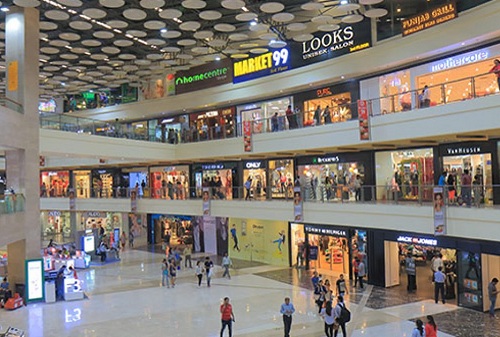 real-time data gives an insight on changes in visitation patterns. While GapMaps device data gives clear understanding of the impact on footfalls – both before the lockdown and in the various phases of unlock.
The aggregate findings from 24 leading malls across India, most of them in Tier-I cities shows quick drop in footfalls in all malls across cities to zero or almost zero in the weeks starting March 23, due to the lockdown. This continued till mid-June when traffic started moving north after partial unlock. And the festive season, saw footfalls reach 60 to 70 per cent of pre-COVID levels in some malls. And in mid-November, levels were trending at 30 to 60 per cent of pre-COVID levels.
The data also reflects as customers returned, their visitation habits and the duration of visit, slowly picked up to pre-COVID levels on an average 80-90 minutes in most cases, compared to 50-60 minutes in March and June.
Local malls were the preferred destination
One global trend that has emerged from the lockdown is that shoppers are now more inclined to focus on shopping centres closer home. The Economic Time report suggests, “for regional malls, which typically thrive when able to attract customers from a broad region, this change in behaviour, if permanent, spells potential problems.”
The study also highlights the pandemic changed the mindset of shoppers on the distances they are willing to travel. In most cases only 15 to 30 per cent regional mall customers travelled two kilometres or less in April, which went up to 50 to 60 per cent. However, in October, the proportion went back to almost pre-COVID levels where customers were more confident to travel greater distances to visit their favourite malls.
China, demand for loungewear pushes up Fast Retailing’s success
Japanese clothing brand Uniqlo noted operating profits were higher than pre-pandemic levels in first quarter, boosted by China's resurgence and strong demand for stay-at-home clothes like jogging pants and loungewear. But Fast Retailing said it was hard to predict the impact of the pandemic beyond the next several months, an uncertainty some analysts said could limit further gains in the shares, which hit record highs ahead of the results.
Fast Retailing has widely been viewed as one of the most resilient retailers during the pandemic, despite suffering a hit in the early days from its dependence on China for both manufacturing and sales. The company runs about 800 Uniqlo stores in Mainland China, roughly the same number as in its home market, Japan.
Full-year estimate of the company is of ¥245 billion in operating profit on ¥2.2 trillion in sales. Fast Retailing's operating profit in the three months through November rose to ¥113.1 billion ($1.09 billion), up 23 per cent from a year earlier. Uniqlo's focus on China and Japan helped it escape the worst of a global retail downturn from the crisis, which has hit other markets such as the United States and Europe harder.
The company cited a large profit gain in mainland China in the quarter, helped by strong demand for warm clothing and growth in margin-boosting online sales. Both Uniqlo and cheaper sister brand GU have also benefited from strong demand for comfortable clothes, such as loose-fitting T-shirts and stretchy pants as more people work from home.
A sell-out collection with German label Jil Sander, priced above Uniqlo's average range, also helped bolster business in Japan during the quarter, boosting spending per customer by nearly 7 per cent.
Trident gets patent for 'Fabric and Method of Manufacturing Fabric'
Trident has been granted patent for “Fabric and Method of Manufacturing Fabric by European Patent office. The invention comprises a method of producing a fabric by subjecting the fabric to a special treatment, thereby obtaining increased air space in the resultant fabric. This will help the company deliver its special soft towels without usage of any chemical based fibers enabling it to save environment and at the same time to deliver its soft luxury towels in European Market.
The grant of this patent provides further recognition of the quality of the innovation being carried out by Trident. The Company operates in two major business segments- Textiles and Paper with its manufacturing facilities located in Punjab and Madhya Pradesh.
First online edition of World Congress on Textile Coating in February
International Newsletters launches its first online edition of World Congress on Textile Coating, scheduled for February 2021. The organisers have developed a well-structured programme of five sessions over four days with live discussion forums following each session for maximum attendee participation.
The programme aims to be inspiring and informative, and will showcase the best innovations and collaborative actions in the industry. Nick Butler, Head of the conference organising committee says, functionality can be added to textiles and nonwovens at the beginning or the end of the supply chain, with increasing range of raw materials, offering many options when designing and realizing a high-performance fabric. At the other end, there are many ways, such as applying a coating, to add functionality to an otherwise finished product. For example, the current pandemic has prompted new commercial anti-viral processes and four such presentations will outline the impact on industry and its response to the global pandemic.
World Congress on Textile Coating will feature time dedicated to networking, encouraging attendees to interact with conference speakers and industry peers throughout the online programme, offering the opportunity to expand professional networks. All the presentations and discussion forums will be recorded for post-event viewing.
imogo AB, Lamberti SpA, JX Nippon ANCI and Weitmann & Konrad GmbH & Co. KG will give individual presentations and host questions and answer session during the four days of the event.
Tiruppur Exporters’ Association submits Budget recommendations
Tiruppur Exporters’ Association (TEA) has submitted some recommendations to the finance minister for next budget. The recommendations include tax concession on staff house construction by garment units in Tiruppur, setting up a research and development (R&D) centre at Tiruppur and offering market promotion support to industry associations as available to export promotion councils.
In a press statement, TEA said the association has a target of constructing one lakh houses for migrant workers in the next five years, primarily to address labour shortage issues and to achieve better utilisation of machinery, apart from enhancing productivity and quality.
In cases, where the units contribute the amount voluntarily for construction of houses to their own workforce, their contribution has to be treated as allowable business expenditure similar to Section 37 of the Income Tax Act, 1961, preferably providing weighted deduction or at least deduction, TEA pleaded.
An R&D centre at the cluster will be beneficial to accelerate the pace of industrial growth and the government can offer cent per cent exemption from income tax. A new scheme called Remission of Duties and Taxes on Exported Products (RoDTEP) has been introduced from January 1 this year and this is available for all physical exports, but the RoDTEP rate has not yet been notified. The concern is that the benefit under RoDTEP scheme shall not be allowed if benefits of the Advance Authorisation Scheme have been availed.
TEA says availing advance authorisation does not lead to complete zero-rating of the exports. Exporters even after procuring certain inputs under advance authorisation have to incur many costs (in the form of indirect taxes) that will get embedded in the price if not remitted. Such direct costs are indirect taxes on electricity, freight and fuel. There will also be indirect costs in terms of customs duties borne by the domestic supplier on imports used in further making the domestic supplies to exporter which are in turn used by the exporters for manufacturing and exporting the finished goods. TEA requested the finance minister to provide proportionate benefits to exporters availing the benefit of advance authorization as well.
Pakistan’s top denim player Artistic Milliners buys factory in Los Angeles
Pakistani denim specialist Artistic Milliners, an integrated producer with spinning, weaving, dyeing and garment manufacturing capabilities, is drawing closer to US customers, by buying a factory in Commerce, California. The new unit has an output capacity of 100,000 units per month. The factory’s new name is Star Fades International (SFI).
This acquisition gives the company a strategic foothold in the US, a region with significant geographic and demographic advantages sates Murtaza Ahmed, Founder of SFI and Executive Director of Artistic Milliners. California has historically been an important cornerstone for the international denim industry. In 2021, the company anticipates increased demand from international retailers and brands for nearshoring capacity, digital design services and sustainable solutions. The investment in this factory gives them a launch platform in the US to meet that demand, as they build the factory of the future.
The Pakistani group plans to rapidly step up SFI’s production capacity to 300,000 units per month, having retained part of the factory's technology know-how, as a base to expand its output. SFI acquisition serves as a major leap in Artistic Milliners’ evolution as a truly global denim company, since it adds multiple dimensions its operating model. Not only does it give their brand partners a US-based manufacturing option but also serves as a nucleus for co-creation and collaboration from fibre to garment at a scale and depth never witnessed before in the industry.
Pakistan’s textile and clothing exports to EU on the rise
The textile sector of Pakistan has immense potential for further expanding its share of exports to the European Union. Zaheer A. Janjua, Ambassador of Pakistan to Belgium, Luxembourg and the European Union, during a virtual meeting with CEOs of the Pakistan Textile Council, Saleha Asif, and other board members, expressed these views. Appreciating the performance of textile sector during the COVID-19 pandemic, Janjua underlined Pakistan’s exports in textile and clothing products to EU have increased in recent months.
The surge in textile exports was the result of government’s smart lockdown strategy, reopening of industry, as well as recently announced energy package to help exporters recuperate from pandemic’s effects.
Moreover, GSP Plus facility had been instrumental pushing up Pakistan’s textile exports to the EU. While emphasising the need for making textile internationally competitive, the ambassador stressed on the need for innovation, value addition, diversification and modernisation to make Pakistan’s products more attractive.











