


FW
Olympic gymnast Li Ning to buy stake in Clarks footwear
Clarks could soon be owned by ex-Olympic gymnast Li Ning’s investment arm Viva China, which aims to buy up 51 per cent stake in the British footwear retailer for a consideration $69 million (£51 million).
Viva had earlier helped facilitate the acquisition of business out of voluntary administration by funding a loan to LionRock, which allows Viva, to convert this debt into equity in Clarks. LionRock the founding Clark family would remain key shareholders in the business, and aims to help the business reposition for future long-term sustainable growth.
Clarks posted a $111 million loss in 2019 and called in accountants to navigate a restructure through voluntary administration last November. If the acquisition goes through it would be very substantial, but that so far no definitive agreement between Viva and LionRock has been reached. Last year Li Ning also took control of Hong-Kong listed apparel group Bossini through Viva, and announced plans to expand the business into Mainland China. According to reports, Li is a non-executive director at LionRock.
Mango to launch a homeware line
Fashion retailer Mango will enter homeware, home linen and home decoration market. After the pandemic shockwave, Mango managed to adapt and respond to new trends, like the boom in e-tail and high demand for casual outfits, and it now intends to capitalise in this new segment.
In a press release, Mango stated the brand has created a new line in order to extend its presence to the homes of its customers, and beyond their wardrobes. This will allow the company to enlarge its product range and offer customers an improved service, by enabling them to purchase complementary products. The group is keen to tap the current popularity of home decoration products, prompted by the lockdown, remote working and generally by the restrictions to people’s movements introduced in recent months, which mean potential customers are spending an more time at home.
Mango's new homeware range will be available from Q2 2021. To begin with, there will be a capsule collection of home linen products, featuring bed and bathroom linen and a series of textile products for the kitchen. The range will gradually expand, extending to other categories, such as tableware. Approximately 80 per cent of all products will be produced locally. The collection will be available in 20 European countries, and its articles can be viewed on Mango’s e-shop and at the label’s physical stores, on the tablets used by shop assistants.
With vaccination roll out, Indian garment exporters start getting orders
As the drive for Covid-19 vaccination rolls out garment exporters in India have started getting orders once more in all major markets. This has been confirmed by top suppliers to international brands such as Zara, H&M and Primark. Fashion brands have started placing fresh orders for Summer/Spring, as they expect consumption in top European and North American markets to pick up in the next few weeks.
This comes months after shipments were kept on hold, orders cancelled and payments were put on hold, as global retailers were in distress due to high number of coronavirus cases in most countries which led to lockdowns and low shopper turnout. Global brands, which were mostly relying on digital channels until now expect shoppers to be back in stores by March or April, and so have started building inventory cautiously.
Pent-up demand and increased online sales are expected to give a boost to exports. The order volume, however, is nowhere close to the pre-Covid level as brands want to mitigate risk.
According to industry estimates, the global textile and apparel market was worth $1.9 trillion in 2019 and was projected to reach $3.3 trillion in 2030. Europe and the US contribute about 30 per cent to the total apparel market and hence the launch of vaccination in these two regions has led to the increase in number of international orders.
However, there has been a significant shift in demand from formal wear to casual wear. Since the pandemic began last year, the loungewear category of India's Rs 53,000-crore knitwear export industry has seen demand increase in the range of 15-150 per cent say exporters.
Similarly, the entire knitwear industry has witnessed this shift towards casual wear since the onset of the pandemic, with the export composition now changing from 50 per cent casual and 50 per cent formal to 70 per cent casual and 30 per cent formal.
David Ponzo to head Louis Vuitton’s global commercial
After naming Anthony Ledru as the new CEO of Tiffany & Co, global luxury conglomerate, Louis Vuitton, has announced the appointment of David Ponzo as executive vice president for global commercial activities. This role was previously held by Ledru prior to his move to the American jeweller, which was acquired by the French luxury group earlier this month.
Since 2015, Ponzo has led Louis Vuitton's operations in Japan with his latest promotion; Ponzo will oversee Louis Vuitton's vast network of 460 stores, as well as its e-commerce platform.
The executive has more than proved his skills over the course of a career notable for its rich and varied international experience. This includes a range of management posts in Asia, at Omega, Swatch and finally at Louis Vuitton, where Ponzo became CEO and president for Japan in 2016, a role in which he appears to have attracted the attention of LVMH's top management.
Unlike popular belief cotton is not a water-intensive crop, say experts
Although denim industry engages in many wasteful practices and needs improvements throughout the supply chain experts feel cotton statistics claimed in most studies are both inaccurate and counterproductive. Transformers Foundation, a nonprofit organization for denim professionals seeking to make positive change, hosted a webinar featuring a panel of cotton experts who discussed the nuances that many global average figures fail to address.
The first claim by the World Wildlife Fund, which states that 2,700 liters of water are needed to make an average T-shirt, was contested by Simon Ferrigno, a freelance researcher and writer. Ferrigno said, this statistic is fairly meaningless. There is no global average, because there’s no global average cotton production. Since water is utilized in different ways depending on the region it’s impractical to calculate an average that’s used across the board. Throughout his research, Ferrigno has seen the statistic range from 2,000 to 20,000 liters of water needed to make a T-shirt.
Instead of numbers, Ferrigno notes the focus should be on whether or not the water that’s used in the process can be cleaned and repurposed for other needs. Ferrigno is of the opinion that water is not actually used; it’s borrowed. There is a total amount of water on the planet. We use that for cotton production or other uses, and it goes back into a water system.
It’s a concept used by mills as a way to significantly reduce water usage and make their products eco-friendlier. Vietnam-based denim manufacturer Saitex is known for its on-site water recycling methods, which remove indigo dye and leave behind water that is safe for human consumption—some of which is even repurposed to brew coffee.
Experts say the numbers are inaccurate as the complexities surrounding water recycling and how that affects calculations. The panellist noted that cotton is essential, as the crop employs millions of people and feeds numerous species. CIRAD, the French Agricultural Research Center for International Development, calculated more than 1,300 insect and animal species that feed on the crop and rely on it for survival.
Keshav Kranthi, head of technical at The International Cotton Advisory, Committee, also explained that cotton is not as water-intensive as many sources infer, noting that the majority of cotton crops around the world rely on rainwater. Calling the crop resilient, according to him many farmers throughout water-deprived regions in Africa and India prefer to grow cotton as a result.
India needs to work hard to reposition itself global in textile value chain
Experts feel, product development, digitalization, niche products and world class R&D institutions are way forward to reposition India in global textile value chain. Digitalization across value chain is the key to growth and competitiveness in textile industry in India. It increases interaction with buyers and allows companies to work closer to consumer through e-commerce.
They also feel given the huge local market of 1.3 billion people, Indian textiles industry has revived post-COVID with the help of new product segments in knit-based industry as focus on comfort wear has grown substantially. If Indian companies want to achieve scale then end to end approach is required and it needs to be supported by world-class R&D institution set up in public private partnership.
Cotton being the strength of industry the focus needs to be sustained. While proactive product development is the key to growth, sustainability along with compliance can create huge differentiation for India among global peers.
Similarly, synthetics industry growth is the key and India needs to increase its share of manmade fibers to grow in global market. India can also look at collaboration with neighbouring countries across supply chain to push textile industry's growth.
India needs to reposition itself through anchor led model, which will involve MSME's to develop scale. Complete digitization of supply chain will make Indian companies more competitive and give services as per buyers need. Creating sustainability across supply chain and adopting collaborative approach is the way forward. Likewise the country needs to broaden its product basket increase global footprint and look beyond US and EU for growth.
SIMA seeks Rs 9,000 crore for ATUFS
In the upcoming Union Budget, the Southern India Mills’ Association (SIMA) has sought allocation of Rs 9,000 crore for the Amended Technology Upgradation Fund Scheme (ATUFS). Of this, nearly Rs 6,000 crore is needed to meet the committed liabilities under earlier versions of the scheme.
It is also imperative to know that in the last few years, textile sector has not got allocation of more than Rs 7,000 crore. The Association has also sought working capital for mills to buy cotton and the creation of a National Textiles Fund. This will help meet the financial needs of textile units for infrastructure creation and technology adoption.
The Association highlighted bamboo fibres can be compared with viscose fibres as the source of raw material is nearly the same. The bamboo fibre is made of bamboo pulp and viscose is made of wood or eucalyptus pulp. So, based on this factual criterion, imported bamboo fibre has been classified by the Customs Department under Tariff Headings 5504 9090 or 5504 1000.
Due to the absence of a specific entry for the Bamboo Fibre in the Customs Tariff Act, 1975, importers were directed to clear the product as artificial staple fibre. Hence, a specific code is needed for bamboo fibre, it said.
Global brands will continue to prioritize China in 2021 to increase sales
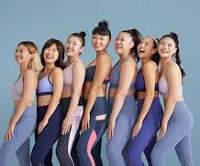 The latest ‘State of Fashion 2021 Report’ by The Business of Fashion and McKinsey & Company’s has predicted China’s fashion sales will to return to pre-Covid levels. This optimism is based on the pace of recovery in Q4 2020 and Q1 2021 and perhaps, what works for China is consumption has rebound, with retail sales returning to positive levels in August and global brands, like Estée Lauder, Nike and Lululemon and luxury conglomerates LVMH and Kering, reporting strong growth, as more and more Chinese consumers are forced to spend money at home instead of shopping abroad.
Brand visibility to help sales
The report suggests with international travel unlikely to resume for most of 2021, it is important for brands to be more visible, attractive and available to Chinese consumers in the mainland. Brands will definitely need to focus on China-centric digital strategies, feel analysts. This will need partnering with one or more China-based e-commerce platforms. Moreover, brands will need to look afresh at their brick and motor store networks, investing more on China properties even while they close stores across the globe.
Indeed, there are compelling arguments in favour of Asia-Pacific market, particularly China portion over the last half of this year. The Business of Fashion reports, “The State of Fashion Report analysis of the 311 fashion companies that disclose regional sales figures, brands generating more than 30 per cent annual sales in the Asia Pacific (APAC) region — including Mainland China, Japan, South Korea and Taiwan — achieved higher market valuations during the pandemic than their counterparts. On average, APAC-focused companies boasted a market cap that was 18 per cent higher than their competitors.”
Perhaps this is driving many brands like Montblanc, Hublot and MSGM to open new stores in Asia. A report by Savills, a property consultancy shows, the number of stores by luxe brands in China went up 4 per cent in the first half of 2020. Indeed, in a market where offline is expected to grow 5 per cent in 2021 compared to 2019, many brands will now need to focus on opening stores to boost sales and meet demand. In fact, brands have understood well the Chinese consumer has the money and are willing to spend and this includes even the lower tier Chinese consumers who are trading up.
Luxury brands see heightened demand
Year 2020 was a turning point for luxe brands. They had to focus a lot more on e-commerce platforms, particularly China-centric ones to boost sales. Alibaba’s stats reveal over 200 global luxury brands the likes of Balenciaga, Prada and IWC — participated in Singles Day activities on its platforms alone. And as per JD.com, the transaction value of goods from more than 130 luxury brands surged almost 100 per cent year-on-year in the first 30 minutes of sales. Even with impressive growth this year, there is still plenty of room for luxury e-commerce to grow in China in 2021.
The report suggests “While the lack of international travel removes a major gateway for new brand discovery, the desire to discover new brands remains. All this is not to say that the rebound in consumption for major brands doesn’t also mean opportunities for smaller niche and international players in China. Again, while the lack of international travel removes a major gateway for new brand discovery, the desire to discover new brands remains.”
Challenges in 2021
The Business of Fashion report outlines the biggest challenge global fashion and beauty brands looking at China this year will face is: “finding equilibrium: to balance investments in both online and offline channels, while building relationships and experiences for consumers across online and offline. At a time in which global budgets are stretched, and operating costs in China, particularly in the online space, are rising, striking this balance will be difficult, but the stronger the ties that bind brands to Chinese consumers are now, the better placed brands will be to win new and returning business at home, as well as overseas, when that becomes a possibility again.”
Shopping malls slowly recover as footfalls inch towards pre-Covid levels
 Year 2020 was a tough one globally for people and businesses alike. With long stretches of lockdowns, and people confined at home, life almost came to a standstill. However, with the successful launch of a few vaccines there is some hope and positivity in our fight against the global pandemic. The Economic Times took stock of the damage that COVID-19 inflicted on the country’s shopping malls and concluded “With some confidence, we believe, is that a significant amount of the ground lost by shopping malls in India during the lockdown has already been recovered.” However, the report did highlight its little early to come to clear date of return to “normalcy” for shopping malls or what the new normal will look like.
Malls on way to recovery The report relied on personal mobility data or device data from smartphone usage. This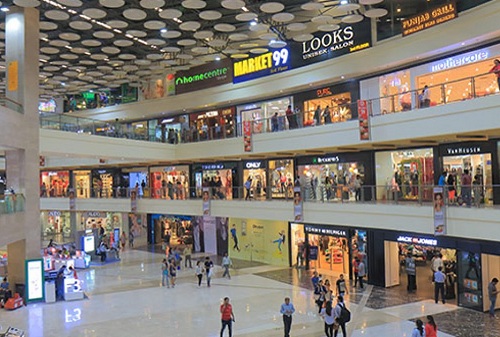 real-time data gives an insight on changes in visitation patterns. While GapMaps device data gives clear understanding of the impact on footfalls – both before the lockdown and in the various phases of unlock.
The aggregate findings from 24 leading malls across India, most of them in Tier-I cities shows quick drop in footfalls in all malls across cities to zero or almost zero in the weeks starting March 23, due to the lockdown. This continued till mid-June when traffic started moving north after partial unlock. And the festive season, saw footfalls reach 60 to 70 per cent of pre-COVID levels in some malls. And in mid-November, levels were trending at 30 to 60 per cent of pre-COVID levels.
The data also reflects as customers returned, their visitation habits and the duration of visit, slowly picked up to pre-COVID levels on an average 80-90 minutes in most cases, compared to 50-60 minutes in March and June.
Local malls were the preferred destination
One global trend that has emerged from the lockdown is that shoppers are now more inclined to focus on shopping centres closer home. The Economic Time report suggests, “for regional malls, which typically thrive when able to attract customers from a broad region, this change in behaviour, if permanent, spells potential problems.”
The study also highlights the pandemic changed the mindset of shoppers on the distances they are willing to travel. In most cases only 15 to 30 per cent regional mall customers travelled two kilometres or less in April, which went up to 50 to 60 per cent. However, in October, the proportion went back to almost pre-COVID levels where customers were more confident to travel greater distances to visit their favourite malls.
China, demand for loungewear pushes up Fast Retailing’s success
Japanese clothing brand Uniqlo noted operating profits were higher than pre-pandemic levels in first quarter, boosted by China's resurgence and strong demand for stay-at-home clothes like jogging pants and loungewear. But Fast Retailing said it was hard to predict the impact of the pandemic beyond the next several months, an uncertainty some analysts said could limit further gains in the shares, which hit record highs ahead of the results.
Fast Retailing has widely been viewed as one of the most resilient retailers during the pandemic, despite suffering a hit in the early days from its dependence on China for both manufacturing and sales. The company runs about 800 Uniqlo stores in Mainland China, roughly the same number as in its home market, Japan.
Full-year estimate of the company is of ¥245 billion in operating profit on ¥2.2 trillion in sales. Fast Retailing's operating profit in the three months through November rose to ¥113.1 billion ($1.09 billion), up 23 per cent from a year earlier. Uniqlo's focus on China and Japan helped it escape the worst of a global retail downturn from the crisis, which has hit other markets such as the United States and Europe harder.
The company cited a large profit gain in mainland China in the quarter, helped by strong demand for warm clothing and growth in margin-boosting online sales. Both Uniqlo and cheaper sister brand GU have also benefited from strong demand for comfortable clothes, such as loose-fitting T-shirts and stretchy pants as more people work from home.
A sell-out collection with German label Jil Sander, priced above Uniqlo's average range, also helped bolster business in Japan during the quarter, boosting spending per customer by nearly 7 per cent.











