


FW
Boohoo to buy out UK retailer Debenhams
Online fashion retailer Boohoo Group is set to acquire collapsed British department store group Debenhams in a cut-price deal that will result in the closure of the group's remaining department stores. The purchase price is expected to be about 68.39 million and a deal could be announced soon, citing two people with knowledge of the transaction.
Debenhams was continuing to engage with a number of third parties regarding the sale of all or parts of the business, administrator FRP Advisory said earlier this month. The Authentic Brands, owner of the New York department store brand Barneys, was looking at a takeover of Debenhams and was in talks with its administrators.
Administrators for Debenhams said in December it would be wound down, closing all its shops after 242 years in business and putting 12,000 jobs at risk amid the COVID-19 pandemic.
12,000 jobs lost as Debenhams shuts all stores in UK
UK department store chain Debenhams is shutting all outlets, administrators for the collapsed group informed, with the loss of around 12,000 jobs. Debenhams, which has long struggled with fierce online competition, will see its brand live on however after British online fashion group Boohoo bought the group's intellectual property assets.
Debenhams collapsed last month, having struggled to adapt from a bricks-and-mortar business long before the coronavirus pandemic forced shoppers online. Stores will reopen following the lifting of the UK lockdown to liquidate stock, administrators FRP Advisory, brought in to salvage parts of the business. Once Debenhams stores are able to reopen and the stock liquidation can continue in stores, the website will be operated by Boohoo.
The closing down sale will continue in stores for several weeks until the stock liquidation is completed and the value of this stock will be retained for creditors. Regrettably, all the UK stores will then be permanently closed, the statement added.
Debenhams, whose history dates back to the late eighteenth century, had hoped to sell some of its 124 stores, whose staff has been paid by the British government's furlough scheme during the pandemic.
Bestseller launches new online brand ‘The Founded’
After the recent announcement of the launch of women’s wear for its Jack & Jones brand, Bestseller has now revealed the launch of another new brand with the online debut of The Founded, which will take over from its existing Bestseller.com webstore. Launched by the UK-based Braveheart web design team, the innovative multi-brand platform will be a treasure trove of beloved Bestseller brands, trending pieces and relevant product creations.
With a fresh aesthetic, the company said this digital destination will, as Bestseller.com steps back, start a new journey with a focus on its community by delivering considered features, personalised content and inspiring product recommendations.
All current Bestseller.com customers looking for the firm’s products online will be redirected from that website to Thefounded.com. And the company said it has great ambitions on behalf of Thefounded.com but also for Bestseller.com. The firm’s namesake website will eventually re-emerge as a new and more engaging corporate website for Bestseller, replacing the current about.bestseller.com.
That means telling more captivating stories about the company, its ever-increasing work within sustainability, its many new digital projects and – naturally – also the vast career opportunities the company offers both in Denmark and abroad.
As near shoring gains ground, stringent rules will guide ‘Made in USA’ label
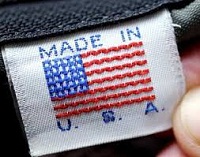 The pandemic and lockdowns disrupted both sales and supply chains across the world. Besides store closures, the Western world also faced problems with supplies especially during the early phase of COVID-19. For example, over 40 per cent apparels sold in the US are sourced from China and 90 per cent are sourced from across the world. And when lockdown forced manufacturing units to shut down especially in China, brands and retailers both in the US and other markets had to deal with production delays for weeks. Indeed, such disruptions have prompted many companies to look at shifting supply chains nearer home.
In fact the idea of near shoring gained steam in the US, especially during President Trump’s time with trade sanctions against China and focus on ‘Made in the USA’.
Near shoring an easier option
As per a report by thefashionlaw.com an EY study done in April 2020 revealed almost 83 per cent MNC executives are looking at ‘reshoring’ supply chains. Similarly, sourcing and supplier discovery platform ThomasNet in its report assessing the impact of the pandemic on manufacturing clearly highlights the emphasis on reshoring. The report suggests, in July two in three (69 per cent) manufacturing companies were contemplating bringing production back to North America (compared to 54 per cent in February).
The thefashionlaw.com report goes on to add “The potential for a surge in reshoring efforts in the US (and beyond) would prove striking for fashion industry entities.” At a time when many top brands are already manufacturing in the US, the domestic fashion industry largely depends on sourcing garments and accessories from across the globe. “With that in mind, a shift back to the US would bring an increased emphasis on the ins-and-outs of ‘Made in USA’ labeling, an area that is expected to be subject to increased attention and enforcement.”
However, the Federal Trade Commission (FTC) prohibits marketers from including unqualified ‘Made in USA’ claims. This means broad representations without explicit limitations on labels unless: First, final assembly or processing of the product occurs in the US; Second, all significant processing that goes into the product occurs in the US; Third, all or virtually all ingredients or components of the product are made and sourced in the US.
The legal tangle on false claims
The fashionlaw report indicates, the FTC has been facing false and misleading ‘Made in USA’ claims for years. “According to Frankfurt Kurnit Klein & Selz PC’s Jeff Greenbaum, who notes that the government agency’s announcement in June 2020 that it is considering codifying its rule that companies market a product as ‘all or virtually all’ made in the US must be able to substantiate such claims.”
In fact, there have been many judgements on false claims of ‘Made in USA’. In December FTC enforced a whopping $1.2 million fine against a Georgia-based adhesive giant for selling glue products with ‘Made in the USA’ claims which indicated the complete product was made in the country while in realty over 80 per cent of materials costs and over half of overall manufacturing costs for the products were from abroad. The fine indicates the FTC is aware of how the system is being sidelined and the consequences could be high for the erring party.
Under the new administration with President Joe Biden, emphasis on labelling will be a priority. In the September 2020, Biden had indicated they want to ‘end false advertising’ relating to ‘Made in USA’ claims and come down on “companies that label products as Made in America even if they are coming from China or elsewhere.” A clear indication enforcement on ‘Made in USA’ claims will increase in the near future.
And as the fashionlaw report sums up, companies are therefore, “encouraged to brush up on the various labelling rules at play – from the difference between country-of-origin rules imposed by Customs and Border Control and the FTC’s.”
India’s retail outlook stays strong with positive government initiatives
 And IBEF report suggests India is the world’s fifth-largest global destination in the retail space. The entry of top players has made the sector one of the most dynamic and fast-paced with total consumption expenditure expected to be worth $3,600 billion by 2020 from $1,824 billion in 2017. It accounts for over 10 per cent of the GDP and around eight per cent of employment.
As per United Nations Conference on Trade and Development's Business-to-Consumer (B2C) E-commerce Index 2019 India stood 73rd and is the fifth largest global destination in retail spaces; 63rd in World Bank’s Doing Business 2019.
A promising and growing market
The IBEF report highlights India’s retail sector was worth $950 billion in 2018 growing at CAGR of 13 per cent and it is expected to reach $1.1 trillion by 2020. Online retail sales were forecasted to grow 31 per cent annually to $32.70 billion in 2018. Revenue were projected at reach $60 billion by 2020.
Revenue from brick and mortar retail was expected to reach Rs 10,000-12,000 crore ($1.39-2.77 billion) in FY20. And as per consulting firm RedSeer’s study the retail sector was expected to recover 80 per cent of pre-Covid revenue ($780 billion) by end-2020. In fact, after a 19 per cent drop in the January-March 2020 quarter, the FMCG industry recovered in July-September 2020 quarter with a y-o-y growth of 1.6 per cent.
As per Department for Promotion of Industry and Internal Trade from April 2000-June 2020, the retail sector received FDI equity inflow worth $ 2.17 billion. In 2019 PE funds worth $970 million were channelled to the retail sector. Many global PE funds have been attracted by Indian retail for example, in September 2020, US private equity firm Silver Lake announced plans to invest Rs 7,500 crore ($1.00 billion) in Reliance Retail, the second billion-dollar investment by Silver Lake in a Reliance Industries subsidiary after the $1.35 billion investment in Jio Platforms in 2020. Walmart Investments Cooperative invested Rs 2.75 billion ($37.68 million) in Wal-Mart India.
And what given the sector an edge are the various government initiatives to improve the industry. One of these is allowing 100 per cent FDI in online retail and services through the automatic route, thereby providing clarity on the existing businesses of e-commerce companies operating in India.
As ecommerce expands in the country, retailers need to leverage digital channels, which would push them to spend less on expensive real estate while reaching out to more customers in smaller cities. By 2021, traditional retail is expected to hold 75 per cent share with organised making up 18 per cent and e-commerce 7 per cent of the total retail market. The long-term outlook for the industry is positive, with rising income, favourable demographics, entry of foreign players, and increasing urbanisation, sums up IBEF.
Turkish companies to invest $50m in Azerbaijan
Turkish companies are planning to invest $50 million to construct textile factories in Azerbaijan's liberated territories says TÜMKİAD (Turkish Association of Business People and Entrepreneurs). A MoU on the construction of textile factories was signed between TÜMKİAD and the National Confederation of Entrepreneurs of Azerbaijan.
TUMKIAD emphasized the construction of industrial plants and textile factories is envisaged as a priority in support program for Azerbaijan in this direction. Moreover, TÜMKİAD is engaged in many areas, but at the initial stage, it is planned to invest in the textile sphere. Earlier, Azerbaijani President had stated companies from friendly countries will take part in reconstruction works to be carried out in liberated territories. Large-scale construction work will be carried out but first, Azerbaijani companies will take part in this work.
The Azerbaijani government has allocated $1.3bn for reconstruction in the liberated territories in 2021. These funds will be used to restore the infrastructure, as well as cultural and historical monuments.
NCTO welcomes President Biden’s COVID-19 Action plan
National Council of Textile Organizations (NCTO) has welcomed President Biden’s action plan and COVID-19 response, accompanied by a series of executive orders, including an order to strengthen US supply chains by directing federal agencies to use the Defence Production Act (DPA) to address shortages of personal protective equipment (PPE) and related vaccine supplies.
American manufacturers have been at the forefront of the effort to build a domestic PPE supply chain since the onset of the COVID-19 pandemic. The US textile industry retooled production and operations virtually overnight, producing millions of face masks, isolation gowns, testing swabs and other critical medical textiles.
The industry is dedicated to making significant investments in automated equipment for PPE, but the industry needs long-term, multiyear contracts to help realize that investment. The deployment of DPA is one of the critical tools that will help incentivize investment in equipment, propel the hiring of U.S. workers and expand these critical production chains.
Since its inception, the DPA has been utilized by the Department of Defense to make critical investments in domestic textile manufacturing infrastructure and capacity, creating private-public partnerships through the government’s capital investments under the DPA and guaranteeing purchases through long-term contracts.
The industry has outlined critical steps that are necessary to strengthen the U.S. supply chain for essential products here.
M&S adds new fashion brands
High street retailers, Marks & Spencer is broadening the choice of fashion clothing by adding third party fashion brands to its growing list of labels available from stores. The multinational retailer has signed partnership deals with fellow UK-based fashion houses Joules, Phase Eight, Hobbs and, Seasalt, which will kick in this coming spring 2021.
M&S, suffered badly during store closures during the lockdown and sees this move as a way of attracting new customers to shops and on-line stores. In 2019, Marks & Spencer put pen to paper for their first third party venture with eco-conscious fashion brand for women, Nobody’s Child a fashion label who sell ethical fashion online.
M&S has just acquired the fashion label Jaeger is partnering UK fashion label Ghost which sees them adding more choices of fashion ranges to their on-line shoppers. According to M&S, these new partnerships will complement the range of clothing and accessory items they can offer to on-line shoppers.
Turkey’s garment exports to exceed $20 billion in 2021
The Turkish Exporters' Assembly (TIM) has announced the country’s garment industry is targeting exports worth $20 billion in 2021. Ready-to-wear clothing exceeded 10 per cent of the country's total exports in 2020, the sector had managed to increase exports in eight of 12 months last year. Exports to Canada rose the most nearly 50 per cent to roughly $101 million. This was followed by Kazakhstan, the Czech Republic, and the US, with $221.4 million, $124.6, and $793.6 million, respectively.
TIM also underlined as they progress, vaccinations will help strengthen the textile industry, as will a recent free trade deal between Turkey and the UK. In the case of no-deal Brexit and WTO tariffs kicking in, the ready-to-wear sector would be the most affected with the $200 million tariffs. Today, this risk is no more. The agreement, signed late last year eliminates uncertainties
At this point, in order to maintain its competitive edge, Turkey’s focus is on high quality and value-added production that will enable it to acquire a much larger share in the global supply of ready-to-wear clothing.
Bangladesh gets GSP Plus benefits in EU despite not meeting all criterions
Some gaps need to be plugged in the EU's nine-point action plan for Bangladesh in order to obtain the Generalised System of Preferences (GSP) Plus status after the country's graduation from a least developed nation in 2024.
One of the major gaps lies in the freedom of association as factory workers still need the participation of 20 per cent of their colleagues to form a union. The threshold was reduced from 30 per cent through an amendment to the labour law. However, the 20 per cent threshold is still high when considering that many factories have thousands of workers.
Besides, representatives of various workers' organisations complain that union leaders are only allowed to be selected from workers of the establishment concerned. This enables employers to force out union leaders by firing them for other reasons, such as 'unruly behaviour'. However, the term 'unruly behaviour' was not properly defined in the labour law. As per the law, the government has the power to stop a strike or lockout if there is concern of "serious hardship to the community" or if the protest is "prejudicial to national interest". However, the related terms are not properly defined by law in the discriminatory anti-strike provisions.
Obtaining the GSP Plus status is important for Bangladesh since the EU is the country's largest export destination. Some three fifths of Bangladesh's total exports and two thirds of the total garment export are destined for the EU, where they enjoy duty free access under the EU's everything but Arms (EBA) scheme. However, this generous preference on export would be eroded when the country graduates to a developing country in 2024, as per the rules of the EU GSP facility for LDCs.











